Marche Militaire in D Major: Violin 1 Sheet Music Preview

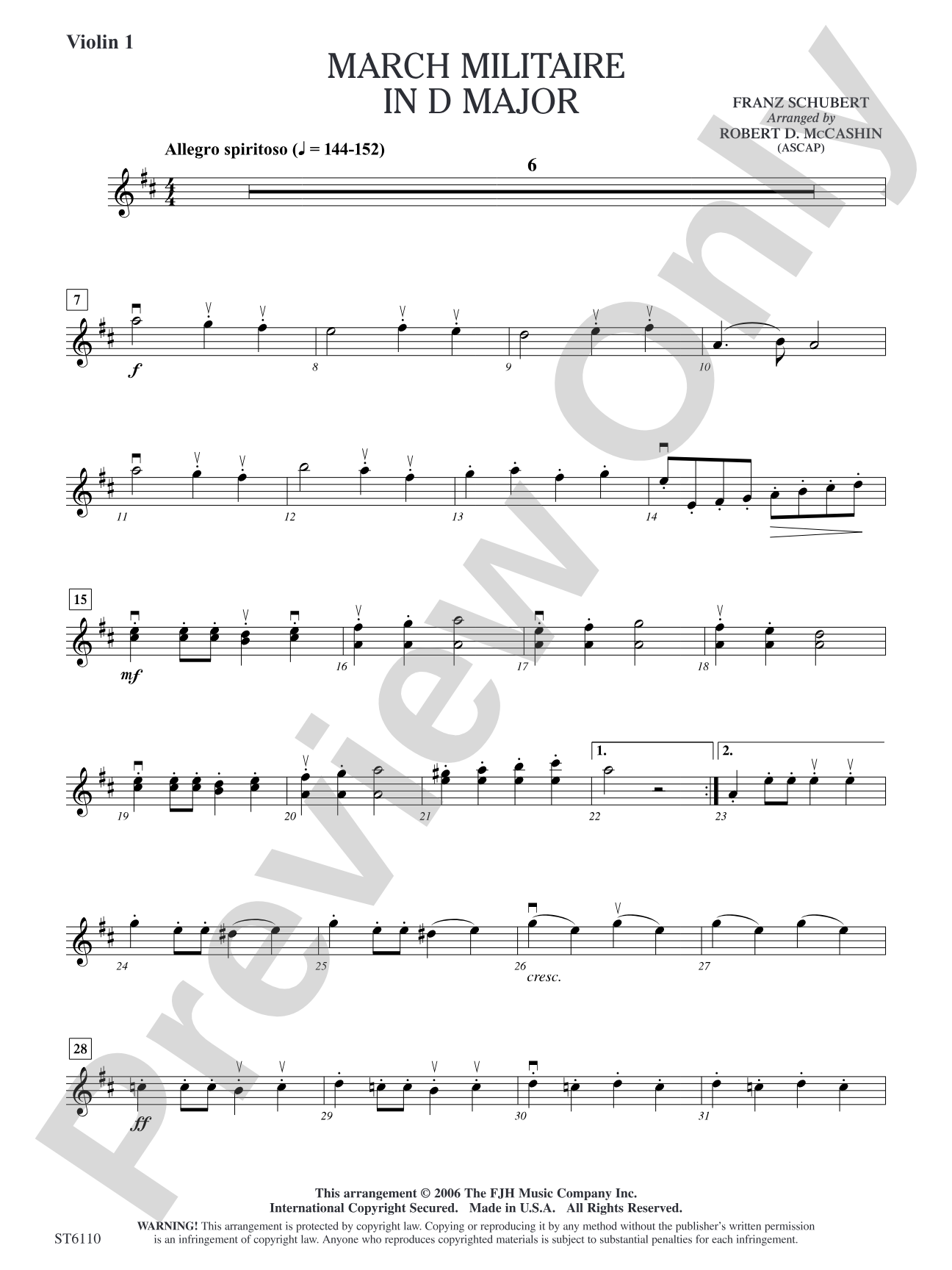
Marche Militaire in D Major: Violin 1

By Franz Schubert / arr. Robert D. McCashin

Grade: 3

Item: 98-PC-DST6110_VN1

Digital Download
$7.00
Description
Dr. McCashin has captured the true spirit of March Militaire in D Major in this well crafted grade 3 arrangement for string orchestra. Plenty for everyone in the group, it can be offered as a strong opener or closer for any concert. Enjoy!

Marche Militaire in D Major: Violin 1 isn't in MakeMusic Cloud just yet...but it could be. Let us know you'd like to see it, and you'll help shape what comes next. In the meantime, start a free trial and dive into thousands of interactive titles your students can play along with today.

Sample Audio
0:00
0:00
Sample Video
Additional Details
Series: FJH String Orchestra
Publisher: The FJH Music Company, Inc.
SKU: 98-PC-DST6110_VN1

More about this title

About the Composer: Franz Schubert

Franz Schubert (1797–1828) composed prolifically across every major genre despite his short life, leaving behind symphonies, chamber music, art songs, and keyboard works that shaped the Romantic era. His melodic gifts were exceptional; even his marches and dances convey the lyrical beauty and harmonic sophistication that define his style, making his lighter works as rewarding to study as his symphonies.

For string musicians, Schubert's compositions offer endless pedagogical value. His writing for strings balances accessibility with genuine musicianship, asking players to listen carefully to each other while delivering melodies and accompaniments of lasting beauty.

Why we love this

McCashin's arrangement preserves Schubert's elegant march character while distributing material evenly across the string section, so every player stays engaged. The grade 3 level sits at an ideal balance for developing orchestras: challenging enough to require real musicianship, accessible enough that students can succeed quickly and perform with confidence in front of an audience.

What to expect

Dignified and processional, with the straightforward character of a ceremonial march. Schubert's D Major tonality and clear melodic architecture create music that feels both stately and lyrical, inviting the ensemble to play with warmth rather than military stiffness.

Who it's for

String orchestra directors working with intermediate ensembles (high school or advanced middle school) who need a confident, concert-ready opener or closer. Students benefit from playing a recognized masterwork arranged specifically for their instrumentation while building ensemble discipline and intonation skills in a familiar harmonic language.

How to get the most out of it

  • Establish a steady, processional tempo early in rehearsal without rushing; the march's character depends on dignified forward motion rather than speed.
  • Balance the melodic lines between first violins and other voices so the piece breathes as an ensemble statement, not a showcase for the top part.
  • Pay close attention to dynamic markings and shape phrases so listeners hear the structure Schubert built into the original.
  • Lock the rhythmic foundation with cellos and basses; a secure low end allows upper voices to sing with freedom and clarity.

How to use it

Program this as a strong opening number to set a refined tone, or use it as a finale following heavier contemporary repertoire. It pairs naturally with other Romantic masterwork arrangements and works equally well as a festival or contest selection where judges value solid craftsmanship and clear musical values.

Skills your students will build

  • Balancing melodic and accompanying voices across the string section
  • Playing with unified rhythmic precision in a march-like meter
  • Responding to phrase shaping and dynamic contrast
  • Listening to ensemble intonation in traditional harmonic progressions
  • Building confidence with published concert repertoire

You May Also Like