
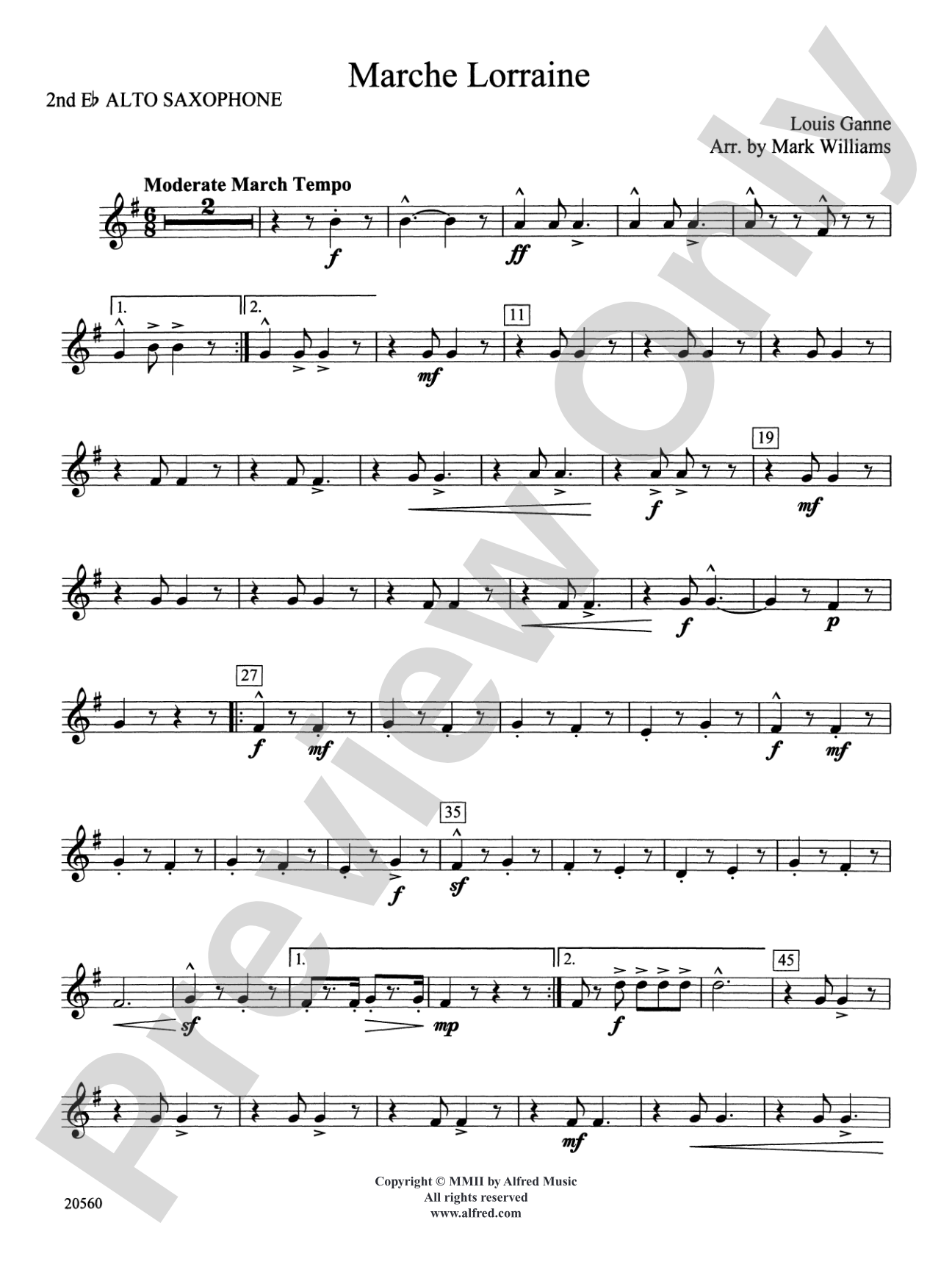

Marche Lorraine: 2nd E-flat Alto Saxophone
By Louis Ganne / arr. Mark Williams
Grade: 3 (Medium)
Item: 00-PC-0016168_AX2
$5.99
Pickup currently not available
Description
Tired of the same old Sousa marches on your program? Marche Lorraine, by French composer Louis Ganne, has been adapted for the concert band from the original version for brass band by Mark Williams. This well-known tune will be a welcome addition to any concert or festival program. Vive la marche! This title is available in MakeMusic Cloud.


Don't just read it, hear it, play along with it, and watch your students grow with it. In MakeMusic Cloud, Marche Lorraine: 2nd E-flat Alto Saxophone comes alive with professional accompaniment, adjustable tempo, and built-in practice tools that turn solo practice into real progress.
Open in the Player
Jump straight in and assign it today.
Start Your Free Trial
Open this title and explore the full library in minutes.
Sample Audio
1
Audio File
--:--
0:00
0:00
Sample Video
No sample videos found.
Additional Details
Series:
Alfred Concert Band
Publisher:
Alfred Music
Page Count:
272
SKU:
00-PC-0016168_AX2
More about this title
About the Composer: Louis Ganne
Louis Ganne (1862-1923) was a French composer and conductor who gained prominence during the late Romantic era, particularly known for his contributions to French band and orchestral music. His compositions, including Marche Lorraine, became staples of European concert band and brass band traditions, reflecting the vibrant musical culture of late 19th-century France.
Ganne's work bridged the gap between popular concert music and serious compositional craft. His marches and dances were performed extensively across European concert halls and remain valued repertoire for their melodic directness and orchestral clarity, making them accessible teaching tools for intermediate student ensembles.
Why we love this
Marche Lorraine offers a refreshing alternative to the perennial Sousa standards without sacrificing the energy or polish your students need for a confident concert performance. The melodic strength is genuine French Romantic material, not a simplified knockoff, which means your band gets to engage with actual compositional voice and orchestration rather than a pale imitation. At Grade 3, it sits at the sweet spot where intermediate bands can execute the piece with musicality intact.
What to expect
Marche Lorraine radiates French elegance wrapped in the forward propulsion of a march. The melody is singing and lyrical, never stark or utilitarian; phrases arch gracefully even as the rhythmic foundation propels you forward. There is pageantry and celebration in this music without bombast, a sense that something ceremonial and joyful is unfolding.
Who it's for
Concert band directors seeking repertoire that sits comfortably at the intermediate level but sounds polished and finished on stage. Grade 3 bands will find this piece challenging enough to build musicianship without being saddled with extreme technical demands or excessive rehearsal time. This is repertoire for ensembles ready to move beyond beginner march form and into genuine concert literature.
How to get the most out of it
- Establish a crisp, forward march tempo early in rehearsals; the piece's character lives in its rhythmic momentum, not in rushing through individual notes.
- Balance the cornet or trumpet melody against the mid-range voices carrying harmonic support; Ganne's orchestration depends on clarity across all sections rather than a single dominant line.
- Shape the lyrical moments with attention to phrase length; marches often fall into regular four and eight-bar structures, so help students hear the bigger architectural lines rather than playing it section by section.
- Give the bass line (tubas and trombones) room to breathe; the harmonic foundation in a French march is every bit as important as the melody.
How to use it
Program this as a second-half opener or closer to energize your audience while giving soloists and sections brief recovery time from heavier repertoire. It pairs naturally with other concert band staples from the Romantic era, or it can anchor a program built around French band literature. The piece has enough musical substance for festival performance, where judges will recognize authentic compositional craft rather than filler.
Skills your students will build
- Executing a steady march tempo with evenness across sections
- Balancing multiple simultaneous melodic lines in a traditional harmonic structure
- Shaping lyrical phrases within a march form
- Reading standard concert band instrumentation and voicing conventions
- Maintaining ensemble cohesion during repeated harmonic progressions