
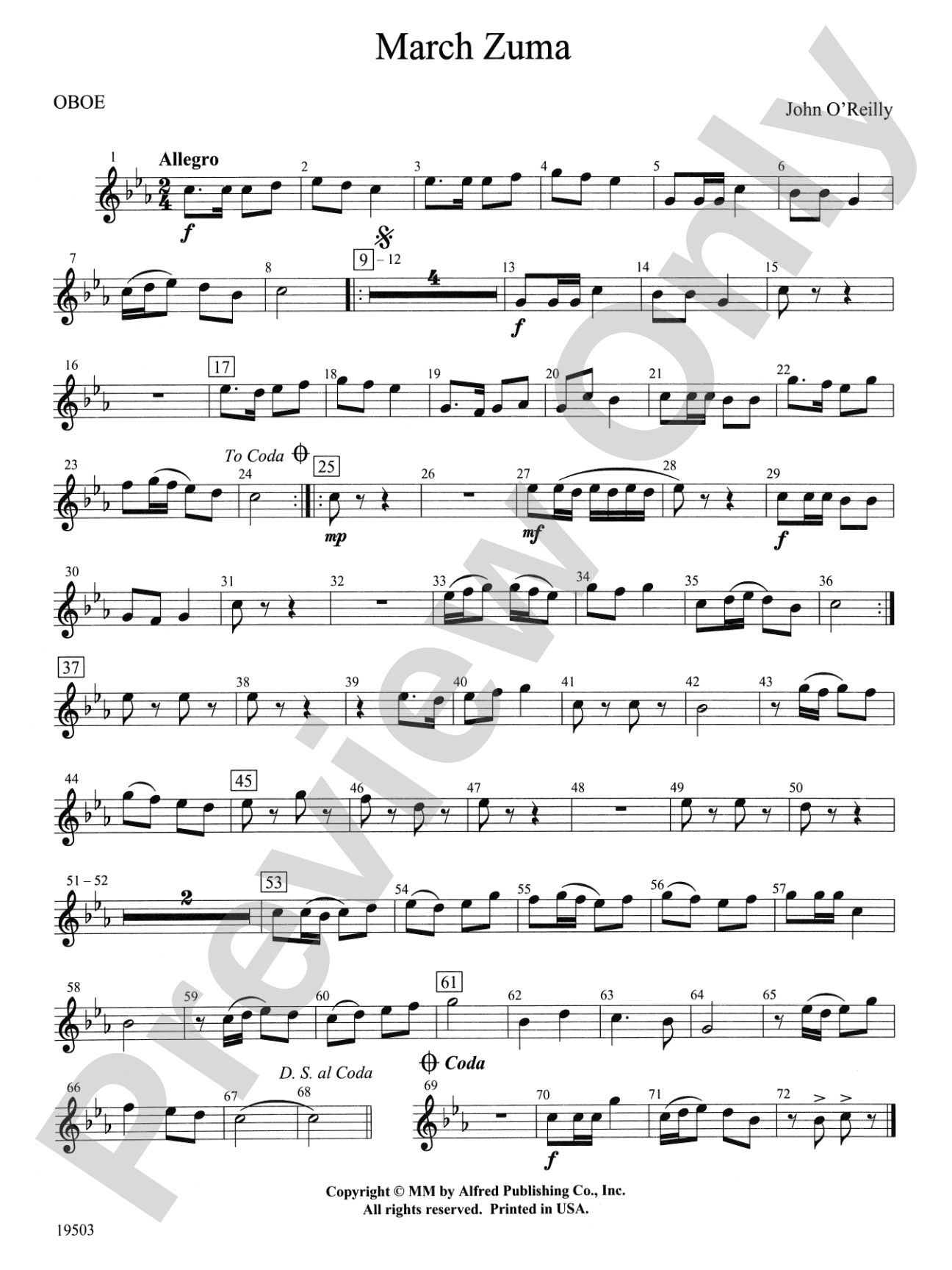

March Zuma: Oboe
By John O'Reilly
Grade: 1.5 (Easy)
Item: 00-PC-0000321_O1
$3.00
Pickup currently not available
Description
Introduce your band to the natural minor tonality and a variety of sixteenth-note rhythmic patterns with this fresh sounding concert march that correlates with Accent on Achievement, Book 2, page 15. Your low brass section will love being featured on the melody in the trio section, and snare drummers get to show off their 5- and 9-stroke rolls.


Don't just read it, hear it, play along with it, and watch your students grow with it. In MakeMusic Cloud, March Zuma: Oboe comes alive with professional accompaniment, adjustable tempo, and built-in practice tools that turn solo practice into real progress.
Open in the Player
Jump straight in and assign it today.
Start Your Free Trial
Open this title and explore the full library in minutes.
Sample Audio
1
Audio File
--:--
0:00
0:00
Sample Video
No sample videos found.
Additional Details
Series:
Accent on Achievement
Publisher:
Alfred Music
Page Count:
116
SKU:
00-PC-0000321_O1
More about this title
About the Composer: John O'Reilly
John O'Reilly is a composer and educator whose work spans concert band, orchestra, and wind ensemble literature. He has written extensively for school bands across all grade levels, earning recognition for pieces that balance musical substance with pedagogical clarity. His compositions are known for their singable melodies, accessible harmonic language, and thoughtful orchestration that gives every section meaningful material.
Why we love this
This march lands at exactly the right moment in a young band's development. The combination of natural minor tonality with straightforward sixteenth-note patterns feels contemporary without overwhelming players still building rhythmic confidence, and the trio gives your low brass a genuine moment in the spotlight rather than relegating them to harmonic filler. The snare drum writing adds real artistry to a section that often gets undersold in Grade 1.5 literature.
What to expect
Fresh and purposeful. The natural minor tonality gives the march a slightly modern edge compared to traditional major-key concert marches, while the rhythmic energy of the sixteenth-note figures keeps the piece moving forward with vitality. The low brass showcase in the trio shifts the color and weight of the band, creating a satisfying contrast and a moment where typically supporting voices become leaders.
Who it's for
This score works best for bands in their second year of playing or early third year, particularly those using Accent on Achievement as their foundation method. Directors will appreciate the direct correlation to Book 2, page 15, which allows students to see how their daily exercises translate into full-band repertoire. It's also an excellent choice for concert programming when you want something contemporary sounding but within reach of a developing ensemble.
How to get the most out of it
- Emphasize the distinction between the primary theme and trio by adjusting articulation in your low brass section. The melody in the trio deserves a slightly fuller, more legato approach to showcase the tonal quality you've developed in your trombone and tuba sections.
- Balance snare drum rolls carefully during the trio melody. The 5-stroke and 9-stroke rolls should complement rather than overshadow the brass line; work with your percussionists to control dynamics so the drum part enhances the musical line instead of competing for attention.
- Lock the march tempo early and maintain it through transitions between sections. Minor-key marches can feel less propulsive than their major-key counterparts; a steady pulse keeps the forward motion clear and prevents the natural minor tonality from creating drag.
- Color the minor tonality intentionally. Avoid a somber approach to the A section. Marches in natural minor can feel bright and energetic with the right articulation and phrasing; guide your ensemble toward that character rather than letting the minor key pull the music into a slower emotional register.
How to use it
Place this as the opening number on a concert where you want to establish competence and musicality without opening with something overly familiar. It pairs well with lyrical ballads or character pieces in the same program, as its crisp rhythmic profile creates good variety. Given its connection to Accent on Achievement Book 2, it also works naturally as a celebration piece near the end of that study cycle.
Skills your students will build
- Reading natural minor tonality and recognizing its sound identity
- Executing sixteenth-note rhythmic patterns with precision and consistency
- Balancing melody and accompaniment across full band texture
- Performing 5-stroke and 9-stroke rolls with control and musical purpose
- Maintaining tempo and pulse through key changes and sectional shifts
- Listening across the ensemble to locate and support principal melodic lines