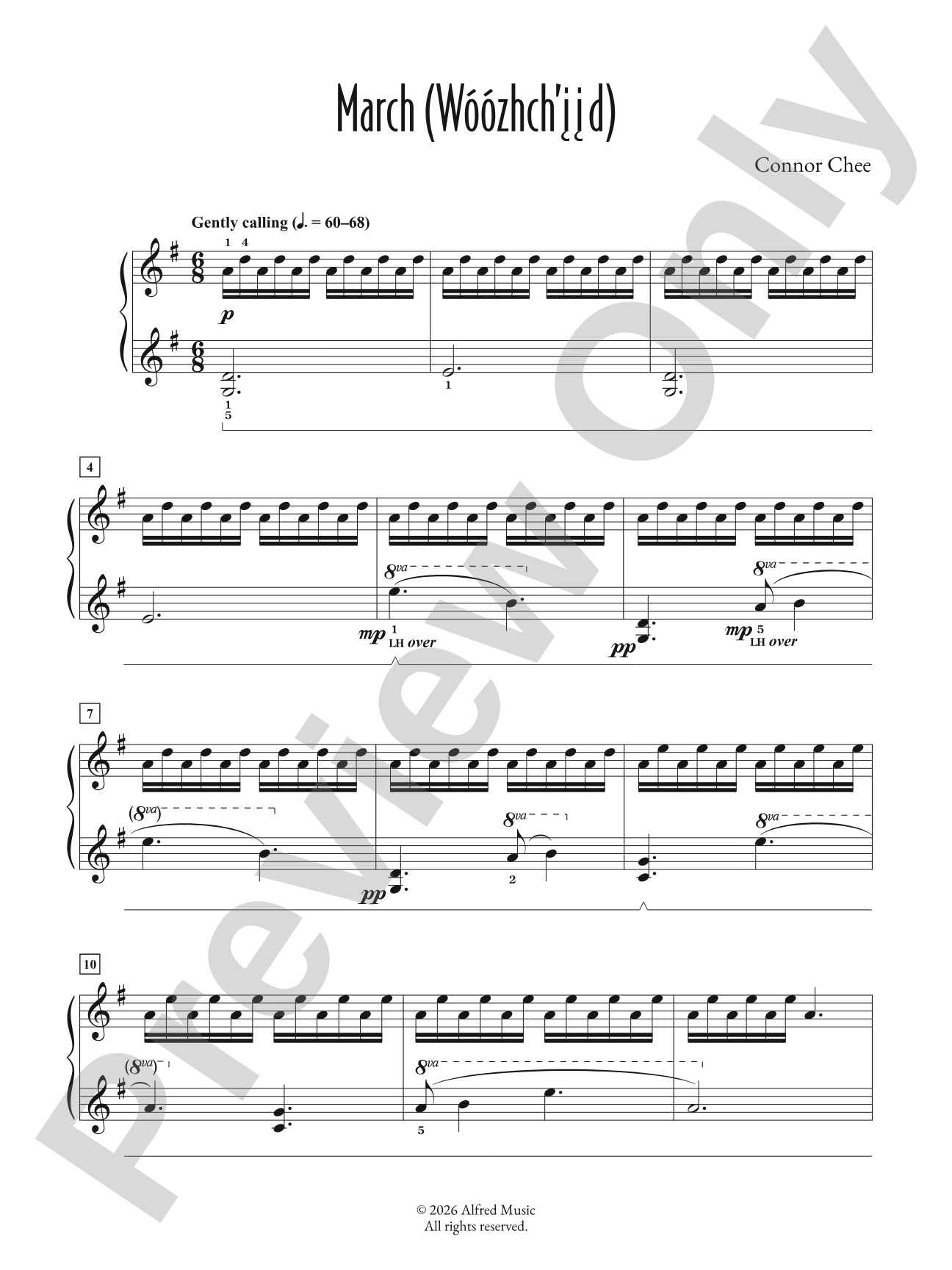
March celebrates the Navajo month known as "the first cry of the eaglets." Connor Chee's expansive musical style shines in this accessible intermediate piece, where patterned writing creates a rich, sophisticated sound while leaving plenty of space for artistry.
Discover MakeMusic Cloud: thousands of interactive titles your students can play along with today.
Connor Chee is a Diné (Navajo) composer and pianist whose work bridges classical tradition and indigenous musical expression. His compositions weave Navajo melodic elements into contemporary piano writing, earning recognition through awards and performances at major concert venues and festivals internationally.
Beyond the concert stage, Chee is committed to music education and cultural preservation. He actively mentors emerging musicians while championing the integration of Diné cultural narratives into classical music contexts, ensuring these stories reach audiences worldwide.
Why we love this
Chee's harmonic language here manages to sound both sophisticated and transparent. The patterned accompaniment figures give students something reliable to anchor into while their right hand carries melodic material that genuinely sings, making this an ideal intermediate piece where technique serves musicality rather than the reverse.
What to expect
The piece captures the strength and freedom of eaglets finding their voices in the spring sky. Measured yet alive, it unfolds with the patient confidence of something emerging into full presence, drawing the listener into a moment of natural awakening.
Who it's for
Intermediate pianists ready to move beyond basic repertoire into pieces that reward nuance and expressive awareness. This work suits students who thrive when musical ideas are clear but the interpretive possibilities remain open.
How to get the most out of it
Let the patterned writing establish a steady pulse without sounding mechanical; find the breath within the repetition to maintain forward motion.
Shape the melodic line with intention, treating each phrase as a complete statement even when the accompaniment pattern continues unchanged.
Explore the space between notes as intentionally as the notes themselves, using silence and air to enhance the piece's narrative quality.
Balance density and clarity by adjusting pedal judiciously; the patterns should shimmer beneath the melody rather than blur it.
How to use it
This pairs beautifully in a recital celebrating diverse cultural voices in classical music, or as a standalone showcase piece that demonstrates how traditional narratives can inhabit contemporary piano writing. Consider programming it alongside works by other indigenous composers to build thematic coherence.
Skills your students will build
Maintaining steady pulse in patterned accompaniment figures
Shaping melodic lines with independence from harmonic accompaniment
Balancing technical evenness with interpretive expression
Using pedal strategically to enhance rather than obscure harmonic clarity
Connecting cultural context to musical interpretation
You May Also Like
Scan to Complete Your Purchase
Use your phone's camera to scan the code below
You'll log in on your phone and the order will be added to your account