March with Fanfares: E-flat Alto Saxophone Sheet Music Preview

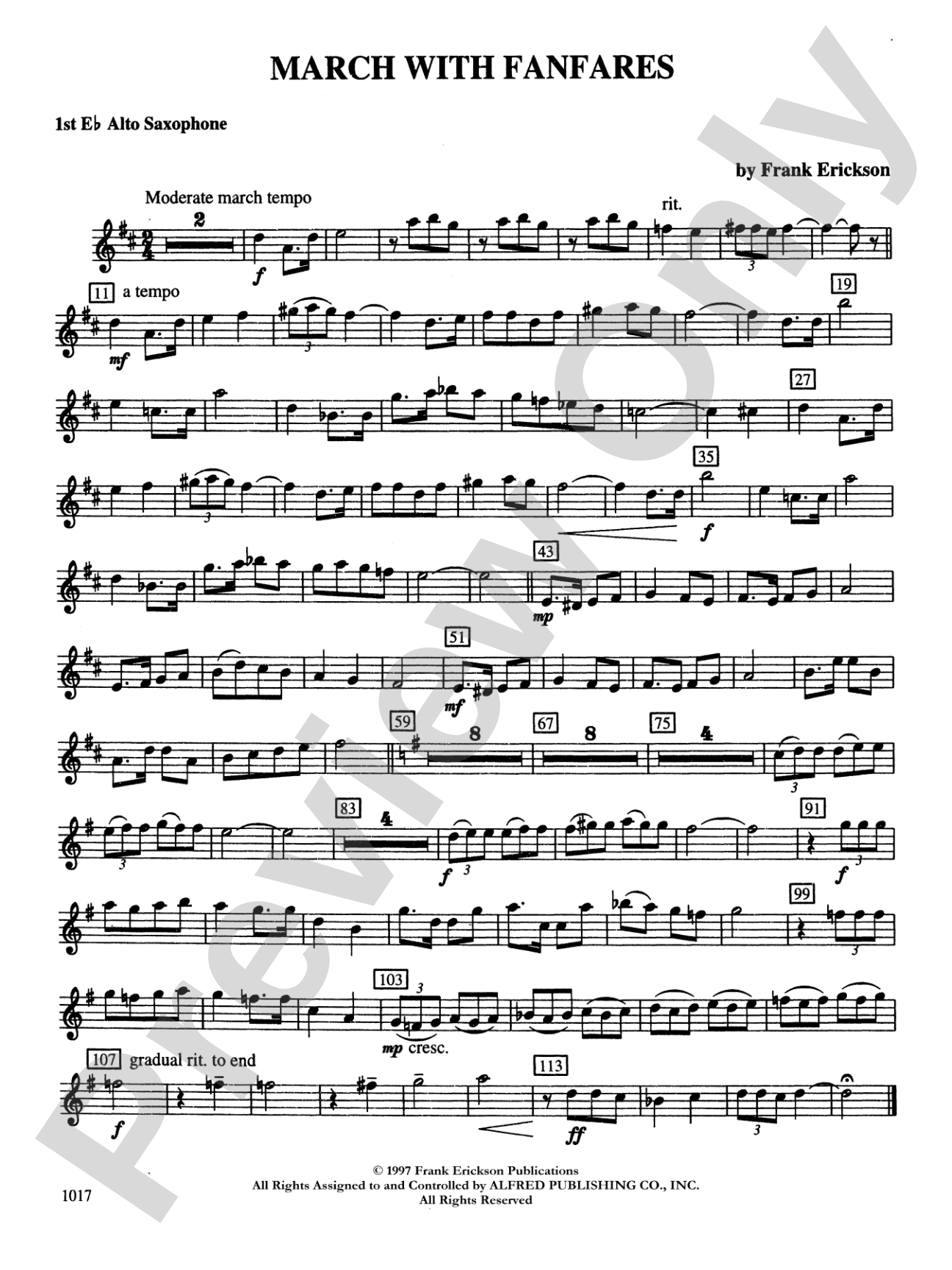
March with Fanfares: E-flat Alto Saxophone

By Frank Erickson

Grade: 2 (Easy)

Item: 00-PC-0001628_AX1

Digital Download
$3.00
Description
Frank Erickson passed away before he could provide rehearsal suggestions for this piece. March with Fanfares was one of his final numbers.

Don't just read it, hear it, play along with it, and watch your students grow with it. In MakeMusic Cloud, March with Fanfares: E-flat Alto Saxophone comes alive with professional accompaniment, adjustable tempo, and built-in practice tools that turn solo practice into real progress.

Sample Audio
No sample audio found.
Sample Video
Additional Details
Series: Frank Erickson Publications
Publisher: Alfred Music
Page Count: 142
SKU: 00-PC-0001628_AX1

More about this title

About the Composer: Frank Erickson

Frank Erickson (1923-1996) shaped American concert band literature through decades of prolific composition and arrangement. His works became staples in school and community bands across the country, prized for their musicality, accessibility, and genuine understanding of ensemble capabilities at every level.

Erickson's gift lay in writing music that respected young musicians while making real artistic demands. His pieces balance melodic appeal with solid harmonic content, allowing directors to build genuine musicianship without overwhelming developing players. March with Fanfares, composed near the end of his career, represents the clarity and craft that defined his legacy.

Why we love this

Erickson's marches have an honesty that cuts through the typical Grade 2 repertoire. The fanfare sections give your band genuine showcase moments without requiring virtuosic technique, and the harmonic language stays sophisticated even as the technical demands remain manageable. This feels like a piece written by someone who actually knew what bands could accomplish at this level and refused to settle for less.

What to expect

A ceremonial procession with moments of brilliant brightness. The march moves with purposeful stride, anchored by steady rhythmic figures, while the fanfare passages bring the ensemble into sharp focus with block harmonies and brass-led gestures. There is formality here, but warmth too, with melodic phrases that feel earned rather than imposed.

Who it's for

Concert bands at the Grade 2 level, including middle school ensembles and developing high school groups. Directors programming their first serious march or seeking repertoire that builds musicianship without technical overload will find this score rewarding. The balanced instrumentation and clear part writing support ensemble growth while keeping rehearsal time focused on musical issues rather than mechanics.

How to get the most out of it

  • Shape the fanfare sections with clear dynamic contrast. Let the brass answer each phrase decisively rather than letting the texture blur.
  • Balance the melodic line against the accompaniment figuration. The tune should sing through, but the inner voices deserve independence and voice.
  • Establish steady forward momentum through the march sections. Avoid letting the tempo sag during ensemble passages where the parts accumulate.
  • Bring the woodwinds into focus during their solo passages. They often carry material that bridges phrases, and clarity here strengthens the overall architecture.

How to use it

This works beautifully as an opener or closer on a concert, especially one celebrating the ensemble's growth across the year. It pairs well alongside other Erickson concert pieces or with Grade 2-3 overtures and suites. Consider using it as the first full-ensemble march in your program if your band is still developing ensemble maturity; it teaches fundamentals of march playing without condescension.

Skills your students will build

  • steady rhythmic precision in march meter (2/2 or 2/4)
  • ensemble balance between melody and harmonic support
  • dynamic control across full range of the ensemble
  • voice independence in homophonic textures
  • clarity and articulation in fanfare figures

You May Also Like