

March Wind - Piano Solo: Piano Solo
By Edward MacDowell
Level: Early Advanced
Item: 00-PS-0017599
$4.99
Pickup currently not available
Related Items
March Wind: Piano Sheet |
$4.99
|
View |
Description
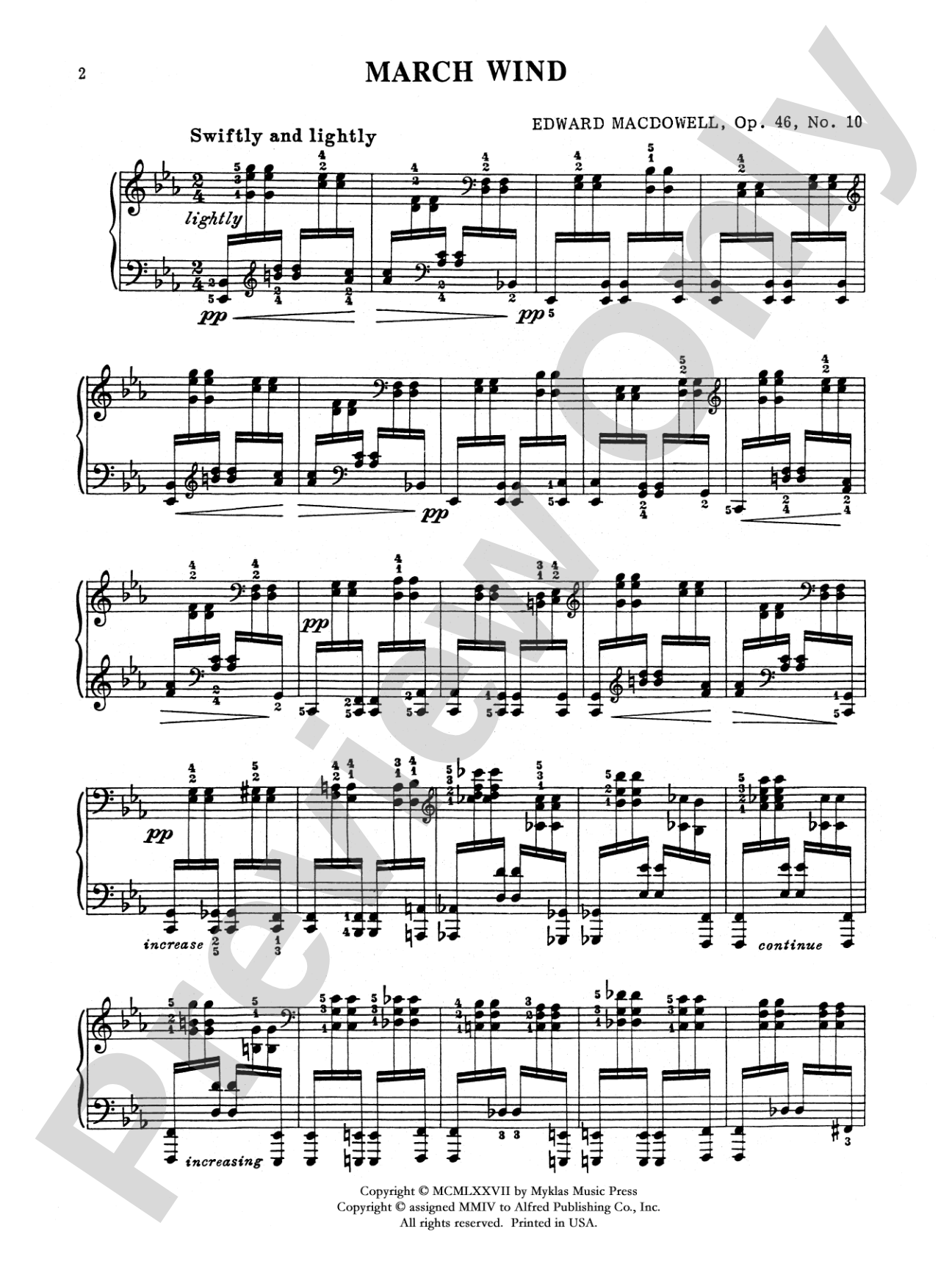
This is a brilliant, etude-styled piece, using hand-over-hand technique in relentless sixteenth note patterns, alternating between the hands, in E-flat Major, 2/4 time. It is very romantically descriptive, musically of the rise and fall of the wind, and will require the playing of filled-in octave chords by both hands, quite a bit of chromaticism, and a tempo that suggests the piece be played "Swiftly and Lightly." A nice recital offering for the advanced student. A Federation Festivals 2024-2028 selection.


March Wind - Piano Solo: Piano Solo isn't in MakeMusic Cloud just yet...but it could be. Let us know you'd like to see it, and you'll help shape what comes next. In the meantime, start a free trial and dive into thousands of interactive titles your students can play along with today.
Request This Title
Tell us you want it.
Start Your Free Trial
Explore everything that's ready to play right now.
Sample Audio
No sample audio found.
Sample Video
No sample videos found.
Additional Details
Publisher:
Alfred Music
Page Count:
8
SKU:
00-PS-0017599
More about this title
About the Composer: Edward MacDowell
Edward MacDowell stands as one of America's most important 19th-century composers, bridging European Romantic idiom with distinctly American musical sensibilities. His substantial catalog of piano works established him as a master of the keyboard, and his gift for translating natural imagery into musical form made his pieces especially appealing to students and concert audiences alike.
MacDowell spent much of his career championing American composition while teaching at Columbia University, where he shaped the next generation of American musicians. His piano miniatures, particularly those from collections like Woodland Sketches, continue to offer pianists access to high-quality Romantic writing that rewards serious technical and interpretive work.
Why we love this
This etude delivers the kind of technical demand that engages advanced students without veering into dryness or artificiality. The hand-over-hand sixteenth note figuration requires real control, yet MacDowell anchors it all to genuine musical imagery, so students practice mechanics in service of expression rather than mechanics for their own sake. Its selection for Federation Festivals 2024-2028 recognizes what teachers already know: it's the kind of piece that sounds impressive to audiences and builds serious chops.
What to expect
You are at once the observer and the wind itself, translating natural forces into finger work. The piece captures spring breezes that gather and disperse, building pressure and then releasing it, all while your hands dance across the keyboard in intricate counterpoint. There's elegance and energy woven throughout, never static, never indulgent.
Who it's for
Advanced pianists preparing for festivals, competitions, or recitals will find both the technical challenge and the musical substance here. This suits students who've already mastered basic Romantic repertoire and are ready for pieces that demand equal parts keyboard facility and interpretive maturity.
How to get the most out of it
- Shape the sixteenth note patterns as waves rather than an unbroken stream. The rise and fall of the wind should breathe through the texture, so listen for natural peaks and troughs across the hand-over-hand exchange.
- Balance filled-in octave chords carefully between the hands; the lower voice can easily overwhelm the upper line. Test both hands independently to ensure even tone and weight across the span.
- Let the chromatic passages slide under the fingers rather than force them. MacDowell's chromaticism works best when it feels inevitable and smooth, not labored.
- Approach the tempo marking 'Swiftly and Lightly' as a character instruction, not a metronome setting. The piece needs enough forward motion to convey wind, but rushing sacrifices the romantic detail and hand coordination.
How to use it
Consider pairing this with other Romantic character pieces to create a recital set around nature imagery, or use it as a showstopper in the second half of a student concerto program where its brilliant surface and athletic writing will shine. It also serves as an ideal choice for spring-themed concerts or competitions falling within the Federation Festivals calendar.
Skills your students will build
- Hand-over-hand coordination in rapid sixteenth note patterns
- Even tone across octave voicings spanning both hands
- Navigating chromaticism fluidly at tempo
- Shaping phrase contour through texture rather than melody
- Technical independence between hands while maintaining unified musical intention