March to the Big Top: 1st B-flat Clarinet Sheet Music Preview

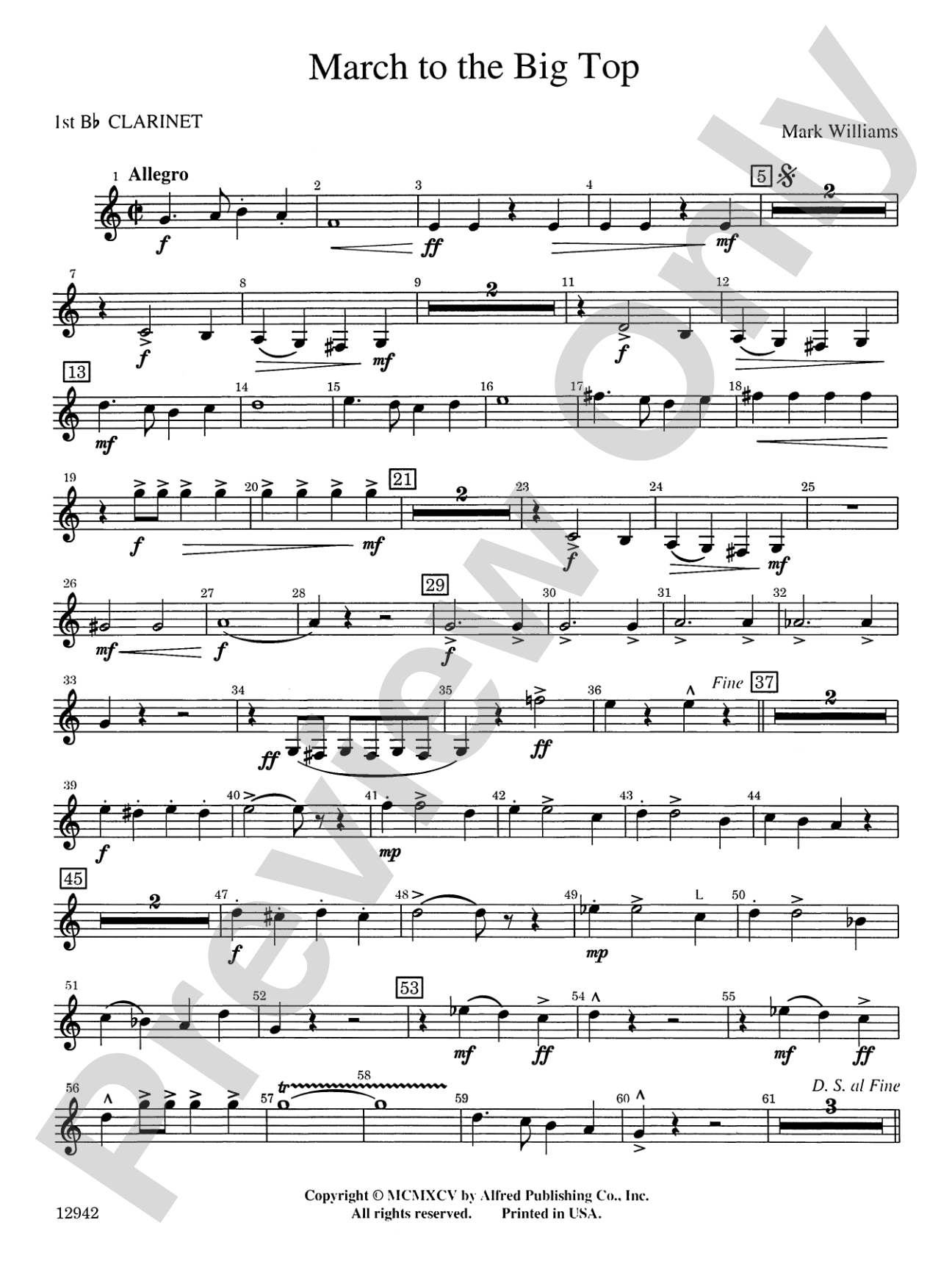
March to the Big Top: 1st B-flat Clarinet

By Mark Williams

Grade: 1.5 (Easy)

Item: 00-PC-0014244_C1

Digital Download
$3.00
Description

Don't just read it, hear it, play along with it, and watch your students grow with it. In MakeMusic Cloud, March to the Big Top: 1st B-flat Clarinet comes alive with professional accompaniment, adjustable tempo, and built-in practice tools that turn solo practice into real progress.

Sample Audio
0:00
0:00
Sample Video
Additional Details
Series: Challenger Band Series
Publisher: Alfred Music
Page Count: 116
SKU: 00-PC-0014244_C1

More about this title

About the Composer: Mark Williams

Mark Williams

Mark Williams built his reputation as one of the most prolific and respected composers for school bands. His output exceeded 200 published works, and his influence on band music education extended across North America and beyond. As co-author of the Accent on Achievement Band Method, he shaped how countless students learned their instruments.

A Chicago native who settled in Washington State, Williams brought deep experience in elementary band instruction to his compositional work. He held degrees from Eastern Washington University and served as a woodwind performer and arranger for the 560th Air Force Band. His career as a clinician and guest conductor took him to 34 states, five Canadian provinces, and Australia. Recognition came through awards including the Western International Band Clinic's Gralia Competition and multiple ASCAP Special Awards. Beyond the page, Williams performed bassoon regularly and served as conductor and artistic director for the Spokane British Brass Band.

Why we love this

Williams wrote for the students actually in front of you, not some idealized ensemble. This march sits at grade 1.5 because it respects the abilities of younger players while never condescending to them. The straightforward melodic writing and accessible harmonic language mean your students can focus on ensemble precision, balance, and style without wrestling with technical demands.

What to expect

March to the Big Top captures the energy and spectacle of the circus with clear, bright melodic lines and a propulsive rhythm section. The music unfolds with infectious optimism and forward momentum, inviting audiences into a world of wonder and pageantry. Young players come away feeling accomplished and celebratory.

Who it's for

This is ideal for young concert bands in their first or second year of repertoire study. The grade 1.5 level ensures accessibility for mixed-ability sections while maintaining musical substance. Directors seeking a confident, straightforward addition to a spring concert or festival program will find this an excellent fit.

How to get the most out of it

  • Keep the tempo brisk but controlled. The march character thrives on clarity rather than rush; let the articulation shape the forward motion.
  • Balance the melody prominently enough that audiences hear the tune clearly, but not so heavily that the supporting voices disappear. Young bands often struggle with this equilibrium.
  • Attend to the rhythmic precision of any syncopated figures or syncopated passages; even simple rhythms become impressive when executed with exact togetherness.
  • Use dynamic contrasts to build interest across the form. Younger ensembles benefit from clear roadmaps, so mark your parts with entry cues and dynamic targets.

How to use it

Place this on a concert as a crowd-pleaser that builds ensemble confidence early in the season. It works especially well as a second or third piece, when players have warmed up but before tackling more complex arrangements. Consider pairing it with contrasting ballads or character pieces to show your band's dynamic range.

Skills your students will build

  • Executing articulate, precise rhythmic figures typical of march style
  • Balancing melody and accompaniment in band scoring
  • Playing with consistent ensemble articulation and clarity
  • Understanding and performing standard march form and phrasing
  • Responding to dynamic and tempo changes with accurate ensemble coordination

You May Also Like