
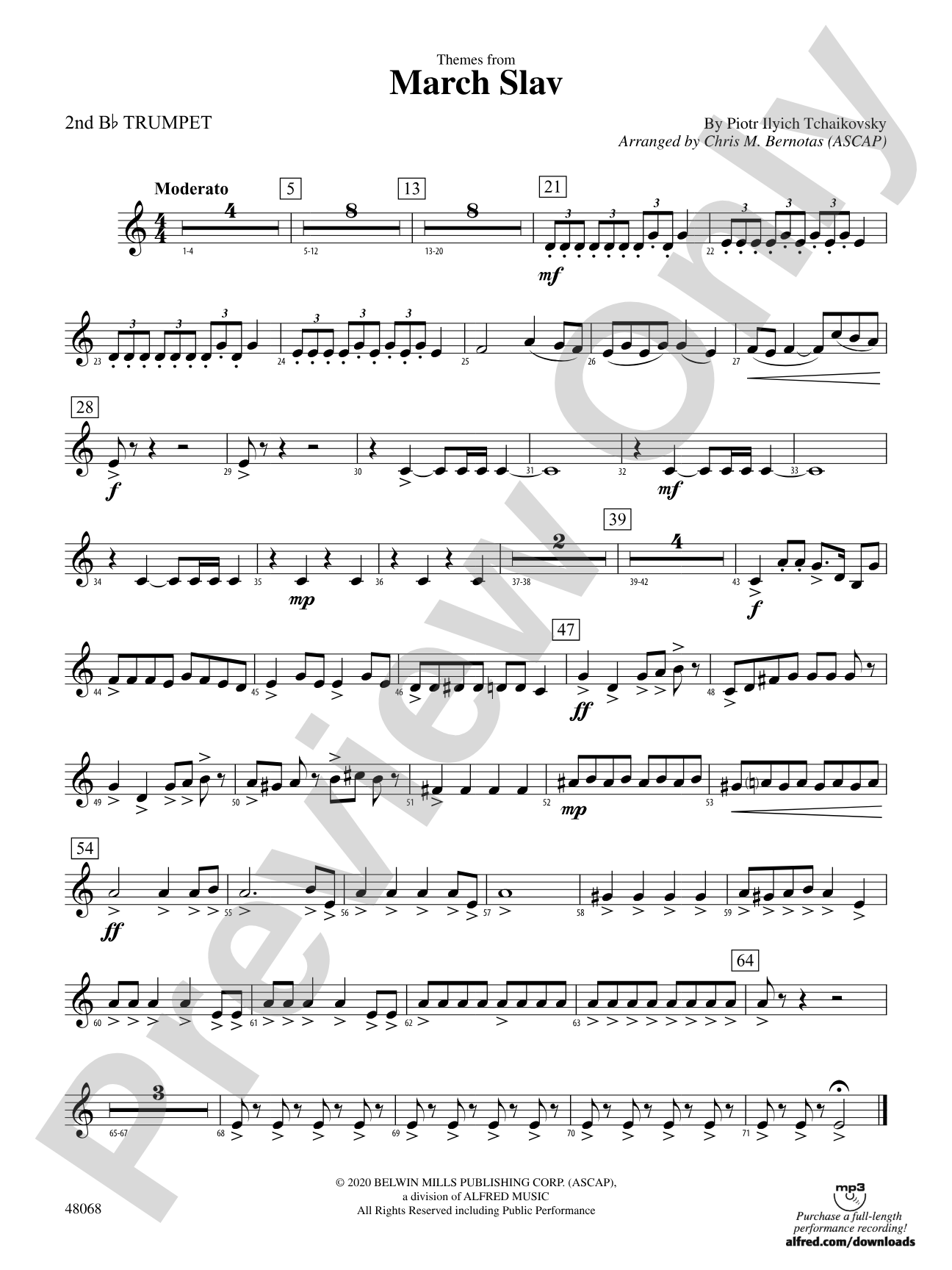

March Slav: 2nd B-flat Trumpet
By Piotr Ilyich Tchaikovsky / arr. Chris M. Bernotas
Grade: 3
Item: 00-PC-0018454_T2
$3.00
Pickup currently not available
Description
Your symphony orchestra will love March Slav by Piotr Ilych Tchaikovsky, arranged by Chris M. Bernotas. Scored for full orchestra or strings only, this arrangement features great themes and a big full symphonic sound. Featuring a reduced number of wind parts to allow for maximum accessibility for a younger full orchestra, this iconic march is a great way to introduce your students to the music of Tchaikovsky. Truly a wonderful choice for a departmental collaboration or any festival or contest. (3:00) This title is available in MakeMusic Cloud.


Don't just read it, hear it, play along with it, and watch your students grow with it. In MakeMusic Cloud, March Slav: 2nd B-flat Trumpet comes alive with professional accompaniment, adjustable tempo, and built-in practice tools that turn solo practice into real progress.
Open in the Player
Jump straight in and assign it today.
Start Your Free Trial
Open this title and explore the full library in minutes.
Sample Audio
1
Audio File
--:--
0:00
0:00
Sample Video
Additional Details
Series:
Belwin Concert Full Orchestra
Publisher:
Alfred Music
Page Count:
176
SKU:
00-PC-0018454_T2
More about this title
About the Composer: Peter Illyich Tchaikovsky
Peter Illyich Tchaikovsky (1840-1893) was a Russian composer whose dramatic works and gift for unforgettable melody made him one of the most performed composers worldwide. His orchestral music combines rich harmonic language with direct emotional expression, qualities that have made his ballets, concertos, and symphonic works central to the concert repertoire.
For school orchestras, Tchaikovsky's accessibility is a major strength. His themes sing, his orchestrations are colorful, and his forms are clear enough for young musicians to follow. March Slav exemplifies this approachability: it arrives with immediate character and builds through straightforward structural logic that holds student performers' attention.
Why we love this
Bernotas's arrangement preserves the march's irresistible forward momentum and patriotic fire while making the wind requirements realistic for a developing orchestra. The reduced orchestration doesn't sacrifice the symphonic sweep; instead, it forces clarity and balance onto every section, making this an excellent choice for teaching how individual instrumental lines contribute to a cohesive whole. Few pieces this accessible deliver such an immediate sense of accomplishment.
What to expect
March Slav pulses with Romantic grandeur and patriotic fervor. The main melody has a lyrical, almost singing quality that contrasts with the march's steady, commanding forward drive. By the final statement, the piece builds to a brilliant, full-orchestra climax that leaves both performers and listeners energized.
Who it's for
This arrangement is designed for young orchestras at the intermediate level who are ready for a substantial masterwork but still developing independence in wind sections. It works equally well for a full mixed orchestra or as a showcase for strings alone, making it flexible for groups with uneven instrumentation. Students will recognize the piece immediately and feel the pride of performing authentic Tchaikovsky at a professional level.
How to get the most out of it
- Shape the main theme with a singing, almost vocal quality in the opening statements; this is a melody meant to soar, not march mechanically.
- Lock the tempo in early rehearsals using the accompaniment recording to establish the march's propulsive character and give the orchestra a clear rhythmic anchor.
- Treat dynamics as architectural elements. The buildup from soft to the final fortissimo creates genuine drama, so track every crescendo marking and bring detail to transitions between dynamic levels.
- Balance the string section carefully when they carry the primary material; their tone sets the piece's warmth and prevents the march from sounding brittle or thin.
How to use it
Program this as a concert opener or closing piece where you want immediate impact and audience recognition. It pairs beautifully alongside other Tchaikovsky works or as a bridge between classical and contemporary repertoire in a departmental concert. The flexible orchestration also makes it ideal for a showcase featuring both full orchestra and string ensemble, allowing you to highlight different student groups in a single program.
Skills your students will build
- Balancing independent melodic lines within a large ensemble
- Maintaining steady tempo and rhythmic precision in march form
- Dynamic control across crescendos and sustained forte passages
- Responding to clear harmonic and structural architecture
- Ensemble listening and sectional blend in reduced wind instrumentation