
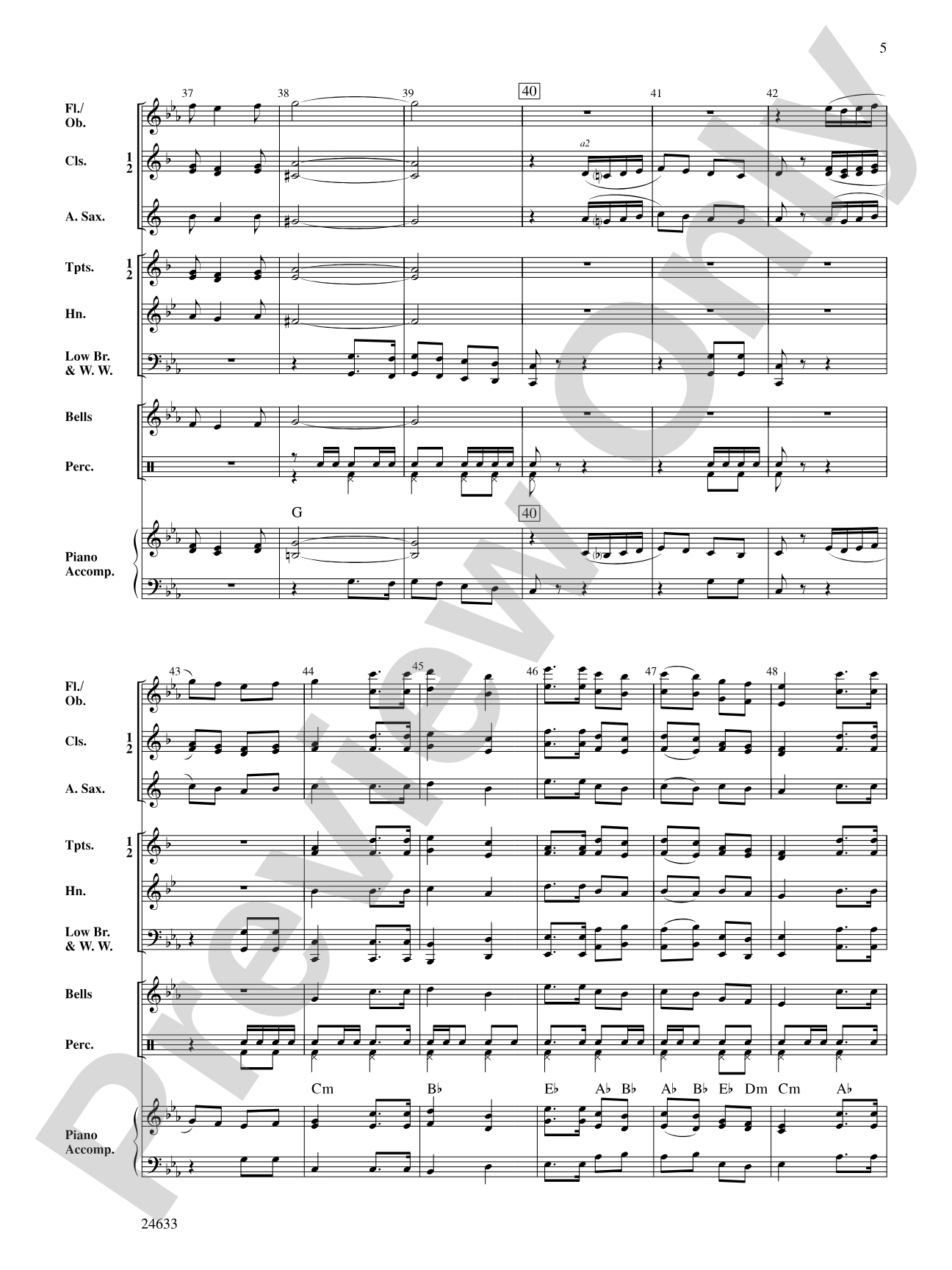
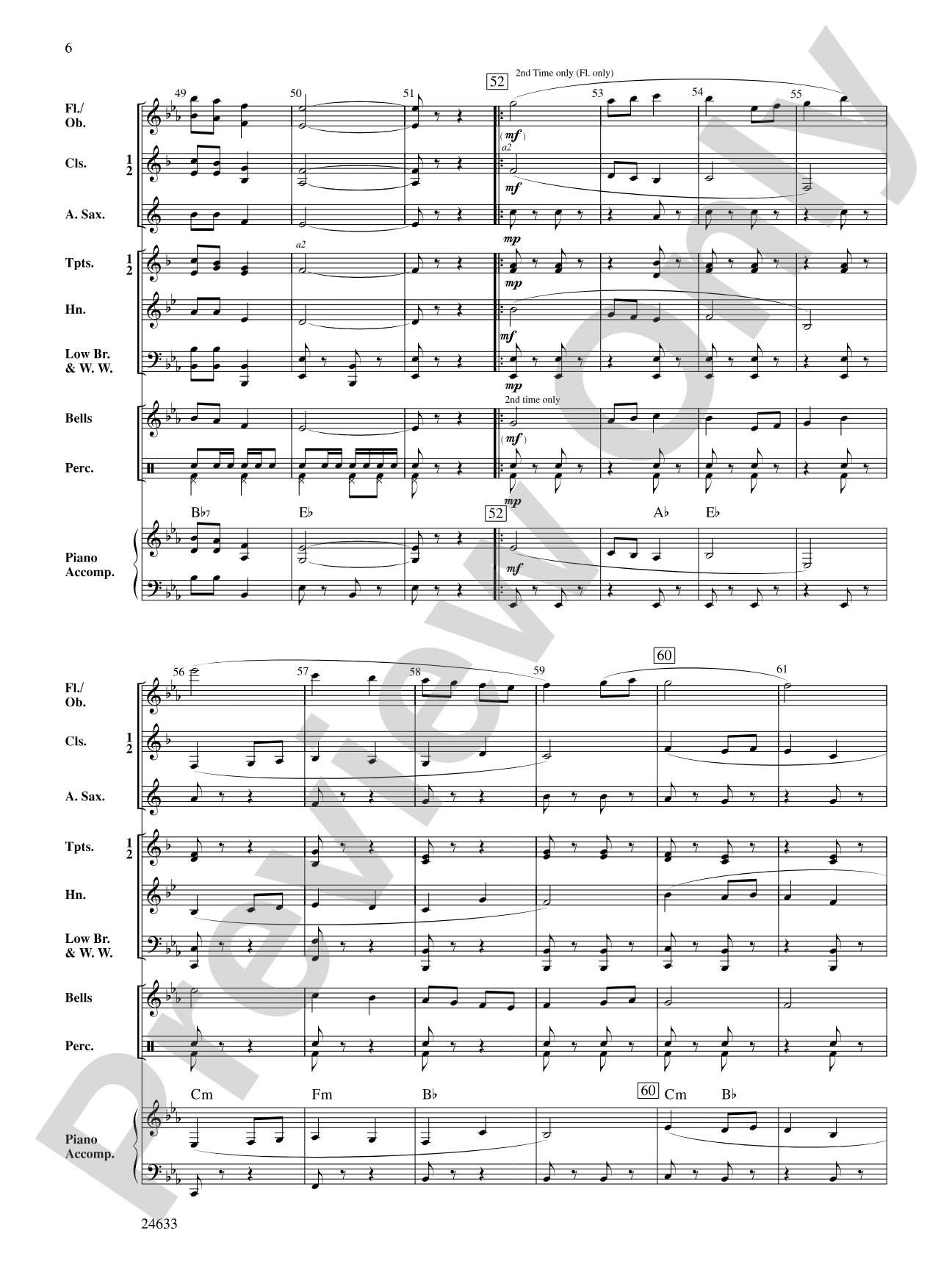
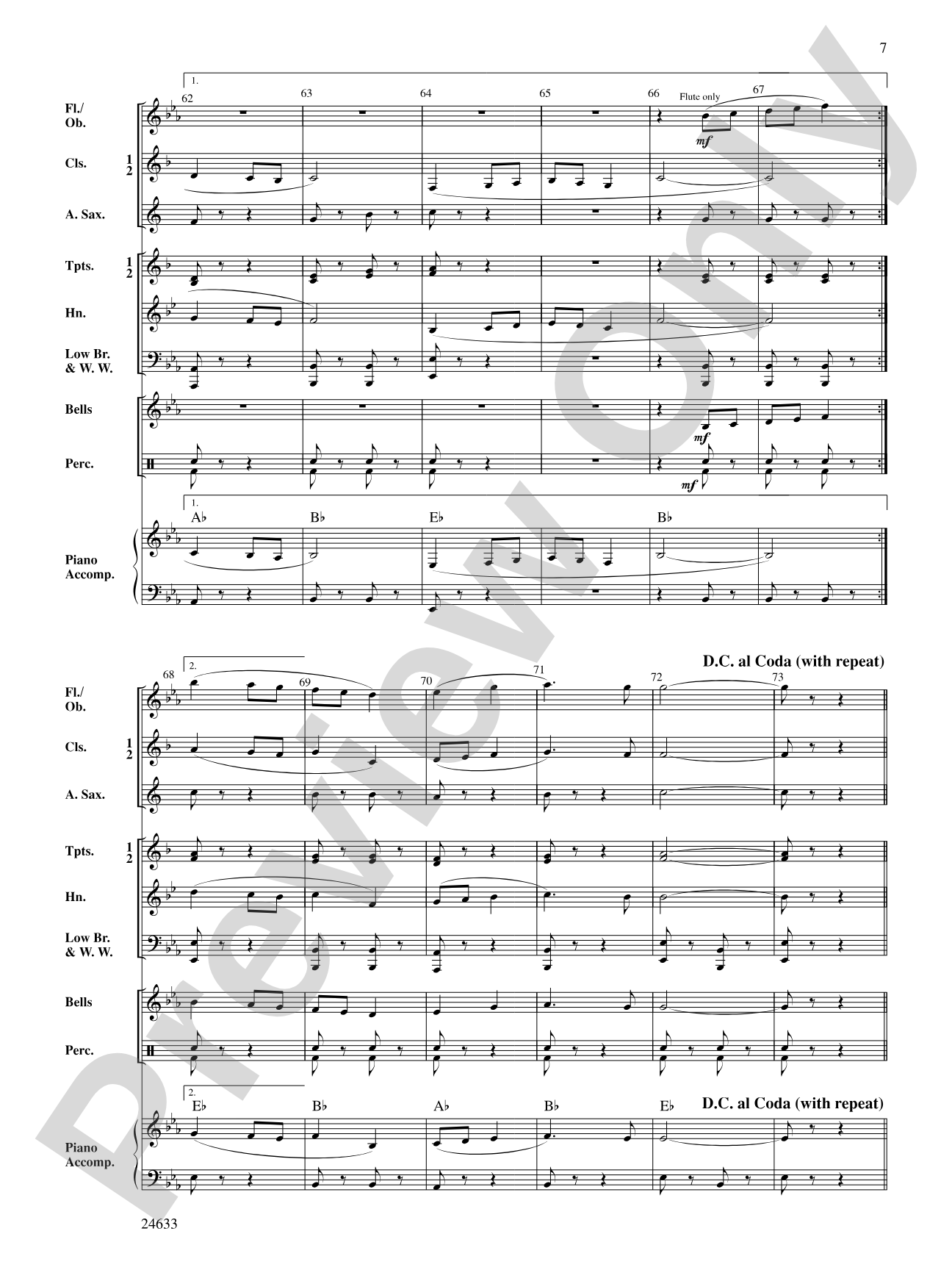
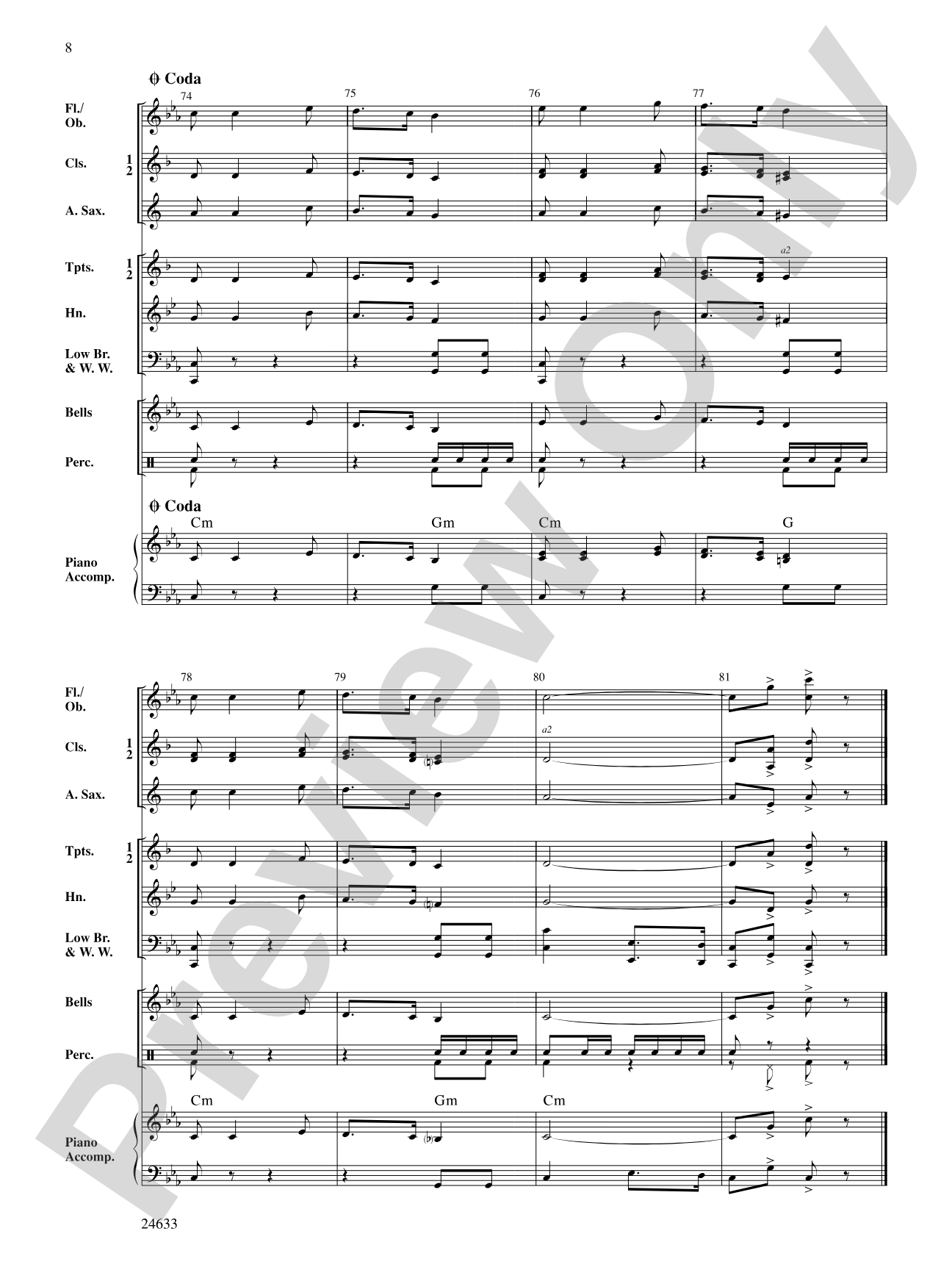

March Saranac: Concert Band Conductor Score & Parts
By John O'Reilly
Grade: 1 (Very Easy)
Item: 00-PK-0000809

$42.00
Pickup currently not available
Buy Extra Parts (Digital PDF Download)
Parts Added to Cart!
Description
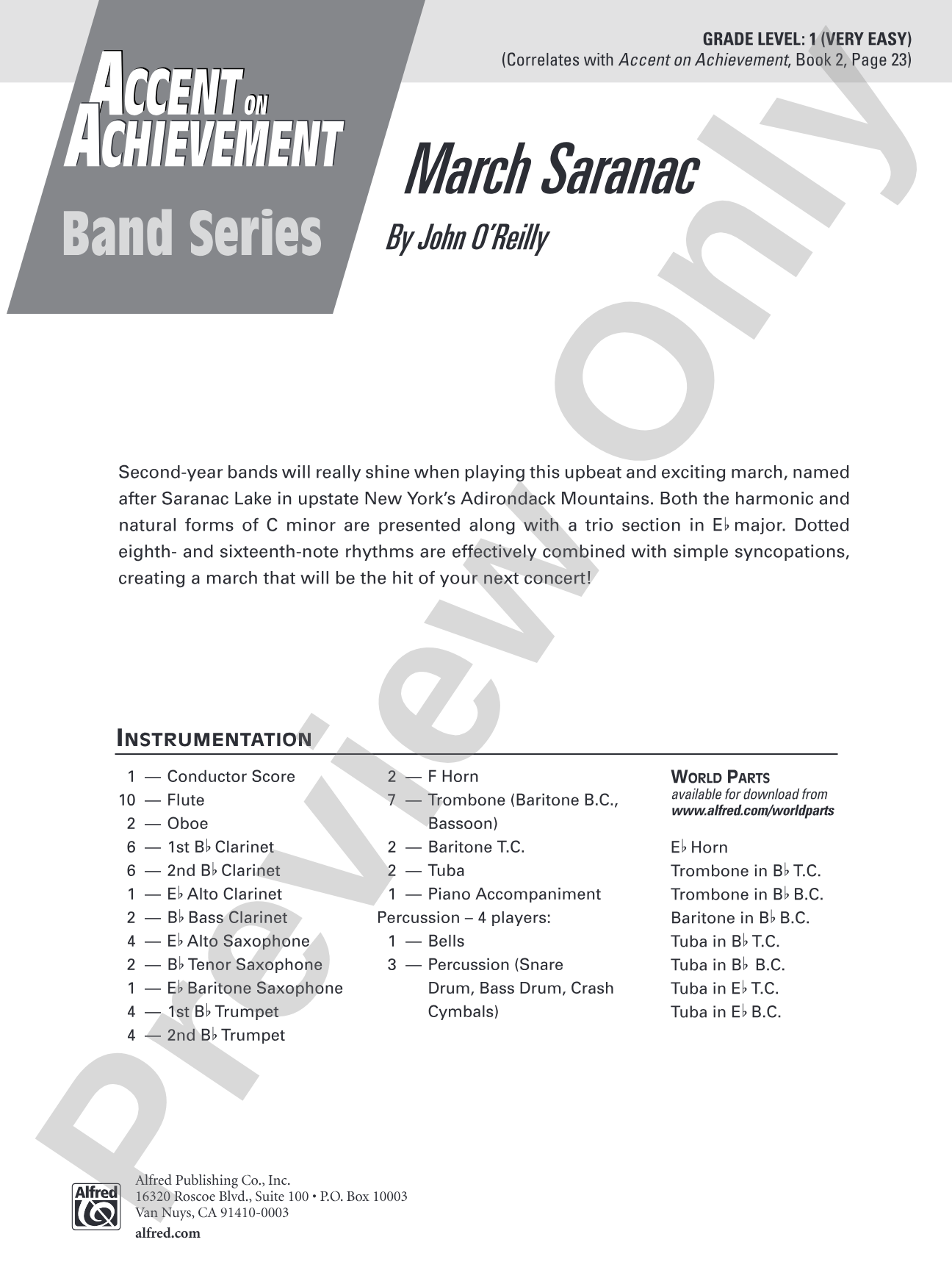
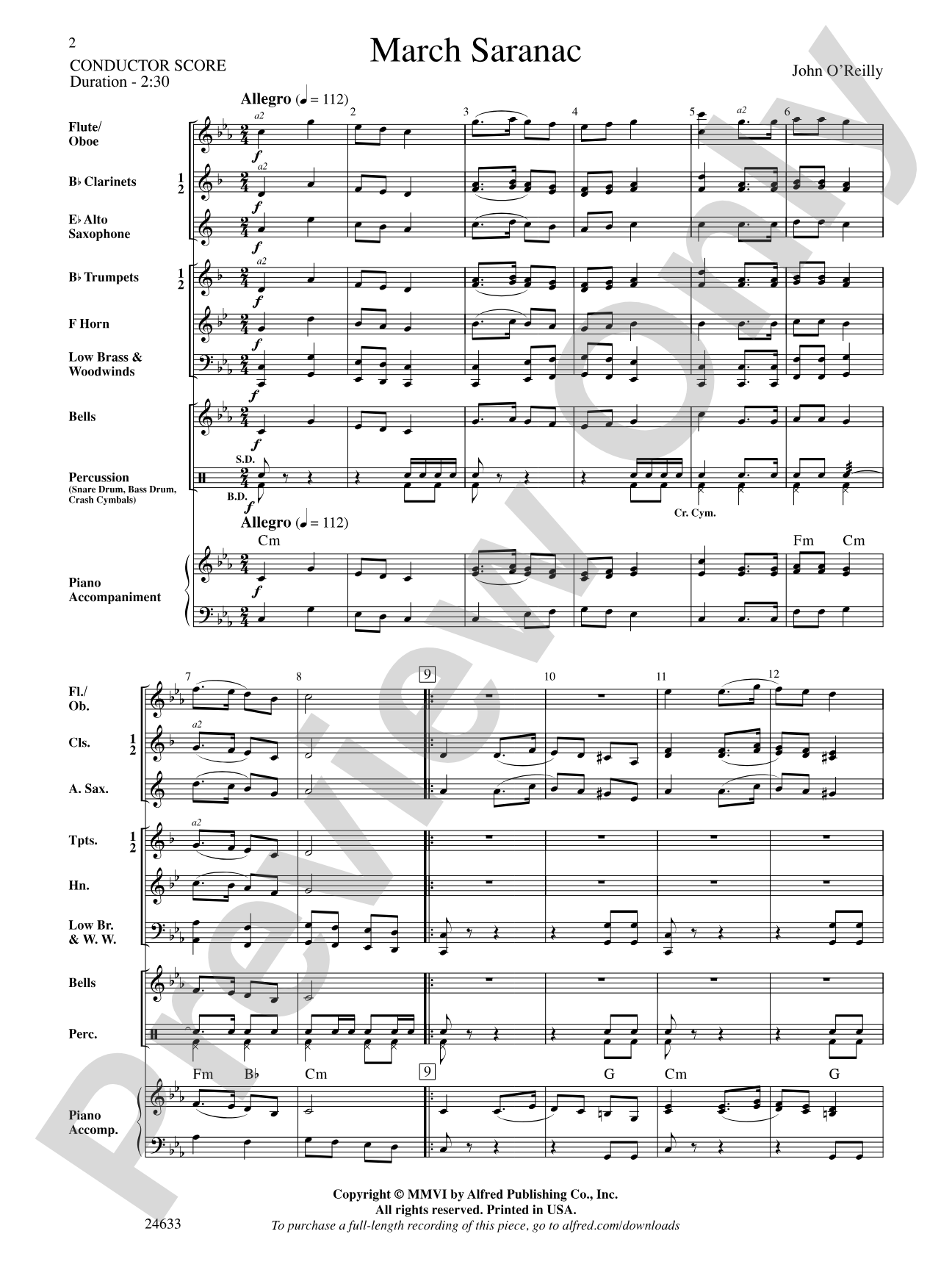
Second year bands will really shine playing this upbeat exciting march named after Saranac Lake in upstate New York's Adirondack Mountains. Both the harmonic and natural forms of C minor are presented along with an E-flat major trio section. Dotted eighth and sixteenth rhythms are effectively combined with simple syncopations to create a march that will be the hit of your next concert. Correlated with Accent on Achievement, Book 2, page 23.


Don't just read it, hear it, play along with it, and watch your students grow with it. In MakeMusic Cloud, March Saranac: Concert Band Conductor Score & Parts comes alive with professional accompaniment, adjustable tempo, and built-in practice tools that turn solo practice into real progress.
Open in the Player
Jump straight in and assign it today.
Start Your Free Trial
Open this title and explore the full library in minutes.
Sample Audio
1
Audio File
--:--
0:00
0:00
Sample Video
No sample videos found.
Additional Details
Series:
Accent on Achievement
Publisher:
Alfred Music
Page Count:
128
SKU:
00-PK-0000809
More about this title
About the Composer: John O'Reilly
John O'Reilly is a prolific composer and arranger whose work forms the backbone of standard band curricula across North America. His output spans pedagogical concert works, method books, and full-length arrangements that balance musical substance with realistic technical demands for student ensembles.
Why we love this
This march delivers exactly what second year bands need: a straightforward but musically satisfying piece that builds confidence without feeling like training wheels. The combination of C minor harmonic vocabulary with a bright E-flat trio keeps the ensemble engaged, and the rhythmic writing (dotted eighths, sixteenths, and gentle syncopation) challenges reading without overloading players who are still building independence.
What to expect
A spirited march that captures the energy of regional band concerts. The harmonic language feels slightly sophisticated for Grade 1, with enough minor key character to keep the piece from sounding elementary, while the E-flat trio arrival brings a moment of brightness and lift. It moves with the confidence of a much larger work.
Who it's for
Second year concert bands looking for a march with genuine musical content and a specific pedagogical purpose. This works equally well for students encountering modal interchange and syncopation in a repertoire context, or for directors who want their group to experience a full concert march without the complexity of Grade 2 writing.
How to get the most out of it
- Balance the harmonic and natural forms of C minor carefully; the shift between them should feel intentional rather than accidental. Have your lower winds and mallets lock the tonality before asking sections to blend.
- Shape the dotted eighth and sixteenth rhythmic figures with precision at a steady tempo; rushing these patterns is the most common pitfall at this level. Use a metronome in rehearsal and mark the subdivision clearly in parts.
- Let the E-flat major trio breathe. It's a genuine key change, not just a harmonic shift, so articulate the transition clearly and give the ensemble permission to settle into the new color before pushing forward.
- Keep the march march-like in character. Resist the urge to rush; a steady, confident tempo sells the piece better than a fast one that feels shaky.
How to use it
Program this as your lead march on a concert featuring Grade 1 repertoire, or use it as an opener for a mixed-difficulty concert where you want to build the audience's energy immediately. It pairs well with other Accent on Achievement correlated material, allowing your students to experience continuity between method and concert library.
Skills your students will build
- Reading in C minor (both harmonic and natural forms)
- Articulating dotted eighth and sixteenth rhythmic figures at performance tempo
- Managing syncopation within a structured march form
- Recognizing and executing a key modulation (C minor to E-flat major)
- Balancing individual section clarity with ensemble blend
- Maintaining steady tempo and march character through dynamic and harmonic changes