
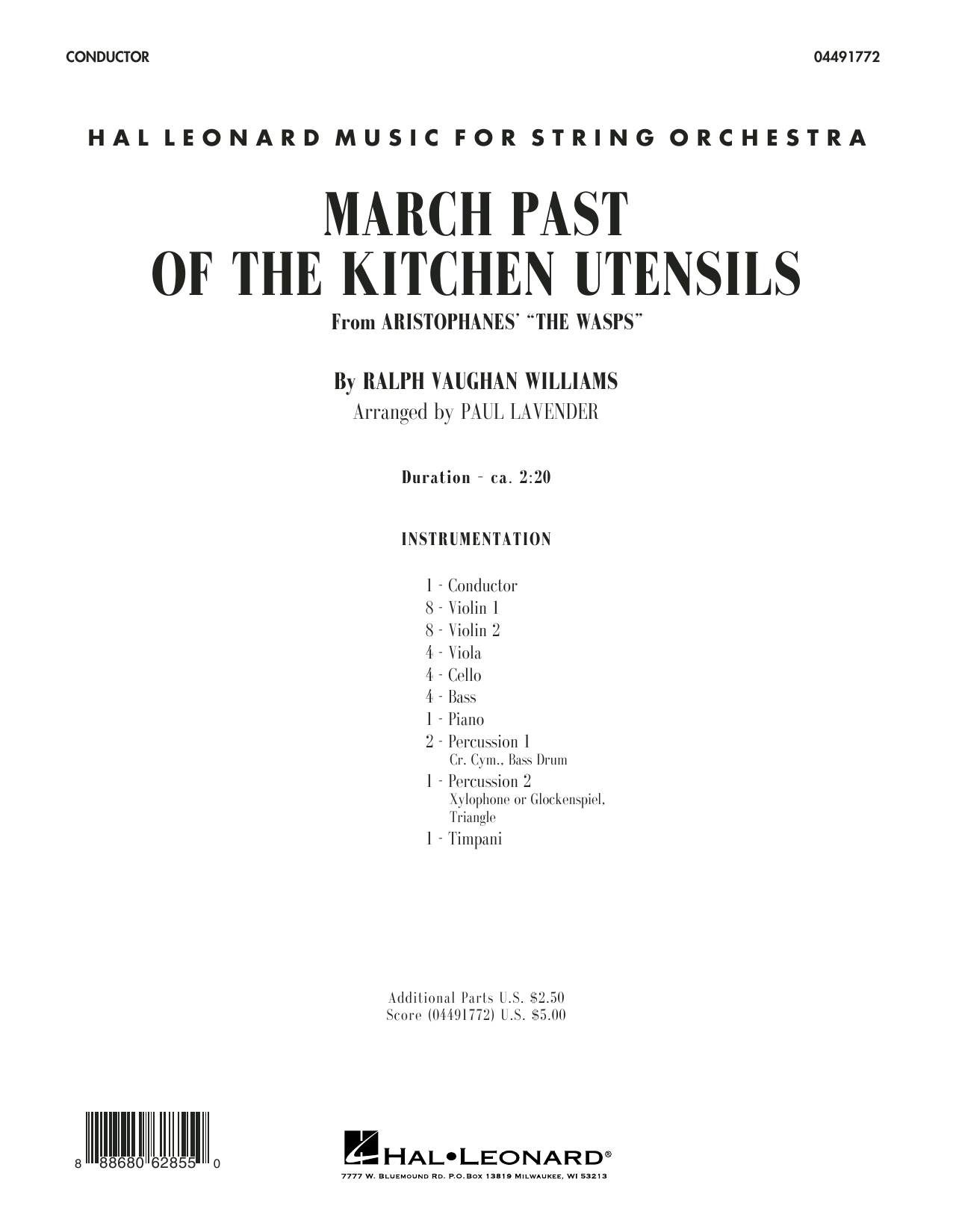

March Past of the Kitchen Utensils (from The Wasps): String Orchestra Conductor Score & Parts
Arranged by Paul Lavender
Grade: 4
Item: 35-PK00398618
$50.00
Pickup currently not available
Buy Extra Parts (Digital PDF Download)
Parts Added to Cart!
Description
This clever movement is taken from incidental music written for a satirical stage work. Composed early in Williams' career, it reflects his skill with folk-style melodies and orchestration refined by his studies with Ravel. This adaptation is an effective theatrical concert work for mature string orchestras. Dur: 2:20


March Past of the Kitchen Utensils (from The Wasps): String Orchestra Conductor Score & Parts isn't in MakeMusic Cloud just yet...but it could be. Let us know you'd like to see it, and you'll help shape what comes next. In the meantime, start a free trial and dive into thousands of interactive titles your students can play along with today.
Request This Title
Tell us you want it.
Start Your Free Trial
Explore everything that's ready to play right now.
Sample Audio
No sample audio found.
Sample Video
No sample videos found.
Additional Details
Publisher:
Hal Leonard
SKU:
35-PK00398618
More about this title
About the Arranger: Paul Lavender
Paul Lavender is a prolific arranger and composer whose work spans concert band, wind ensemble, and string orchestra repertoire. His arrangements are known for preserving the character of original works while tailoring them thoughtfully for specific ensembles, making standard orchestral literature accessible to school programs.
Why we love this
Lavender captures the whimsy and theatrical energy of Williams' original without oversimplifying the harmonic language or orchestration. The result feels fresh enough to engage mature players while remaining genuinely playable at the Grade 4 level, which is harder to achieve than it sounds.
What to expect
A miniature march with infectious good humor. The melodies dance with the rhythmic precision of a well-choreographed entrance, full of personality and theatrical charm. It feels like watching something clever unfold without ever winking at the audience.
Who it's for
String orchestras with solid intonation and a growing sense of orchestral balance, particularly those ready to program something lighthearted without sacrificing musicality. This works equally well for orchestras in their second or third year of structured ensemble work or for more experienced groups looking for a refreshing concert opener.
How to get the most out of it
- Treat the folk melody as the anchor: clarity in the first violins matters more than perfect ensemble at all dynamics. The tune is what carries the humor.
- Balance the kitchen-utensil energy with musical intent. The piece is witty, not silly. Conductor precision keeps the orchestra from falling into parody.
- Shape the phrasing in two-bar units to honor the dance-like character while maintaining forward momentum through the short duration.
- Reference recordings of Williams' original incidental music if available. Understanding the stage context and orchestral colors will inform your sectional rehearsals and help string players hear beyond their own parts.
How to use it
Program this as an opening number to set a welcoming, slightly playful tone for a concert, or pair it with other character pieces to build a thematic set around folk traditions in classical music. Its 2:20 duration makes it ideal for filling a specific slot in a varied program without eating rehearsal time on lengthy works.
Skills your students will build
- Balancing melodic prominence with accompaniment texture
- Executing clear articulation and rhythmic precision in dance forms
- Responding to conductor gesture for theatrical expression
- Coordinating multiple string sections in dialogue
- Sustaining intonation through light, bouncy rhythmic figures