March, Op. 108: Tuba Sheet Music Preview

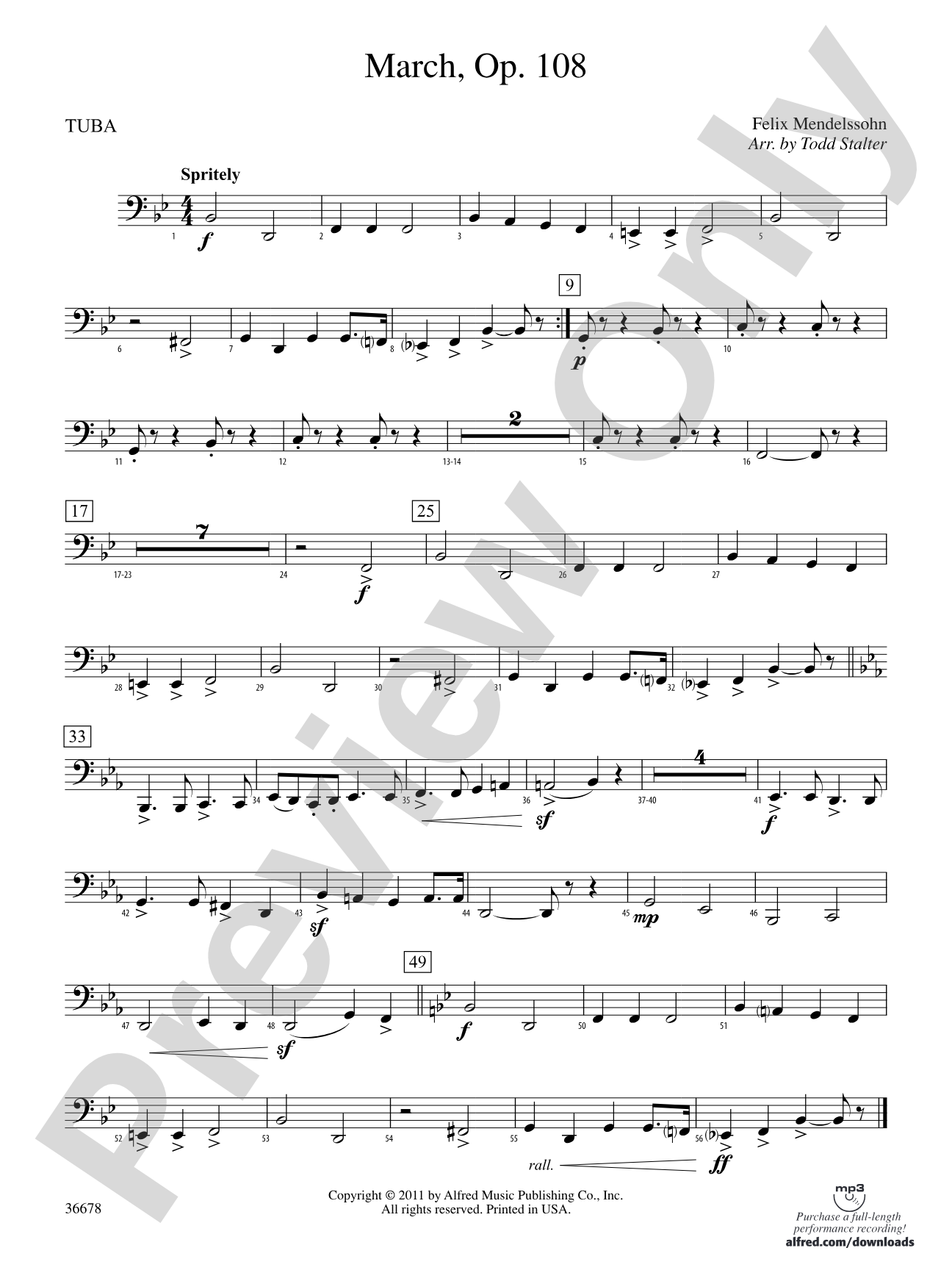
March, Op. 108: Tuba

By Felix Mendelssohn / arr. Todd Stalter

Grade: 1.5 (Easy)

Item: 00-PC-0015106_TB1

Digital Download
$3.00
Description
Mendelssohn wrote his "March," op. 108, in 1841 for a festival celebrating the famous painter Peter Von Cornelius' visit to Dresden. It is a stately and festive sounding work, and a rarely performed gem by one of the world's great composers. Careful observance of articulations and dynamics will make this march spring to life. This title is available in MakeMusic Cloud.

Don't just read it, hear it, play along with it, and watch your students grow with it. In MakeMusic Cloud, March, Op. 108: Tuba comes alive with professional accompaniment, adjustable tempo, and built-in practice tools that turn solo practice into real progress.

Sample Audio
0:00
0:00
Sample Video
Additional Details
Series: Challenger Band Series
Publisher: Alfred Music
Page Count: 122
SKU: 00-PC-0015106_TB1

More about this title

About the Composer: Felix Mendelssohn

Felix Mendelssohn (1809-1847) was a German composer whose works shaped the Romantic era and remain central to orchestral and chamber music repertoires today. Beyond his symphonies and concertos, Mendelssohn produced a vast catalog of occasional and ceremonial works, each crafted with the same meticulous attention to orchestration and melodic invention that defines his larger compositions. His skill at writing for wind ensembles and bands made him a natural choice for festival commissions throughout his career.

Why we love this

This march gives young bands immediate access to a genuine masterwork at an accessible difficulty level. Todd Stalter's arrangement preserves Mendelssohn's characteristic elegance and formal clarity while distributing the material so every section has something to play, making it equally engaging for developing musicians and rewarding for listeners.

What to expect

Dignified and ceremonial without pretension. The piece moves with purposeful energy, its melodies unfolding with the clarity and grace that defined Mendelssohn's style. Despite its occasional character, it stands as complete and satisfying music, never feeling like a minor occasional piece.

Who it's for

Band directors leading groups at the 1.5 grade level who want to program concert music with substance. Students in these ensembles gain exposure to genuine Romantic-era craftsmanship while building fundamentals in articulation, balance, and musical phrasing.

How to get the most out of it

  • Shape the articulation carefully; Mendelssohn's march relies on crisp tonguing and consistent release patterns to project its ceremonial character across a full band.
  • Attend to the dynamic contours as written. The piece gains its stately dignity through controlled use of forte and piano, not simply by playing loud throughout.
  • Balance the harmonic voices so accompanying figures support rather than overshadow the primary melodic line; this clarity is especially important in a piece of this formal design.
  • Draw out the festive character by maintaining steady, confident tempo through sectional transitions. Mendelssohn's form is clean and direct; let it breathe without dragging.

How to use it

Pair this with other nineteenth-century concert marches to build a program celebrating the genre's vitality and variety. It works equally well as an opener that sets a formal, festive tone or as a centerpiece showcasing ensemble musicality. The accessibility of the difficulty level makes it an excellent choice for mid-season concerts or spring festival programs.

Skills your students will build

  • Precise articulation and release control in march style
  • Reading and executing dynamic shapes within a formal structure
  • Balancing melody and accompaniment voices
  • Maintaining steady tempo and ensemble cohesion through sectional form
  • Performing with expression and style while maintaining technical accuracy

You May Also Like