
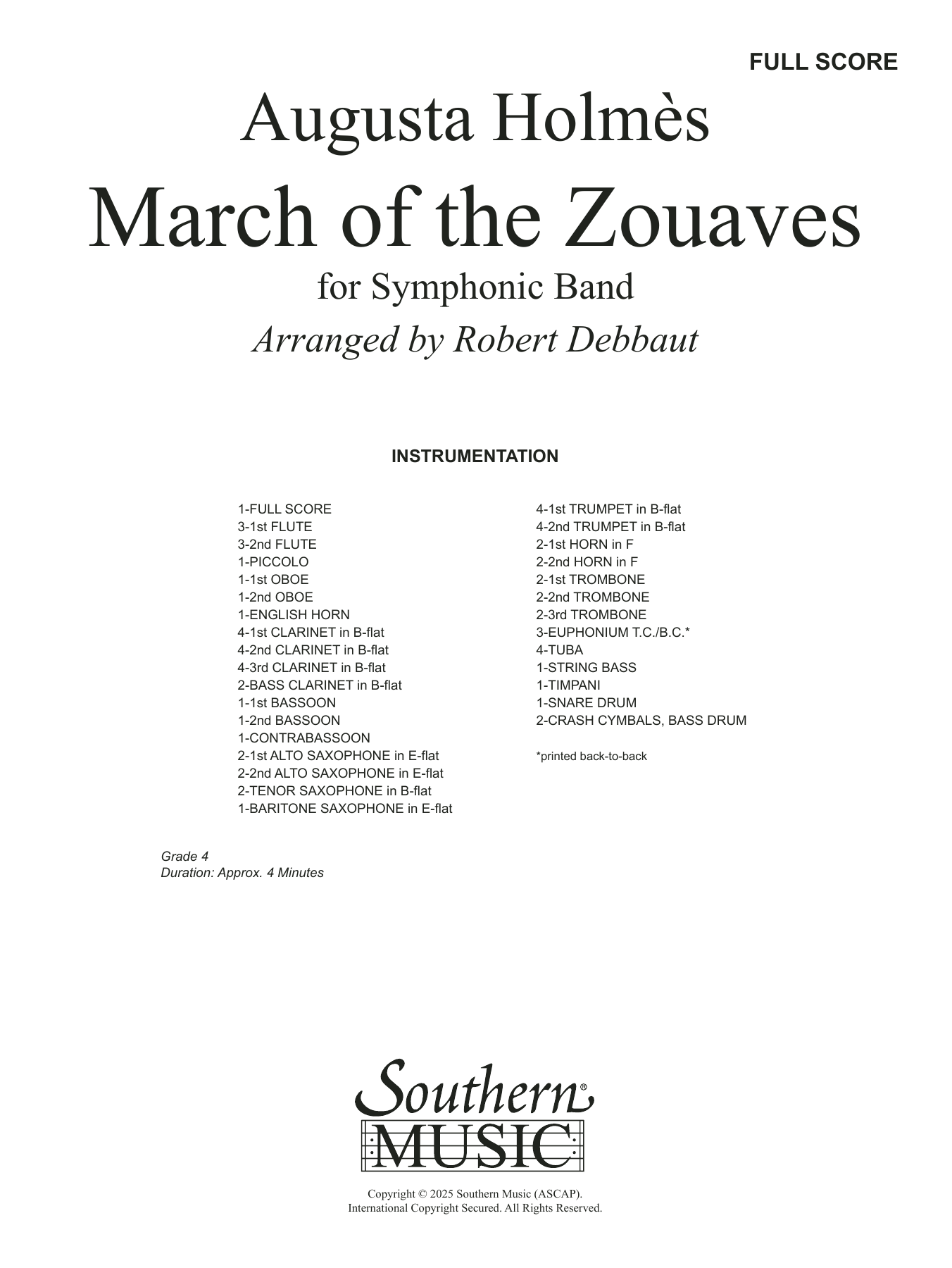

March of the Zouaves (arr. Robert Debbaut): Concert Band Conductor Score & Parts
By Augusta Holmes / Arranged by Robert Debbaut
Grade: 4
Item: 35-PK01727812
$75.00
Pickup currently not available
Buy Extra Parts (Digital PDF Download)
Parts Added to Cart!
Description
This is a fresh and invigorating work that will add sparkle to any program. A rare work from a little known, yet significant, French woman composer.


March of the Zouaves (arr. Robert Debbaut): Concert Band Conductor Score & Parts isn't in MakeMusic Cloud just yet...but it could be. Let us know you'd like to see it, and you'll help shape what comes next. In the meantime, start a free trial and dive into thousands of interactive titles your students can play along with today.
Request This Title
Tell us you want it.
Start Your Free Trial
Explore everything that's ready to play right now.
Sample Audio
No sample audio found.
Sample Video
No sample videos found.
Additional Details
Publisher:
Hal Leonard
SKU:
35-PK01727812
More about this title
About the Composer: Augusta Holmes
Augusta Holmes (1847–1903) was a French composer of Irish descent whose prolific output and bold orchestrations challenged the male-dominated classical music establishment of her era. Her works span symphonies, operas, choral pieces, and band arrangements, yet she remains largely absent from standard concert repertoires. Holmes earned recognition during her lifetime for her gift for melody and her confident handling of large ensembles, qualities that shine through in pieces like March of the Zouaves.
Why we love this
Robert Debbaut's arrangement captures Holmes's gift for infectious march melody and orchestral color without requiring a massive ensemble. The piece delivers genuine energy and polish at a manageable Grade 4 level, making it an excellent choice for programs that need a confident closer with genuine compositional substance rather than filler.
What to expect
Buoyant and confident. The piece marches forward with swagger and lightness, delivering the sparkle promised in its character without relying on heavy ornamentation or bombast. Holmes's melodic voice is direct and memorable; it sticks with listeners.
Who it's for
Directors seeking a march with genuine compositional weight and historical interest. Concert bands at the intermediate level who are ready to move beyond functional marches into pieces with real melodic appeal and orchestral sophistication.
How to get the most out of it
- Shape the main march theme with a clear sense of forward momentum. The piece thrives on rhythmic precision from the full ensemble, so lock the accents and pulse in early rehearsals.
- Balance the countermelodies carefully during the trio section. Secondary themes should sing without overshadowing the primary line.
- Allow the arrangement room to breathe at transitions. Debbaut's voicing benefits from clean articulation and space between sections rather than a relentless tempo.
- Bring out the color in the inner voices. Flutes, clarinets, and saxophones trade material throughout; make sure each choir has ownership of their lines.
How to use it
Use this as a second-half opener to reset energy after a lyrical or introspective piece. The march works equally well as an opener if you want to establish forward momentum early. It pairs naturally with other French or European concert band repertoire and serves as a thoughtful alternative to the standard march parade.
Skills your students will build
- Maintaining pulse and rhythmic precision across sustained ensemble passages
- Balancing melody against countermelody in multi-voice textures
- Executing clean articulation and transitions at concert tempo
- Responding to subtle dynamic shaping within a march form
- Playing with stylistic awareness of late 19th century French band music