
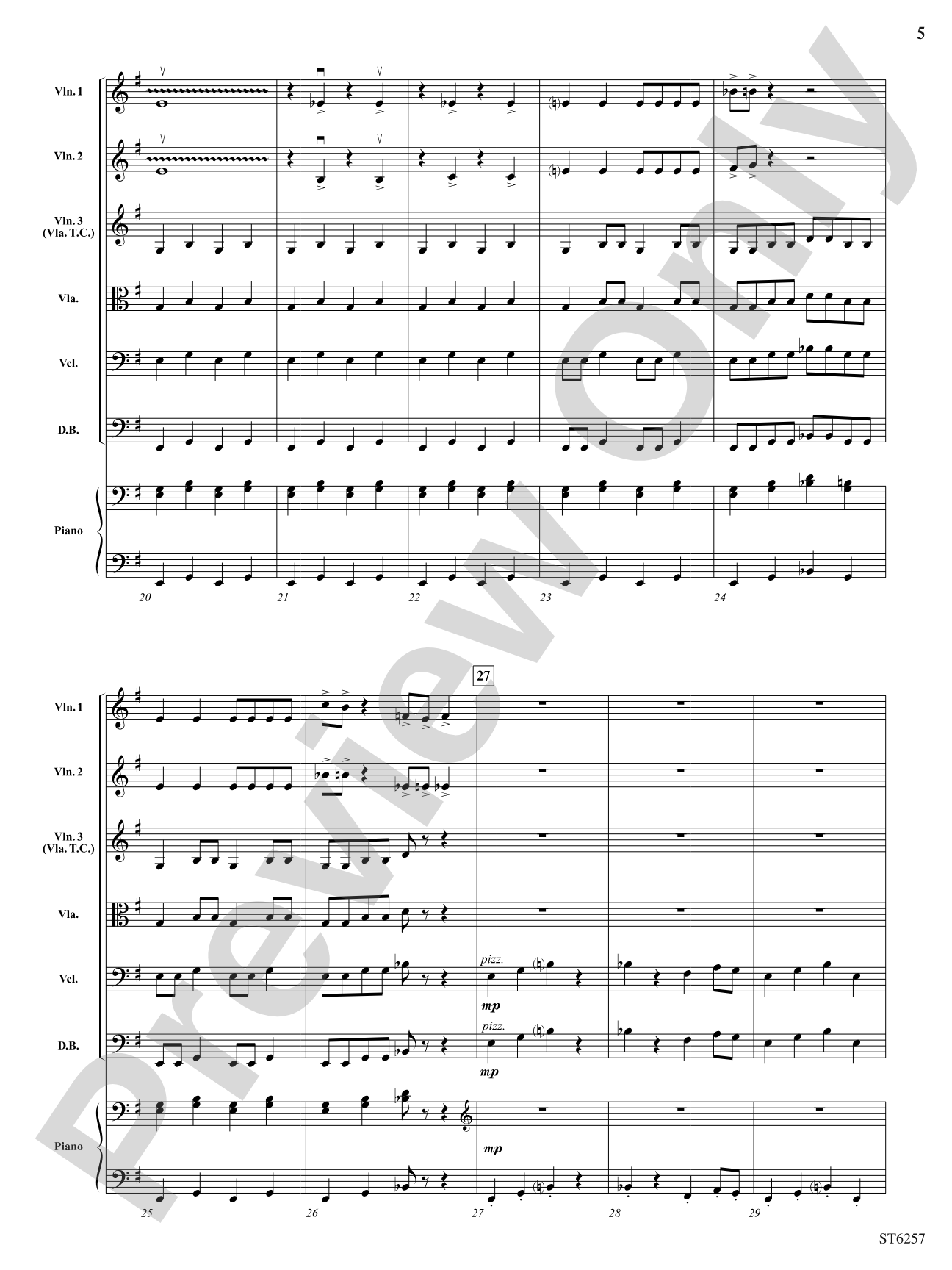
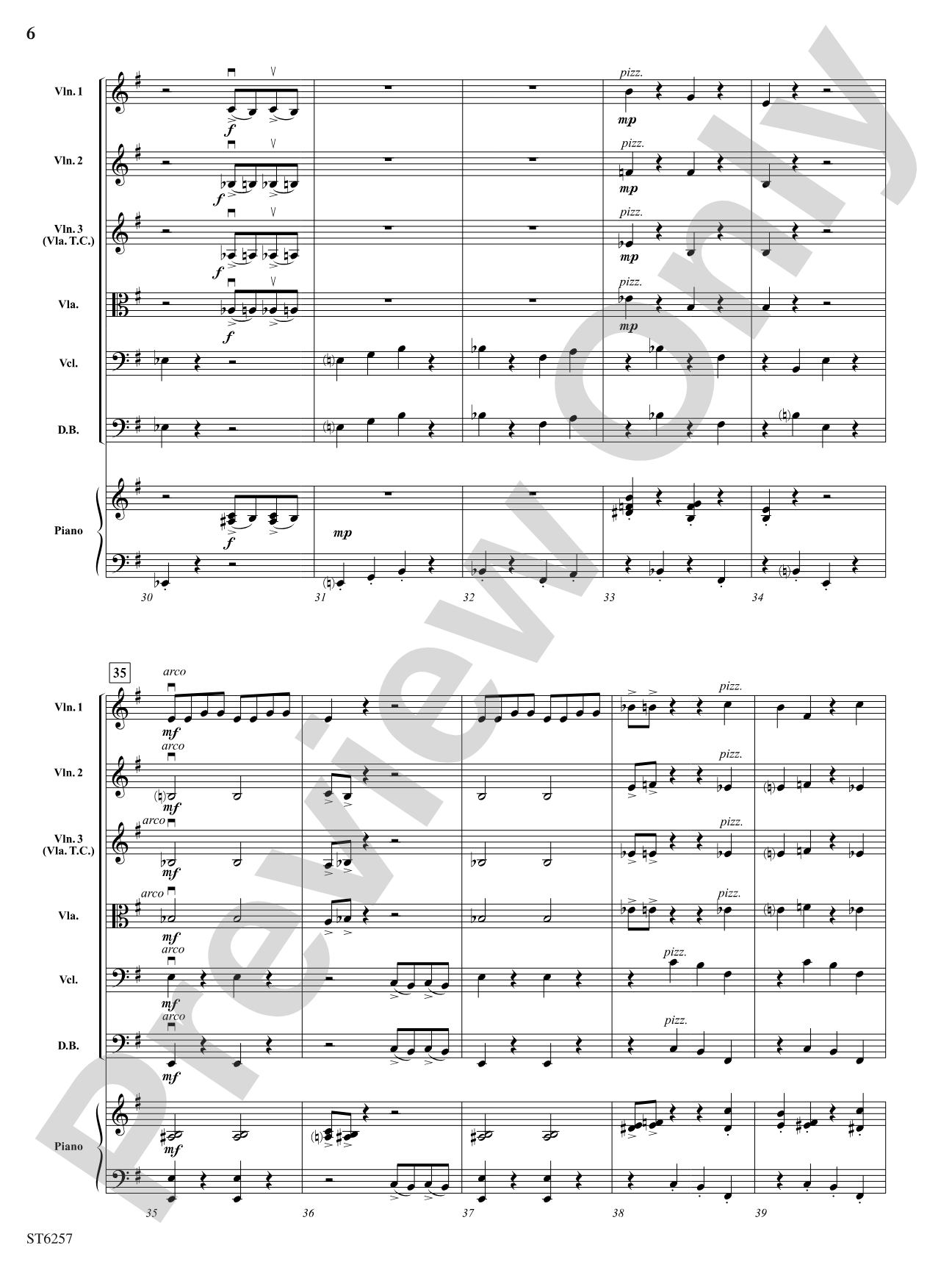
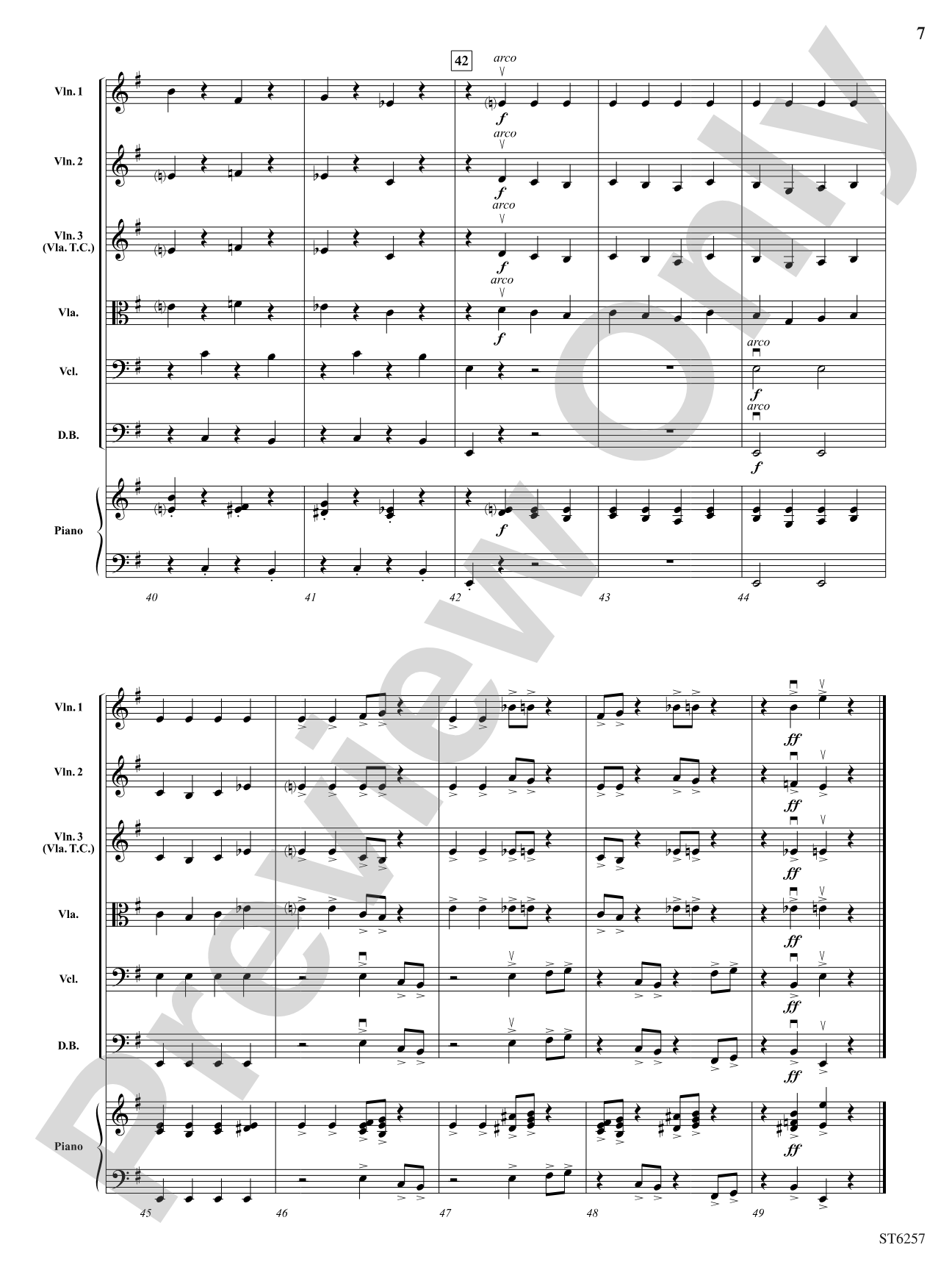

March of the Shadows: Score
By Brian Balmages
Grade: 2
Item: 98-DST6257S
$10.00
Pickup currently not available
Description
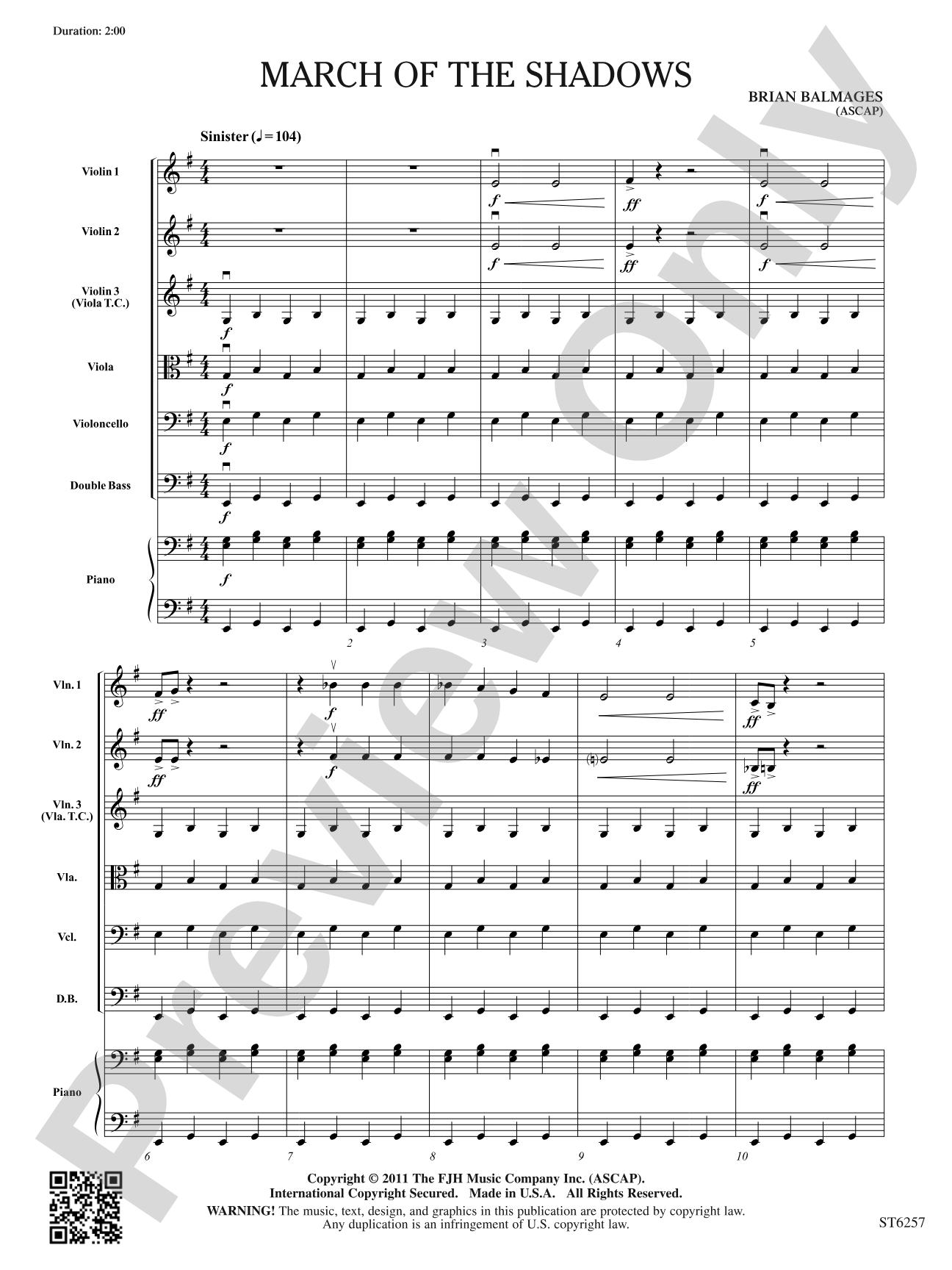
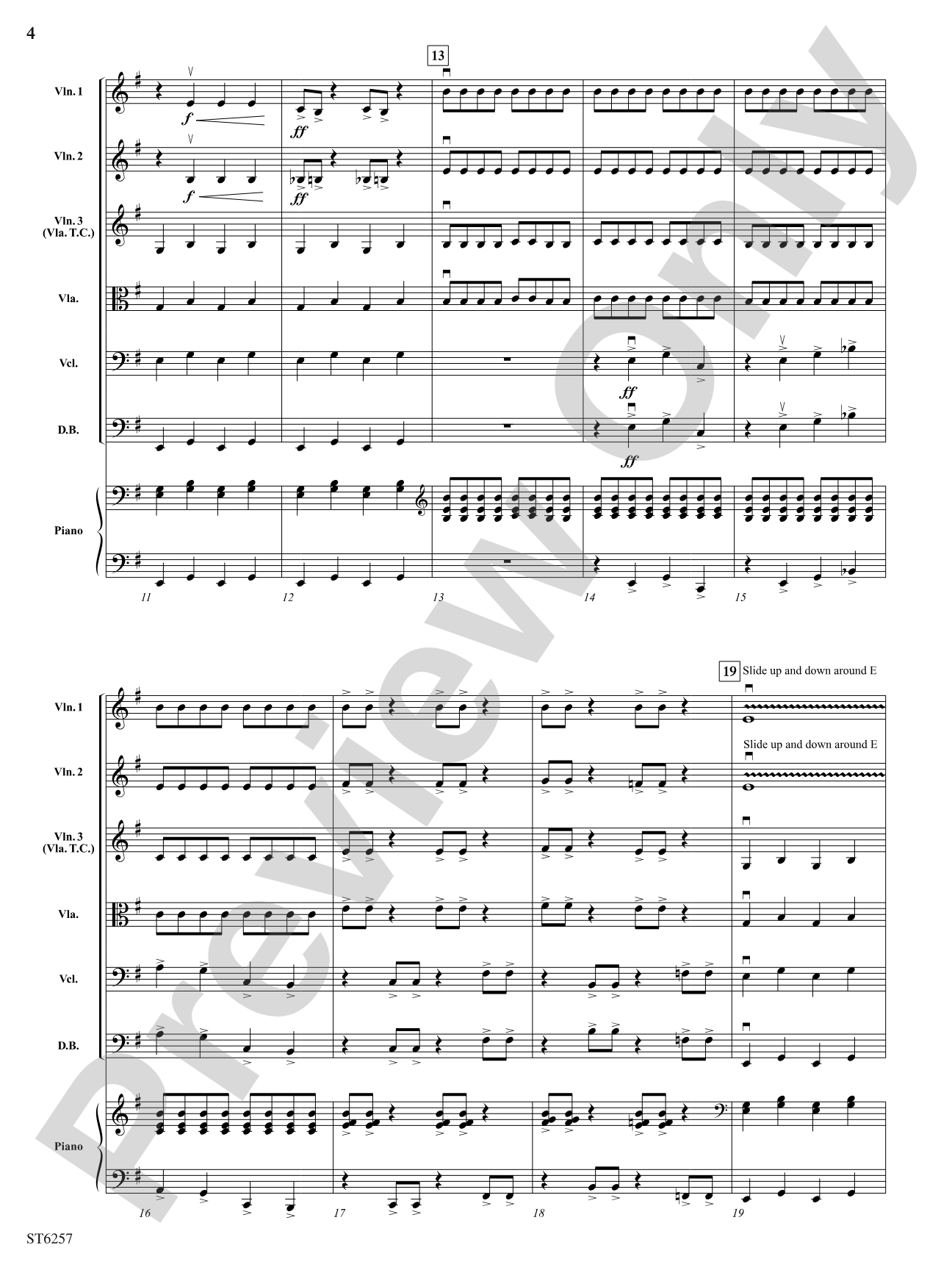
Dark, sinister and fun - these words describe this wonderfully inventive piece that paints a picture of shadows marching in unison through hallways, dark corners, and anywhere else the imagination would like to go. Designed to introduce students to Eb and Bb in a simple setting, the work makes wonderful use of mild dissonance as the shadows come to life. Clever!


Don't just read it, hear it, play along with it, and watch your students grow with it. In MakeMusic Cloud, March of the Shadows: Score comes alive with professional accompaniment, adjustable tempo, and built-in practice tools that turn solo practice into real progress.
Open in the Player
Jump straight in and assign it today.
Start Your Free Trial
Open this title and explore the full library in minutes.
Sample Audio
1
Audio File
--:--
0:00
0:00
Sample Video
No sample videos found.
Additional Details
Series:
FJH Developing Strings
Publisher:
The FJH Music Company, Inc.
SKU:
98-DST6257S
More about this title
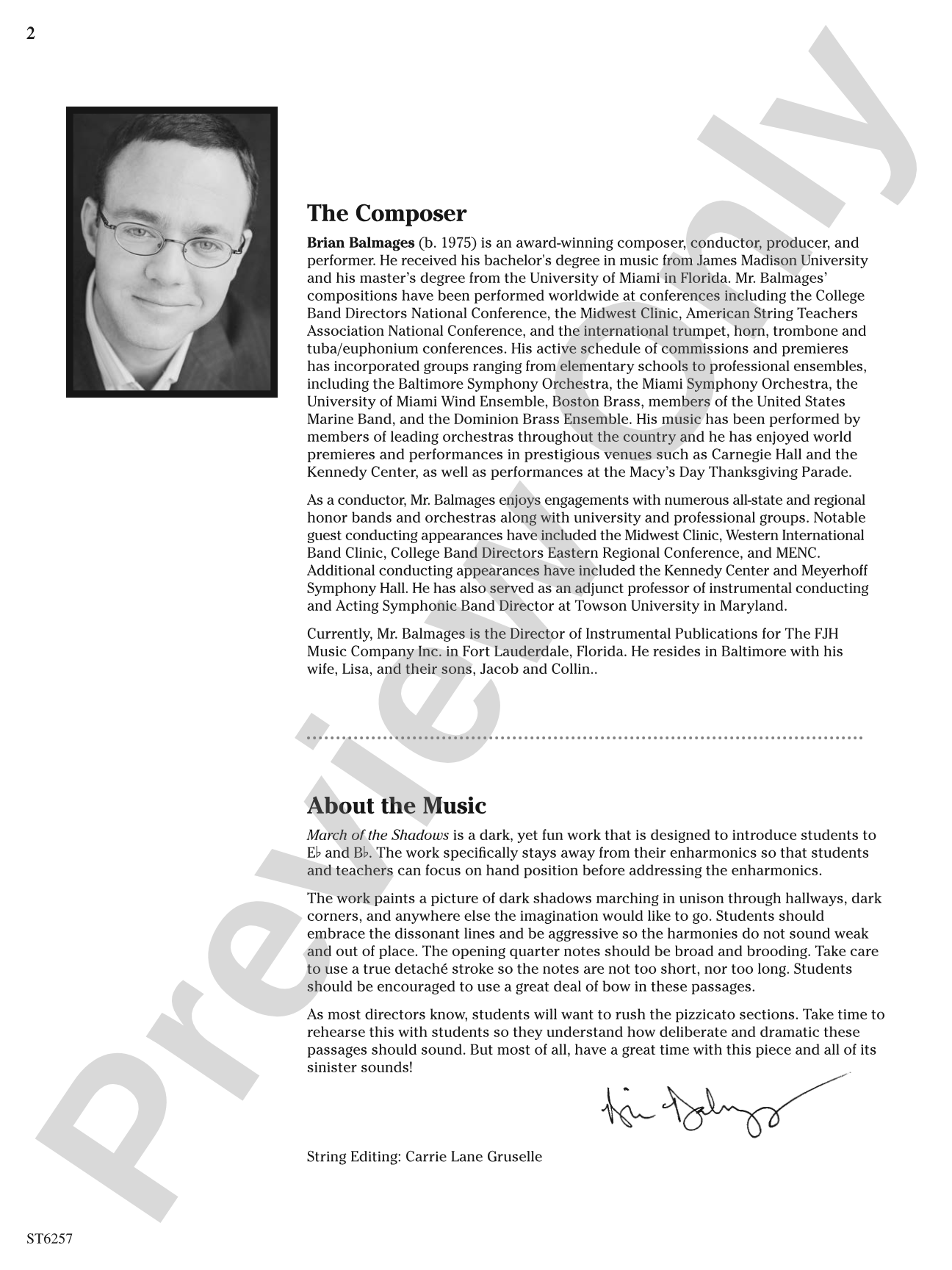
About the Composer: Brian Balmages

Brian Balmages has established himself as a composer and conductor working across orchestral, band, and chamber music with equal fluency. His works have reached audiences in prestigious venues including Carnegie Hall, the Kennedy Center, and the Sydney Opera House, performed by ensembles ranging from professional symphony orchestras to school groups. He received the A. Austin Harding Award from the American School Band Directors Association and won the 2020 NBA William D. Revelli Composition Contest. His music was featured during the 2013 Presidential Inaugural Prayer Service, and he has been commissioned by major institutions including the University of Miami for presidential inaugural music.
As a conductor, Balmages maintains regular engagements with all-state and regional ensembles as well as university and professional orchestras worldwide. He has guest conducted at venues including the Midwest Clinic, Western International Band Clinic, and numerous state ASTA conferences. An elected member of the American Bandmasters Association, he currently serves as Director of MakeMusic Publications and Digital Education for Alfred and MakeMusic.
Why we love this
Balmages brings dark humor and narrative clarity to Grade 2 string writing without oversimplifying the musical language. The introduction of Eb and Bb through a genuinely imaginative concept (shadows marching through hallways) keeps students engaged with the pedagogical work rather than making it feel like an exercise. The mild dissonance creates real dramatic effect while remaining well within the technical grasp of developing orchestras.
What to expect
The piece carries genuine theatrical menace despite its elementary grade level. Dissonant harmonies and deliberate orchestration choices create an eerie, imaginative atmosphere that captures shadowy movement through dark spaces. Young musicians feel like they're bringing something genuinely creepy and clever to life, not simply playing an exercise.
Who it's for
This conductor score with parts serves Grade 2 string orchestras ready to engage with slightly more sophisticated harmonic language and programmatic storytelling. It works well for groups seeking festival-ready repertoire that advances musicianship beyond their current level without requiring dramatic technical growth.
How to get the most out of it
- Shape the dynamic arc around the march's progression through different spaces; let the shadows feel heavier as they gather and lighter as they disperse into corners.
- Establish a steady, relentless pulse in the lower strings to anchor the piece's sinister character; this foundation lets the upper voices create the unsettling effects.
- Tune the mild dissonances deliberately during sectionals so students hear them as intentional color rather than mistakes; this builds confidence in the unfamiliar harmonic language.
- Bring out the inventive details in the orchestration that give each section its own character; Balmages writes for strings with real personality.
How to use it
Program this as a concert opener or as part of a thematic program exploring imagery and storytelling in orchestral music. It pairs well alongside other inventive Grade 2 pieces that prioritize musical substance and imagination. The festival designation makes it suitable for competition programming when directors want pedagogical growth alongside artistic merit.
Skills your students will build
- Reading and performing in Eb and Bb major/minor tonalities
- Interpreting mild dissonance as intentional compositional color
- Responding to programmatic direction through orchestration and dynamics
- Maintaining ensemble precision during rhythmic unison passages
- Balancing inner voices with melodic lines in a four-part string texture