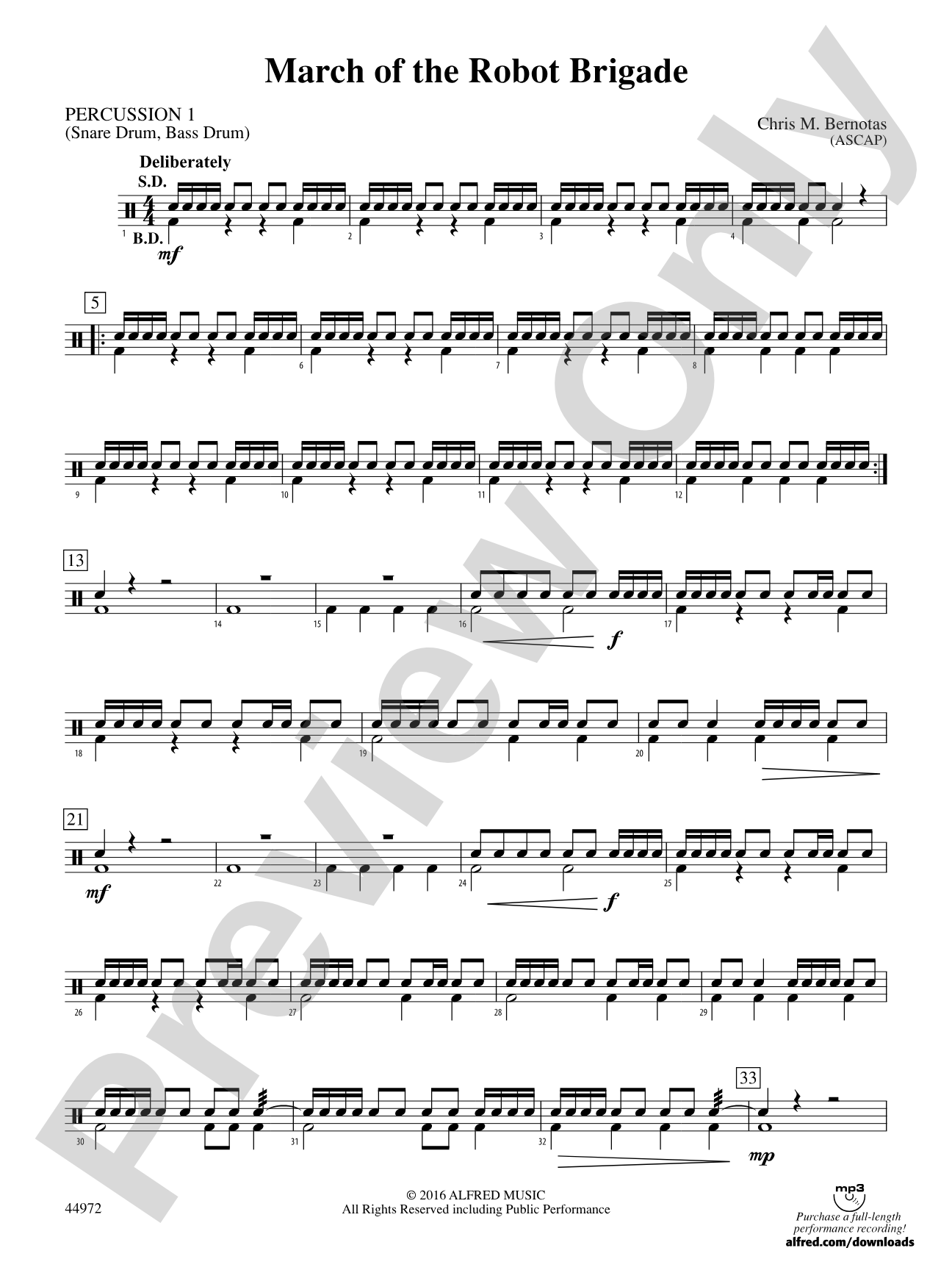
March of the Robot Brigade: 1st Percussion Sheet Music Preview

March of the Robot Brigade: 1st Percussion

By Chris M. Bernotas

Grade: 1 (Very Easy)

Item: 00-PC-0017437_PC1

Digital Download
$3.00
Description
Here they come marching two by two---it's a robot brigade! This dramatic piece for beginning band uses only the first six notes students learn. It is full of meaningful teachable moments that include call-and-response, minor mode, dynamics, and much more. The low brass and low winds play a prominent role throughout and everyone in the band will stay engaged. Students will surely practice this one! (2:25)

Don't just read it, hear it, play along with it, and watch your students grow with it. In MakeMusic Cloud, March of the Robot Brigade: 1st Percussion comes alive with professional accompaniment, adjustable tempo, and built-in practice tools that turn solo practice into real progress.

Sample Audio
0:00
0:00
Sample Video
Additional Details
Series: Sound Innovations for Concert Band
Publisher: Alfred Music
Page Count: 136
SKU: 00-PC-0017437_PC1

More about this title

About the Composer: Chris M. Bernotas

Chris M. Bernotas

Chris M. Bernotas brings over 25 years of music education experience to his work as composer and conductor. As Director of Instrumental Publications at Alfred Music, he shapes band and orchestra curricula for programs worldwide, drawing on deep classroom knowledge to create music that teaches as it engages.

Bernotas has built a reputation for writing accessible works that don't compromise on musicality or emotional content. His guest conducting and clinician work, combined with his authorship of pedagogical resources including the Sound Innovations series, reflects his commitment to solving real problems teachers face. His compositions are performed globally, from beginning ensembles to advanced groups seeking repertoire with substance and teachable depth.

Why we love this

Bernotas designed this piece to maximize engagement without overwhelming beginning musicians. The call-and-response structure and minor mode introduction give students genuine musical concepts to grasp, while the prominent low brass and wind parts ensure every section carries the melody at some point. You'll see immediate motivation to practice when every student has a moment to shine.

What to expect

Mechanical and purposeful, with a distinct minor-mode march character. The piece captures the humor and slight eeriness of a robot parade while maintaining genuine musical substance and forward momentum.

Who it's for

Beginning concert bands working with limited note vocabulary will find a fully-formed musical experience here. The piece teaches fundamental concepts like minor tonality and dynamic shaping while respecting where students actually are in their technical development.

How to get the most out of it

  • Balance the call-and-response exchanges by having the responding section match the dynamic level and character of the initial phrase, creating a true musical conversation rather than an echo.
  • Emphasize the minor mode's darker quality through controlled vibrato (where appropriate for your ensemble) and slightly lengthened note values on longer note durations to let the color register.
  • Support the low brass and wind players as they carry primary material; bring them out in sectional rehearsals so they experience ownership of the melody before ensemble balancing.
  • Use dynamics as a form of story-telling: the robot brigade's march builds intensity through gradual dynamic changes, so resist sudden jumps in volume and guide students through a smooth, intentional crescendo.

How to use it

Open a fall concert with this piece to establish tone and energy right away, or place it mid-program as a shift toward minor tonality and a different emotional landscape. The dramatic title and narrative appeal make it a natural audience favorite for family concert nights.

Skills your students will build

  • Reading and performing in minor mode
  • Call-and-response phrasing and ensemble dialogue
  • Dynamic control and expression within a limited range
  • Sustaining focus and intonation on sustained notes
  • Balance and blend in low brass and wind sections

You May Also Like