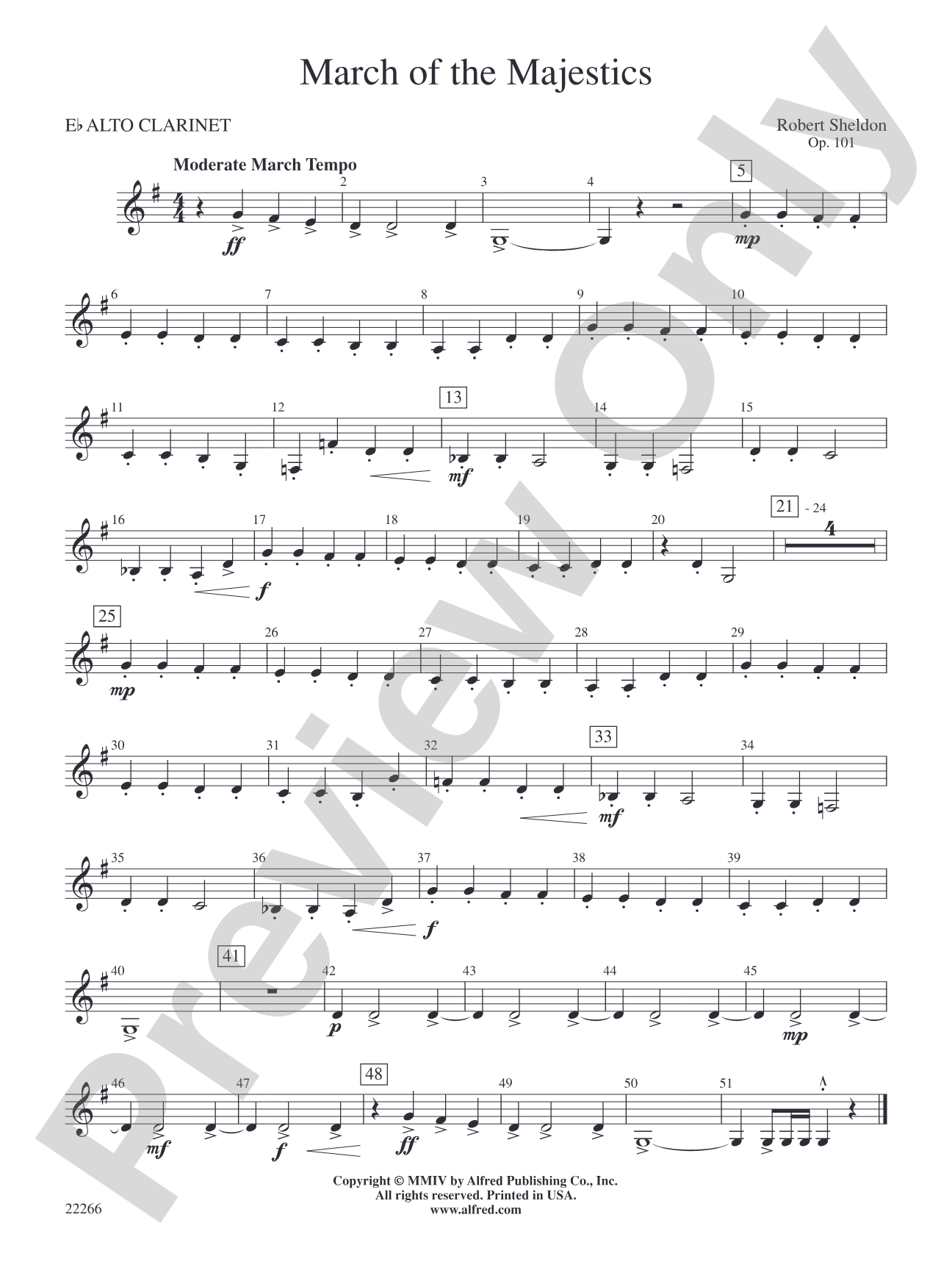
March of the Majestics: E-flat Alto Clarinet Sheet Music Preview

March of the Majestics: E-flat Alto Clarinet

By Robert Sheldon

Grade: 1 (Very Easy)

Item: 00-PC-0000520_AC1

Digital Download
$3.00
Description
An excellent selection for concert, contest or graduation ceremonies, March of the Majestics is a bold and stately processional march, full of dignity and character. The opening fanfare leads to a majestic melody that first appears in the upper voices, and later played by the lower brass and woodwinds. The return of the original fanfare ends the piece with a regal flourish. This title is available in MakeMusic Cloud.

Don't just read it, hear it, play along with it, and watch your students grow with it. In MakeMusic Cloud, March of the Majestics: E-flat Alto Clarinet comes alive with professional accompaniment, adjustable tempo, and built-in practice tools that turn solo practice into real progress.

Sample Audio
0:00
0:00
Sample Video
Additional Details
Series: Alfred Debut Series
Publisher: Alfred Music
Page Count: 126
SKU: 00-PC-0000520_AC1

More about this title

About the Composer: Robert Sheldon

Robert Sheldon

Robert Sheldon's compositions appear on more concert band programs worldwide than nearly any active composer working today. His awards from the American School Band Director's Association, Phi Beta Mu, and ASCAP reflect a gift for writing music that connects with both student ensembles and audiences. Beyond the page, Sheldon serves as guest conductor for All-State and regional honor bands, leads clinics at universities and state music education conferences, and has conducted his own works at Carnegie Hall, Boston Symphony Hall, the Sydney Opera House, and the Kennedy Center.

As lead author of Sound Innovations for Concert Band, Sheldon understands how young musicians learn. His schedule includes commissions, guest conducting appearances across the United States and internationally (Japan, Canada, Italy, Germany, Australia, and China), and the steady output of new concert band publications. He received an honorary doctorate from VanderCook College of Music in 2020.

Why we love this

Sheldon writes marches that feel genuinely grand without demanding advanced technical skill, making this ideal for bands building confidence in their sound. The piece combines a strong ceremonial presence with clear musical storytelling—fanfare, melody, restatement—so students hear how form and orchestration work together. At Grade 1, it's accessible enough for beginning ensembles yet dignified enough to anchor a graduation or contest program without sounding simple.

What to expect

A processional that stands at attention with shoulders back. The opening fanfare announces something important; the flowing melody that follows is noble and unhurried. The final statement of the opening theme feels like a door closing with intention, leaving the audience with a sense of ceremony and closure.

Who it's for

Beginning and developing concert bands preparing for graduation ceremonies, festival performances, or contest programs. Directors seeking music that builds student confidence through clear melodic writing and strong ensemble impact without overwhelming inexperienced players.

How to get the most out of it

  • Balance the opening fanfare so the brass announcement carries without overshadowing the band's ensemble sound; this is your first impression.
  • Shape the majestic melody with long phrase lines rather than note-to-note playing, whether it appears in upper voices or lower brass and woodwinds.
  • Let the return of the fanfare feel like a genuine restatement, not just repetition; the regal flourish works only if the audience recognizes what's returning.

How to use it

Open a graduation ceremony or use it as the opening selection at a spring concert where you want to establish a formal, celebratory tone. The piece also works well as a contest entry for bands seeking solid marching fundamentals and clarity of phrasing at the Grade 1 level.

Skills your students will build

  • Sustaining long melodic phrases with steady breath support and balance
  • Listening to and blending multiple melodic lines occurring simultaneously
  • Understanding rondo form through the fanfare's return
  • Executing clear dynamic shapes within an overall marchlike pulse
  • Achieving ensemble unity in unison and homophonic textures

You May Also Like