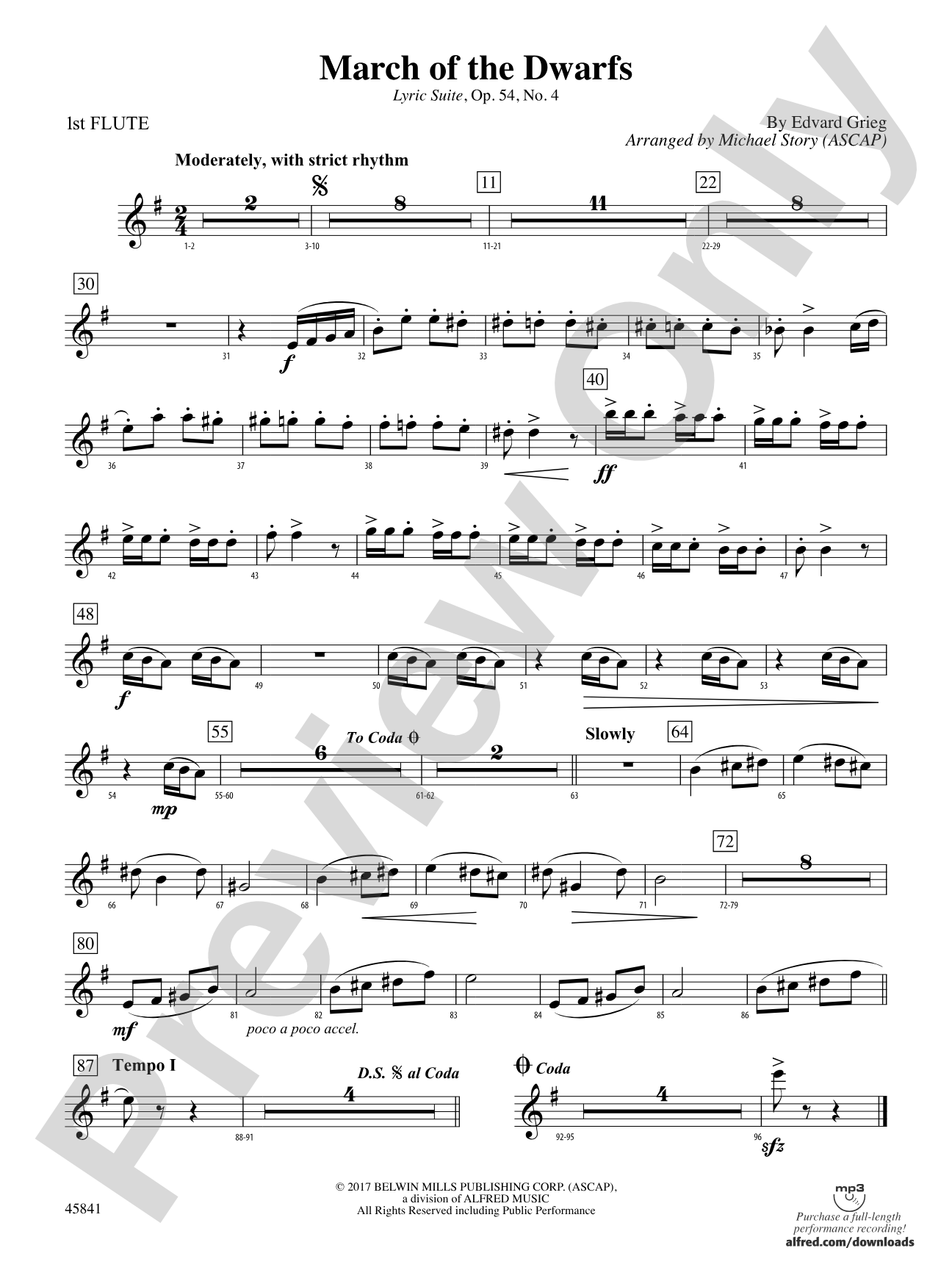
March of the Dwarfs: Flute
Lyric Suite, Op. 54, No. 4
By Edvard Grieg / arr. Michael Story
Grade: 2.5
Item: 00-PC-0018035_F1
Pickup currently not available
Description
Don't just read it, hear it, play along with it, and watch your students grow with it. In MakeMusic Cloud, March of the Dwarfs: Flute comes alive with professional accompaniment, adjustable tempo, and built-in practice tools that turn solo practice into real progress.
Jump straight in and assign it today.
Open this title and explore the full library in minutes.
Sample Audio
Sample Video
Additional Details
More about this title
About the Composer: Edvard Grieg
Edvard Grieg (1843–1907) stands as Norway's most celebrated composer, and his gift for capturing vivid musical imagery made him a cornerstone of Romantic music education. His works balance technical accessibility with emotional depth, which is why so many of his pieces appear in school and community orchestras worldwide. Grieg's ability to evoke landscape, character, and narrative through orchestral color has made his music enduringly popular with student musicians and audiences alike.
Why we love this
Michael Story's arrangement captures all the theatrical personality of Grieg's original without overwhelming a Grade 2.5 ensemble. The orchestration gives every section—strings, woodwinds, brass, and percussion—moments to shine, which keeps rehearsals engaging and ensures students hear themselves contributing to a fully realized sound. This is the kind of piece that makes young musicians understand why they're learning their instruments.
What to expect
You're in a fairy tale world where dwarfs march past in determined procession. The piece moves with quirky charm and just enough sparkle to keep an audience smiling, yet it never turns cutesy or trivial. There's real character and sophistication in the orchestration, giving the simple march premise real musical substance.
Who it's for
This arrangement works for intermediate full orchestras, mixed string orchestras, or schools building toward their first true full orchestra experience. It's ideal for conductors seeking a piece that sounds mature and concert-ready without requiring advanced technical facility from every player.
How to get the most out of it
- Establish a clear tempo from the opening and maintain it consistently; the march character depends on rhythmic stability from the conductor and rhythm section.
- Balance the melody between first violins and the other sections playing counter-melodies or harmonic support; too much weight on one voice will obscure the arrangement's colorful orchestration.
- Use dynamic contrast to bring out the distinctive character sections. The piece shifts between sections of lighter texture and fuller sound; mark these transitions in your score so the ensemble understands where to shape.
- Pay attention to articulation markings in the woodwinds and brass; they define much of the personality and help the arrangement feel crisp and intentional rather than heavy.
How to use it
This works beautifully as an opener or closer on a concert program, especially if you want to establish a lighter tone or bridge between heavier works. It's equally at home in a festival or contest setting where judges expect solid musicianship paired with audience engagement. The 3:10 duration makes it an efficient programming choice when you need something that delivers impact without consuming rehearsal time.
Skills your students will build
- Reading and executing dotted rhythms and syncopation
- Balancing melody and accompaniment within a full orchestral texture
- Responding to conductor's dynamic shaping and expressive gestures
- Coordinate across multiple instrument families with independent rhythmic or melodic material
- Maintaining steady tempo in a march-based form
- Understanding orchestral color and how different instrument combinations create different effects