
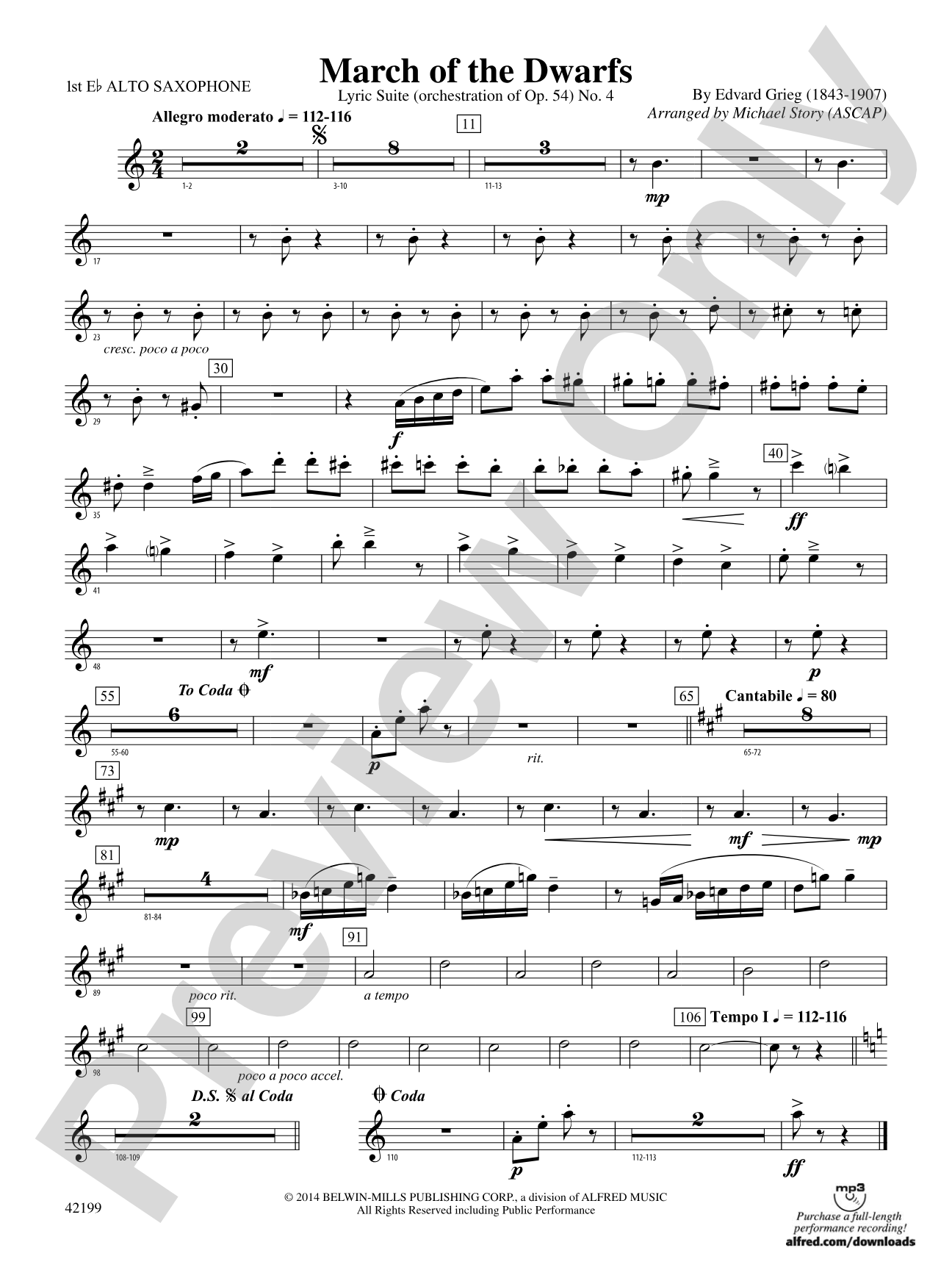

March of the Dwarfs: E-flat Alto Saxophone
Lyric Suite (Orchestration of Op. 54) No. 4
By Edvard Grieg / arr. Michael Story
Grade: 3 (Medium Easy)
Item: 00-PC-0016560_AX1
$5.99
Pickup currently not available
Description
This setting of the march from Grieg's Lyric Suite is a charming and colorful work in ABA form. Delicate at the beginning, it develops the lyric melody, then the march builds with intensity to a dramatic conclusion. Rewarding and musical! (3:30) This title is available in MakeMusic Cloud.


Don't just read it, hear it, play along with it, and watch your students grow with it. In MakeMusic Cloud, March of the Dwarfs: E-flat Alto Saxophone comes alive with professional accompaniment, adjustable tempo, and built-in practice tools that turn solo practice into real progress.
Open in the Player
Jump straight in and assign it today.
Start Your Free Trial
Open this title and explore the full library in minutes.
Sample Audio
1
Audio File
--:--
0:00
0:00
Sample Video
No sample videos found.
Additional Details
Series:
Belwin Concert Band
Publisher:
Alfred Music
Page Count:
122
SKU:
00-PC-0016560_AX1
More about this title
About the Composer: Edvard Grieg
Edvard Grieg (1843-1907) stands as Norway's most celebrated composer, creating a body of work that brought Scandinavian musical identity to the concert stage. His gift for melody and harmonic color made him a master of the small form, and his influence on 20th-century compositional practice runs deep. Teachers and conductors return to Grieg's music generation after generation because it combines technical accessibility with genuine emotional substance.
The Lyric Suite, from which this march is drawn, exemplifies Grieg's skill at writing music that sounds effortless to perform yet engages audiences immediately. His orchestrations and arrangements remain models of clarity and orchestral logic, making his works ideal for music education at every level.
Why we love this
Michael Story's arrangement captures the charm and narrative arc of Grieg's original while writing idiomatically for concert band. The ABA structure gives you clear dramatic shape without overcomplicating the score, and the Grade 3 voicing keeps ensemble management straightforward even as the music builds real intensity. Directors love how this piece sounds larger and more polished than its difficulty level suggests.
What to expect
The piece opens with almost chamber-like intimacy, presenting a gentle Nordic melody that feels both simple and deeply felt. As it unfolds, the march character emerges with color and forward motion, and by the dramatic conclusion, you experience a transformation from quiet reflection to triumphant celebration.
Who it's for
Concert band directors working at the middle school level or building a younger high school ensemble will find this accessible yet substantive. It works equally well for festival programming or as a centerpiece of a concert that pairs well with lighter contemporary works and standard American march literature.
How to get the most out of it
- Keep the opening delicate and transparent; resist the urge to push tempo or dynamics in the quieter A section. The contrast with the developed middle section will hit harder if you establish genuine restraint early.
- Shape the lyric melody through phrase, not vibrato or rubato. Grieg's melodies speak clearly when the harmonic support underneath remains steady and the line breathes at cadences.
- Build the march section with incremental intensity rather than jumping to full volume at the key moment. Let the orchestration do the work; adding doublings and thickening textures naturally creates the sense of accumulation Grieg intends.
- Balance the march character with musical line in the final section. The drama comes from forward momentum and clarity of ensemble, not from raw loudness.
How to use it
Program this as an anchor in a concert that showcases your ensemble's range. Its moderate difficulty and appealing character work well mid-concert to reset audience attention, or pair it with a longer contemporary work to provide a musical palate cleanser. The clear ABA structure and 3:30 duration make it ideal for festival competitions where you want a substantive piece that demonstrates musicianship without demanding virtuoso technique.
Skills your students will build
- Balancing delicate dynamic control with ensemble blend in the A sections
- Executing a clear tempo transition and character shift between the lyric and march sections
- Controlling incremental crescendos and orchestration changes without losing musical shape
- Reading and executing parts within ABA form and adjusting interpretive approach to section architecture