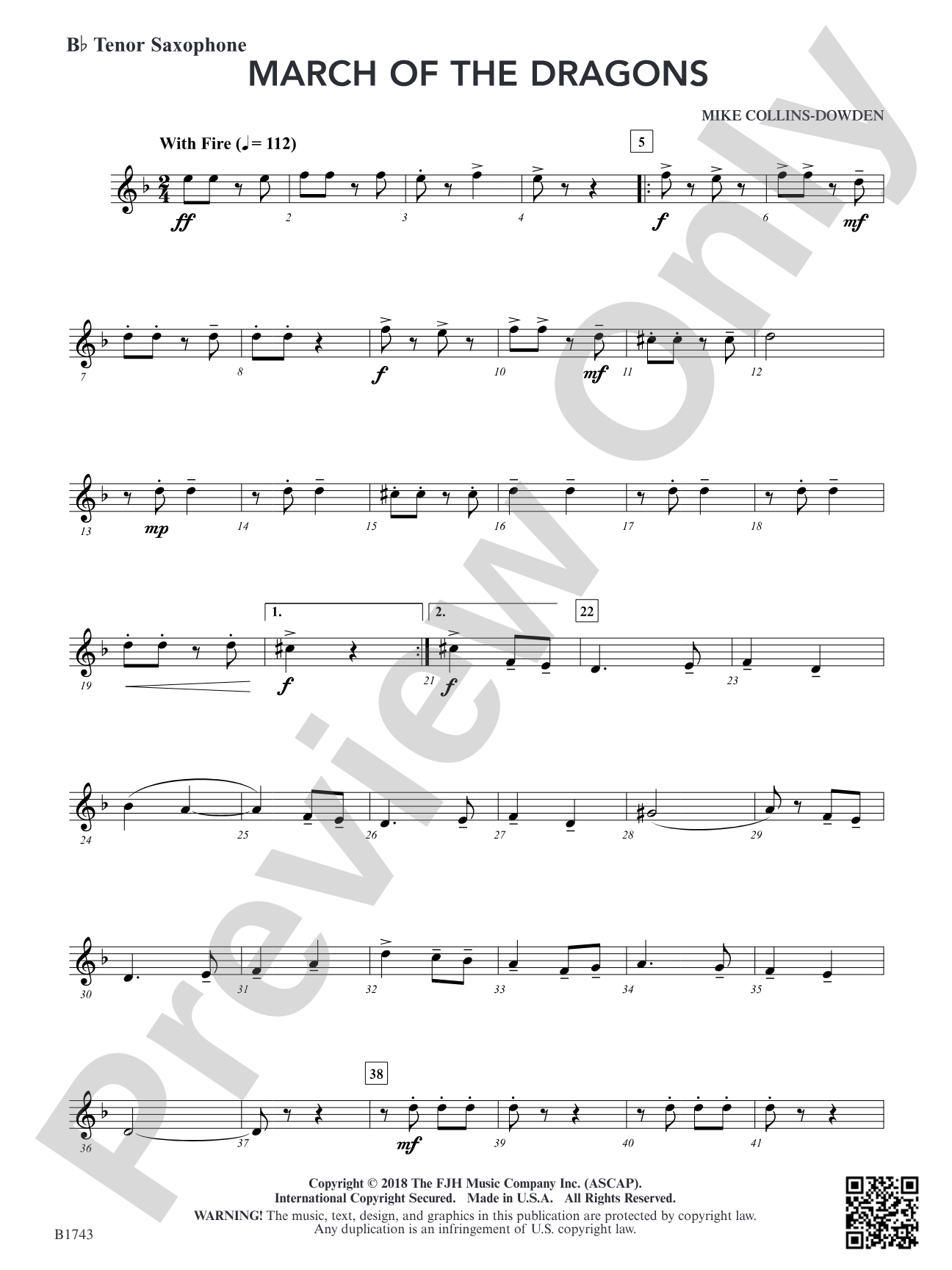
March of the Dragons: B-flat Tenor Saxophone Sheet Music Preview

March of the Dragons: B-flat Tenor Saxophone

By Mike Collins-Dowden

Grade: 1.5

Item: 98-PC-DB1743_TX1

Digital Download
$7.00
Description
Three fearsome dragons do battle in this exciting and unique concert march. Each strain represents the character of a different dragon, with every instrument getting an opportunity to play at least one of the menacing themes. There’s even a “dragon fight” section where the winds and percussion trade rhythmic hits. Sure to add some fire to your next concert!

Don't just read it, hear it, play along with it, and watch your students grow with it. In MakeMusic Cloud, March of the Dragons: B-flat Tenor Saxophone comes alive with professional accompaniment, adjustable tempo, and built-in practice tools that turn solo practice into real progress.

Sample Audio
0:00
0:00
Sample Video
Additional Details
Series: FJH Developing Band
Publisher: The FJH Music Company, Inc.
SKU: 98-PC-DB1743_TX1

More about this title

About the Composer: Mike Collins-Dowden

Mike Collins-Dowden

Mike Collins-Dowden teaches concert and jazz band to 4th and 5th graders at Pleasant Ridge School in Glenview, Illinois, a position he has held since 2007. He earned his B.M. in music education and trombone performance from the Eastman School of Music in 2003, where he performed with the Eastman Wind Ensemble during their 2004 Japan tour, and completed his M.M. in music education from Temple University in 2007.

Collins-Dowden is a prolific composer whose work centers on writing engaging music for young musicians. His output includes more than 30 published pieces with Alfred/Belwin, FJH, and Jalen Music. When he's not teaching, composing, or juggling family responsibilities, he performs on trombone and guitar and programs chiptune compositions on a Nintendo Game Boy.

Why we love this

Collins-Dowden writes with a keen understanding of what captures the attention of young bands while keeping the technical demands genuinely accessible. The concept here—three dragons with distinct musical personalities—gives every section something memorable to play, and the "dragon fight" trading section will energize your ensemble during rehearsal and light up your audience.

What to expect

Imagine three dragons circling each other with growing menace, each one snarling with its own personality. The music crackles with energy, trading punches between sections, building tension until the final clash. It's dramatic enough to hold an audience's attention while remaining playable and fun for young musicians.

Who it's for

Grade 1.5 concert bands ready to move beyond simple marches into repertoire with narrative arc and character contrast. This works equally well for developing programs seeking engaging contest material and established bands looking to add personality to a concert program without technical overreach.

How to get the most out of it

  • Clarify the rhythmic hits during the dragon fight section by isolating winds and percussion separately at first, then bringing them together gradually to lock the trading exchange.
  • Establish clear character work for each dragon strain during early rehearsals so students understand which musical themes belong to which dragon and can deliver distinct playing styles.
  • Balance the menacing themes across the full band during tutti sections; uneven dynamics will flatten the dramatic impact of the march.
  • Let the recorded accompaniment (if available separately) support intonation and tempo consistency in early learning phases.

How to use it

Program this as an energetic opener or closer during a concert where you want to establish your band's confidence and personality. It pairs well alongside lighter novelty selections or serious contest repertoire, offering visual and musical contrast without feeling out of place. The piece works particularly well for festival performance where a strong, memorable impression matters.

Skills your students will build

  • Trading articulation and rhythmic precision between sections
  • Maintaining consistent tone character across different musical strains
  • Dynamic control and balance in tutti passages
  • Ensemble cohesion during rapid sectional exchanges

You May Also Like