
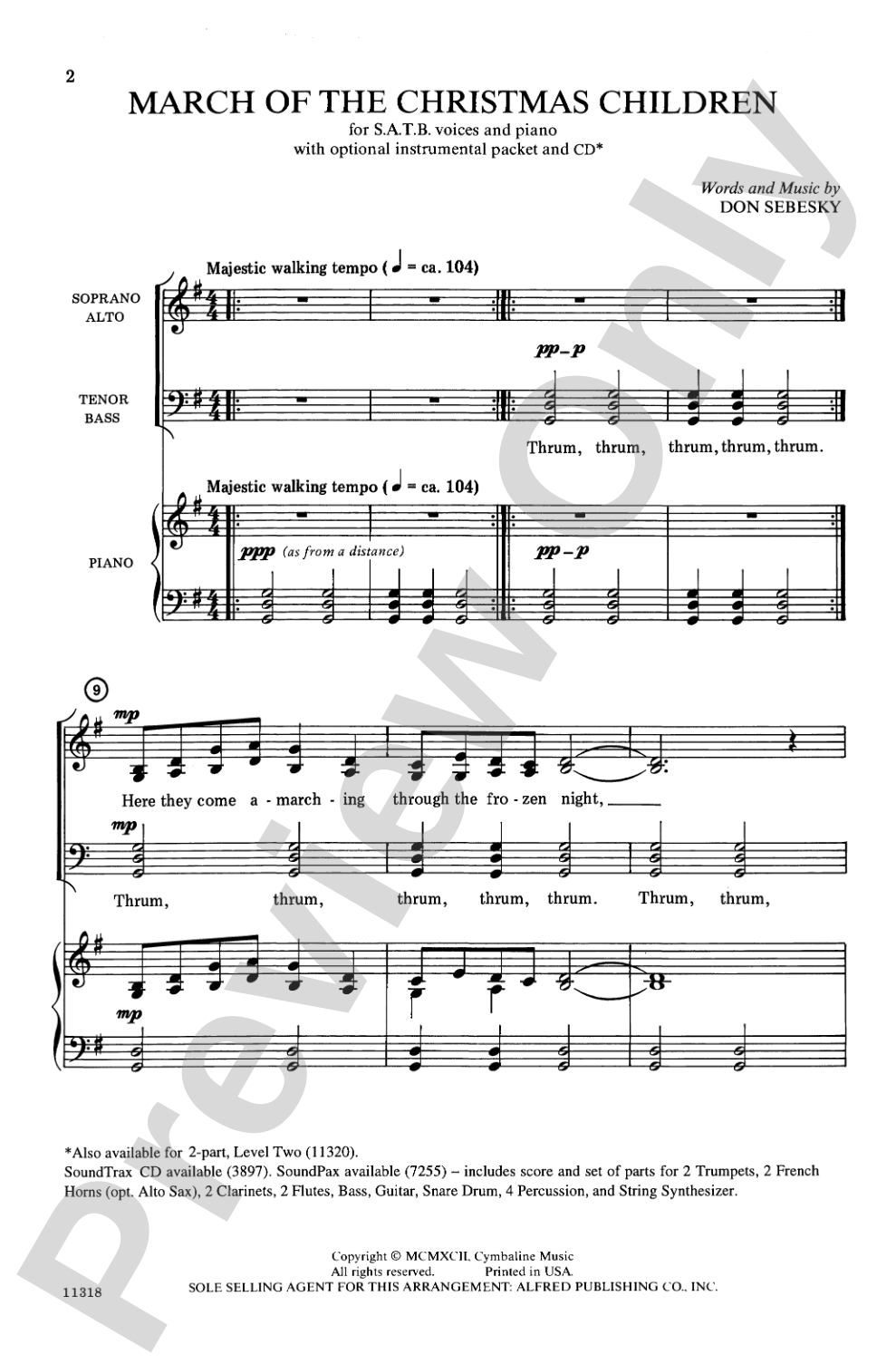
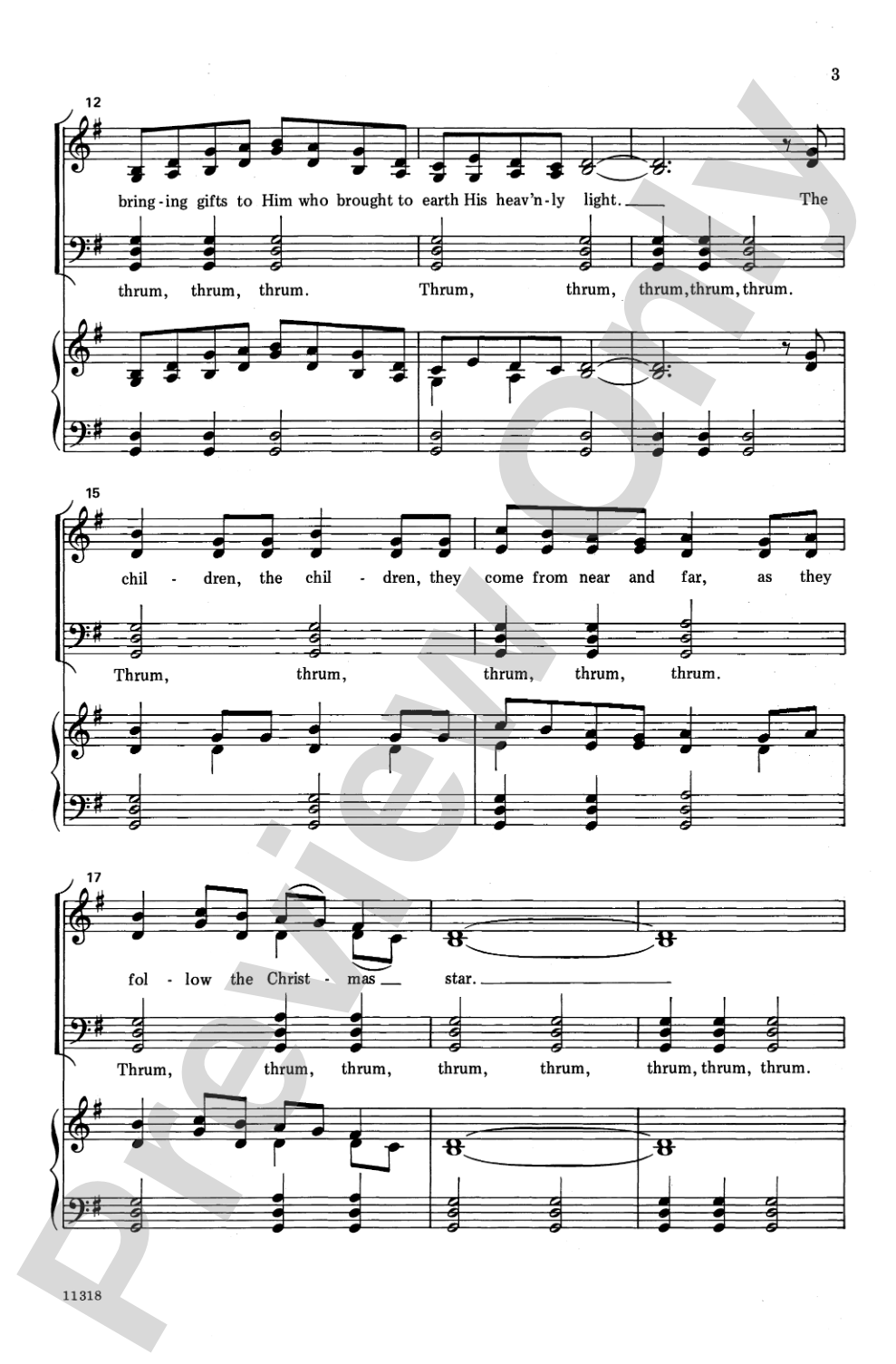
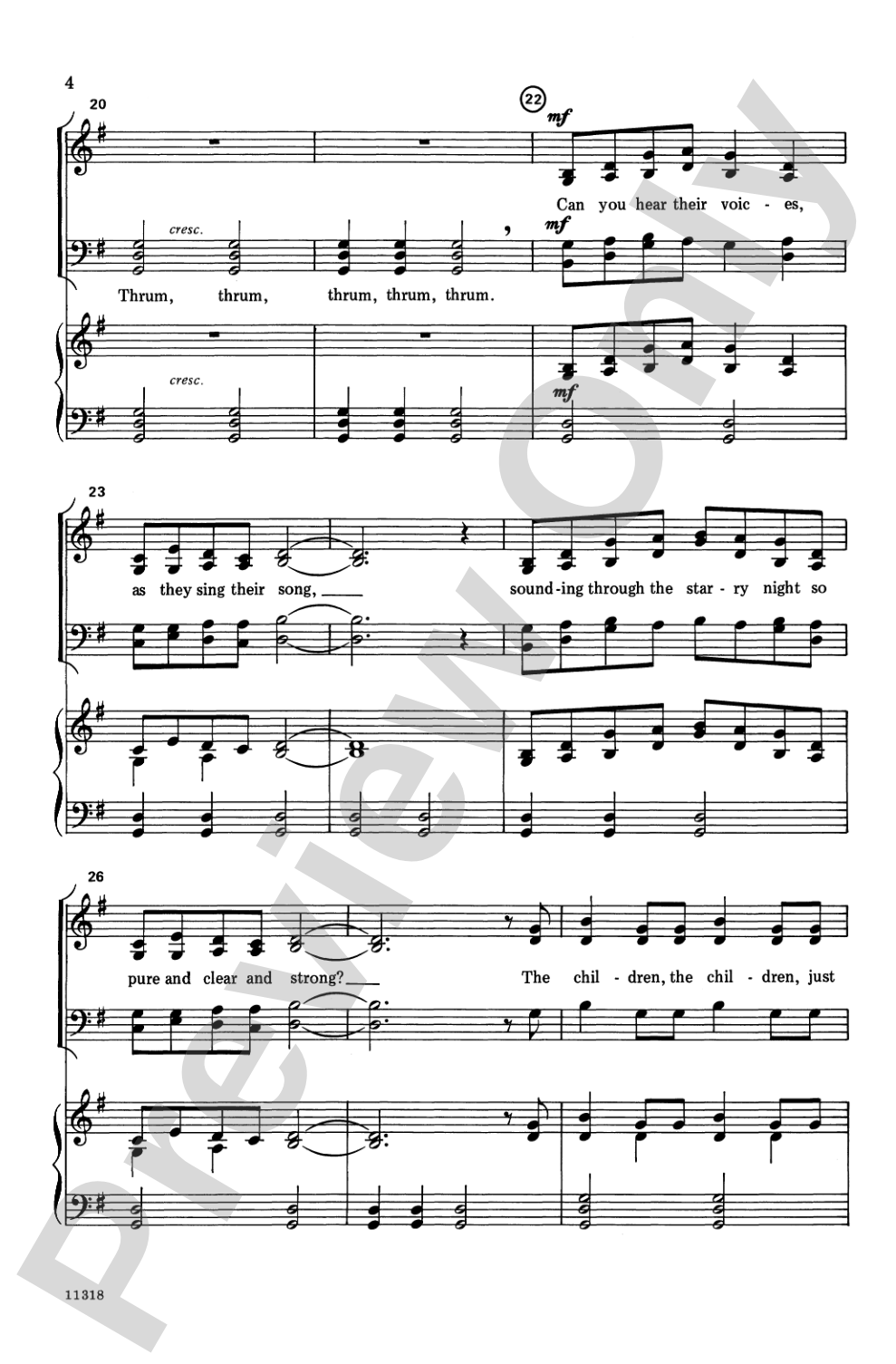

March of the Christmas Children: SATB Choral Octavo
Music by Don Sebesky
Item: 00-PO-0003785
$2.25
Minimum order quantity: 20 copies
Pickup currently not available
Description
A powerful Christmas piece in the tradition of The Little Drummer Boy, MARCH OF THE CHRISTMAS CHILDREN is destined to become a holiday classic. This sterling work by composer/arranger Don Sebesky begins from afar, in a majestic walking tempo. It builds and finally fades into the distance. The SoundTrax is fully orchestrated for a professional sound.


March of the Christmas Children: SATB Choral Octavo isn't in MakeMusic Cloud just yet...but it could be. Let us know you'd like to see it, and you'll help shape what comes next. In the meantime, start a free trial and dive into thousands of interactive titles your students can play along with today.
Request This Title
Tell us you want it.
Start Your Free Trial
Explore everything that's ready to play right now.
Sample Audio
1
Audio File
--:--
0:00
0:00
Sample Video
No sample videos found.
Additional Details
Series:
Alfred Archive Edition: Alfred Choral Designs
Publisher:
Alfred Music
Page Count:
12
SKU:
00-PO-0003785
More about this title
About the Composer: Don Sebesky

Don Sebesky's career spans Broadway, film, and recording studio work as one of America's most accomplished orchestrators and composers. His orchestrations for Kiss Me, Kate earned him Tony and Drama Desk Awards, while his work on Parade brought Drama Desk and Tony nominations. He has received 20 Grammy nominations and three Emmy nominations throughout his career, with Grammy wins in 1999 and 2000 for Best Composition and Arrangement.
Sebesky's collaborations with major recording artists including Barbra Streisand, Carly Simon, and Barry Manilow showcase his versatility across musical styles and mediums. His orchestrations consistently demonstrate sophisticated harmonic writing and a keen sense of how to balance vocal lines with instrumental color.
Why we love this
Sebesky's gift for orchestration translates beautifully to choral writing. The piece unfolds with architectural clarity—starting from a distant, majestic walking tempo and building to an emotional peak before receding—creating a narrative arc that holds your singers' and audience's attention from first note to last. The SoundTrax accompaniment provides a polished, broadcast-quality sound that makes even smaller programs feel festival-ready.
What to expect
Like watching a procession emerge from fog, build to a luminous moment, and slowly disappear into the distance. The piece evokes reverence and wonder without sentiment, anchored by Sebesky's signature orchestral sensibility. There is grandeur here, but also intimacy in the way the voices breathe with the accompaniment.
Who it's for
Choirs seeking a Christmas piece with substantial musical architecture and professional sound. The SATB voicing works for intermediate to advanced ensembles with solid blend and intonation; the 12-page length and dynamic range demand choirs that can sustain focus and execute contrasting textures.
How to get the most out of it
- Shape the opening with restraint, letting the walking tempo establish a processional quality rather than driving forward. Allow the ensemble time to settle into the majestic character before the piece begins building.
- Treat the dynamic arc as one continuous gesture. Mark phrase points and crescendo points clearly in your score so the choir understands exactly where energy needs to peak and where it releases.
- Balance blend carefully as the texture thickens. Sebesky's orchestrations reward precise sectional balance; work the inner voices so they support rather than obscure the soprano line.
- Use the recorded accompaniment to establish tempo and feel early in rehearsal, then gradually reduce your reliance on it so the choir owns the musical shape independently.
How to use it
Position this as an anchor for a holiday concert, particularly if you want to open a second half or shift the emotional tone toward contemplation. It pairs naturally with lighter Christmas fare earlier in the program, as its serious undertone and processional quality benefit from contrast. The piece also works effectively as a concert finale if programmed to close on the fading final measures.
Skills your students will build
- Sustaining phrase lines through dynamic changes and orchestral texture shifts
- Balancing four-part harmony when inner voices carry important harmonic material
- Interpreting majestic, walking tempos with musical intent rather than mechanical pulse
- Responding to a fully orchestrated accompaniment while maintaining independence