March of the Champions: Bells Sheet Music Preview

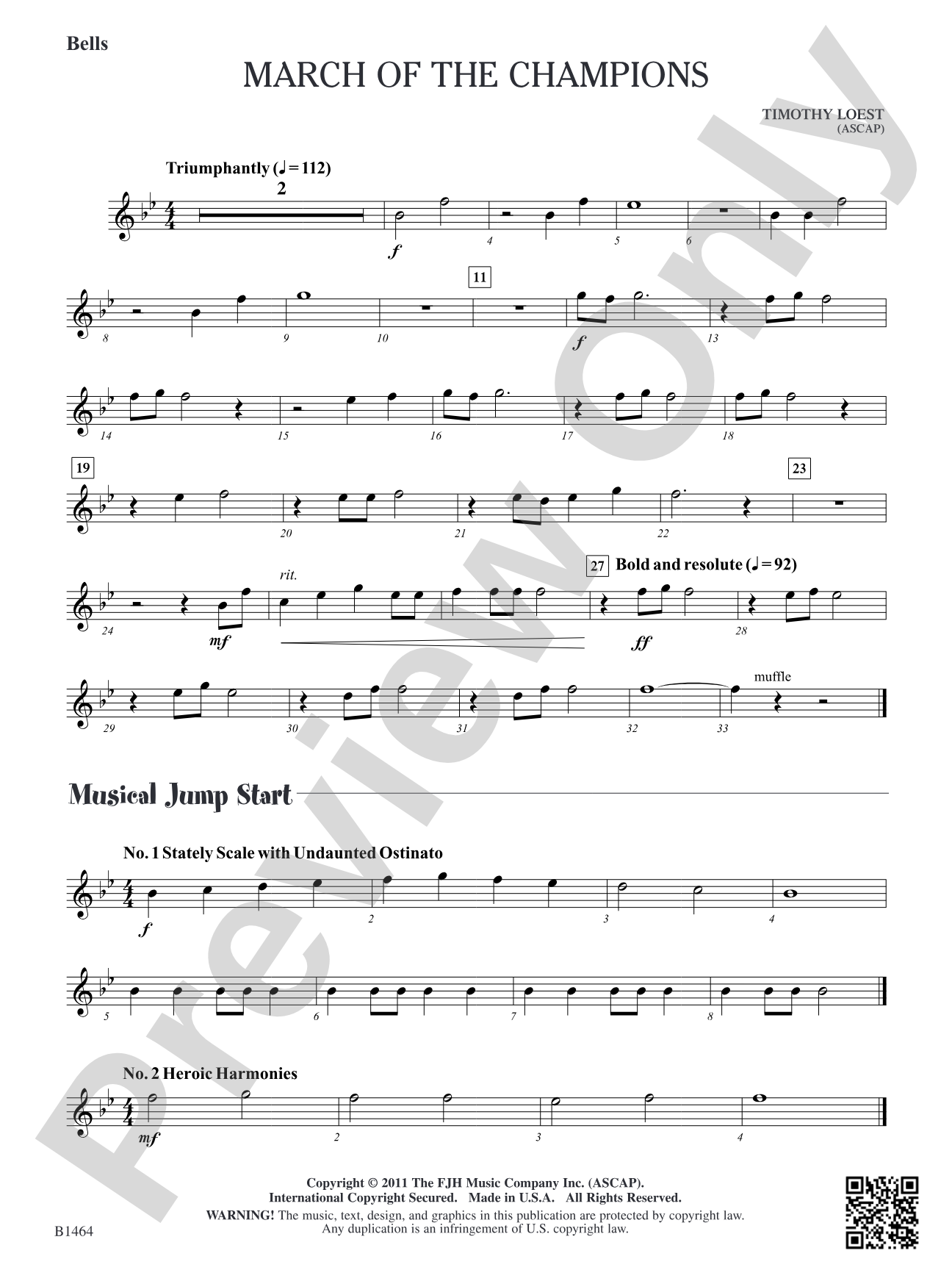
March of the Champions: Bells

By Timothy Loest

Level:.5

Item: 98-PC-DB1464_B

Digital Download
$7.00
Description
Open your next concert with this triumphant march featuring bold themes and powerful harmonies. Conveying courage, character and the indomitable human spirit, this heroic work in grand style uses just six notes in an epic scale. Magnificent!

Don't just read it, hear it, play along with it, and watch your students grow with it. In MakeMusic Cloud, March of the Champions: Bells comes alive with professional accompaniment, adjustable tempo, and built-in practice tools that turn solo practice into real progress.

Sample Audio
0:00
0:00
Sample Video
Additional Details
Series: FJH Starter Series
Publisher: The FJH Music Company, Inc.
SKU: 98-PC-DB1464_B

More about this title

About the Composer: Timothy Loest

Timothy Loest

Timothy Loest has spent over thirty years in the classroom at F.E. Peacock Middle School in Itasca, Illinois, where he developed deep expertise in what young ensembles can achieve musically. His compositions for band are performed internationally, and his work has been featured on major network television, including The Tonight Show Starring Jimmy Fallon and Good Morning America. In 2017, his composition Cloud Gate (Reflections of a City) reached an audience of over 5,000 at Chicago's Millennium Park, and that same year he received the Illinois Grade School Music Association's Cloyd Myers Memorial Award for Excellence in Music Education.

Loest's career spans three decades of publishing with major houses including Warner Bros. Publications, C.L. Barnhouse Company, and The FJH Music Company. He is the creator and contributor to several widely used band method systems, among them Measures of Success: A Comprehensive Musicianship Band Method and the Warm-ups and Beyond series. In 2022, he founded Fanfare Music Press to publish original compositions and arrangements of the highest quality. A member of ASCAP, Loest holds degrees from Illinois State University and Northwestern University and continues to accept commissions for band.

Why we love this

This march opens a concert with immediate confidence and joy. Written by a composer who understands the young band context deeply, it accomplishes something rare: it sounds grand and accomplished while remaining technically accessible, so your students play with genuine musicianship rather than struggling with notes.

What to expect

Triumphant and energizing. The march radiates courage and determination through its bold, singable themes and solid harmonic support, creating the sensation of walking into a hall filled with light and possibility. From the first note, it feels like something important is beginning.

Who it's for

Beginning concert bands (Grade 1-2 students) looking for a strong opening concert piece that sounds confident and polished without technical complexity. It works equally well for small ensembles with limited instrumentation or full bands, since the scoring accommodates various group sizes.

How to get the most out of it

  • Shape the bold themes with clear phrasing and dynamic contrast; avoid conducting it too rigidly. The march moves with character, not mechanical precision.
  • Balance the powerful harmonies by listening carefully to inner voices during rehearsal. Even at this level, harmonic fullness creates that heroic quality the score promises.
  • Establish a steady, confident tempo in your first rehearsal and maintain it through performance. The impact of this march depends on its forward motion and conviction.

How to use it

Open your concert with this piece to establish an uplifting tone and show your audience immediately what your young musicians can do. Its heroic character also works as a finale if you want to end on a note of triumph, or place it early in a program where it sets the stage for more intricate pieces.

Skills your students will build

  • Maintaining steady pulse and ensemble precision through a full march form
  • Playing with dynamic expression and phrasing within a structured form
  • Balancing harmonic voices to create full, confident sound
  • Performing with character and musicality at an early technical level

You May Also Like