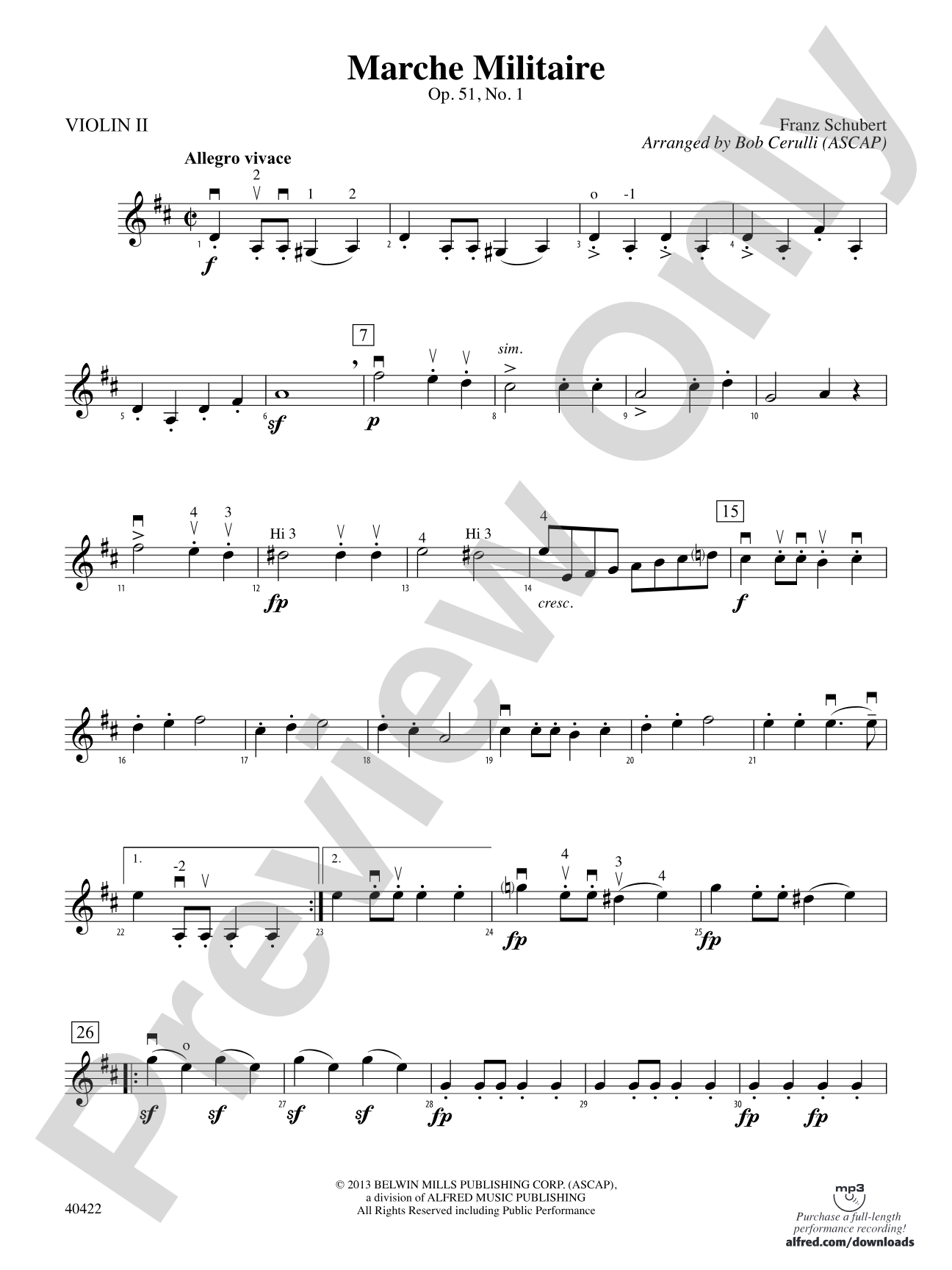
March Militaire: 2nd Violin Sheet Music Preview

March Militaire: 2nd Violin

Op. 51, No. 1

By Franz Schubert / arr. Bob Cerulli

Grade: 2.5

Item: 00-PC-0015956_VN2

Digital Download
$5.99
Description
This lovely arrangement is perfect for festival or contest. Sure to be a success technically and musically with easily accessible hi-3 fingerings! This title is available in MakeMusic Cloud.

Don't just read it, hear it, play along with it, and watch your students grow with it. In MakeMusic Cloud, March Militaire: 2nd Violin comes alive with professional accompaniment, adjustable tempo, and built-in practice tools that turn solo practice into real progress.

Sample Audio
0:00
0:00
Sample Video
Additional Details
Series: Belwin Intermediate String Orchestra
Publisher: Alfred Music
Page Count: 144
SKU: 00-PC-0015956_VN2

More about this title

About the Composer: Franz Schubert

Franz Schubert (1797-1828) composed across every major genre during the Classical and early Romantic eras, yet much of his vast output remained unpublished during his lifetime. His gift for melody and harmonic color influenced generations of composers, and his works for string ensemble reveal a composer equally at home with intimate chamber writing and orchestral grandeur.

Schubert's marches hold a special place in concert repertoire. Written for both piano and orchestra, they blend the direct, energetic character of military music with the lyrical sensibility that defines his style. This particular march demonstrates why his instrumental works remain central to music education and concert programming.

Why we love this

Bob Cerulli's arrangement captures the character of Schubert's original while respecting the technical reality of intermediate players. The fingering solutions keep the piece singable rather than gymnastic, which means your students can focus on shaping phrases and executing the style rather than wrestling with position shifts. This is the kind of arrangement that makes a strong festival performance feel within reach.

What to expect

Bright, purposeful, and rhythmically animated. The march pulse is immediate and energizing, but Schubert's melodic gift prevents it from becoming merely military bluster. There's buoyancy here, a sense of forward motion touched with Austrian charm.

Who it's for

String orchestras at the Grade 2.5 level who are ready for a recognized masterwork but need an arrangement that doesn't demand extensive vibrato technique or high-position agility. This works equally well for rehearsal ensembles that want accessible repertoire with genuine musical substance and for groups preparing for festival or contest.

How to get the most out of it

  • Balance the march character with song. The piece thrives when players deliver clear rhythmic articulation in the first section but resist the urge to sound mechanical; let the natural lilt of the melody shape your phrasing.
  • Shape the dynamic contours phrase by phrase rather than hitting sudden forte-piano shifts. Graduated crescendos and diminuendos will feel more sophisticated and allow the melodic line to breathe.
  • Lock the rhythm section (cellos and basses) with precision in passages that sit beneath the main melodic material. A steady, secure foundation will free your first violins to shape the melody without rushing.
  • Invest in the contrasting section if one exists. Even at this grade level, shifting character between sections gives directors and audiences something to hear and remember.

How to use it

Program this as a concert opener or a festival selection that shows off your ensemble's rhythmic control and melodic poise. It pairs well with lighter contemporary pieces or as a contrasting moment between heavier Romantic works. The 144-page score suggests this is substantial enough to anchor a program segment without overwhelming younger players.

Skills your students will build

  • Stylistic control in Classical-Romantic idioms
  • Sustainable vibrato and tone production across multiple phrases
  • First and second position security with accessible fingering choices
  • Dynamic contrast and phrase shaping at moderate tempos
  • Rhythmic precision in marcato and legato articulation within a march context

You May Also Like