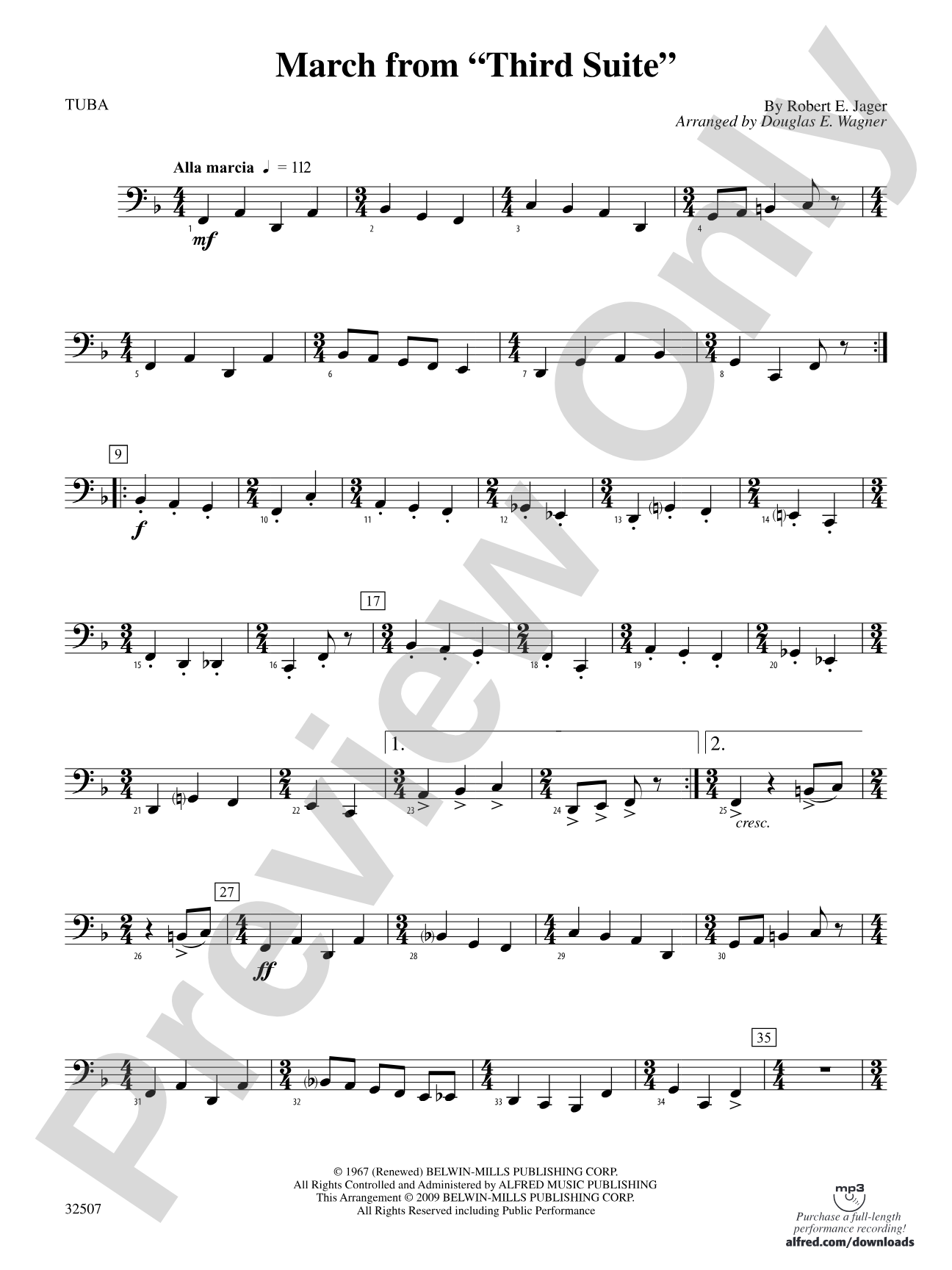
March from "Third Suite": Tuba Sheet Music Preview

March from "Third Suite": Tuba

By Robert E. Jager / arr. Douglas E. Wagner

Grade: 2 (Easy)

Item: 00-PC-0014384_TB1

Digital Download
$3.00
Description
In the words of the composer, Robert Jager, the steady feel and rhythm of a march are somewhat distorted by measures of unequal time values. It is a delight to finally offer this distinguished and time-honored band classic in a practical arrangement with younger players in mind. Although the diminished technical demands at this level have dictated some specific and broad changes, the original style, intent and musical color of the work have been maintained.

This title is available in MakeMusic Cloud.

Don't just read it, hear it, play along with it, and watch your students grow with it. In MakeMusic Cloud, March from "Third Suite": Tuba comes alive with professional accompaniment, adjustable tempo, and built-in practice tools that turn solo practice into real progress.

Sample Audio
0:00
0:00
Sample Video
Additional Details
Series: Pop Young Band
Publisher: Alfred Music
Page Count: 224
SKU: 00-PC-0014384_TB1

More about this title

About the Composer: Robert E. Jager

Robert E. Jager is a prolific composer and arranger whose works have become staples in concert band repertoire at all levels. His compositions combine accessibility with genuine musical substance, making him a trusted voice for directors building programs that engage both student musicians and audiences.

Why we love this

Wagner's arrangement captures everything that makes Jager's original distinctive without overwhelming younger players. The rhythmic playfulness of the mixed meter sections remains intact, giving your ensemble a piece with real character and personality rather than a generic march.

What to expect

A march that knows itself but refuses to be predictable. The piece has swagger and forward motion, yet the changing meter creates subtle surprise and keeps both players and listeners engaged. It feels contemporary within the march tradition.

Who it's for

Grade 2 bands with solid fundamental technique who are ready for pieces with structural sophistication. This works well for ensembles that have mastered basic time signatures but haven't yet tackled advanced rhythmic complexity.

How to get the most out of it

  • Emphasize the contrast between the steady march foundation and the metric disruptions. Those shifting time values are the heart of the piece, so highlight them rather than gloss over them.
  • Balance the ensemble weight carefully during transitions between sections. Younger bands often pile on tone during louder passages; ask for controlled power instead.
  • Let the rhythm section lock in early. A secure foundation from percussion and low brass makes those unusual meter changes feel intentional rather than accidental.

How to use it

This works beautifully as a contest selection or concert opener that establishes energy without demanding technical virtuosity. It also pairs well with traditional marches, offering audiences a familiar form with unexpected twists.

Skills your students will build

  • Reading and executing mixed meter changes (primarily 4/4 and 3/4)
  • Maintaining rhythmic precision during metric shifts
  • Balance and blend in a march-style arrangement
  • Articulation control in fast-moving passages
  • Ensemble security when the expected rhythmic pattern breaks

You May Also Like