
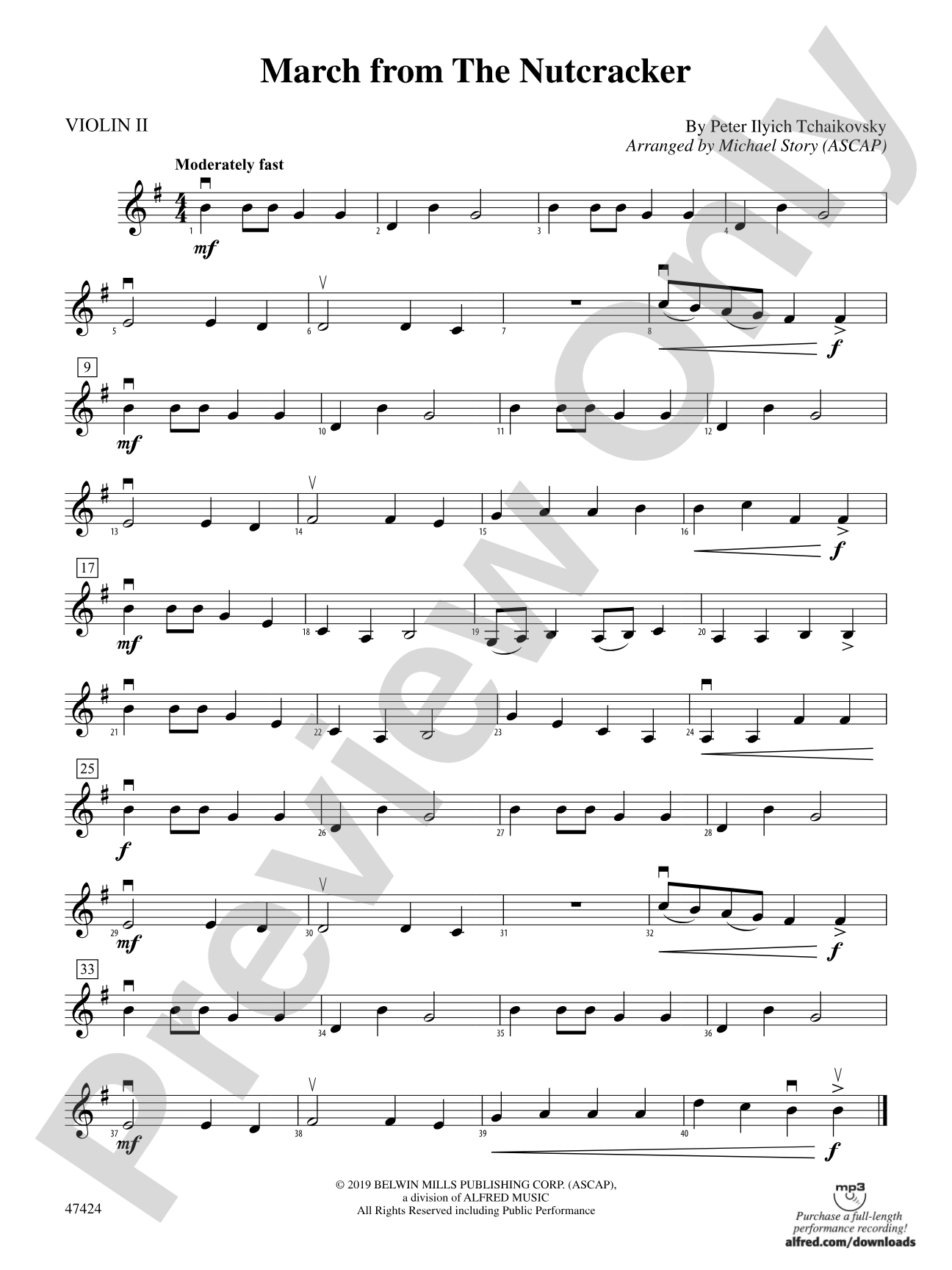

March from The Nutcracker: 2nd Violin
By Peter Ilyich Tchaikovsky / arr. Michael Story
Grade: 0.5
Item: 00-PC-0017955_VN2
$5.99
Pickup currently not available
Description
This piece is sure to get your students and audiences in the holiday mood. The familiar melody, straightforward rhythms, and optional percussion create a wonderful arrangement of this timeless classic. A great opener for any holiday concert.


Don't just read it, hear it, play along with it, and watch your students grow with it. In MakeMusic Cloud, March from The Nutcracker: 2nd Violin comes alive with professional accompaniment, adjustable tempo, and built-in practice tools that turn solo practice into real progress.
Open in the Player
Jump straight in and assign it today.
Start Your Free Trial
Open this title and explore the full library in minutes.
Sample Audio
1
Audio File
--:--
0:00
0:00
Sample Video
Additional Details
Series:
Belwin Very Beginning String Orchestra
Publisher:
Alfred Music
Page Count:
70
SKU:
00-PC-0017955_VN2
More about this title
About the Composer: Peter Ilyich Tchaikovsky
Peter Ilyich Tchaikovsky (1840-1893) was a Russian composer whose gift for melody and orchestration shaped the sound of 19th-century classical music. His ballets, symphonies, and concertos remain cornerstone repertoire in concert halls worldwide, valued equally by seasoned professionals and students encountering classical music for the first time.
Tchaikovsky possessed a rare ability to write music that operates on multiple levels: pieces that delight young listeners with their immediate charm while offering musicians of all ages genuine artistic substance. The Nutcracker, premiered in 1892, exemplifies this gift, with movements that have become synonymous with the winter season and remain accessible entry points into the orchestral repertoire.
Why we love this
Michael Story's arrangement captures the unmistakable character of Tchaikovsky's March while meeting beginning string players exactly where they are. The straightforward rhythms and familiar melodic shape mean students can focus on tone production and ensemble balance rather than wrestling with complex notation, yet the piece never feels condescended to. Programming this early in your holiday concert signals to audiences that the season has arrived while building genuine musicianship in your youngest players.
What to expect
The March radiates ceremonial energy and holiday warmth. Straightforward melodic lines move forward with clear purpose, supported by steady accompaniment that feels dignified rather than heavy. Even at this accessible level, the piece carries the grandeur and festive character audiences associate with Nutcracker music.
Who it's for
This arrangement serves beginning string orchestras and very young ensembles ready for their first full orchestral piece. It works equally well for homogeneous groups (all violins, for example) and mixed string sections, making it flexible for schools building their instrumental programs from the ground up.
How to get the most out of it
- Shape the main melody with consistent tone and vibrato where appropriate; the piece carries emotional weight even at this level, and the familiar tune deserves musical intention rather than mechanical execution.
- Balance the accompaniment figures so the melody sings without dominating; young string players often err toward loudness when playing supporting material, so rehearse the viola and cello lines with the same care you give the first violins.
- If using the optional percussion parts, establish a clear lead section in rehearsal so all players can hear where the downbeat lands; this creates security for the entire ensemble.
- Consider a moderate tempo that allows clean bowing clarity; resist the urge to rush, which often happens when students recognize the tune and want to move quickly.
How to use it
Open your winter or holiday concert with this piece to establish an immediate seasonal atmosphere and set a confident, celebratory tone from the first notes. Pair it with other accessible arrangements or original works for young orchestras to create a cohesive first half, then transition to more substantial repertoire as the program progresses.
Skills your students will build
- Sustained bowing and tone consistency across phrase lengths
- Reading and maintaining simple rhythmic patterns (quarter notes, eighth notes, half notes, whole notes)
- Ensemble balance between melody and accompaniment voices
- Following conductor cues and managing ensemble entries
- Recognizing and performing standard orchestral texture (melody with harmonic support)