
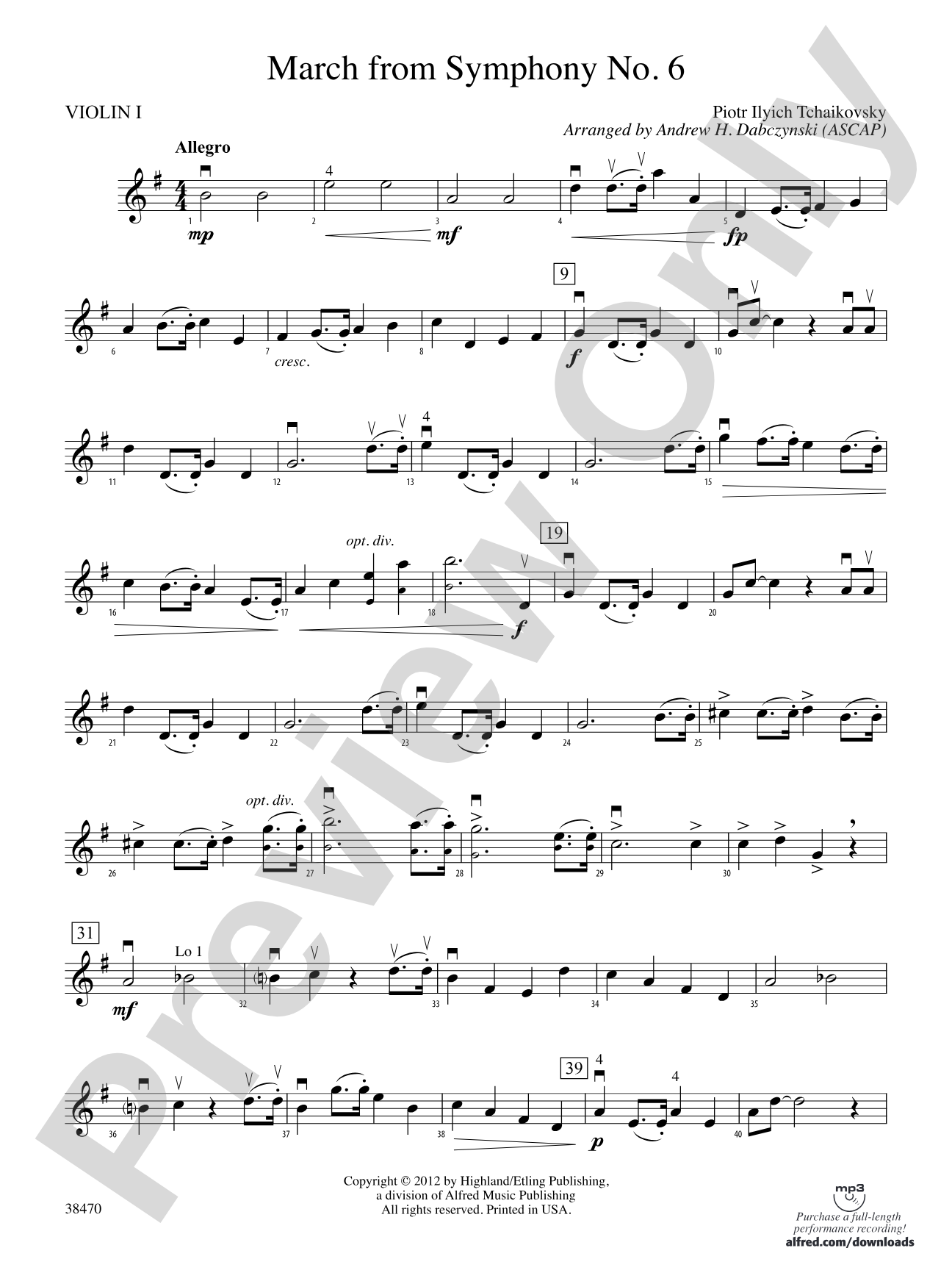

March from Symphony No. 6: 1st Violin
By Peter Ilyich Tchaikovsky / arr. Andrew H. Dabczynski
Grade: 2
Item: 00-PC-0015518_VN1
$5.99
Pickup currently not available
Description
For over 100 years, audiences have left concert halls happily humming this lovely tune. The stirring rhythms and melodies of one of the world's greatest Romantic compositions are achievable even after the first year of study. More advanced students will find the arrangement fulfilling and motivational as they delight in its rich harmonies and signature hooked bowing pattern. A great opener---or closer! This title is available in MakeMusic Cloud.


Don't just read it, hear it, play along with it, and watch your students grow with it. In MakeMusic Cloud, March from Symphony No. 6: 1st Violin comes alive with professional accompaniment, adjustable tempo, and built-in practice tools that turn solo practice into real progress.
Open in the Player
Jump straight in and assign it today.
Start Your Free Trial
Open this title and explore the full library in minutes.
Sample Audio
1
Audio File
--:--
0:00
0:00
Sample Video
No sample videos found.
Additional Details
Series:
Highland/Etling String Explorer
Publisher:
Alfred Music
Page Count:
140
SKU:
00-PC-0015518_VN1
More about this title
About the Composer: Peter Ilyich Tchaikovsky
Pyotr Ilyich Tchaikovsky (1840–1893) stands as one of the Romantic era's most gifted melodists, with a gift for writing themes that lodge instantly in the listener's memory. His orchestral works have remained concert staples for generations, prized equally by audiences and musicians for their emotional directness and technical brilliance.
In the classroom, Tchaikovsky's music offers young string players immediate connection to the Romantic repertoire. His melodies are generous and singable, his harmonies rich but transparent, and his orchestration clear enough for students to hear their individual lines within the full texture. This arrangement of the March from Symphony No. 6 demonstrates why his music endures: it engages both heart and ear, making even Grade 2 players feel they are performing something genuinely important.
Why we love this
This arrangement captures the infectious energy of one of Tchaikovsky's most recognizable melodies without compromising the dignity of the original. What makes it particularly rewarding to conduct is how the Grade 2 voicing remains honest to the harmonic language and orchestral intent of the score; students hear themselves playing Tchaikovsky, not a simplified approximation of it. The hooked bowing figure becomes a signature moment that students look forward to learning and executing together.
What to expect
Stately and uplifting, with the character of a ceremonial march filtered through Romantic warmth. The melody unfolds with natural lyricism, supported by rich harmonic movement and a distinctive rhythmic figure that gives the piece its memorable profile.
Who it's for
String orchestras in their first or second year of study will find this piece achievable and genuinely musical. More experienced groups will appreciate the authentic harmonic language and the satisfaction of performing a beloved Romantic masterwork at their level.
How to get the most out of it
- Bring out the character of the opening theme by balancing melody and accompaniment carefully; even at Grade 2, the fuller string sound supports rather than obscures the soaring line.
- The hooked bowing pattern requires attention to uniform bow placement and pressure across the section. Practice the rhythmic shape separately before combining with pitch.
- Maintain the march's forward momentum without rushing; Romantic phrasing lives in the breath between phrases, not in tempo fluctuation.
- Exploit the dynamic contrasts to shape the form; the arrangement's harmonic and textural shifts reveal the architecture of the original symphony.
How to use it
This title works equally well as a concert opener, where it immediately establishes ensemble confidence and audience goodwill, or as a satisfying finale that leaves listeners with a tune they'll hum on the way out. It also fits seamlessly into a Romantic era spotlight or a celebration of masterwork arrangements at festival.
Skills your students will build
- Sustaining long melodic lines with phrase shape and direction
- Executing hooked bowings with precision and rhythmic clarity
- Balancing melody and harmonic accompaniment within the string choir
- Reading and responding to dynamic and tempo markings that shape musical character
- Understanding orchestration by hearing individual string parts within the full score