
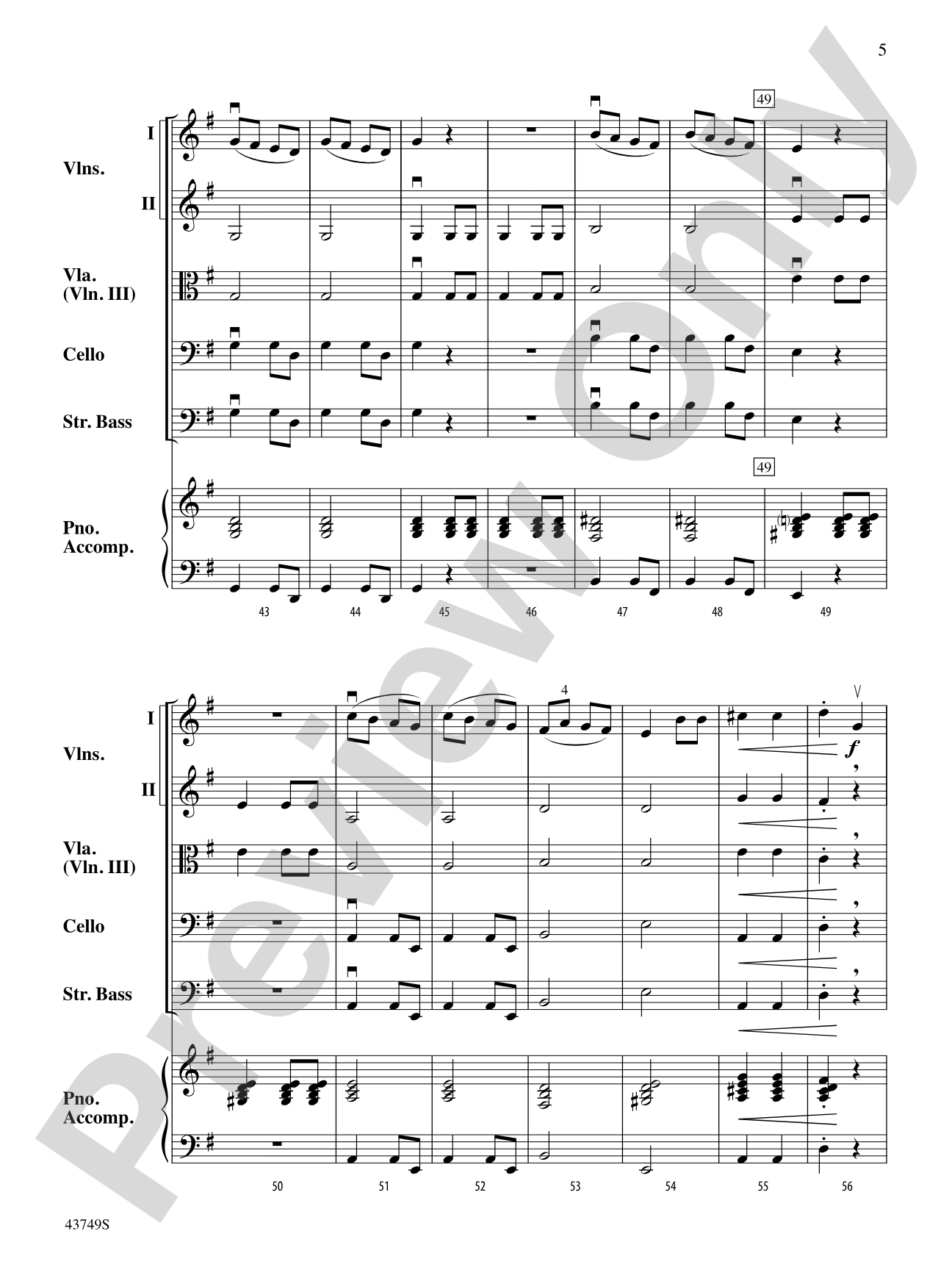
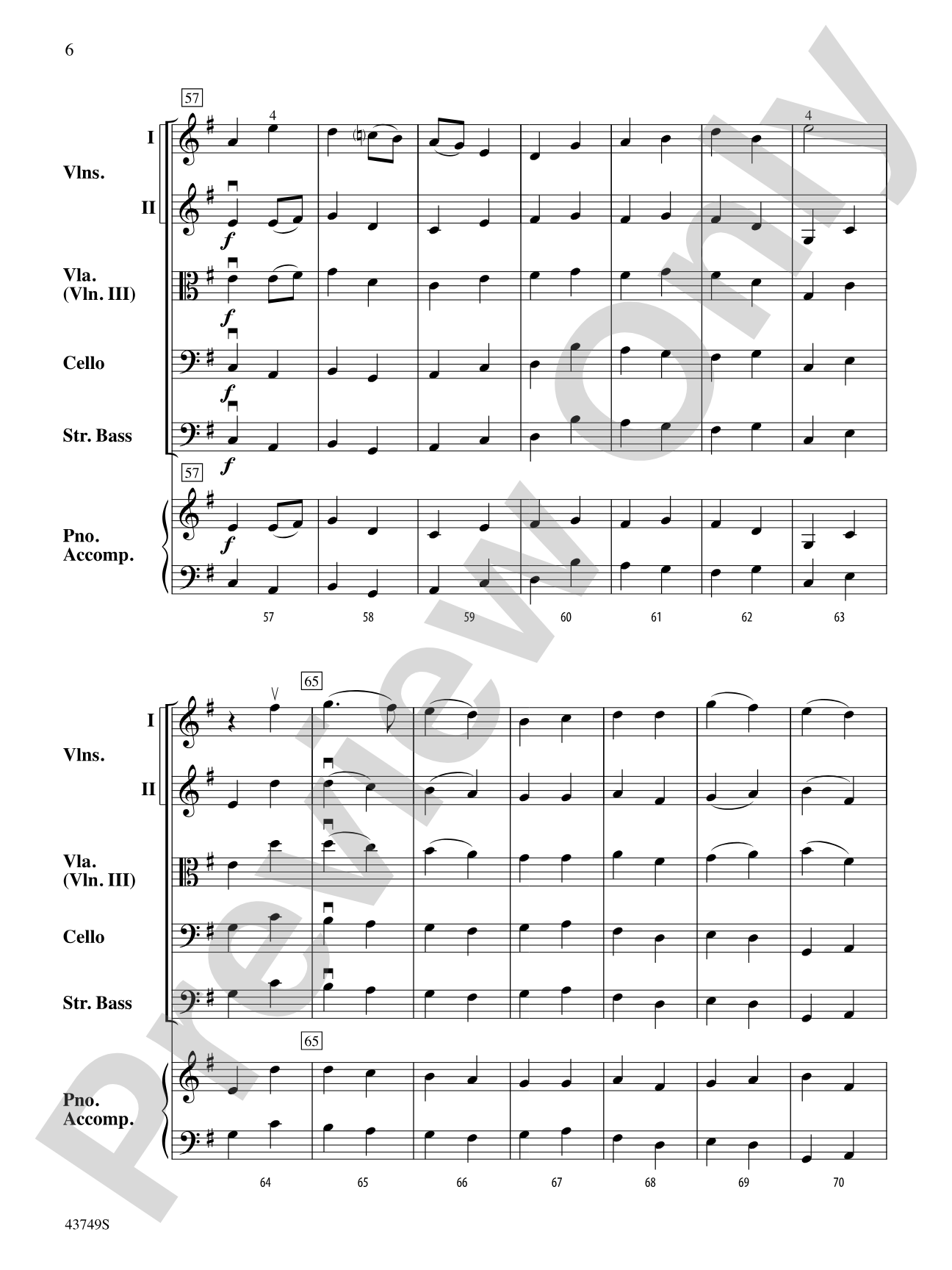
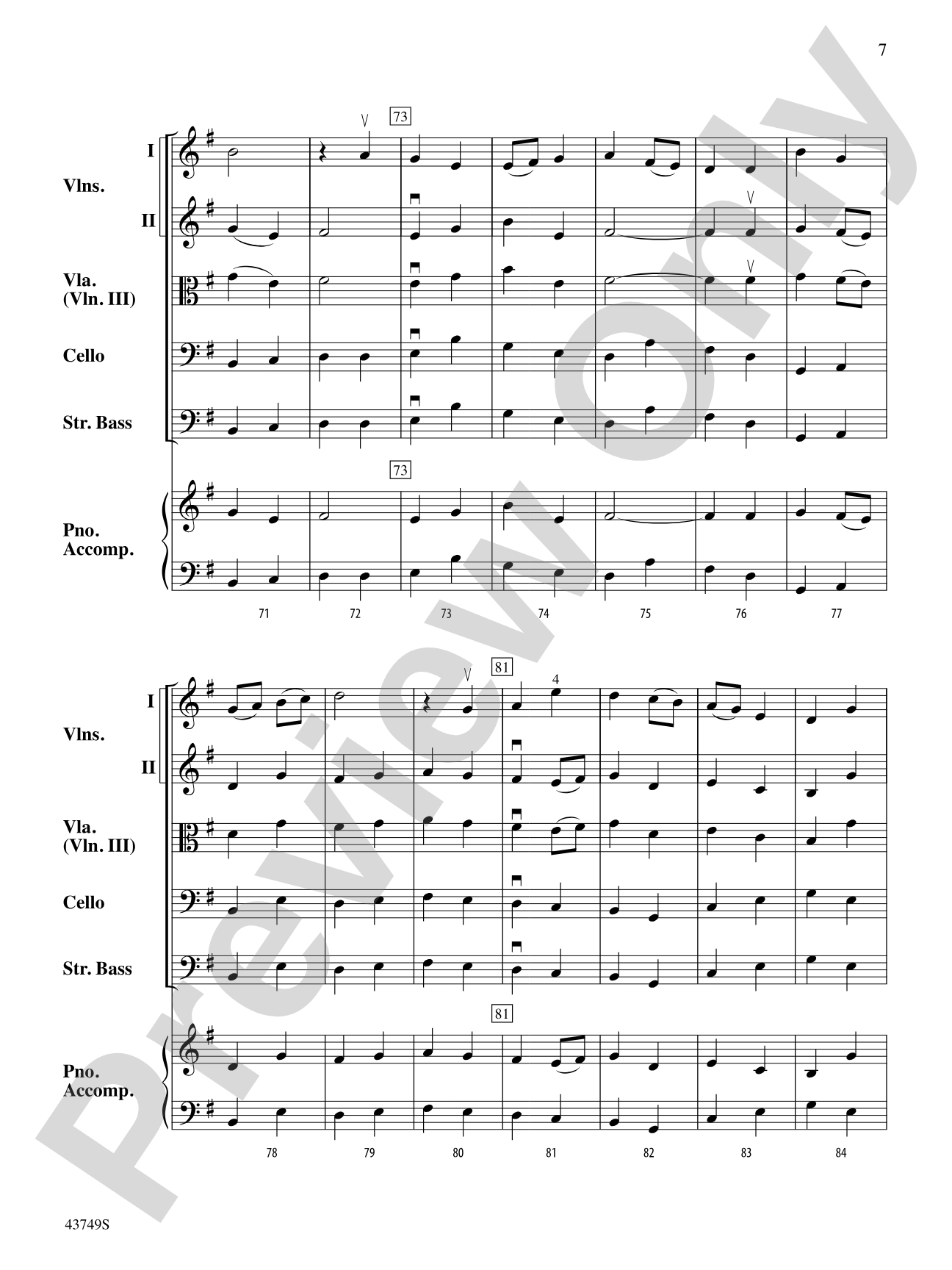
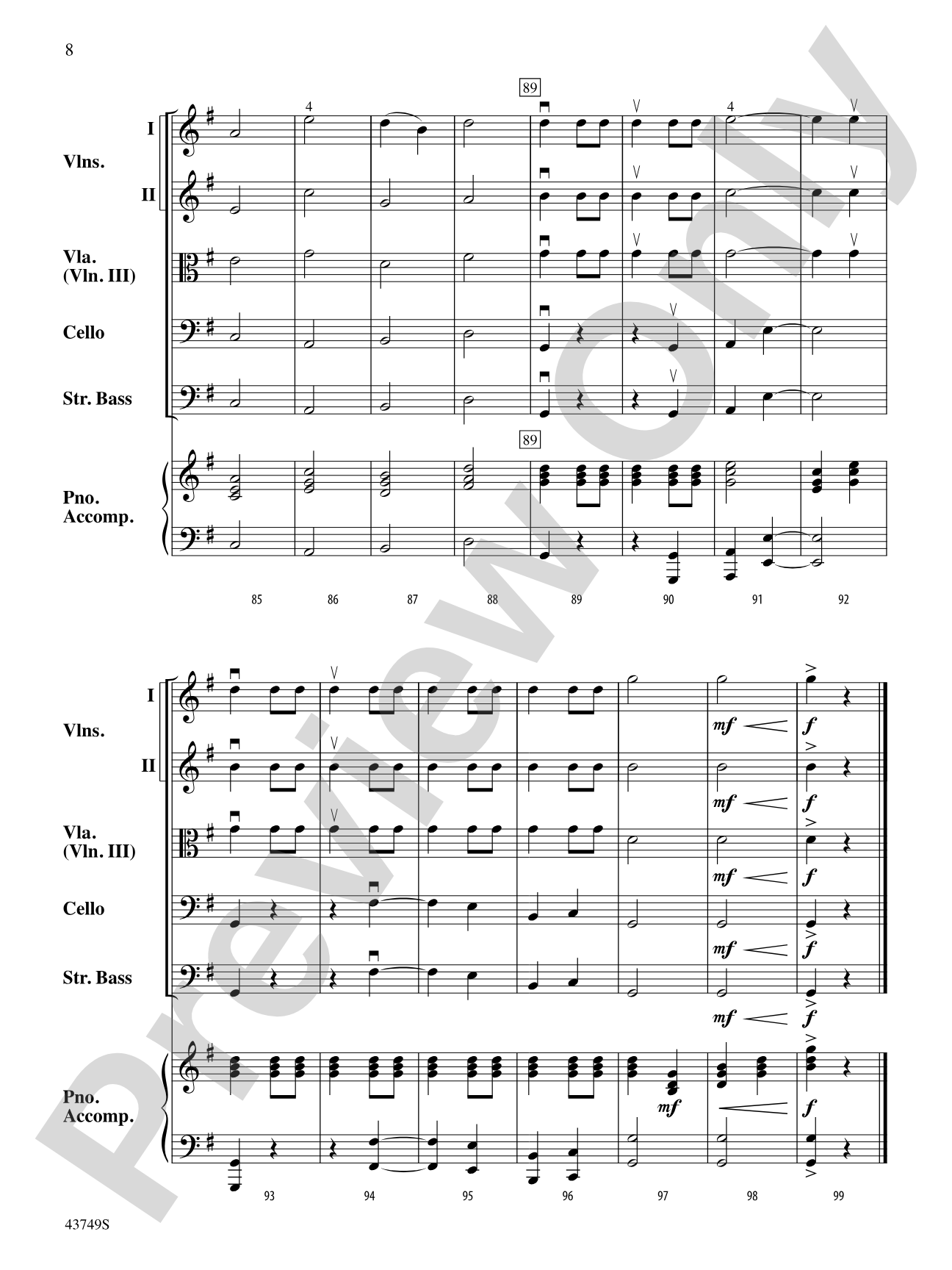

March from Suite No. 1: Score
By Gustav Holst / arr. Michael Story
Grade: 1.5
Item: 00-PR-0005096
$8.00
Pickup currently not available
Description
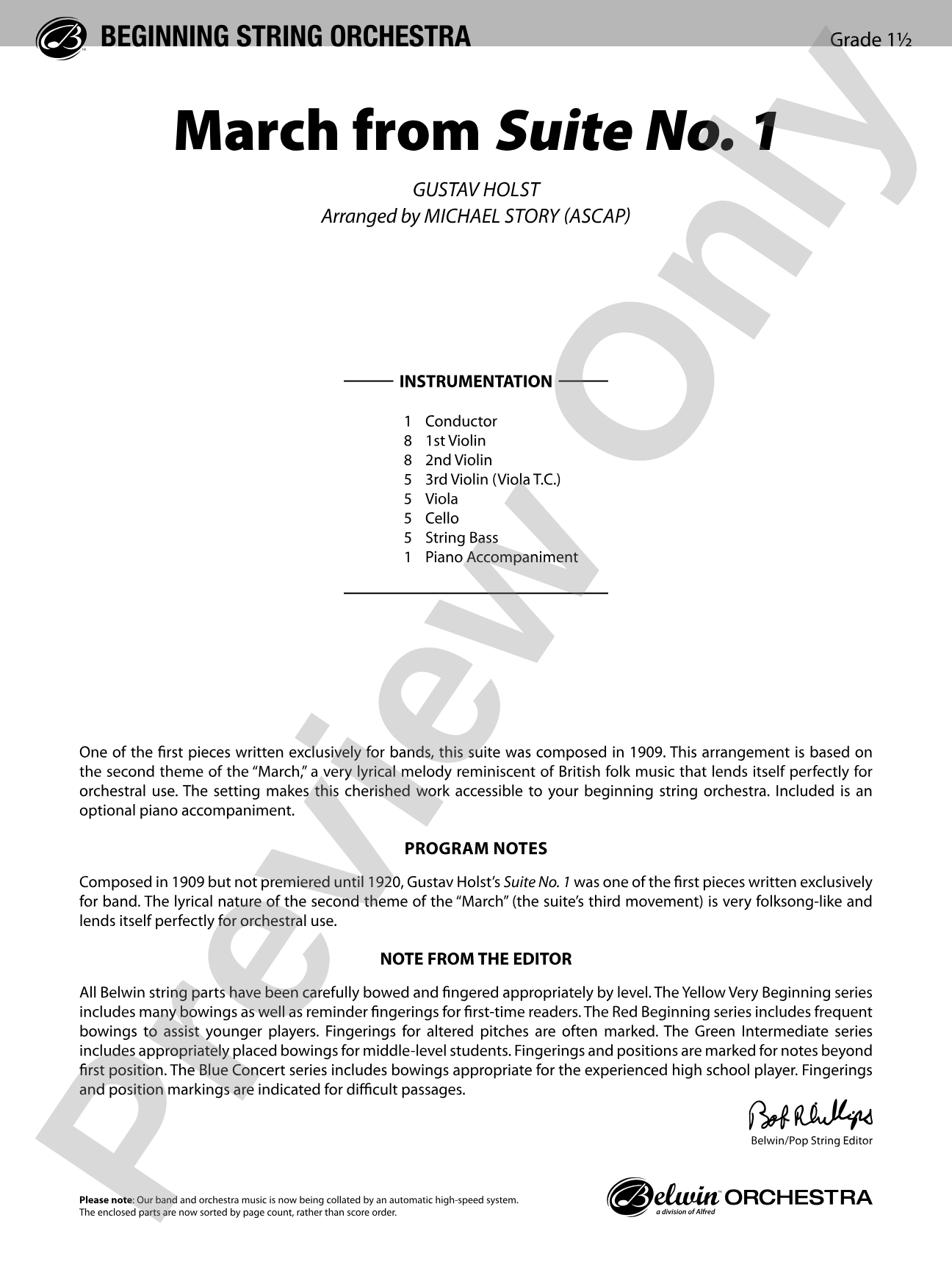
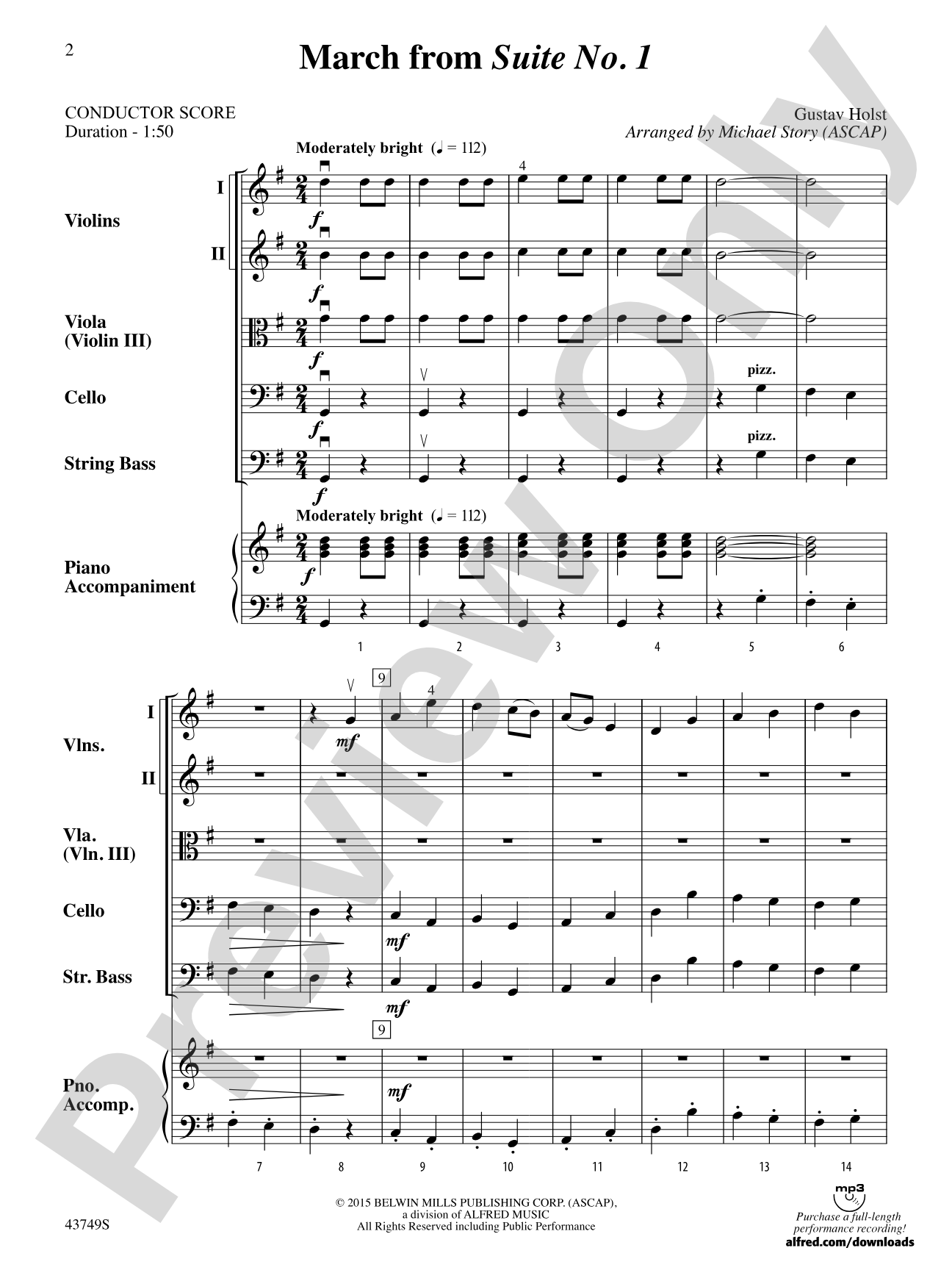
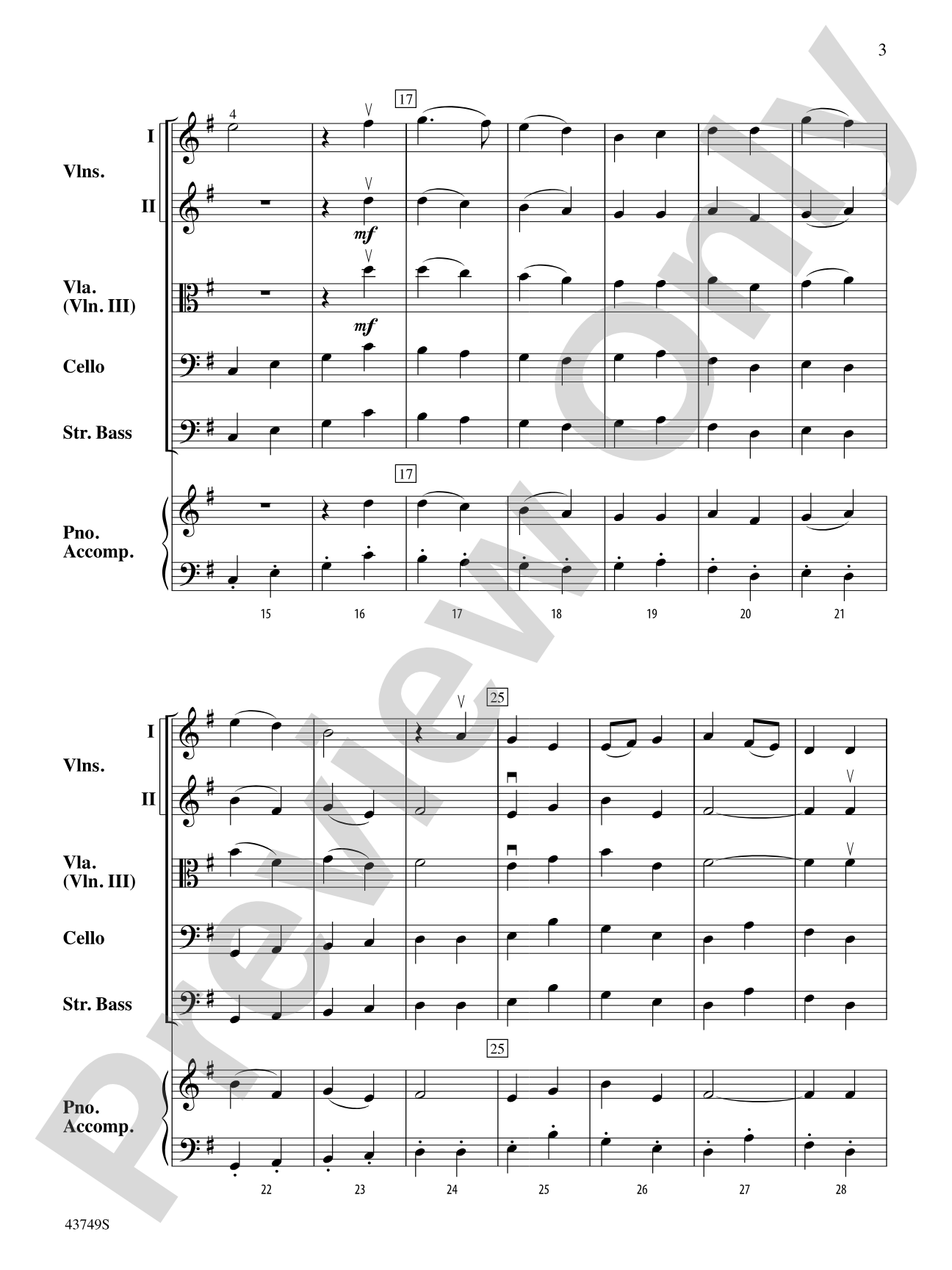
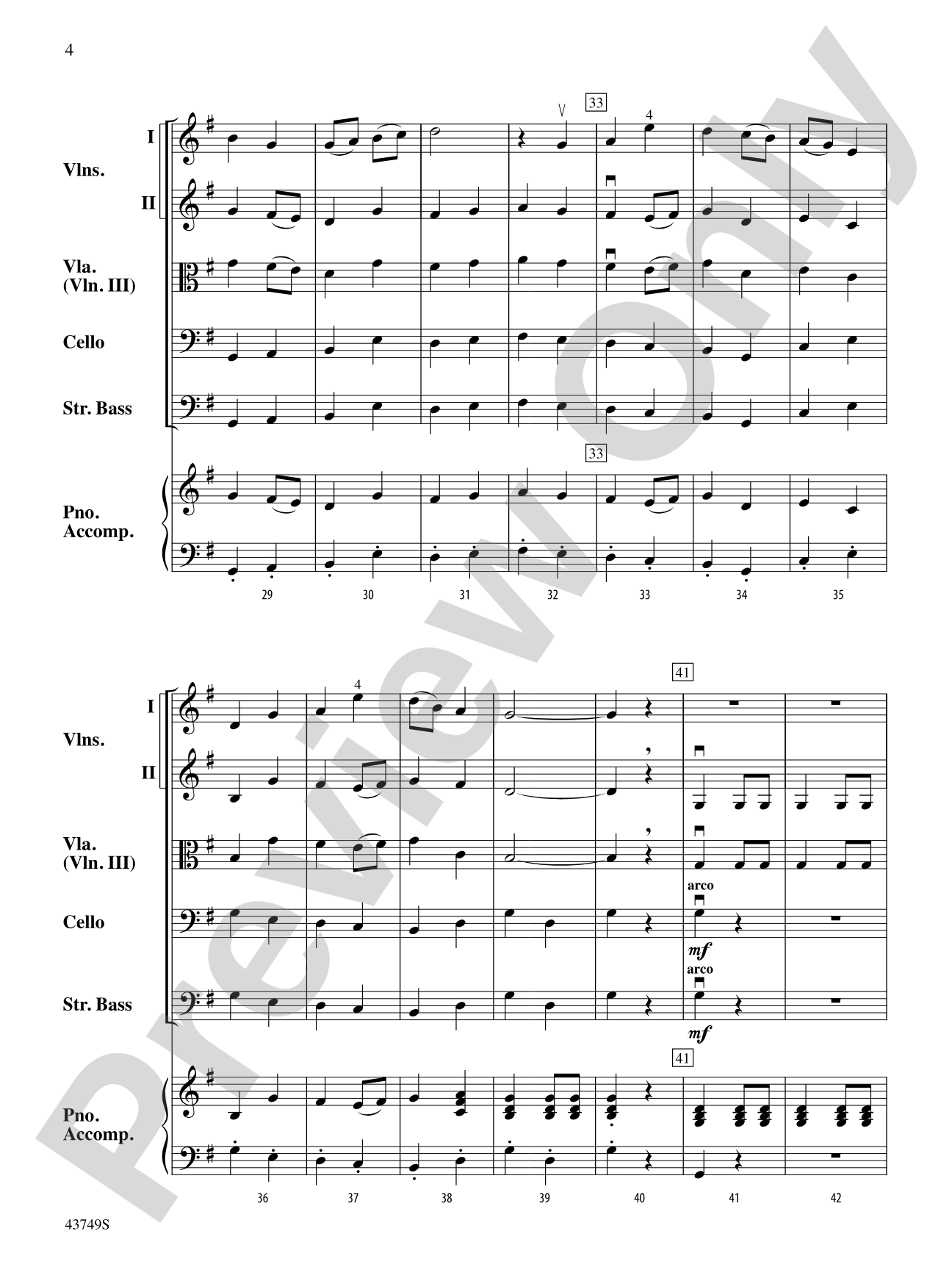
One of the first pieces written exclusively for bands, this movement includes a very lyrical melody reminiscent of British folk music that lends itself perfectly for orchestral use. Included is an optional piano accompaniment. (1:50)


Don't just read it, hear it, play along with it, and watch your students grow with it. In MakeMusic Cloud, March from Suite No. 1: Score comes alive with professional accompaniment, adjustable tempo, and built-in practice tools that turn solo practice into real progress.
Open in the Player
Jump straight in and assign it today.
Start Your Free Trial
Open this title and explore the full library in minutes.
Sample Audio
1
Audio File
--:--
0:00
0:00
Sample Video
No sample videos found.
Additional Details
Series:
Belwin Beginning String Orchestra
Publisher:
Alfred Music
Page Count:
76
SKU:
00-PR-0005096
More about this title
About the Composer: Gustav Holst
Gustav Holst (1874-1934) composed some of the most enduring works in the orchestral repertoire while maintaining a lifelong commitment to music education. His belief that music should be accessible to young players shaped his approach to writing for student ensembles, resulting in scores that challenge developing musicians without overwhelming them.
Holst's early band compositions, including the Suite from which this March is drawn, demonstrated his conviction that young musicians deserved music of genuine artistic merit. His influence on music pedagogy extended beyond composition; he taught at multiple institutions and advocated for bringing quality literature into the hands of student orchestras and bands at all levels.
Why we love this
Michael Story's string arrangement honors Holst's original voice while creating an accessible entry point for young orchestras. The folk-song melody is instantly memorable and sits comfortably across string parts, making this a piece that sounds impressively mature even at Grade 1.5. Programming this opens doors to discussing Holst's legacy as both a visionary composer and champion of young musicians.
What to expect
A spirited processional with the character of an English country celebration. The melody unfolds with understated elegance, built from simple intervals that feel natural under the fingers yet convey unmistakable charm. There's a sense of purposeful forward motion, neither rushed nor heavy, that feels both period-appropriate and immediate.
Who it's for
String orchestras at Grade 1.5 seeking repertoire with genuine musical substance. This arrangement serves conductors building ensembles that are ready for melody-driven pieces but still developing technical facility. It rewards both developing players and attentive listeners.
How to get the most out of it
- Shape the lyrical melody with careful dynamic control; the folk-tune character emerges through gentle swelling rather than dramatic contrasts.
- Balance pizzicato accompaniment figures so they support without overshadowing the singing line.
- Consider using the optional piano accompaniment in concert settings to add warmth and fullness, particularly in larger venues.
How to use it
Open a concert with this piece to establish an accessible, welcoming tone while showcasing the ensemble's developing musicality. It pairs naturally with other grade 1.5 to 2 string literature in thematic programs exploring British composers or folk traditions. The brief runtime (1:50) makes it valuable for festival appearances where timing is exact.
Skills your students will build
- Sustaining melodic lines across longer phrases without pitch sagging
- Balancing multiple string parts where accompaniment figures require independence from melody
- Responding to conductor's dynamic shaping in a slow-to-moderate tempo context
- Reading a score arrangement that distributes melody across different instrumental families