
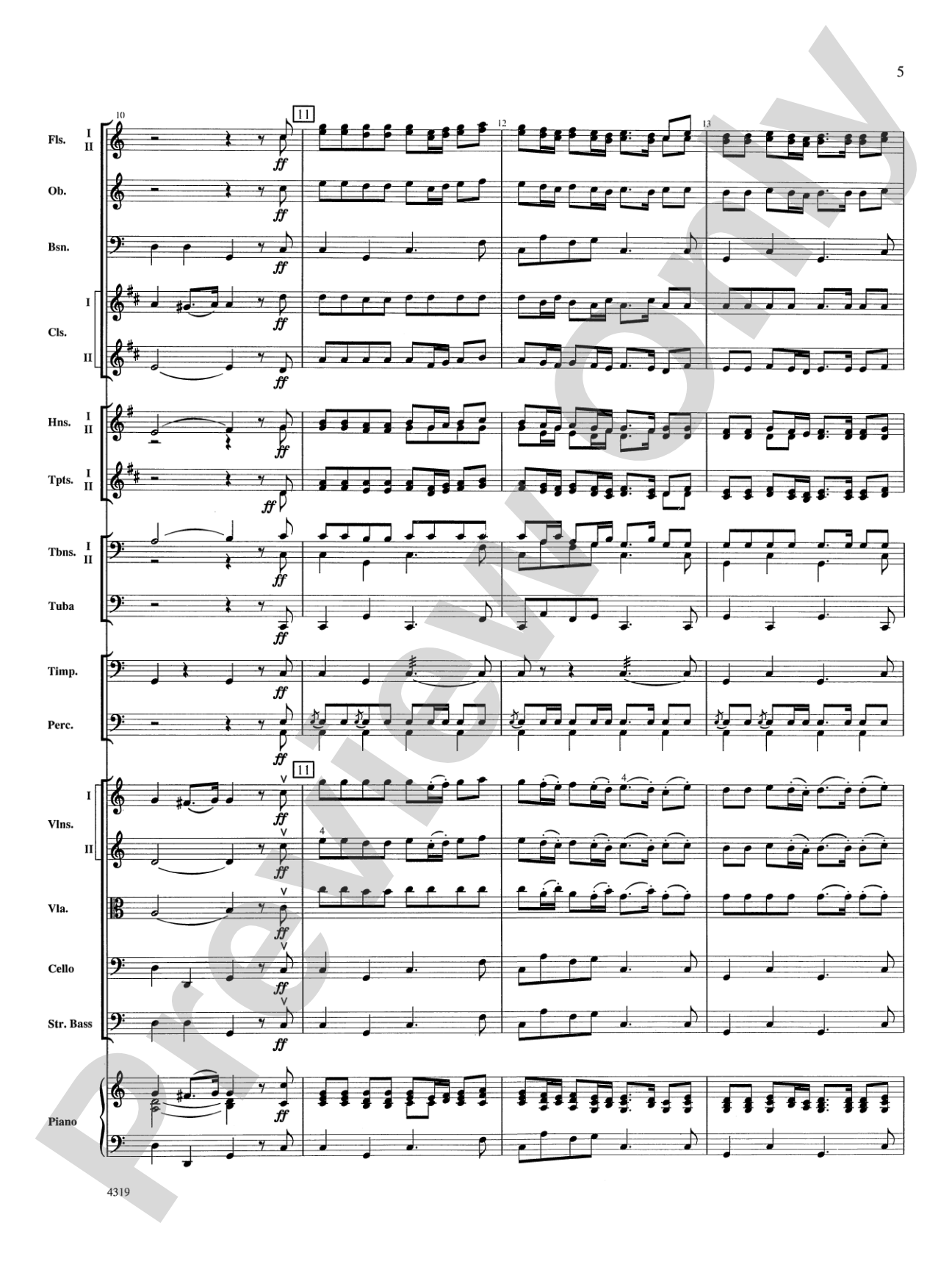
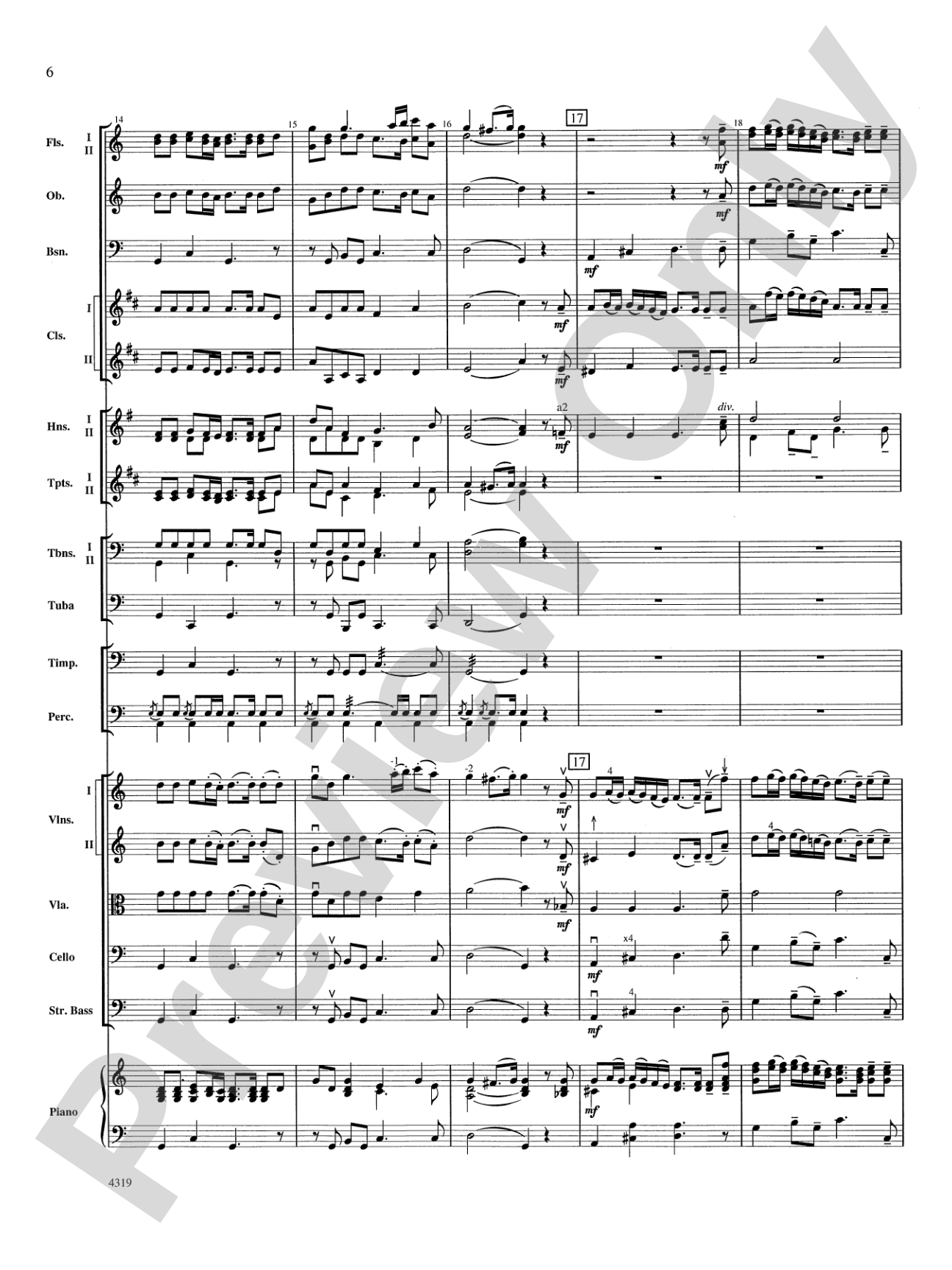
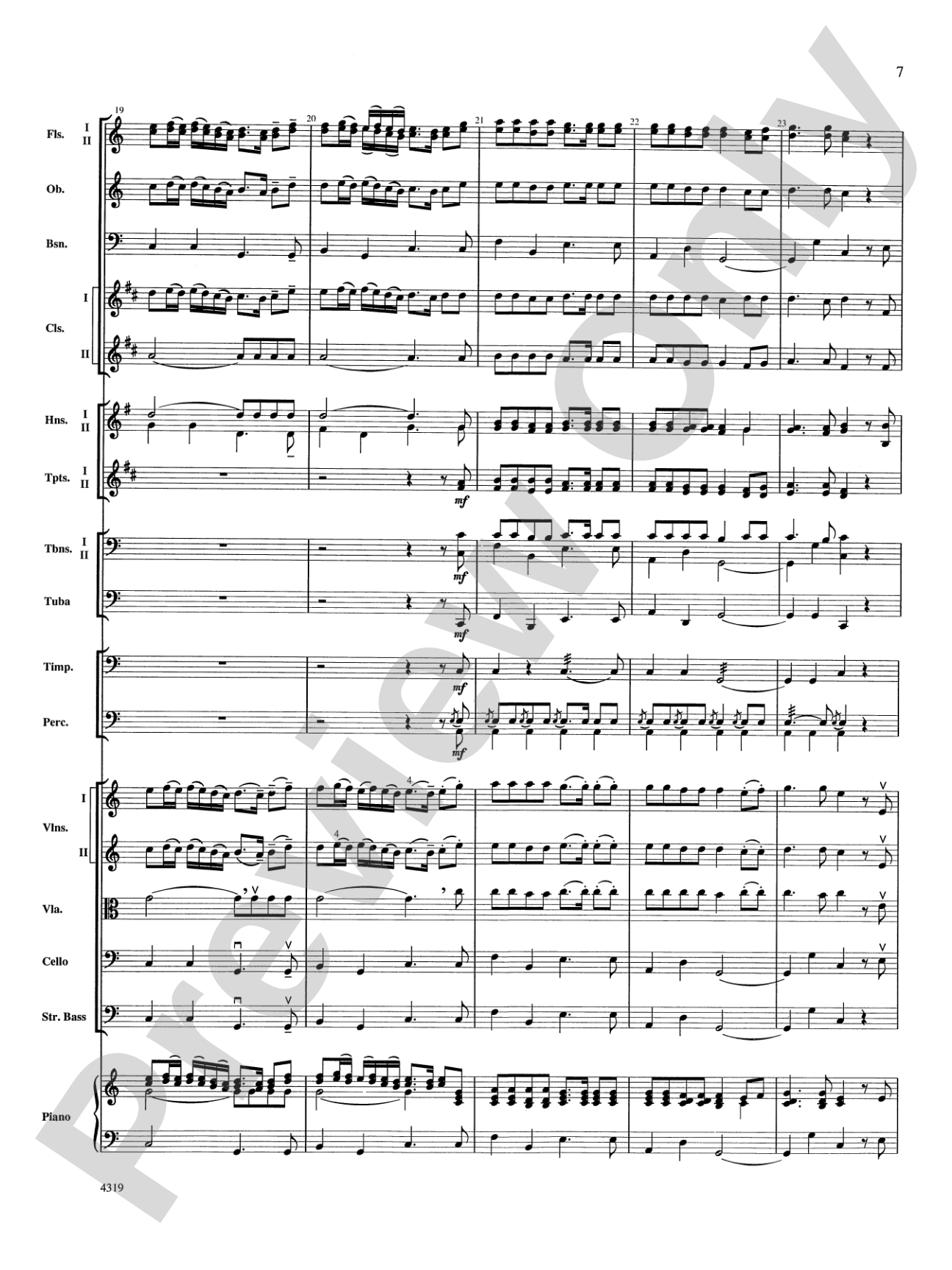
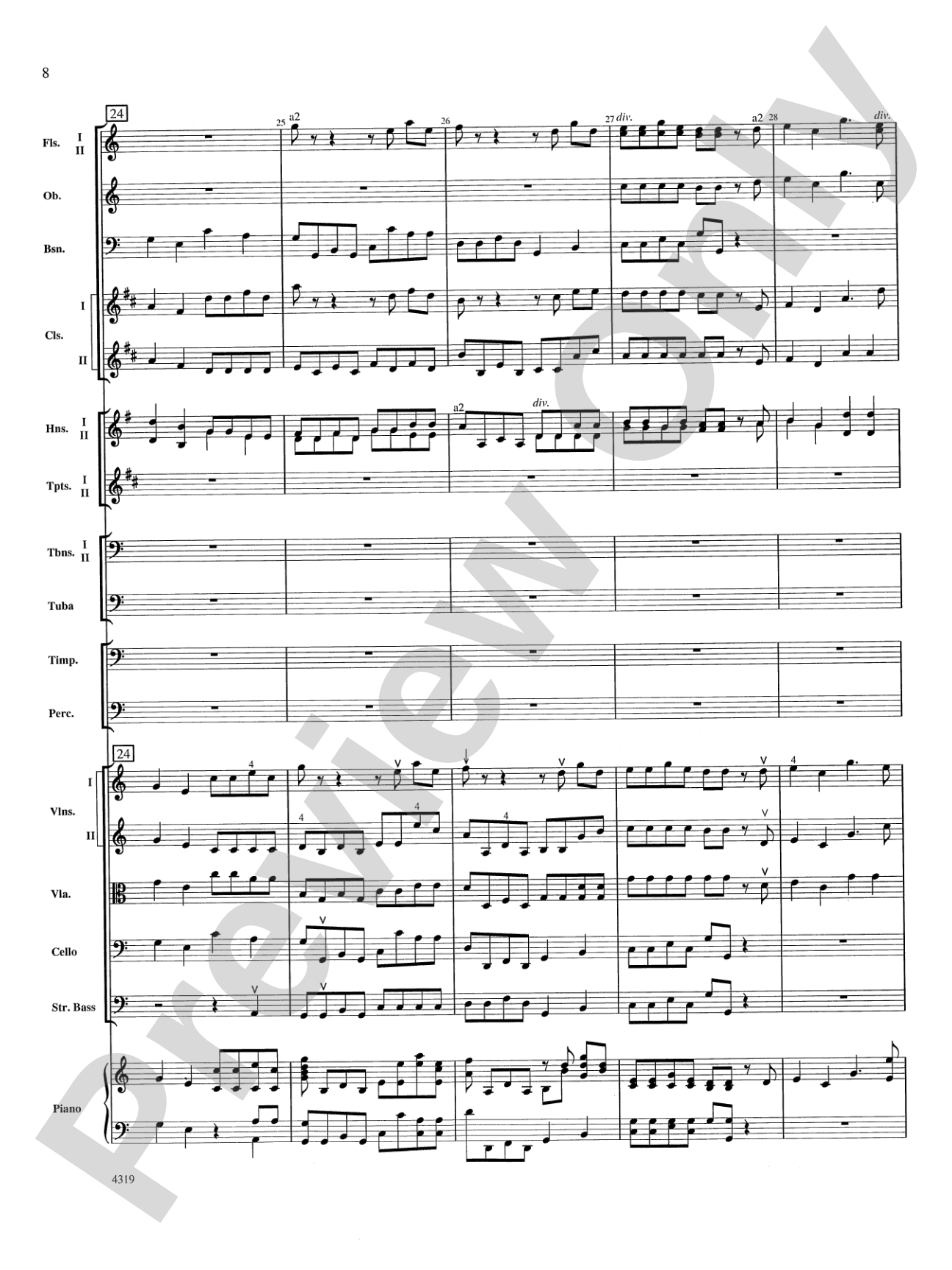
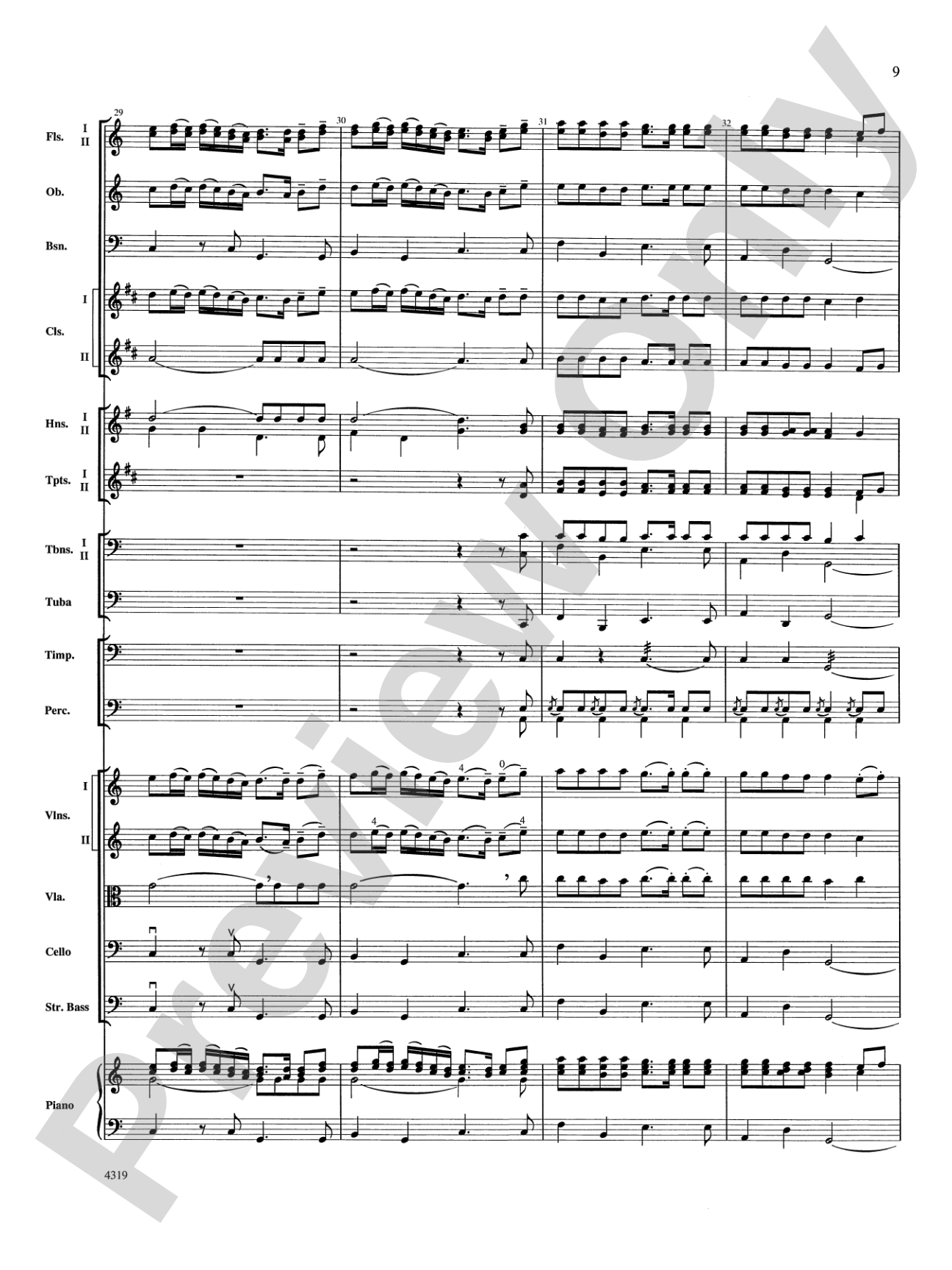
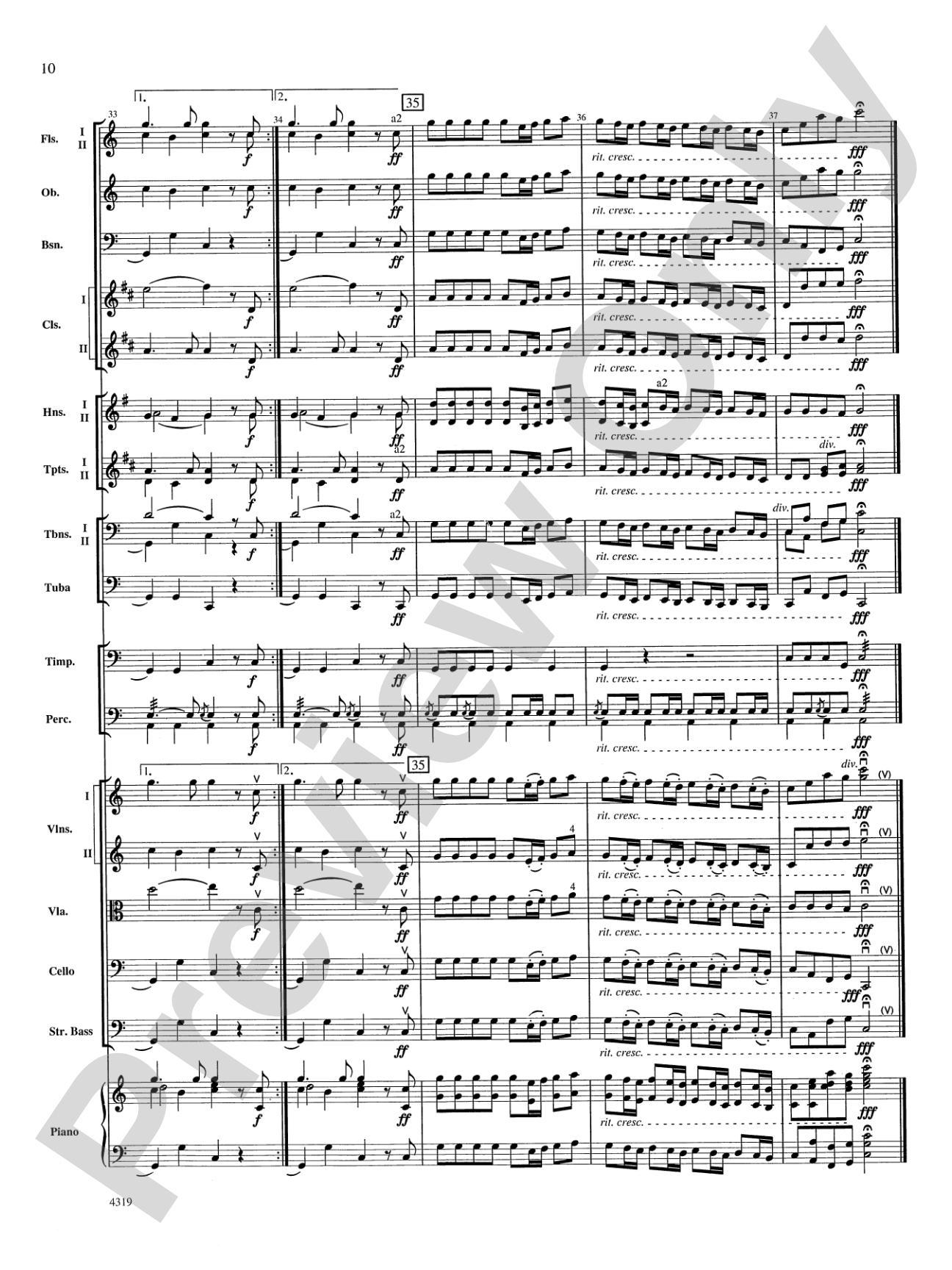



March from "Psalm 19": Full Orchestra Conductor Score & Parts
(from "Psalm 19")
By Benedetto Marcello / arr. Vernon Leidig
Grade: 2
Item: 00-PK-0001858

$63.00
Pickup currently not available
Buy Extra Parts (Digital PDF Download)
Parts Added to Cart!
Description
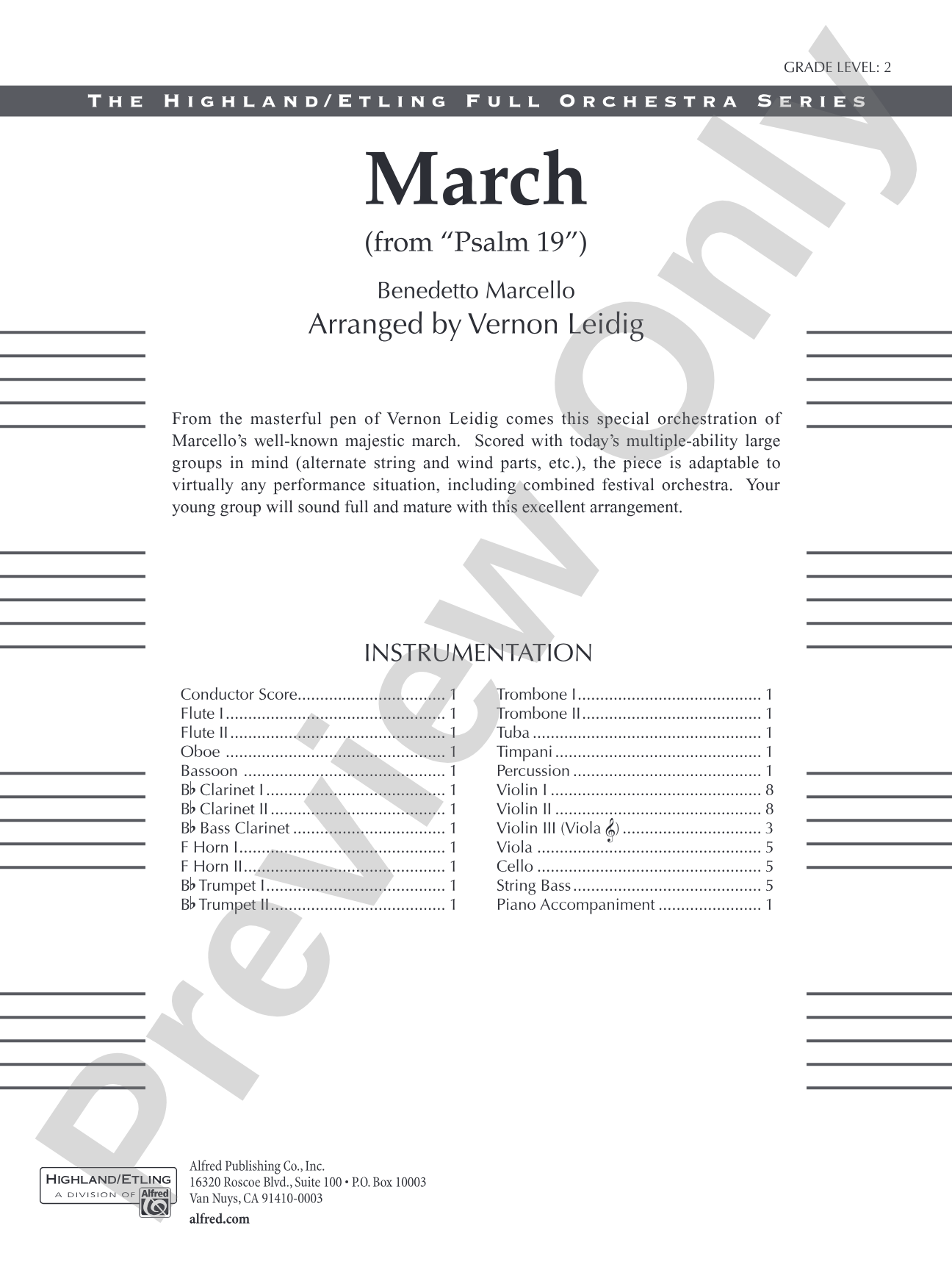
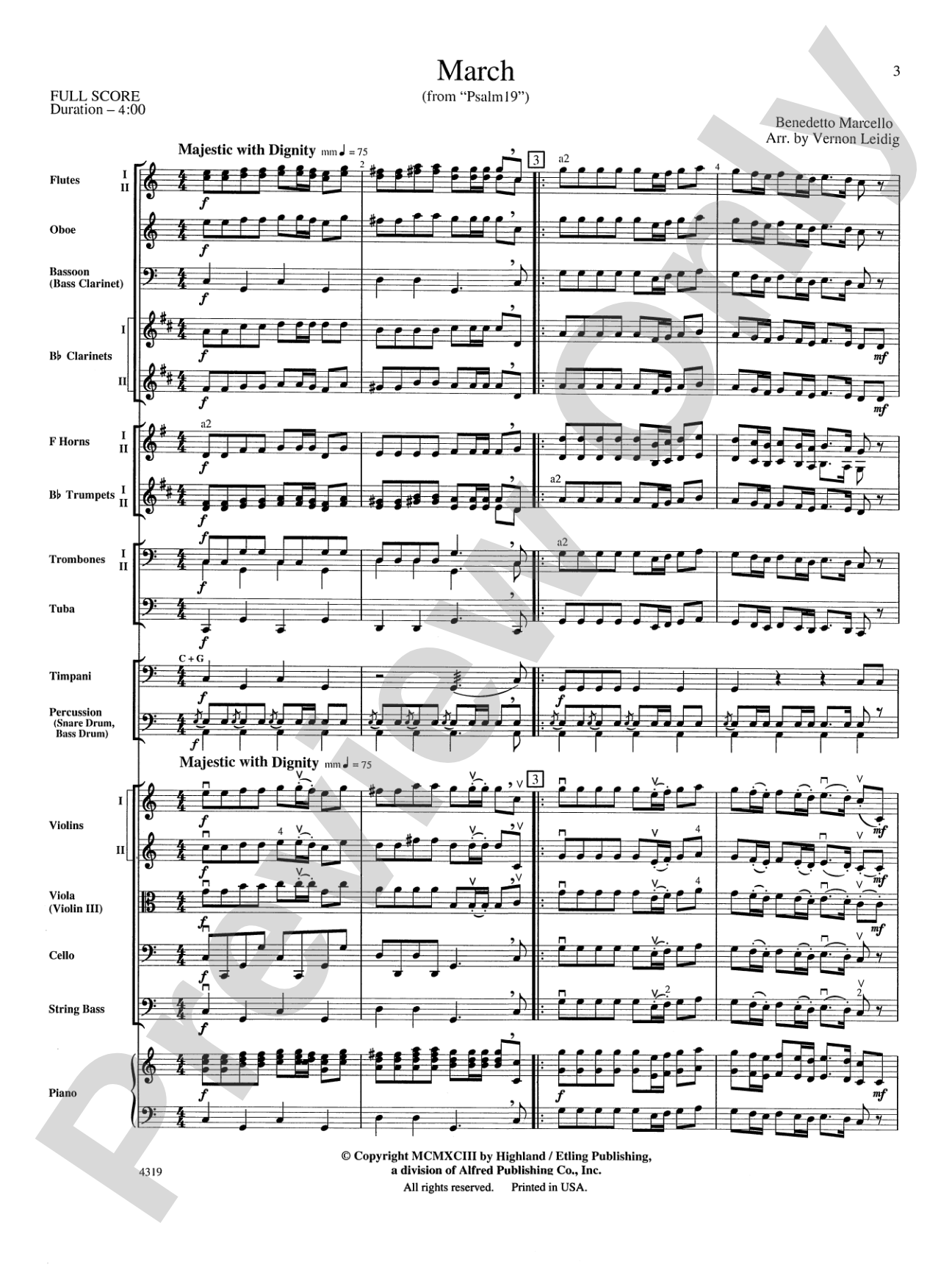
From the masterful pen of Vernon Leidig comes this special orchestration of Marcello's well-known majestic march. Scored with today's multipleability large groups in mind (alternate string and wind parts, etc.), the piece is adaptable to virtually any performance situation, including combined festival orchestra. Your young group will sound full and mature with this excellent arrangement.


Don't just read it, hear it, play along with it, and watch your students grow with it. In MakeMusic Cloud, March from "Psalm 19": Full Orchestra Conductor Score & Parts comes alive with professional accompaniment, adjustable tempo, and built-in practice tools that turn solo practice into real progress.
Open in the Player
Jump straight in and assign it today.
Start Your Free Trial
Open this title and explore the full library in minutes.
Sample Audio
No sample audio found.
Sample Video
No sample videos found.
Additional Details
Series:
Highland/Etling Full Orchestra
Publisher:
Alfred Music
Page Count:
104
SKU:
00-PK-0001858
More about this title
About the Composer: Benedetto Marcello
Benedetto Marcello (1686-1739) was a Venetian composer, virtuoso oboist, and nobleman whose instrumental works gained widespread popularity across Europe during his lifetime. His sonatas and concertos showcase the elegant melodic writing and harmonic sophistication characteristic of late Baroque instrumental music, and many remain staples of classical education and performance today.
Marcello's music is known for its singing quality and architectural clarity. His ability to craft memorable, lyrical themes that sit naturally for performers at all levels has ensured his works remain relevant in music education, where they serve as excellent models for understanding phrase structure, ornamentation, and the balance between formal clarity and expressive melody.
Why we love this
Marcello's march carries genuine gravity and forward motion without excessive technical difficulty, allowing Grade 2 orchestras to sound polished and assured. Vernon Leidig's orchestration thoughtfully includes alternates that let you shape the arrangement to fit your instrumentation, making it equally at home with a full symphonic ensemble or a smaller mixed group at festival competition.
What to expect
Stately and dignified, Marcello's march unfolds with the confident bearing of Baroque ceremonial music. The melody floats above supportive harmonies with elegance and poise, creating a mature sound that rewards both disciplined ensemble playing and genuine musicality.
Who it's for
This arrangement serves young orchestras in Grades 2-3 who are ready for Baroque masterworks but need the flexibility and accessibility that thoughtful scoring provides. It works equally well for mixed ensembles, community orchestras preparing for festival performance, and combined school groups where varied instrumentation requires practical alternatives.
How to get the most out of it
- Balance the melody across your string sections and woodwinds to let Marcello's singing line shine through without overpowering accompaniment figures.
- Maintain steady, confident tempo throughout; this march thrives on forward momentum and architectural clarity rather than expressive rubato.
- Use the alternate parts strategically to highlight your strongest section players on exposed passages and to redistribute weight when certain instruments are unavailable.
- Shape the phrases with gentle dynamic peaks that follow the natural arc of the melody rather than sudden contrasts.
How to use it
Program this early in a concert to establish polish and confidence, or place it as a festival competition piece where its combination of accessible difficulty and substantial musical content allows judges to hear real orchestral maturity. It pairs naturally with other Baroque or early Classical repertoire as part of an era-focused program.
Skills your students will build
- Sustained ensemble intonation across mixed Baroque harmonic writing
- Phrase shaping and melodic line continuity
- Part independence between sections (strings, woodwinds, brass)
- Reading multiple textural roles (melody, countermelody, accompaniment figuration)
- Baroque articulation and ornamentation conventions