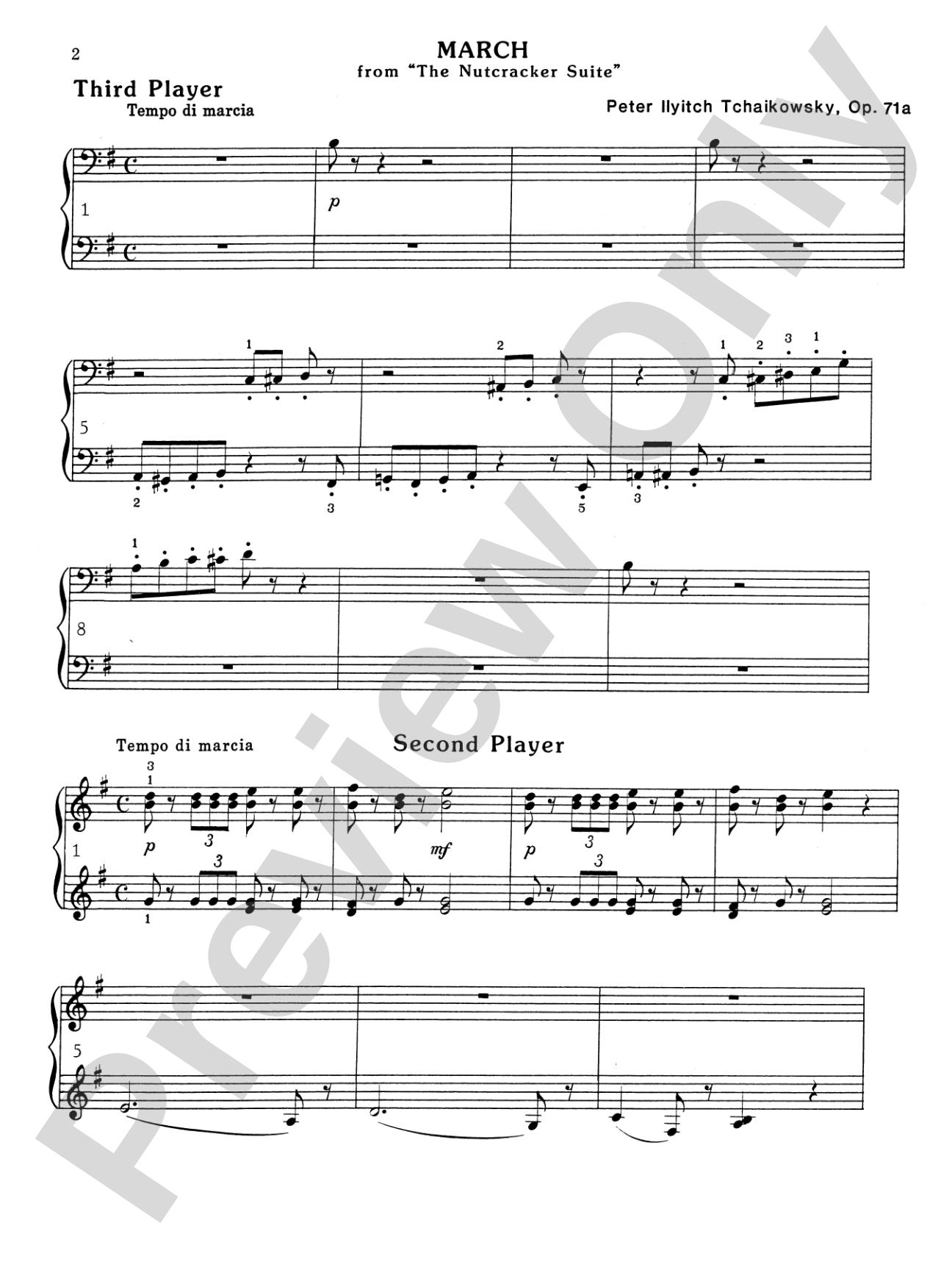
Three intermediate level pianists at one keyboard will enjoy the full sound of this holiday classic transcribed from Tchaikowsky's famous ballet. It is played in G major, with interesting passages, rhythms and solo material in each performer's part. All three parts are readable from the same score. A Federation Festivals 2024-2028 selection.
Discover MakeMusic Cloud: thousands of interactive titles your students can play along with today.
Tchaikovsky stands as one of the most performed composers of the 19th century, and his gift for melody remains unmatched in the Romantic canon. His ballets, especially The Nutcracker, have become fixtures of holiday programming worldwide and continue to introduce millions of listeners to classical music each winter season.
Why we love this
This arrangement delivers the iconic March with remarkable sophistication on a single keyboard. Clark's voicing keeps all three pianists equally engaged with genuine solo material and rhythmic interplay rather than relegating anyone to accompaniment duty; the result feels like a conversation between peers rather than a performance hierarchy.
What to expect
The March radiates festive energy with crisp rhythmic figures and a forward momentum that captures the military precision of Tchaikovsky's original. The G major tonality cuts through with clarity, creating that brilliant, celebratory quality that makes this piece instantly recognizable.
Who it's for
This arrangement works perfectly for intermediate ensembles seeking festival-ready repertoire or holiday concerts that celebrate collaborative playing. The accessible level and manageable page count make it ideal for trios preparing for the Federation Festivals circuit.
How to get the most out of it
Establish a steady tempo before the first rehearsal and stick to it. Three hands on one keyboard demand consistent pulse and clear communication about who's playing what in the thicker passages.
Balance the melody lines carefully across the three parts. The G major key is generous with brightness, but resist letting the upper registers overshadow the harmonic foundation.
Mark your entrances in pencil well before performance. With everyone reading from one score, a quick visual cue from the pianist sitting center can prevent false starts.
How to use it
Feature this as a standalone moment during holiday concerts to showcase ensemble musicianship and pianistic balance without overwhelming your audience with lengthy classical works. It also serves as an excellent bridge piece between full ensemble numbers and smaller chamber offerings.
Skills your students will build
Coordinating three independent melodic lines within a confined physical space
Executing rhythmic precision in a marcato context
Reading shared score parts and tracking multiple voices simultaneously
Balancing voice leading in G major without allowing upper register dominance
Managing hand positioning transitions at a single keyboard with multiple performers
You May Also Like
Scan to Complete Your Purchase
Use your phone's camera to scan the code below
You'll log in on your phone and the order will be added to your account