March and Procession of Bacchus: E-flat Baritone Saxophone Sheet Music Preview

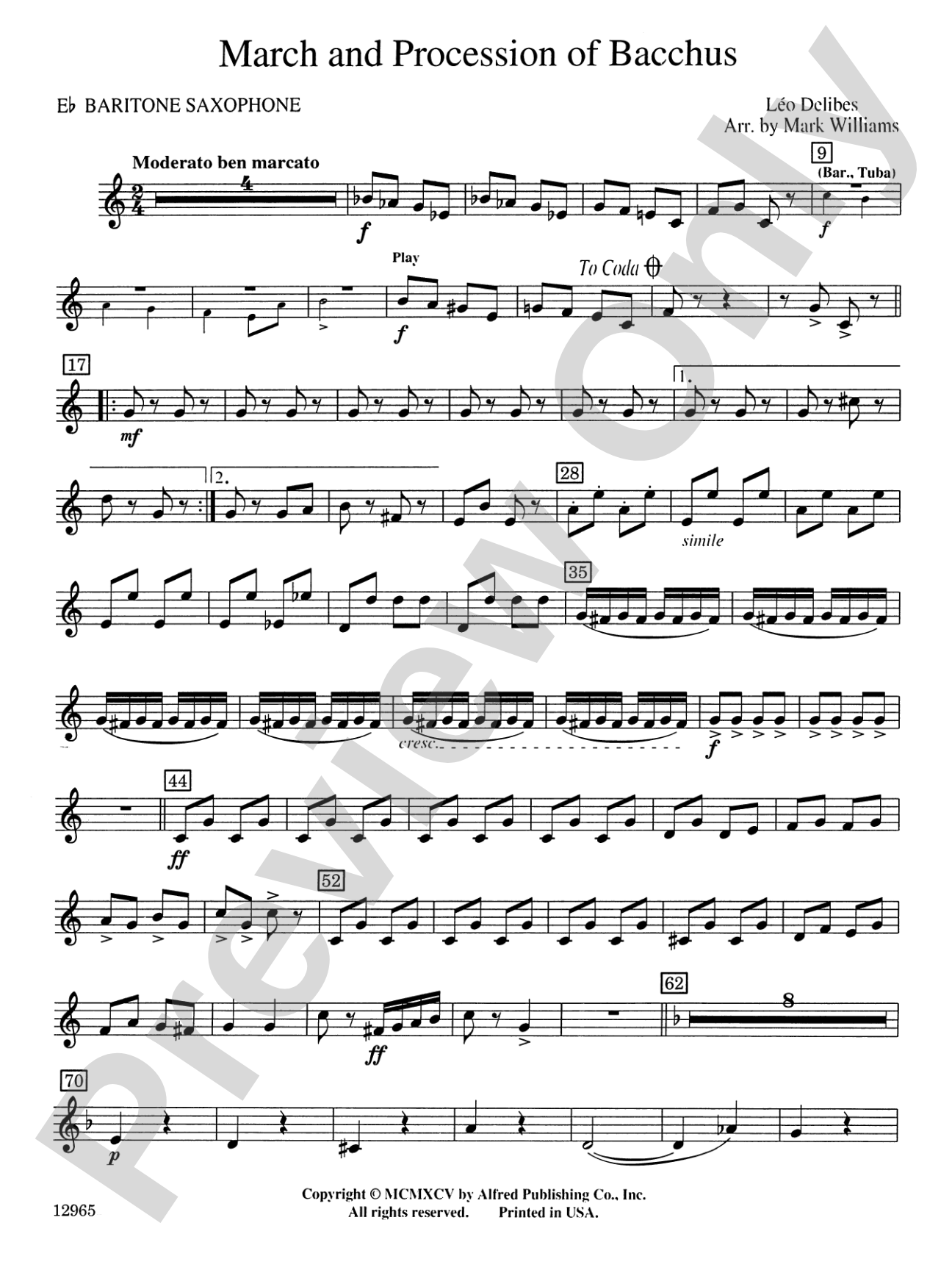
March and Procession of Bacchus: E-flat Baritone Saxophone

By Léo Delibes / arr. Mark Williams

Grade: 3 (Medium)

Item: 00-PC-0014782_BTX

Digital Download
$3.00
Description

Don't just read it, hear it, play along with it, and watch your students grow with it. In MakeMusic Cloud, March and Procession of Bacchus: E-flat Baritone Saxophone comes alive with professional accompaniment, adjustable tempo, and built-in practice tools that turn solo practice into real progress.

Sample Audio
0:00
0:00
Sample Video
Additional Details
Series: Growing Band Series
Publisher: Alfred Music
Page Count: 264
SKU: 00-PC-0014782_BTX

More about this title

About the Composer: Léo Delibes

Léo Delibes (1836–1891) was a French composer whose gift for melody and orchestration made him a central figure in 19th-century opera and ballet. He composed the iconic ballets Coppélia and Sylvia, works that remain standards in dance repertoire and demonstrate his mastery of rhythmic vitality and colorful instrumentation. His music combines Romantic lyricism with emerging Impressionistic textures, creating pieces that are both structurally sophisticated and immediately engaging.

Why we love this

Mark Williams has crafted an arrangement that captures Delibes's theatrical exuberance without overwhelming a Grade 3 ensemble. The march sections snap with energy while the procession material gives younger students a chance to shape lyrical phrasing, making this a rewarding piece that doesn't sacrifice musical substance for accessibility. It's the kind of work that sounds accomplished when performed well and teaches directors something about orchestration through a masterwork.

What to expect

The march opens with ceremonial grandeur and propulsive energy, full of the pageantry you'd expect from a Bacchic procession. When the music shifts into the procession proper, it softens into lyrical, gently swaying melody that feels both noble and whimsical, creating an atmosphere of celebration tempered with elegance.

Who it's for

This arrangement serves Grade 3 concert bands ready to explore a canonical orchestral work. It works equally well for directors seeking contest material with musical substance or for ensembles wanting to build familiarity with Romantic-era ballet music through an accessible arrangement.

How to get the most out of it

  • Keep the march sections precise and rhythmically locked; the brass needs to anchor the tempo while woodwinds maintain articulate accompanying lines.
  • Shape the procession sections with gradual dynamic control rather than sudden shifts; let the melody breathe naturally across phrase lengths.
  • Balance the inner voices in the thicker passages so the clarinet and horn countermelodies remain audible beneath the trumpet line.
  • Emphasize the rhythmic distinctiveness between the march and procession materials to help the ensemble navigate the formal contrast without losing continuity.

How to use it

Program this as a concert opener to establish energy and musicality early, or place it mid-concert where it can provide theatrical contrast to contemporary works. Its manageable length and intermediate difficulty make it ideal for a spring concert or contest where you want to balance technical advancement with repertoire recognition.

Skills your students will build

  • Balancing rhythmic precision in march sections with expressive phrasing in lyrical material
  • Maintaining clarity of inner voice lines during full ensemble textures
  • Recognizing and executing formal contrasts between march and procession characters
  • Reading and interpreting 19th-century Romantic compositional style through orchestral arrangement

You May Also Like