
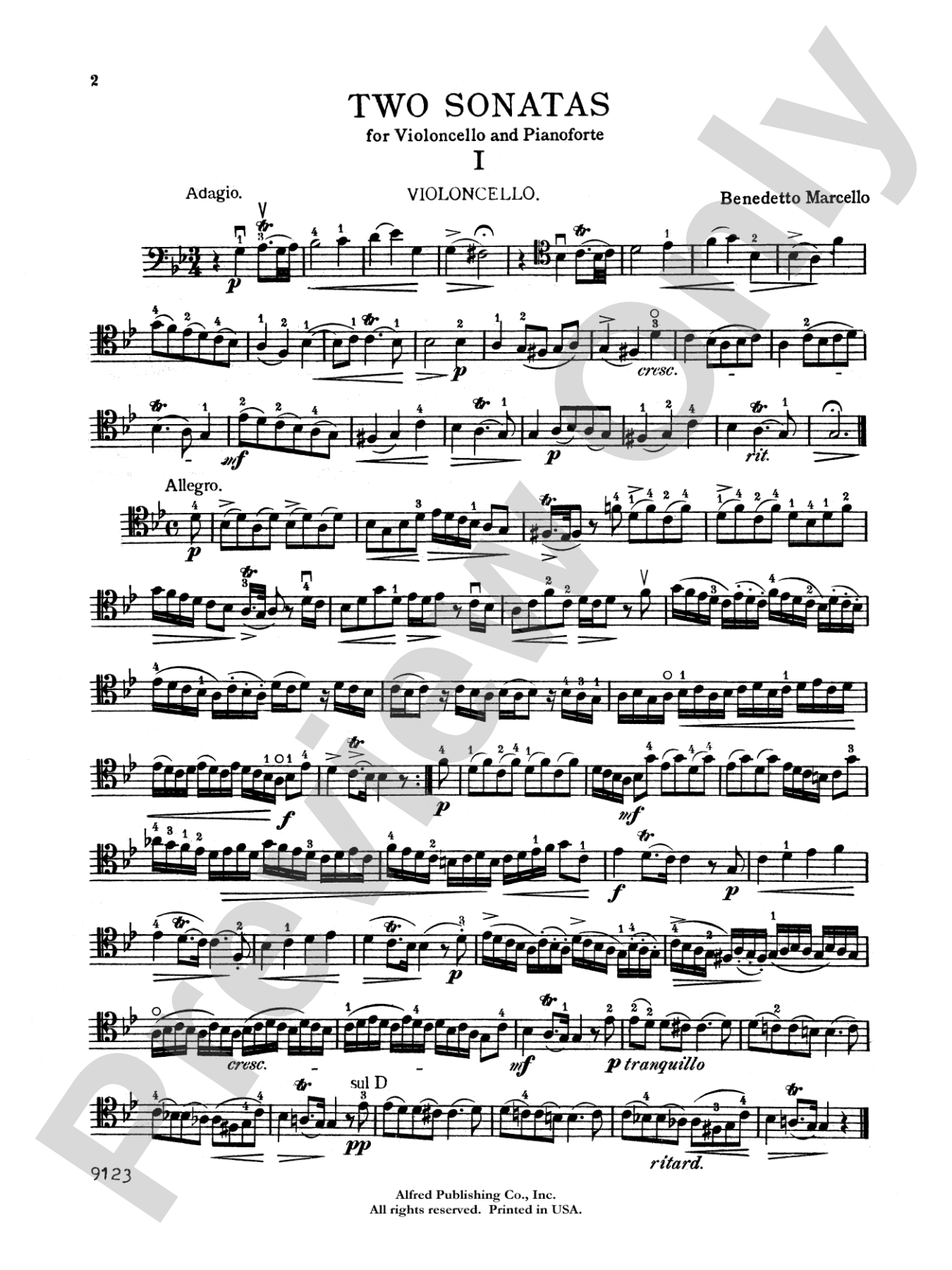
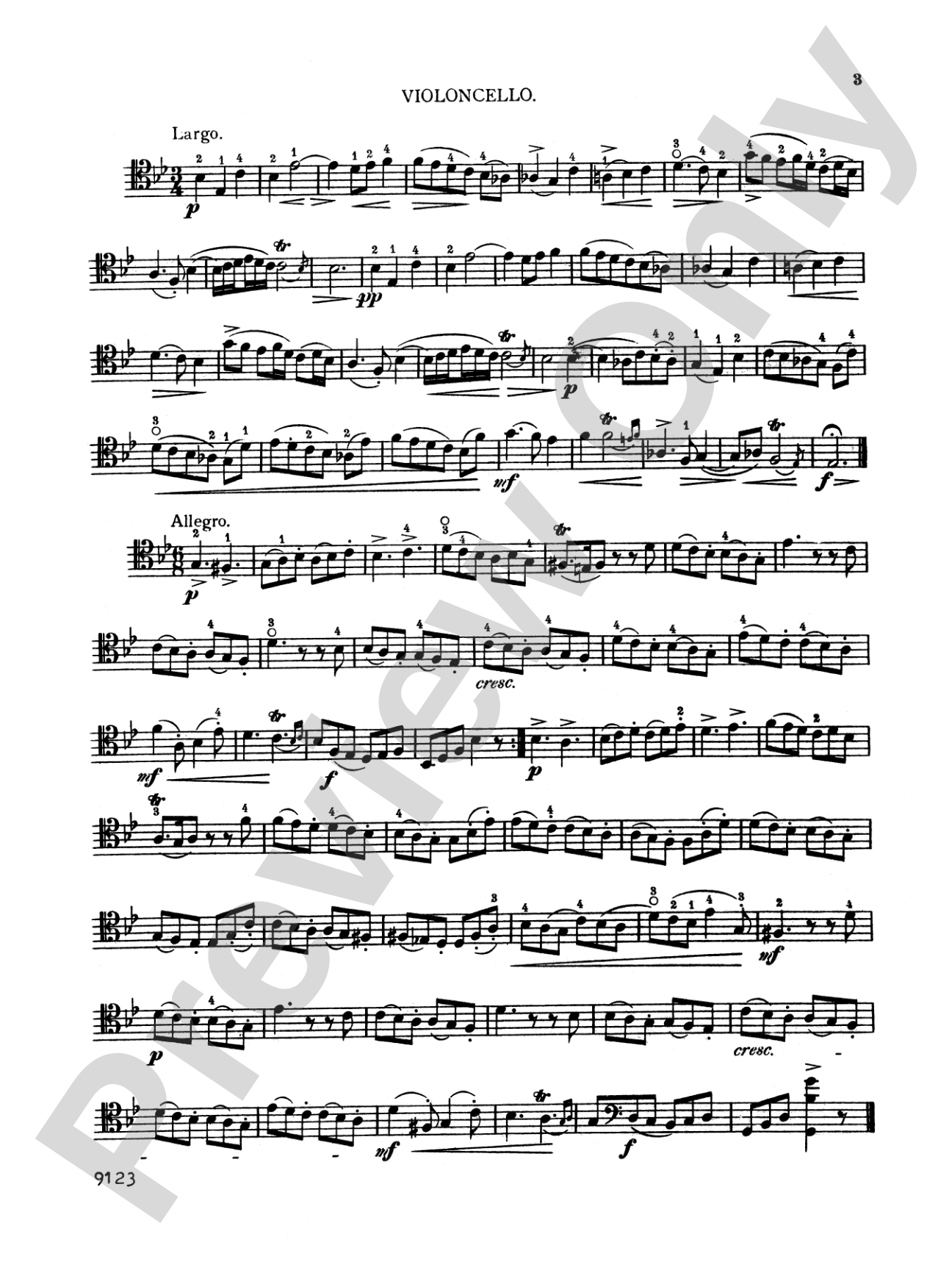

Marcello: Two Sonatas in G Minor and F Major: Cello Part(s)
By Benedetto Marcello
Item: 00-PK-0003694

$9.99
Pickup currently not available
Buy Extra Parts (Digital PDF Download)
| Product | Price | Quantity |
|---|---|---|
| Marcello: Two Sonatas in G Minor and F Major | $1.99 | |
| Marcello: Two Sonatas in G Minor and F Major | $1.99 | |
| Marcello: Two Sonatas in G Minor and F Major | $1.99 | |
| Marcello: Two Sonatas in G Minor and F Major | $1.99 |
Parts Added to Cart!
Description


Don't just read it, hear it, play along with it, and watch your students grow with it. In MakeMusic Cloud, Marcello: Two Sonatas in G Minor and F Major: Cello Part(s) comes alive with professional accompaniment, adjustable tempo, and built-in practice tools that turn solo practice into real progress.
Open in the Player
Jump straight in and assign it today.
Start Your Free Trial
Open this title and explore the full library in minutes.
Sample Audio
No sample audio found.
Sample Video
No sample videos found.
Additional Details
Series:
Kalmus Edition
Publisher:
Alfred Music
Page Count:
24
SKU:
00-PK-0003694
More about this title
About the Composer: Benedetto Marcello
Benedetto Marcello (1686–1739) was a Venetian composer and nobleman whose chamber music remains central to Baroque cello literature. Though he held important civic positions in Venice, including procurator of San Marco, he devoted serious attention to composition and left a substantial body of vocal and instrumental works that showcase both formal sophistication and emotional depth.
Marcello's sonatas for cello and continuo bridge the worlds of Corelli and the later galant style. His writing for cello is idiomatic and grateful, demanding solid technique while remaining accessible to serious students. These two sonatas exemplify the elegant, transparent textures that made his music valued across Europe during his lifetime and continue to anchor cello recital programs today.
Why we love this
Marcello's sonatas occupy a sweet spot in the cello repertoire: genuinely rewarding to perform yet not burdened by the immense technical demands of later Baroque virtuosity. The formal clarity and harmonic language make them ideal for students developing interpretive independence, while directors appreciate how naturally they program alongside both early and mid-Baroque chamber works.
What to expect
These sonatas breathe with Venetian elegance and restraint. The G minor sonata carries a contemplative, slightly somber character, while the F major is warmly lyrical and conversational. Throughout both works, the dialogue between cello and keyboard feels natural and unhurried, with plenty of room for expressive playing without romantic exaggeration.
Who it's for
This edition serves advanced high school cellists and undergraduate musicians preparing recital or chamber music repertoire, as well as adult amateurs returning to the instrument with solid technique. Cellists comfortable with first and second position work and basic Baroque stylistic conventions will find these sonatas both engaging and attainable.
How to get the most out of it
- Shape phrases with your bow weight and length rather than dynamic marking alone; Marcello's melody lines benefit from a subtle arch and release that comes from bow direction.
- Approach ornaments (trills, turns, grace notes) with period conventions in mind; consult a Baroque cello method or treatise to keep articulation and speed consistent with the style.
- Balance your sound with the continuo player(s) by using a clear, projecting tone without forcing; cello sonatas of this era assume the keyboard and cello share equal partnership.
- Practice the runs and passagework in segments, establishing comfortable fingering patterns early so intonation remains secure at tempo.
How to use it
Pair either sonata with works by Marcello's contemporaries such as Jacchini or Geminiani for a coherent Baroque cello recital program, or use them as vehicles for student chamber recitals where the continuo part (harpsichord or piano) is readily available. They work equally well as a student-led coffee hour piece or as part of a baroque ensemble evening.
Skills your students will build
- Reading and executing Baroque ornamentation (trills, turns, grace notes)
- Playing in secure intonation across first and second positions
- Balancing tone and presence with continuo accompaniment
- Shaping melodic lines through bow control and phrasing rather than tempo changes
- Interpreting figured bass cues and responding to harmonic motion in real time