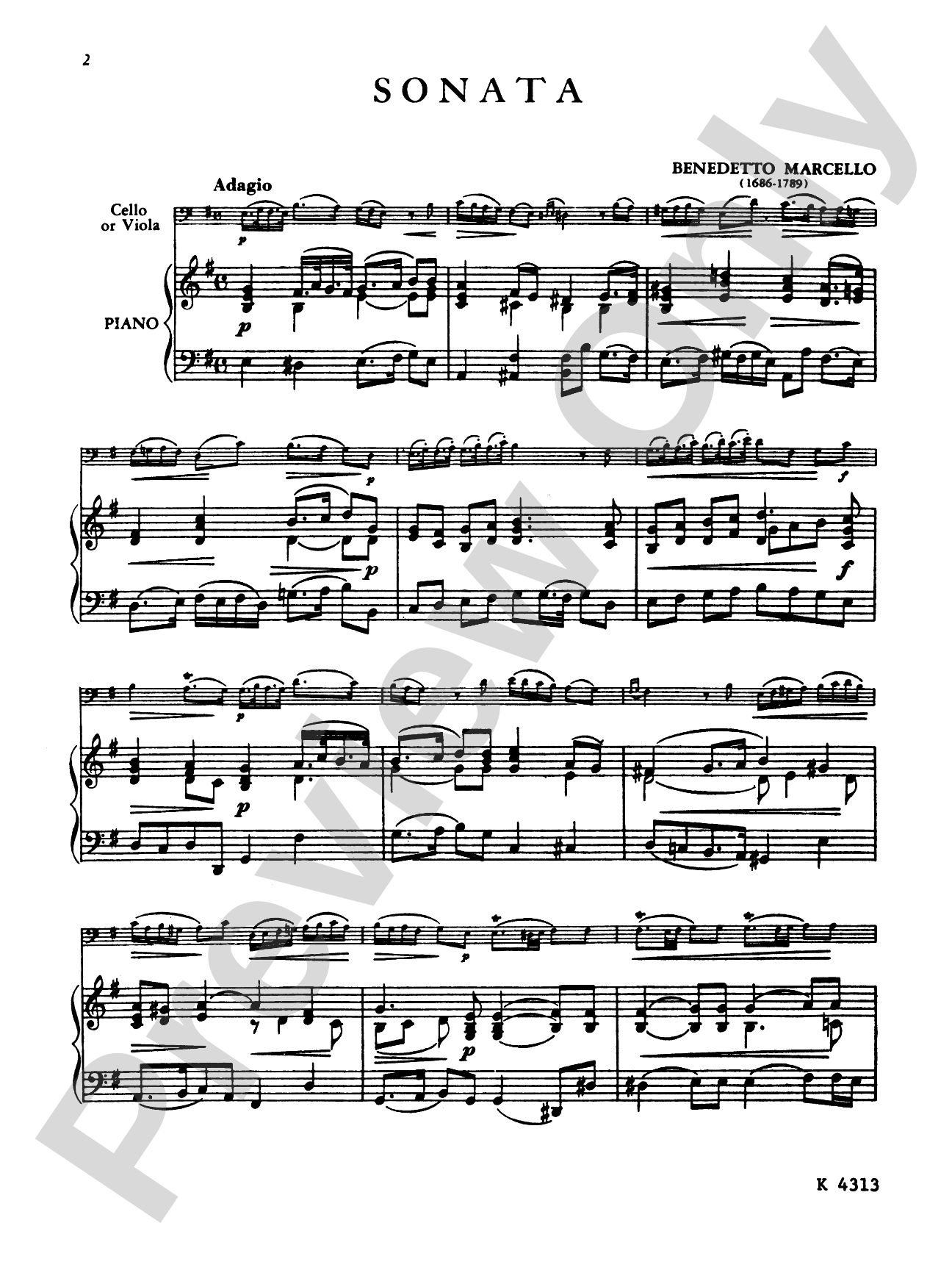
Marcello: Sonata in E Minor Sheet Music Preview

Marcello: Sonata in E Minor

By Benedetto Marcello

Item: 00-PC-0010214

Digital Download
$3.99
Description
A solo, for Viola with Piano Accompaniment, composed by Benedetto Marcello.

Don't just read it, hear it, play along with it, and watch your students grow with it. In MakeMusic Cloud, Marcello: Sonata in E Minor comes alive with professional accompaniment, adjustable tempo, and built-in practice tools that turn solo practice into real progress.

Sample Audio
No sample audio found.
Sample Video
Additional Details
Series: Kalmus Edition
Publisher: Alfred Music
Page Count: 12
SKU: 00-PC-0010214

More about this title

About the Composer: Benedetto Marcello

Benedetto Marcello (1686–1739) was a Venetian composer whose instrumental works bridged the transitional space between late Baroque and early Classical styles. His sonatas for various instruments remain staples of the chamber music repertoire, valued for their lyrical melodic writing and structural clarity. Marcello served in administrative roles throughout Venice and also composed sacred music, but his instrumental works have endured most prominently in music education and professional performance.

Why we love this

This sonata sits perfectly at the intersection of technical challenge and musical substance. Violists gain experience with Baroque phrasing and ornamentation while the lyrical E minor opening gives them material worth performing at adjudicated events. The piano part is genuinely supportive rather than subordinate, making it a rewarding partnership to prepare.

What to expect

Contemplative and elegantly melancholic in E minor, this work unfolds with the character of an intimate conversation. The opening phrases are introspective, while passage work maintains energy without becoming rushed or superficial.

Who it's for

Intermediate to advanced violists preparing for solo recitals, competitions, or festival performances. This sonata rewards players who have solid intonation, vibrato control, and experience with Baroque style conventions.

How to get the most out of it

  • Shape the opening melodic line with subtle dynamic contours rather than a flat dynamic; the Baroque style allows for expressive graduations within each phrase.
  • Balance rhythmic precision in passage work with the flowing, singing quality of longer note values; avoid mechanical articulation.
  • Coordinate with your pianist on the harmonic rhythm so accompaniment figures support rather than compete with your phrasing.

How to use it

Program this as a centerpiece on a solo recital or as a significant offering at a competition. Its 12-page length and structural weight make it a strong anchor for a program that might include a lighter contemporary work or a dance-based movement.

Skills your students will build

  • Baroque ornamentation and articulation style
  • Long-line phrasing in E minor with idiomatic harmonic language
  • Collaboration with pianist accompaniment in chamber context
  • Sustaining lyrical expression across sustained passages

You May Also Like