
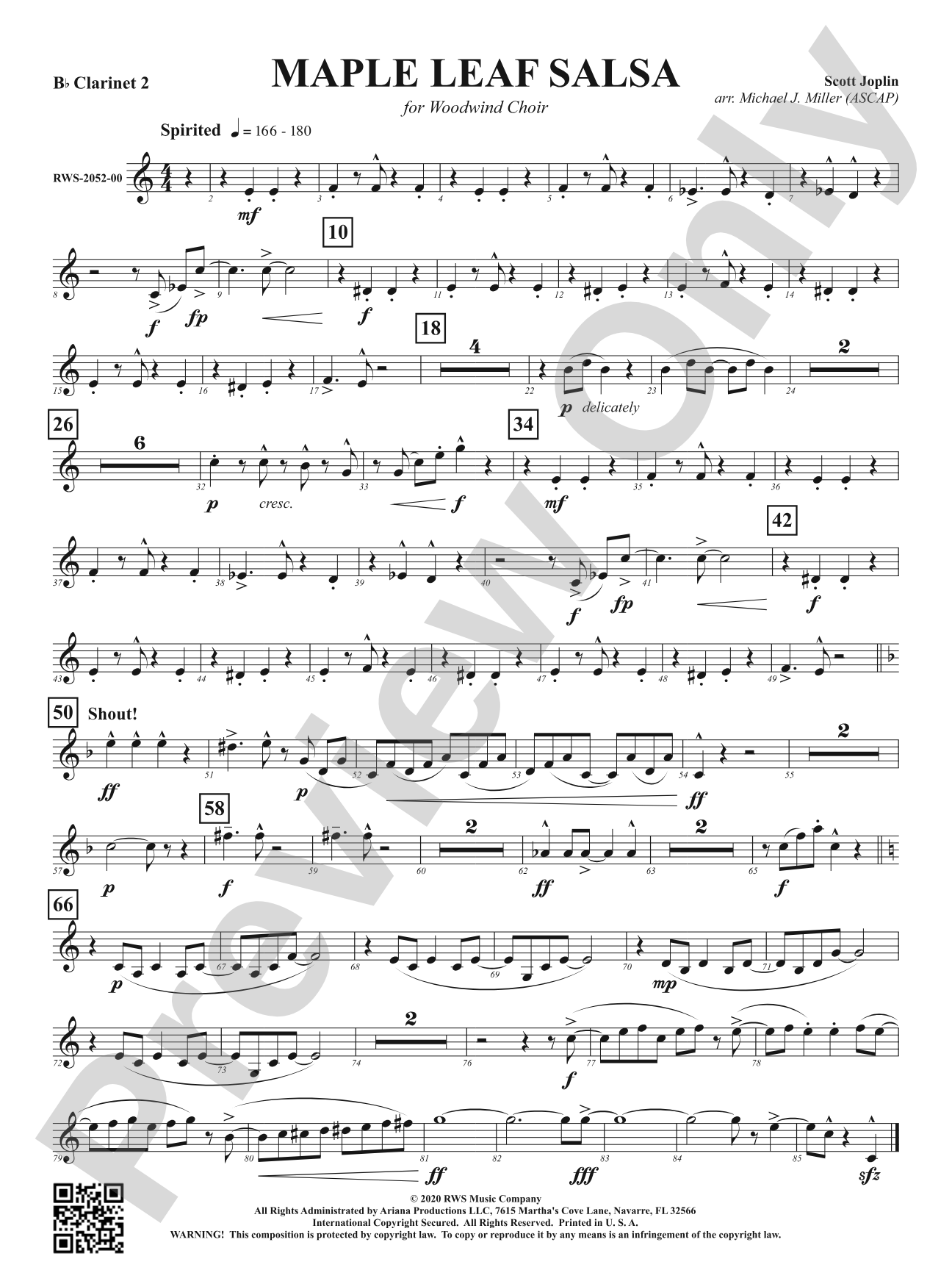

Maple Leaf Salsa - For Woodwind Choir: 2nd B-flat Clarinet
For Woodwind Choir
By Scott Joplin / arr. Michael J. Miller
Grade: 4
Item: 98-PC-RWS2052_C2
$3.99
Pickup currently not available
Description
Start with the world's most famous rag by Scott Joplin, add some latin flair, and you have Maple Leaf Salsa! This Afro-Cuban infused arrangement for woodwind ensemble will expose students to a historic piece of American literature while experiencing and performing classic Latin grooves. This Michael J. Miller arrangement is Muy Caliente!
Original Item#: RWS-2052-00


Original Item#: RWS-2052-00
Maple Leaf Salsa - For Woodwind Choir: 2nd B-flat Clarinet isn't in MakeMusic Cloud just yet...but it could be. Let us know you'd like to see it, and you'll help shape what comes next. In the meantime, start a free trial and dive into thousands of interactive titles your students can play along with today.
Request This Title
Tell us you want it.
Start Your Free Trial
Explore everything that's ready to play right now.
Sample Audio
1
Audio File
--:--
0:00
0:00
Sample Video
No sample videos found.
Additional Details
Series:
RWS - Festival Ensemble
Publisher:
RWS Music Company
SKU:
98-PC-RWS2052_C2
More about this title
About the Composer: Scott Joplin
Scott Joplin (1868-1917) was an African American composer and pianist who fundamentally shaped American music by elevating ragtime from popular dance music to a respected art form. His compositions, including "Maple Leaf Rag," demonstrated sophisticated harmonic language, syncopated rhythms, and structural complexity that influenced composers across jazz, blues, and classical traditions for generations.
Why we love this
Michael J. Miller's arrangement honors Joplin's iconic syncopated writing while grafting it onto authentic Afro-Cuban rhythmic language, creating something that feels both historically grounded and genuinely fresh. At Grade 4, the piece respects the melodic integrity of the original while making the Latin grooves accessible enough that students can lock in the pocket without oversimplifying the harmonic content. This is the kind of arrangement that works equally well at a festival, a concert celebrating American music, or a program exploring how jazz and Latin music continually reshape classical repertoire.
What to expect
Playful yet sophisticated. The familiar shape of "Maple Leaf Rag" emerges through a warm, syncopated Latin groove that feels celebratory rather than gimmicky. There's genuine swing in the rhythm section paired with the sparkling clarity of the woodwind lines, creating an arrangement that respects both traditions it's drawing from.
Who it's for
Intermediate woodwind ensembles ready to expand beyond traditional concert band repertoire and engage with American vernacular music traditions. This works for groups with solid intonation and ensemble blend who want to explore how iconic melodies can be recontextualized through different cultural musical languages.
How to get the most out of it
- Lock the clave rhythm in your rhythm section before rehearsing the full ensemble; once the bass line and percussion establish the pattern confidently, the woodwind lines will sit naturally against it.
- Shape the Joplin melody with the same rubato and forward motion you'd use in a traditional rag, but keep the overall groove grounded in the salsa rhythm rather than letting it drift into swing time.
- Balance the alto and tenor saxophone lines carefully; they carry counter-melody material that deepens the harmonic color, but they should support rather than compete with the flute or clarinet lead.
- Rehearse the articulation of the syncopated figures with crisp, unified attacks; the contrast between the syncopated hits and the smoother sustained lines will give the arrangement its character.
How to use it
Program this alongside other pieces that celebrate American musical roots, or as a bridge piece between a classical work and contemporary music on the same concert. It's also an excellent choice for a springtime pops program, a festival focused on American music, or a concert exploring cultural intersections in jazz and classical music.
Skills your students will build
- Reading and performing syncopated rhythmic figures against steady Latin percussion
- Balancing melody and counter-melody in a multi-line texture
- Understanding and executing Afro-Cuban rhythmic patterns (clave, tumbao bass)
- Historical awareness of ragtime and its influence on American music traditions
- Stylistic flexibility in articulation and phrasing across different musical idioms