
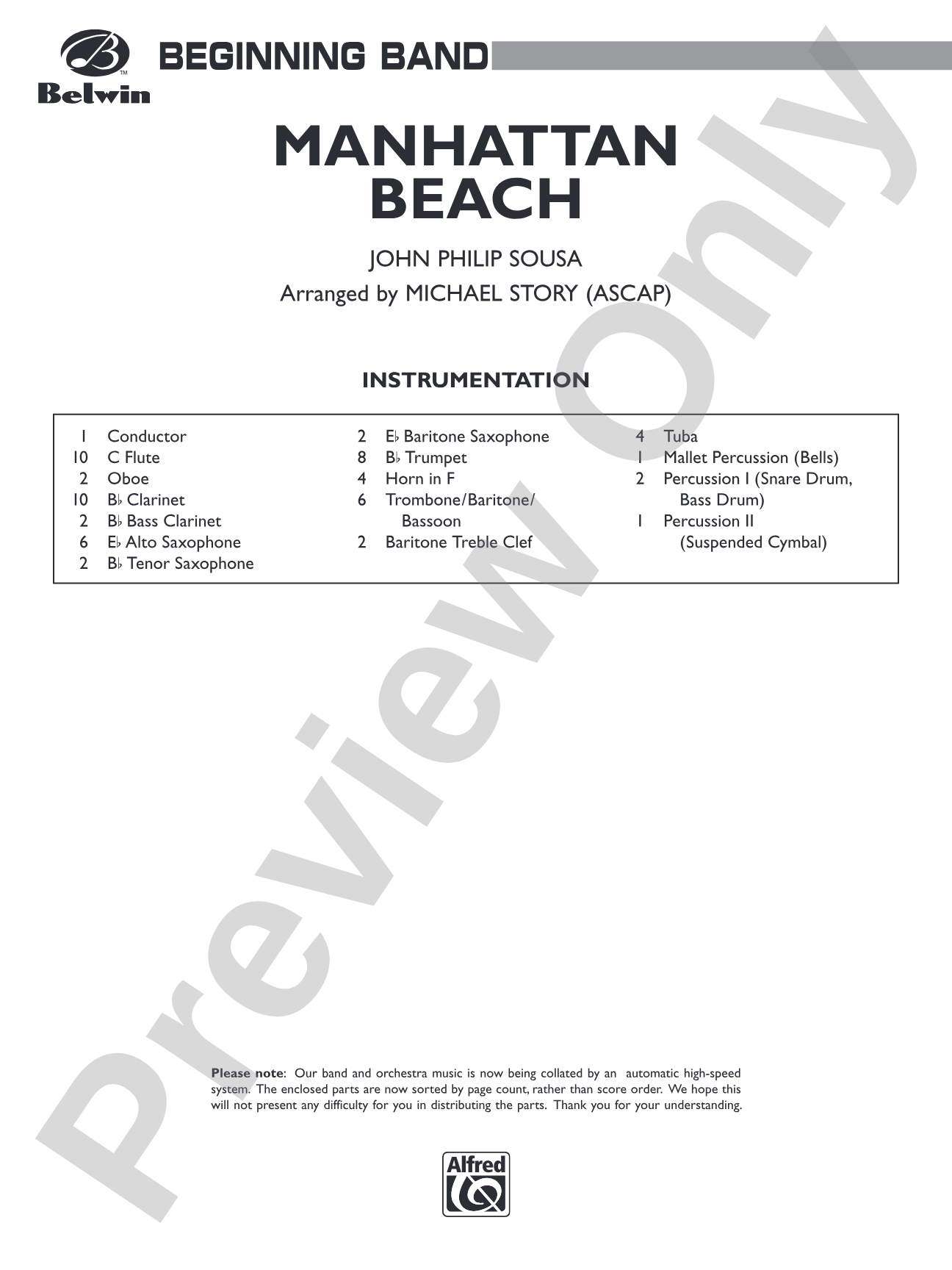
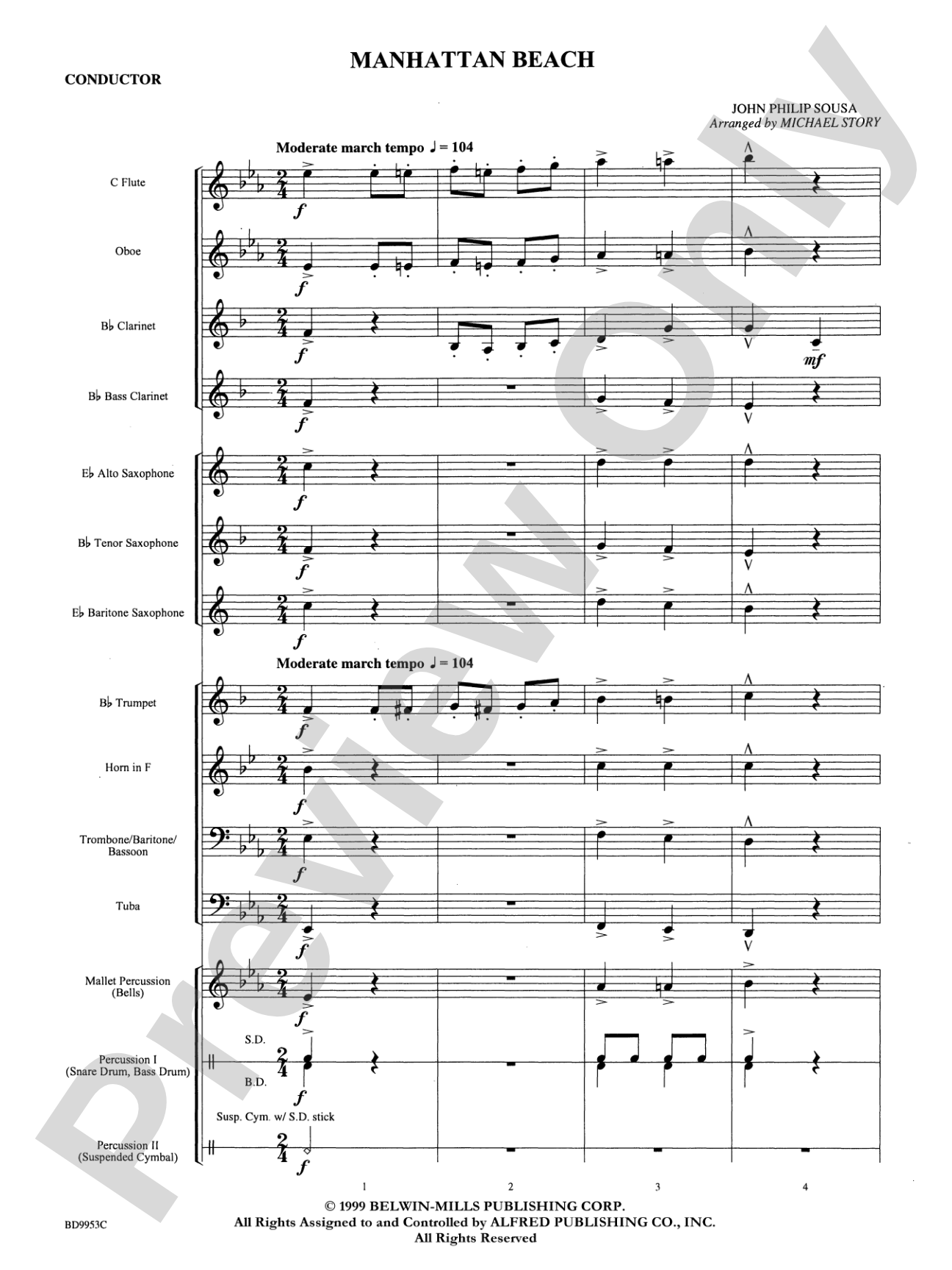
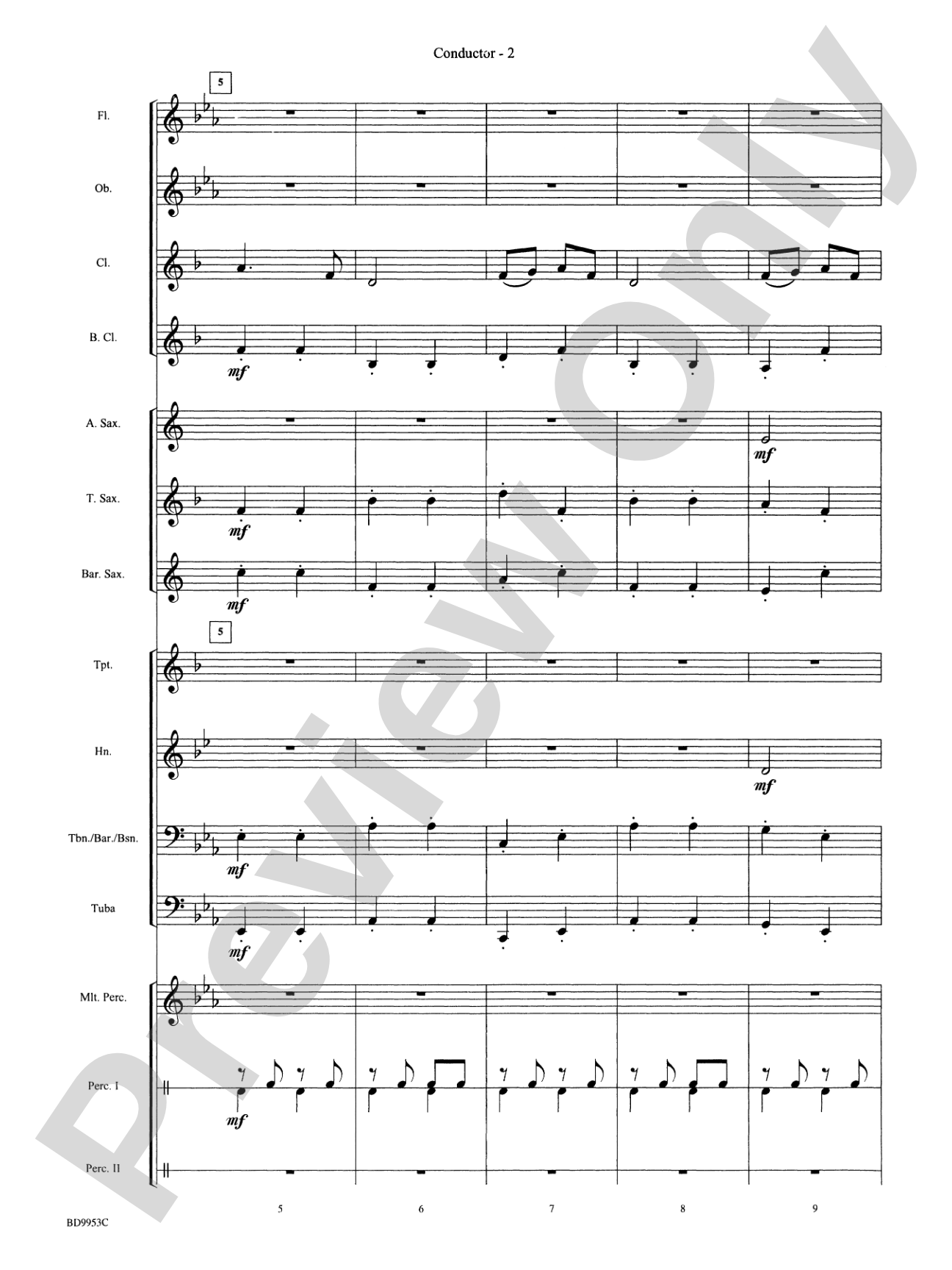
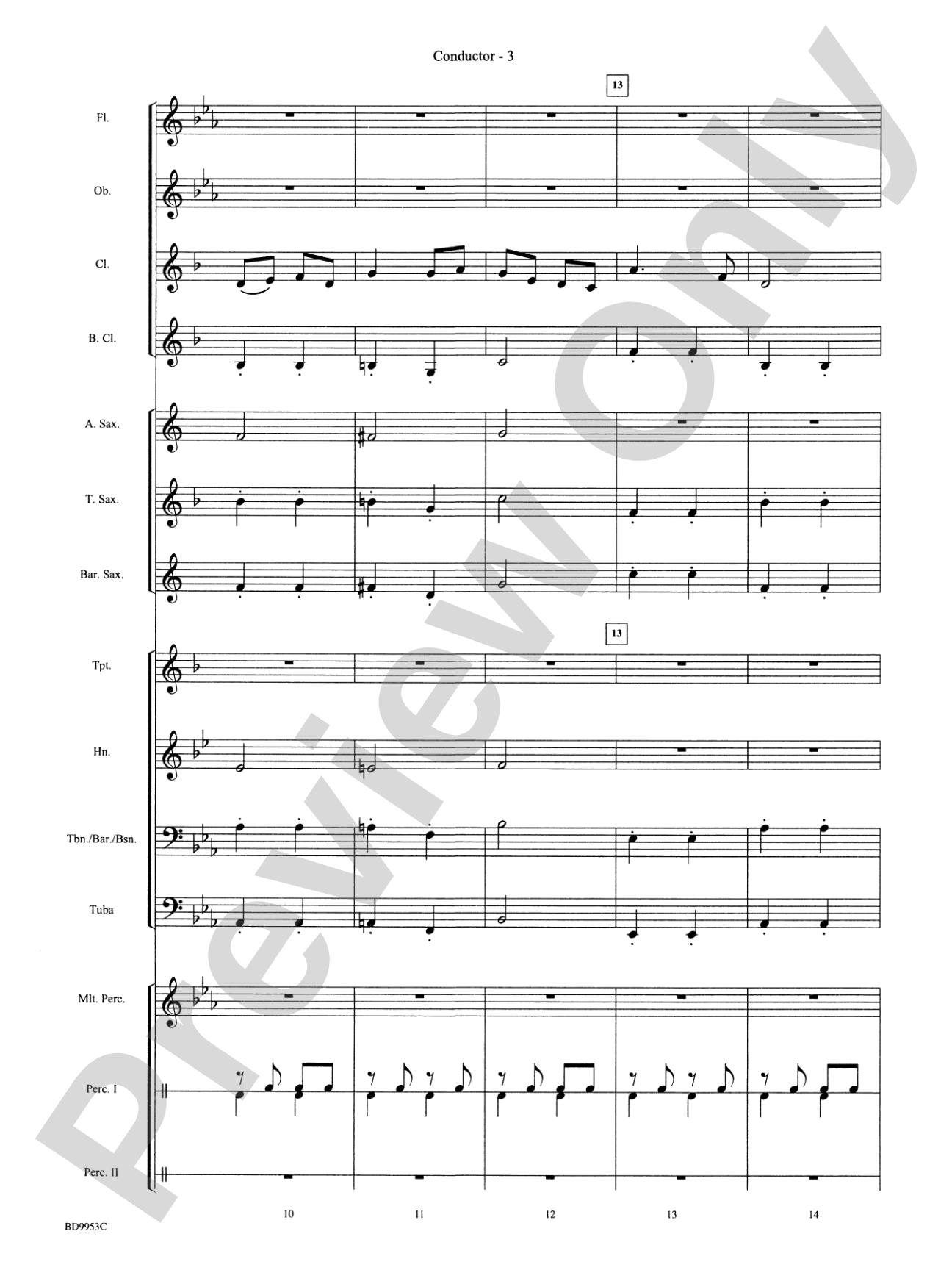
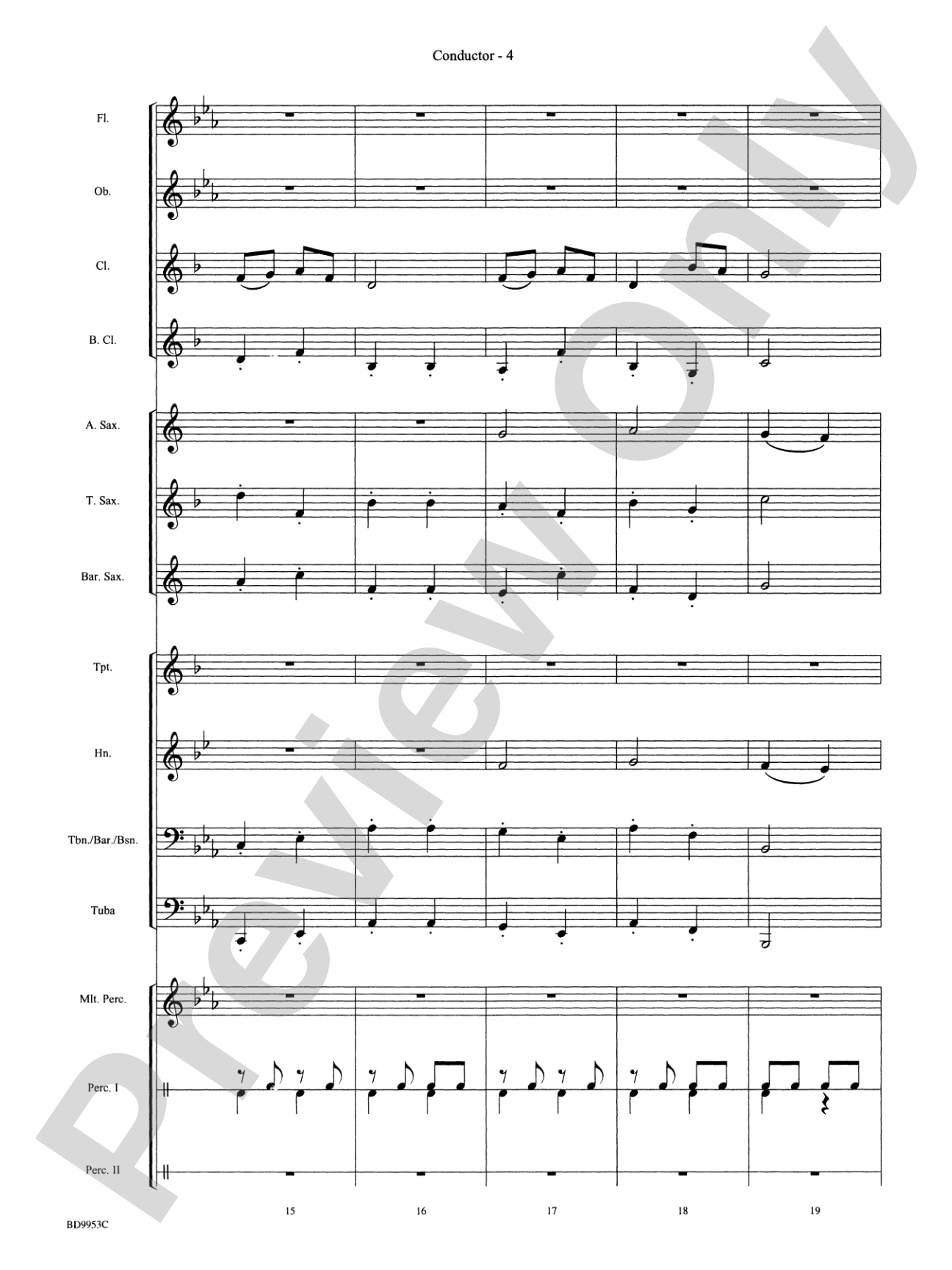
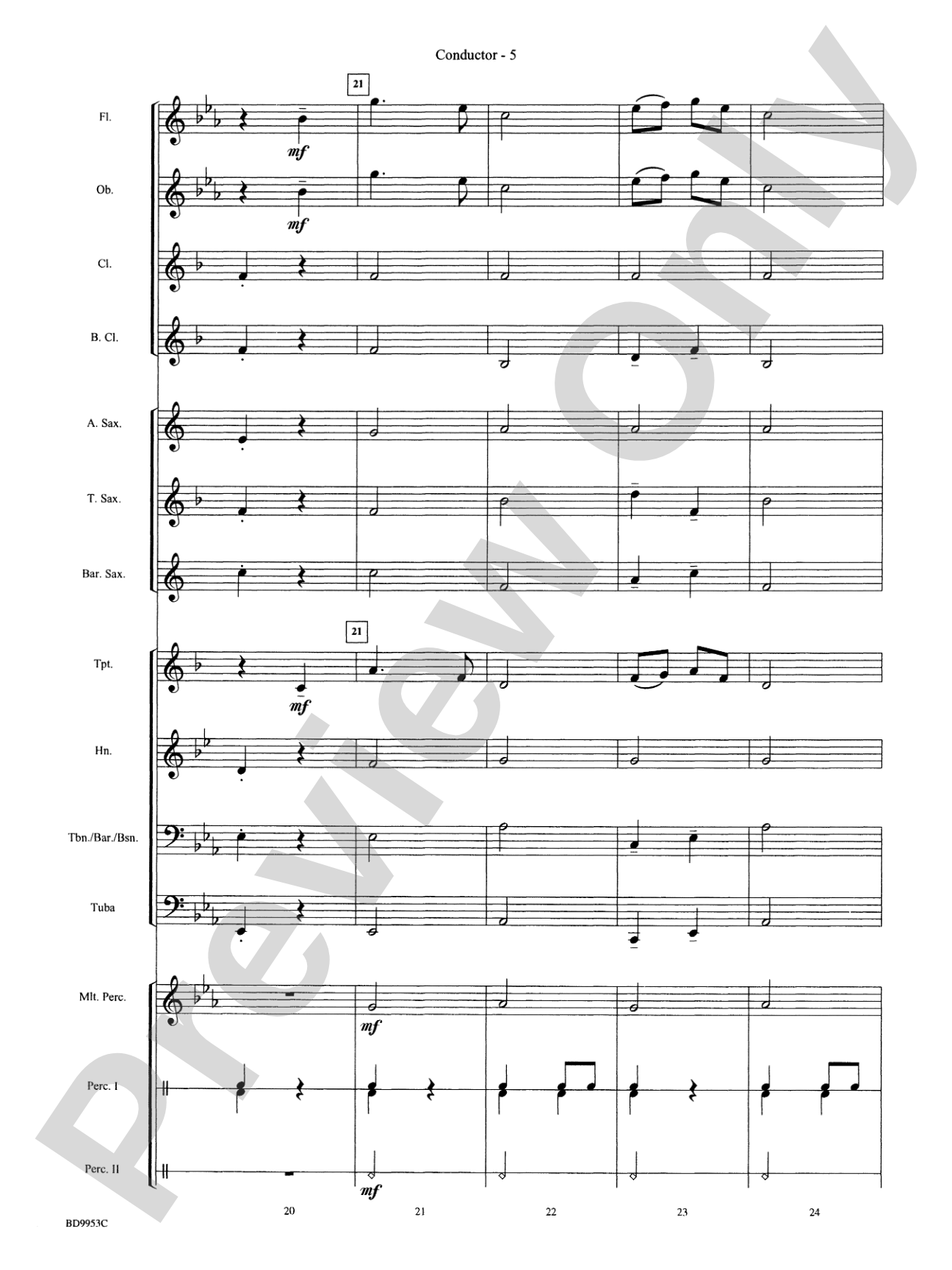
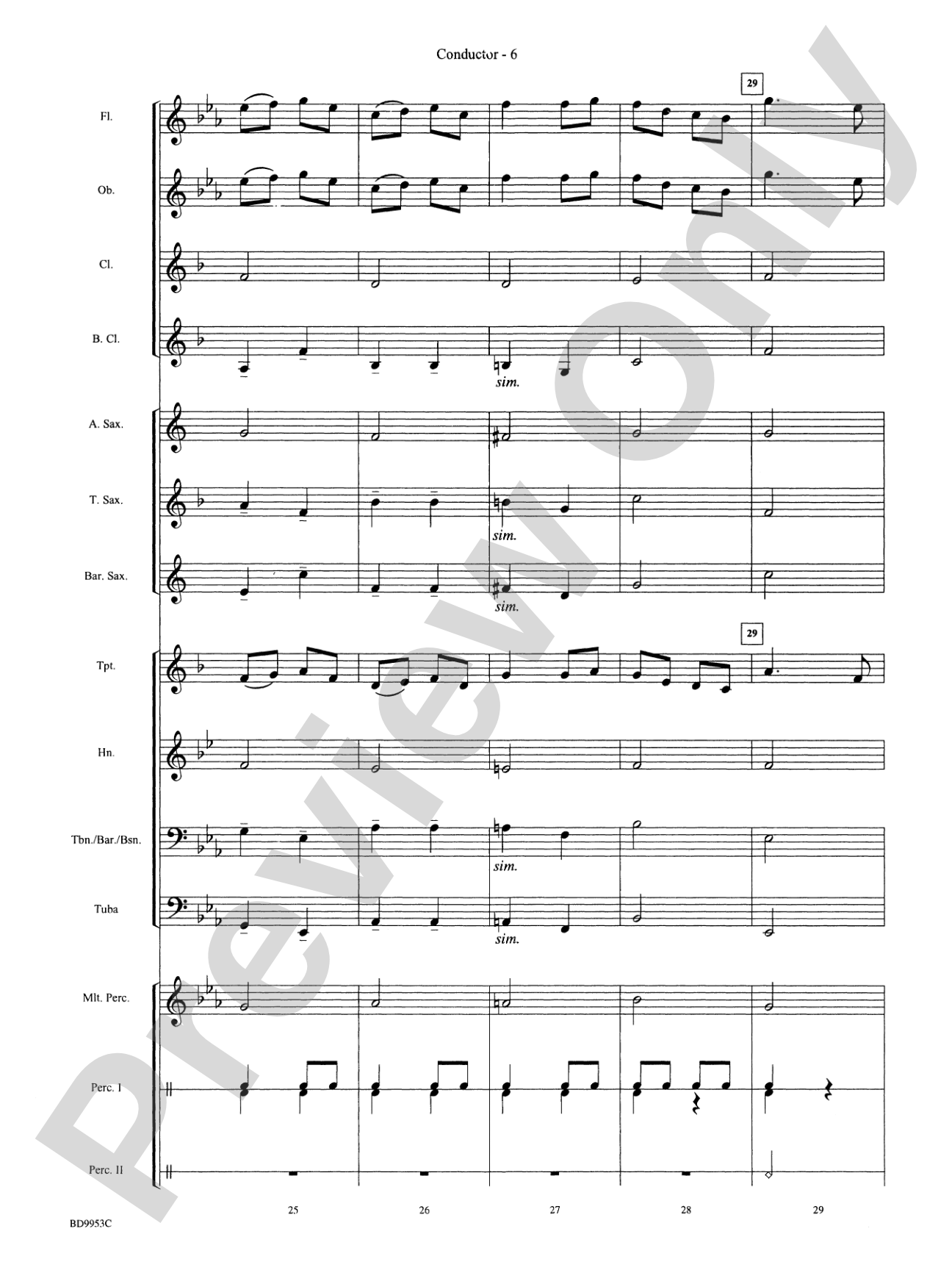
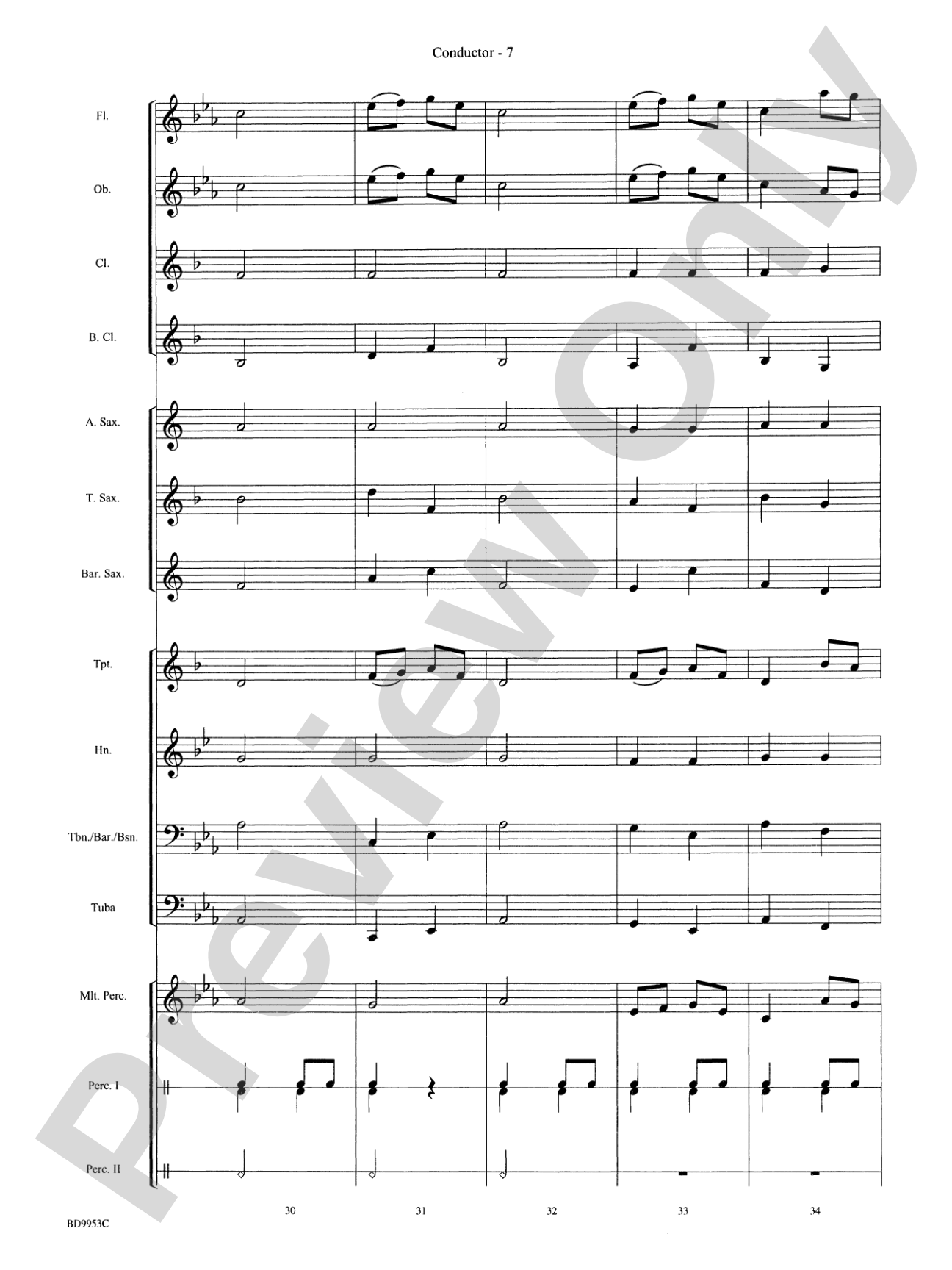
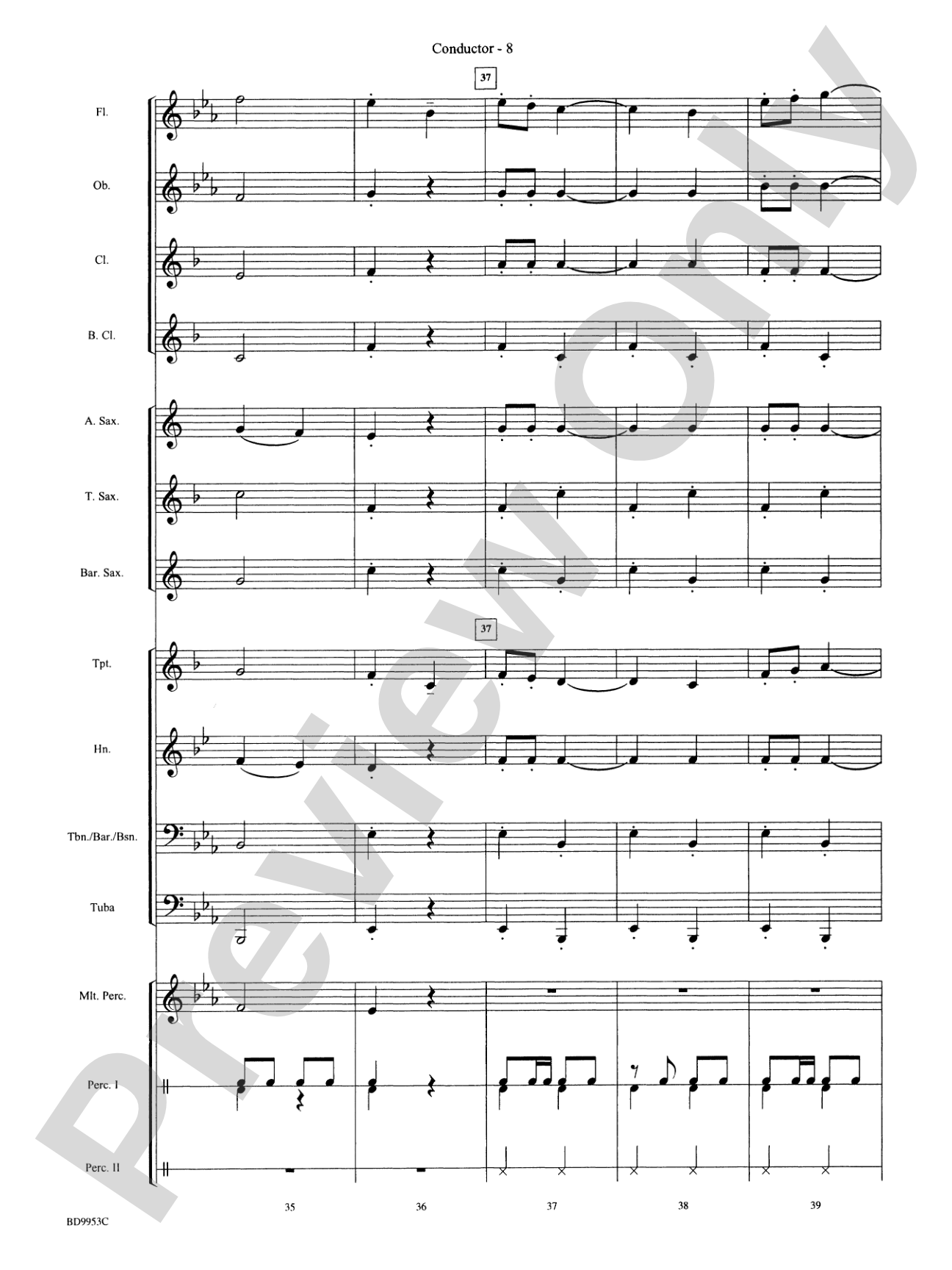
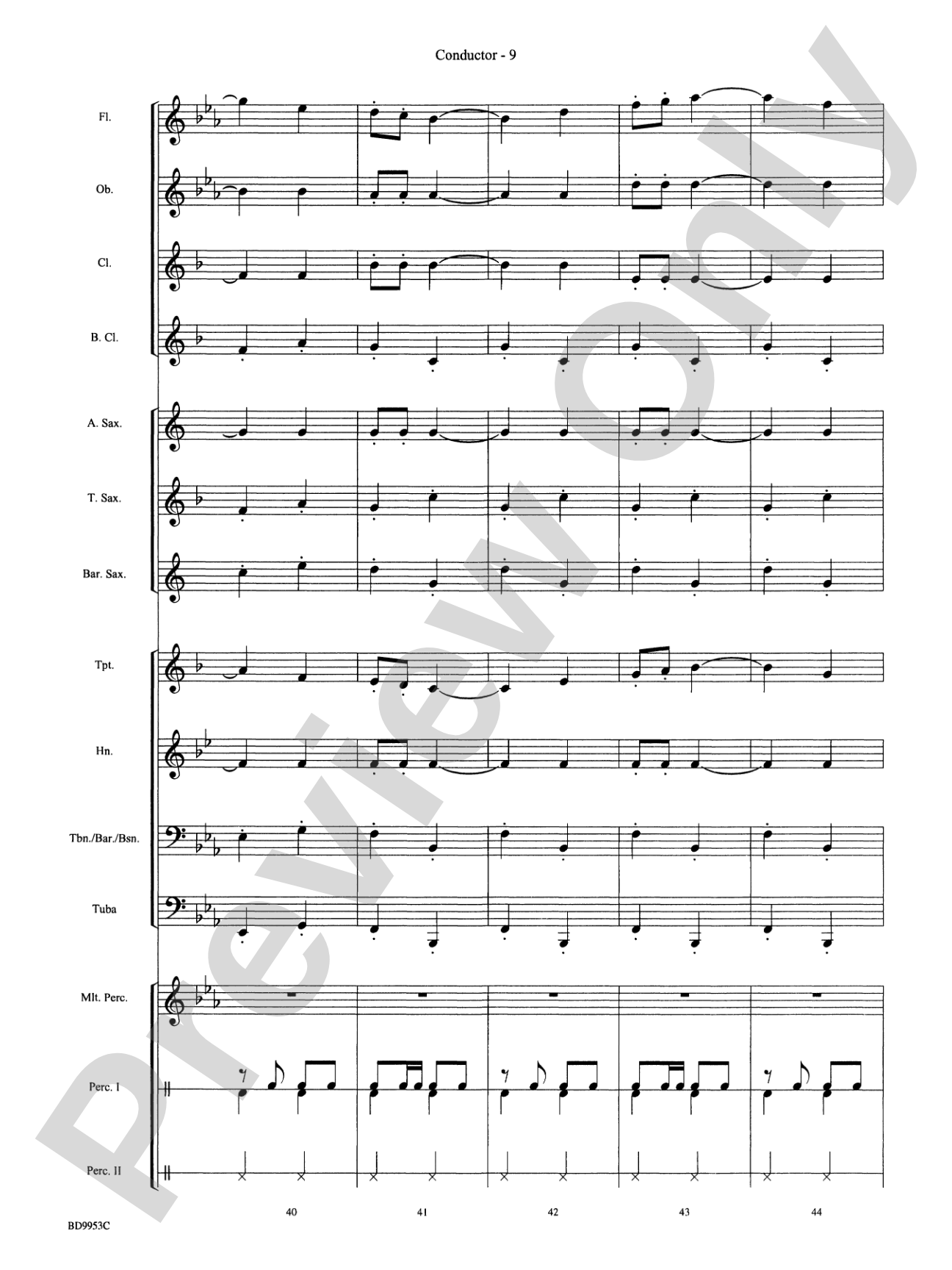
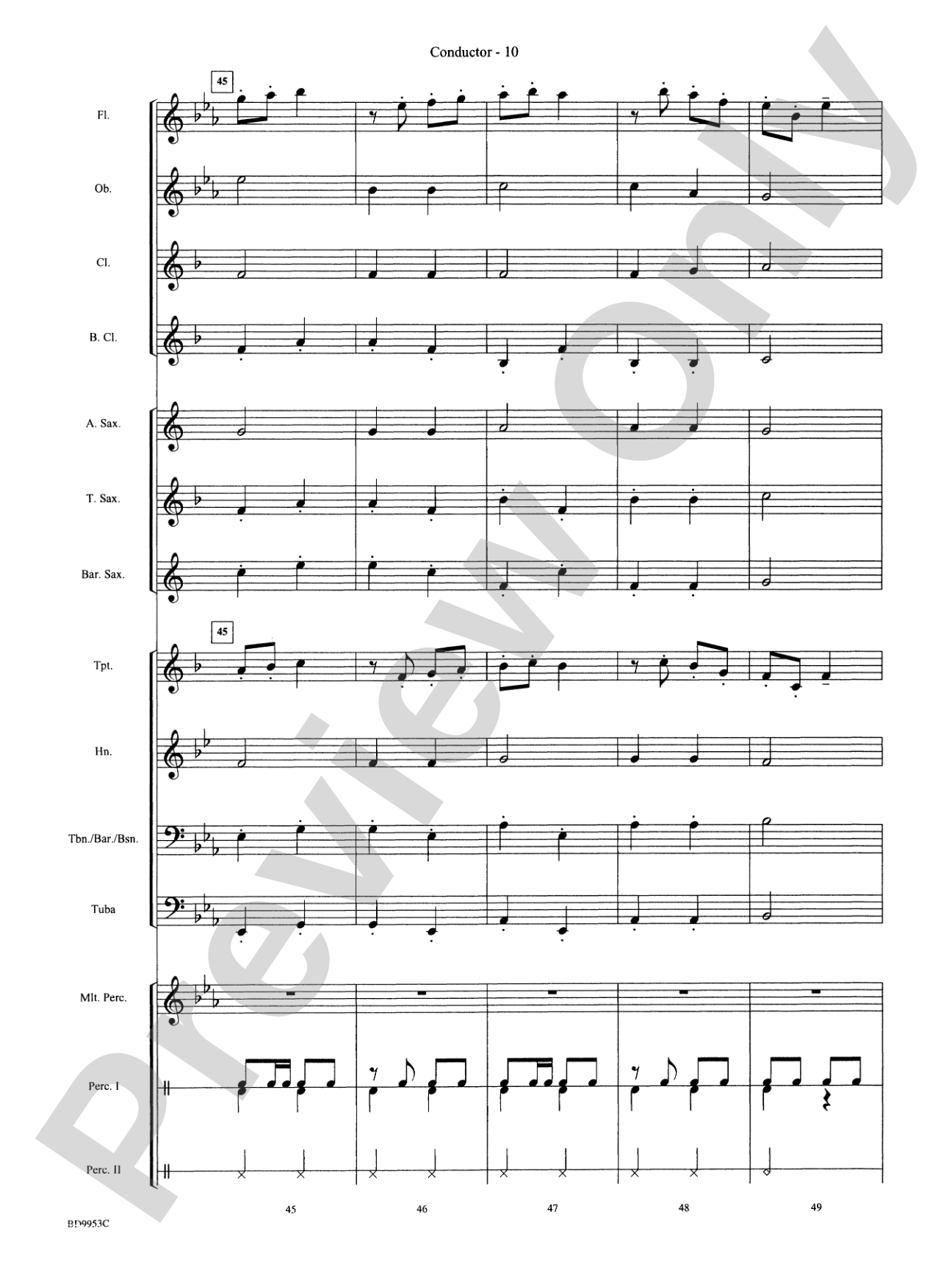
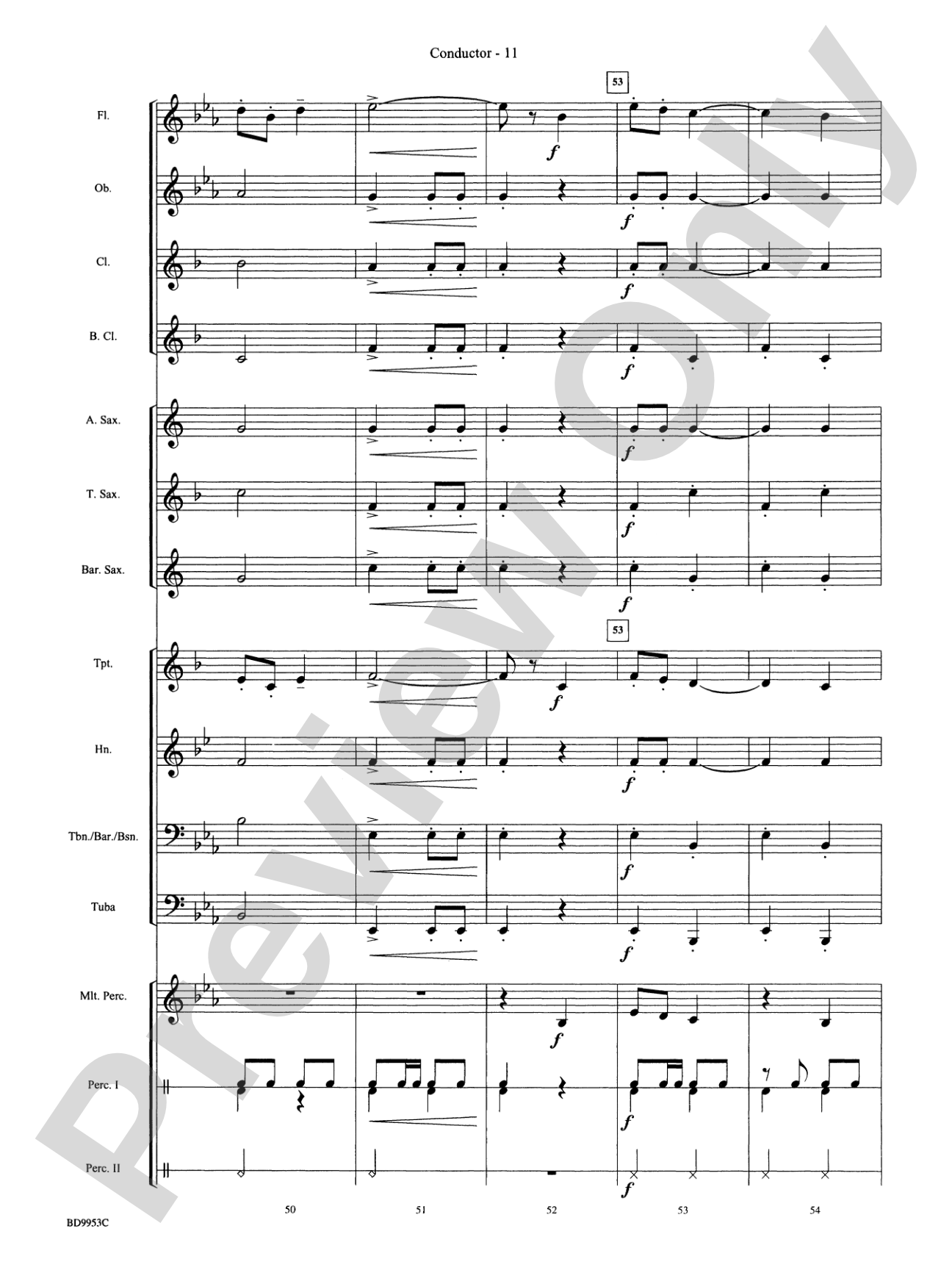
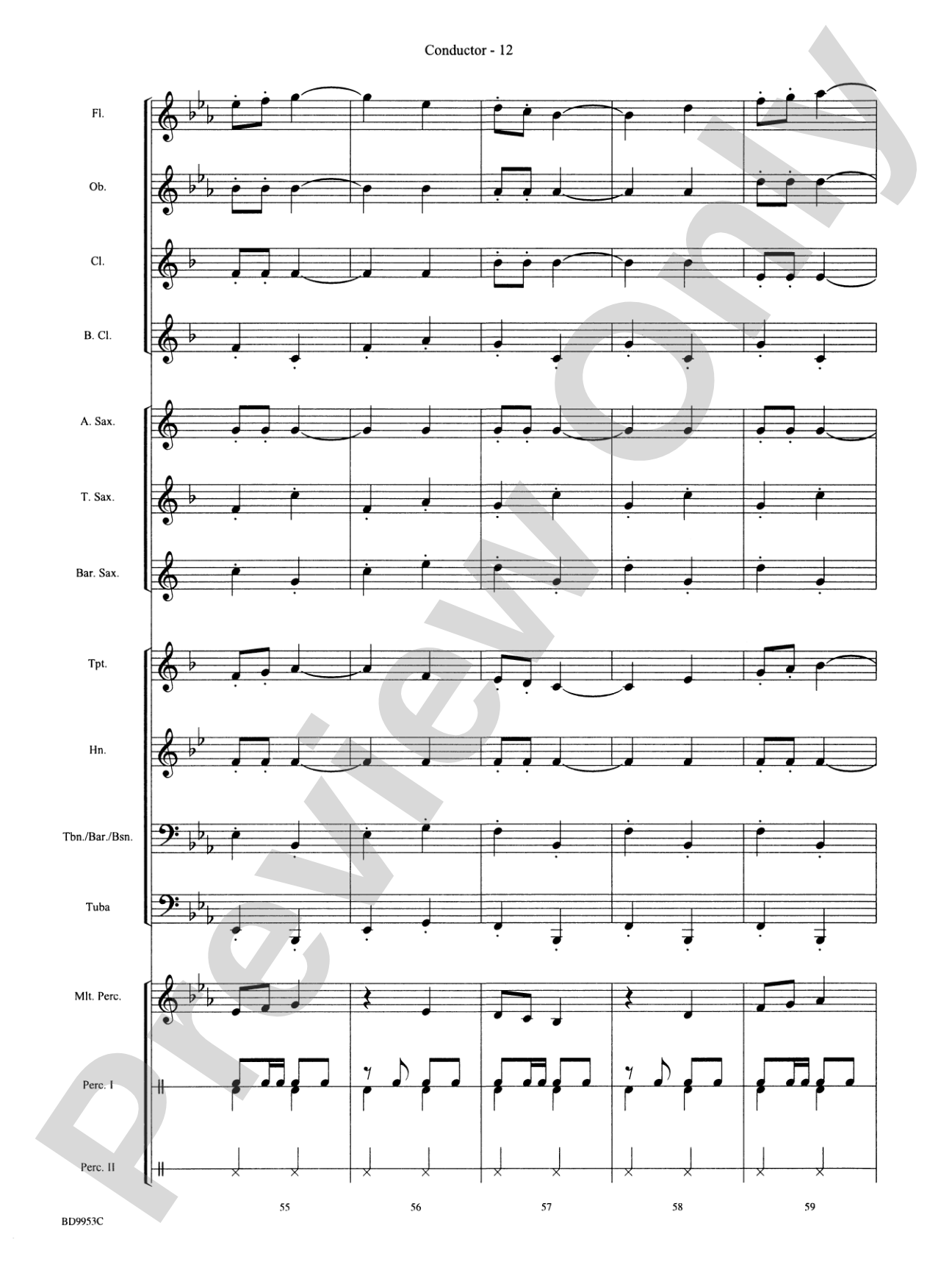
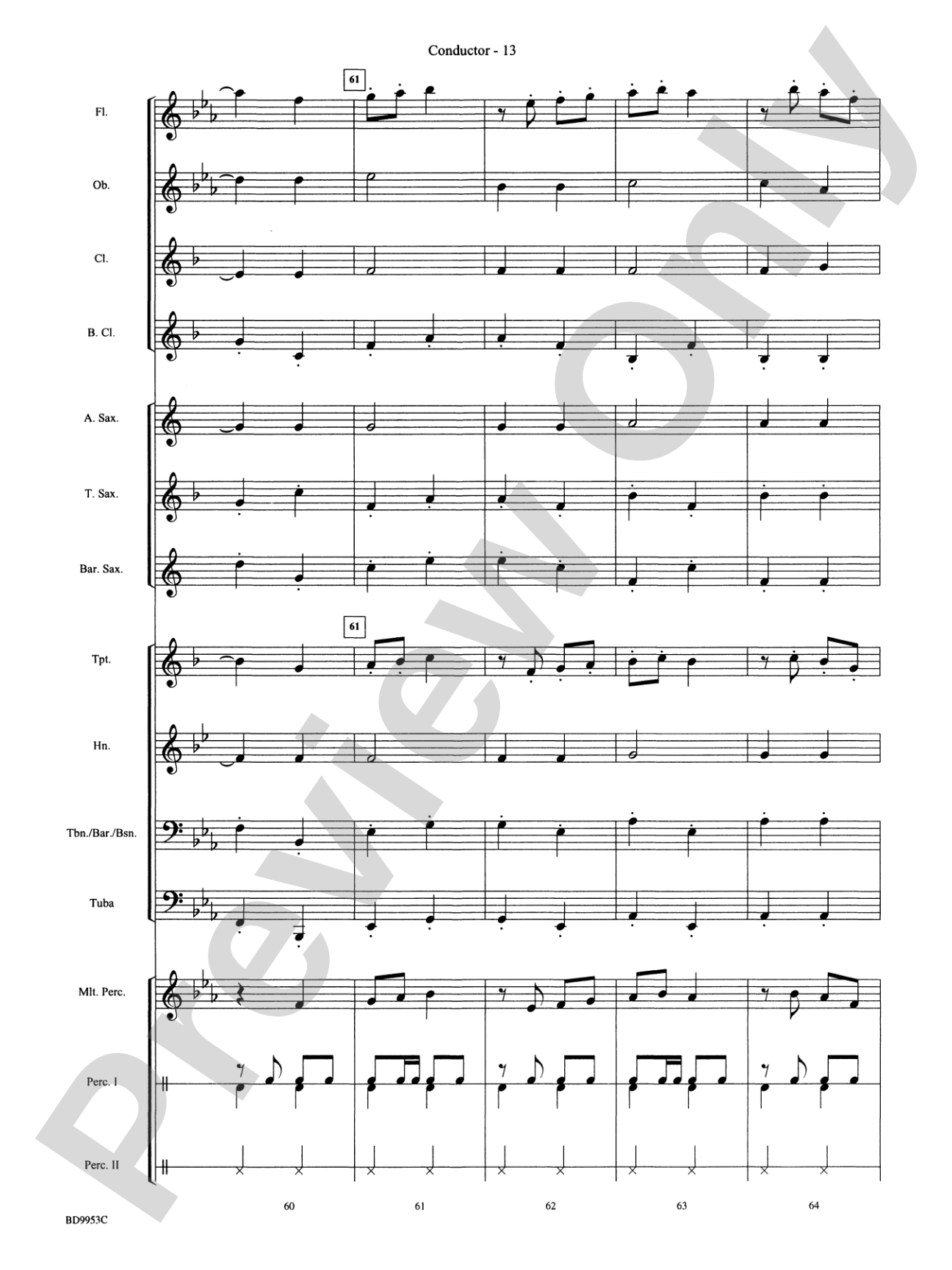
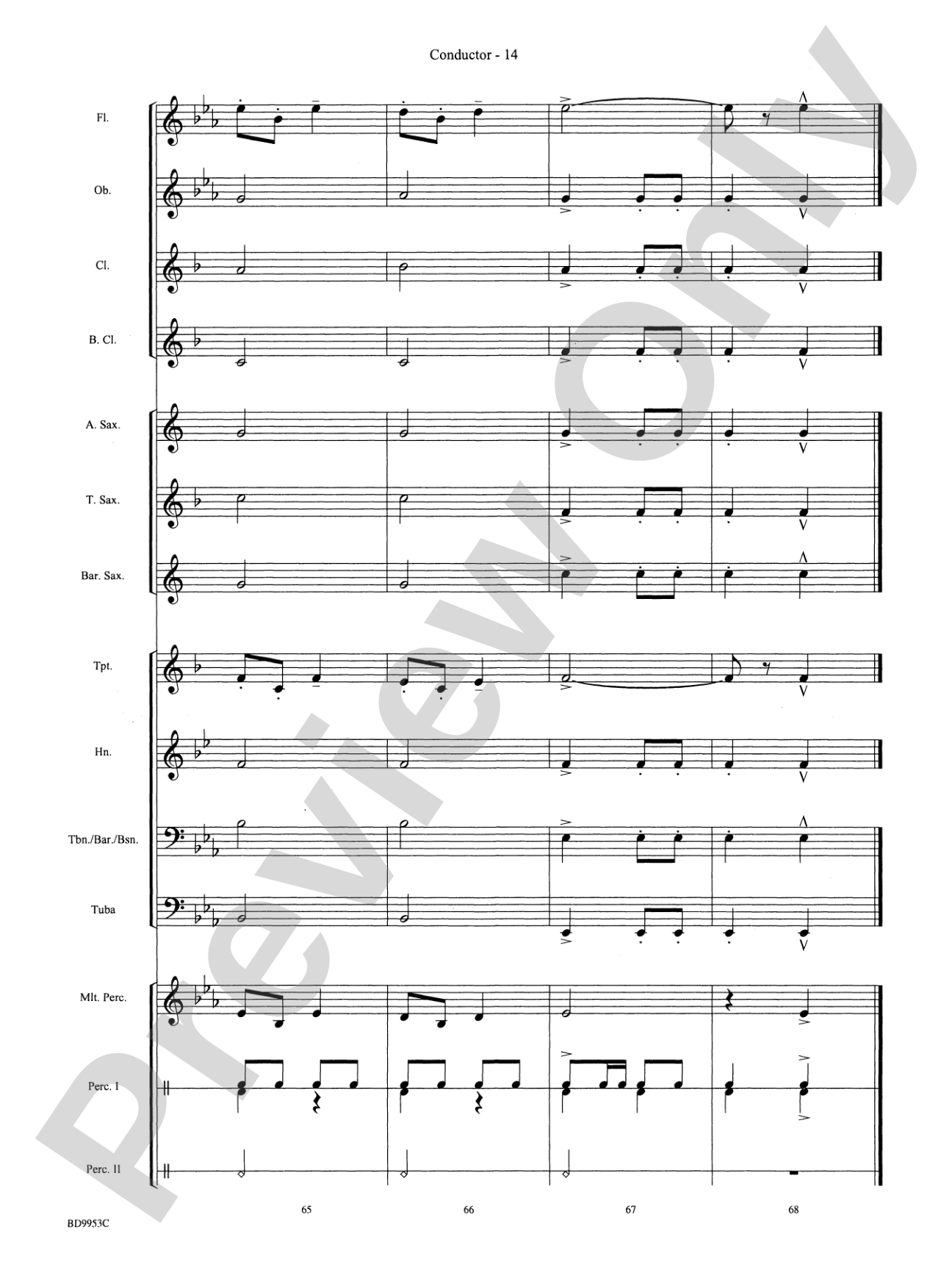


Manhattan Beach: Concert Band Conductor Score & Parts
By John Philip Sousa / arr. Michael Story
Grade: 1 (Very Easy)
Item: 00-PK-0002129

$57.00
Pickup currently not available
Buy Extra Parts (Digital PDF Download)
| Product | Price | Quantity |
|---|---|---|
| Manhattan Beach: Score | $10.00 | |
| Manhattan Beach: Flute | $3.00 | |
| Manhattan Beach: Oboe | $3.00 | |
| Manhattan Beach: 1st B-flat Clarinet | $3.00 | |
| Manhattan Beach: B-flat Bass Clarinet | $3.00 | |
| Manhattan Beach: E-flat Alto Saxophone | $3.00 | |
| Manhattan Beach: B-flat Tenor Saxophone | $3.00 | |
| Manhattan Beach: E-flat Baritone Saxophone | $3.00 | |
| Manhattan Beach: 1st B-flat Trumpet | $3.00 | |
| Manhattan Beach: 1st F Horn | $3.00 | |
| Manhattan Beach: 1st Trombone | $3.00 | |
| Manhattan Beach: Baritone T.C. | $3.00 | |
| Manhattan Beach: Tuba | $3.00 | |
| Manhattan Beach: Mallets | $3.00 | |
| Manhattan Beach: 1st Percussion | $3.00 | |
| Manhattan Beach: 2nd Percussion | $3.00 |
Parts Added to Cart!
Description
Although John Philip Sousa is stereotyped as a march writer, he composed music in many forms. But, of course, it's his marches that have brought his name to millions of performers and listeners the world over. Of the hundreds of marches he wrote, many are still among the most performed of the medium. Michael Story has chosen this classic Sousa work and removed the technical difficulties so it can be enjoyed by even the youngest ensemble or band. Relish this music of the "March King"! (1:23)


Don't just read it, hear it, play along with it, and watch your students grow with it. In MakeMusic Cloud, Manhattan Beach: Concert Band Conductor Score & Parts comes alive with professional accompaniment, adjustable tempo, and built-in practice tools that turn solo practice into real progress.
Open in the Player
Jump straight in and assign it today.
Start Your Free Trial
Open this title and explore the full library in minutes.
Sample Audio
No sample audio found.
Sample Video
No sample videos found.
Additional Details
Series:
Belwin Beginning Band
Publisher:
Alfred Music
Page Count:
136
SKU:
00-PK-0002129
More about this title
About the Composer: John Philip Sousa
John Philip Sousa (1854-1932) shaped American concert band music more than any composer in history. As a bandmaster, conductor, and prolific composer, he elevated the concert band to an art form and created a repertoire that remains central to band programs worldwide. His marches, in particular, became synonymous with American patriotism and civic pride, earning him the title "March King."
Beyond marches, Sousa composed operettas, suites, and concert pieces that demonstrated his range as a musician. His legacy rests not only on the brilliance of his melodies but on his deep understanding of band instrumentation and what makes music accessible and joyful to performers and audiences alike.
Why we love this
Michael Story's Grade 1 arrangement makes one of Sousa's most recognizable marches available to young ensembles without sacrificing the piece's character and pride. The simplification opens this standard to bands that wouldn't otherwise tackle Sousa, while keeping the harmonic integrity and infectious energy intact. Programming this on a contest or festival entry invites audiences to connect with authentic American music history from their very first concert.
What to expect
Bright, energetic, and immediately satisfying. The forward momentum and sing-song melodic phrases create that signature march character that feels celebratory and grand even when played by younger musicians. There's a sense of pageantry and pride woven into every measure, inviting students to feel like they're part of something larger than themselves.
Who it's for
Beginning and first-year band students who are ready to experience a genuine American masterpiece without technical barriers. This arrangement is perfect for young ensembles entering their first competition season or preparing a concert featuring achievable repertoire with real musical substance.
How to get the most out of it
- Shape the melodic phrases with gentle dynamic swells rather than rigid dynamic markings. Young ensembles often play march style too mechanically; invite them to sing through the primary melody as if it were lyrical.
- Balance the parts carefully so the melody rises above the accompaniment. In the simplified version, students may be playing supporting figures that can easily overwhelm the tune.
- Maintain a steady, confident tempo throughout. Marches demand rhythmic precision, and younger players often rush when excited. A metronome in rehearsal builds the foundation for clean ensemble rhythm.
- Give special attention to the sections where instrumentation thins or changes. These transitions are learning moments for blend and listening across the band.
How to use it
Schedule this as an opener or closer for a concert where it can make a strong first impression or send the audience out smiling. It pairs well on programs alongside other accessible concert band classics or as the anchor piece of a Grade 1 showcase that demonstrates young musicians' growth. The familiar tune also works beautifully as a festival or contest selection where judges and audience members will instantly recognize quality American repertoire.
Skills your students will build
- Reading straightforward march rhythm and meter (2/2 or cut time)
- Balancing melody and accompaniment parts within an ensemble texture
- Maintaining steady tempo under the character of a march form
- Responding to phrase structure and dynamic shape in a tonal melody
- Playing in a traditional concert band instrumentation and style