
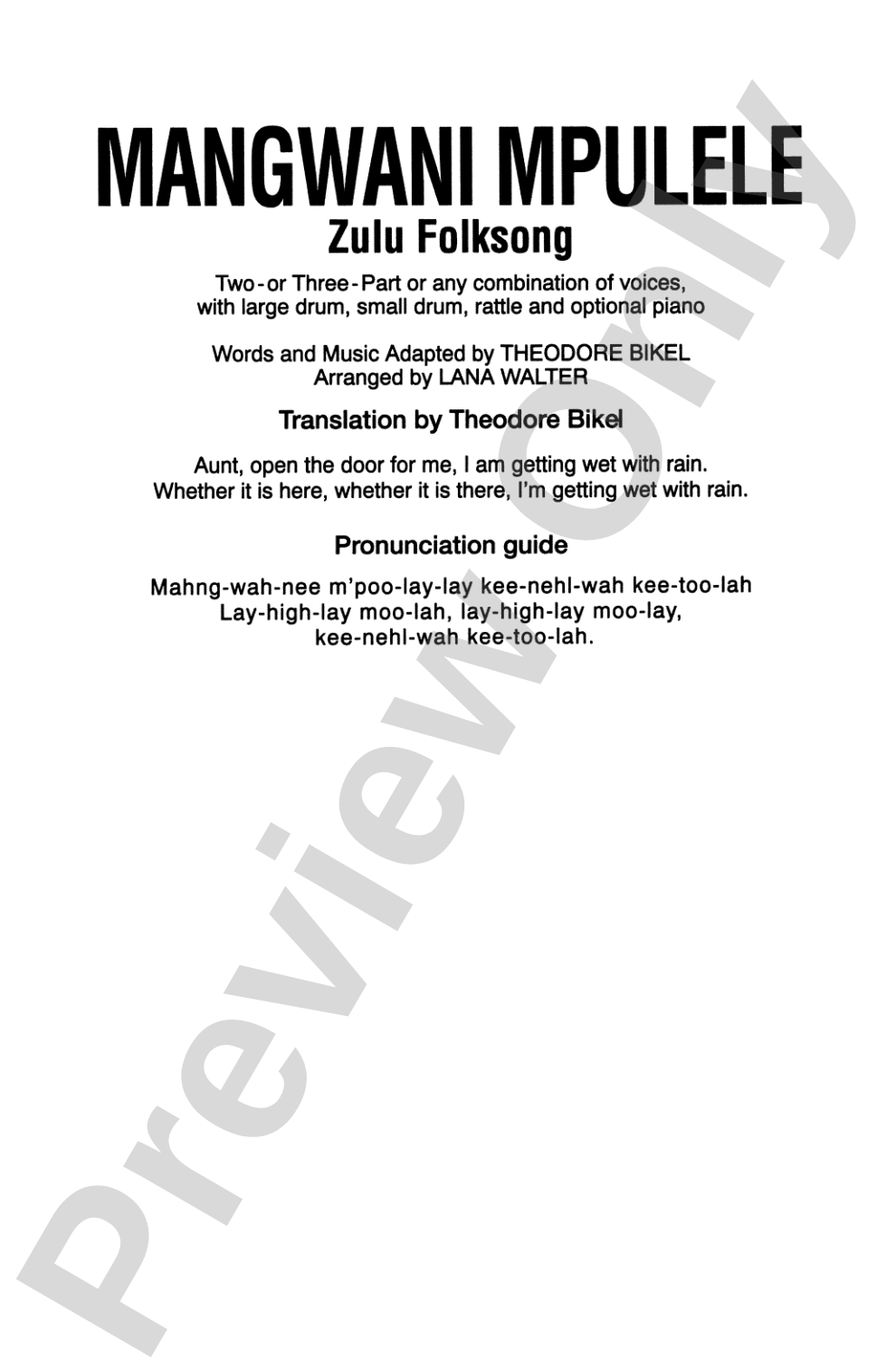
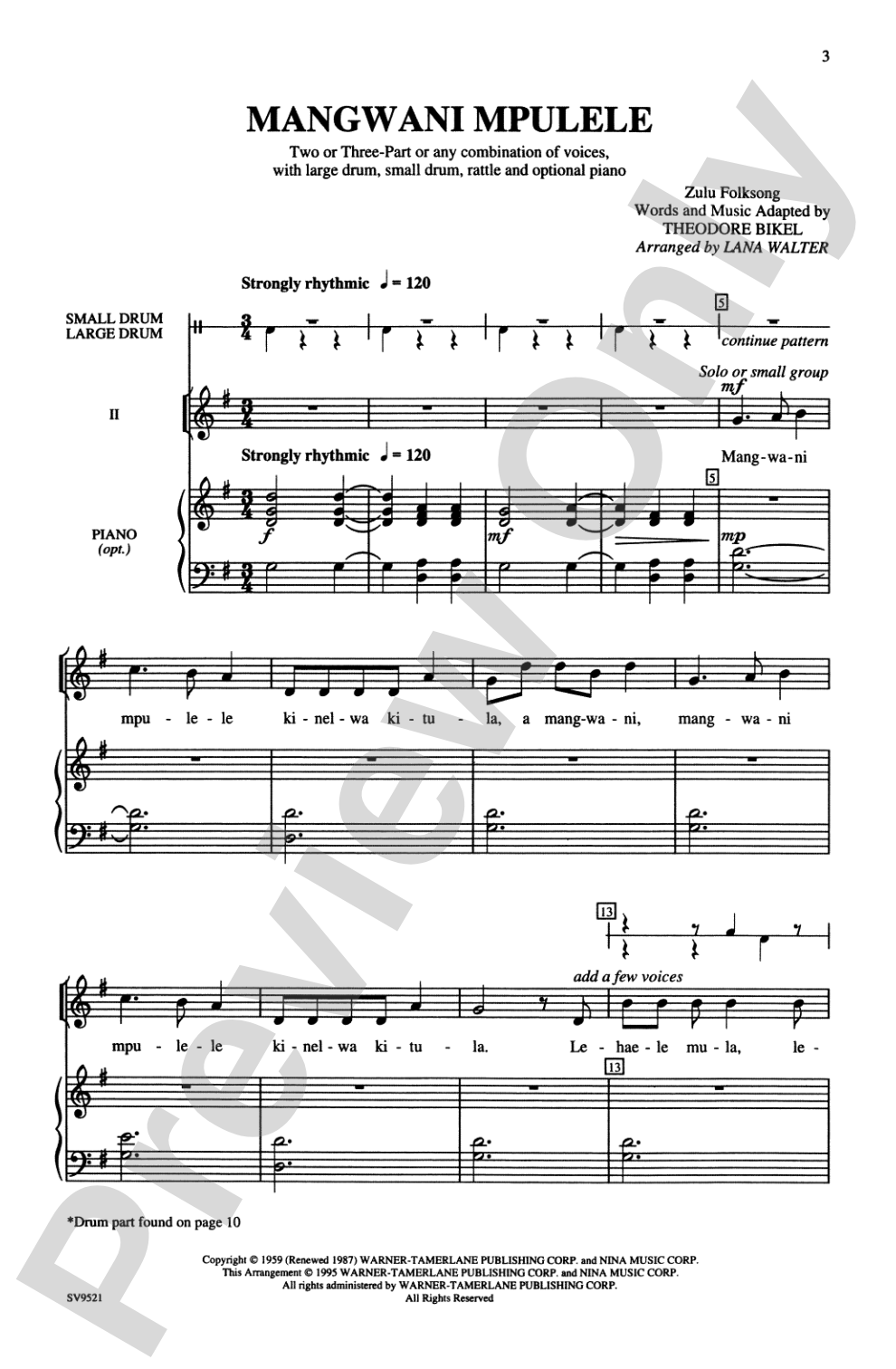

Mangwani Mpulele: 2 or 3-Part (any combination of voices) Choral Octavo
Zulu Folksong, adapted by Theodore Bikel / arr. Lana Walter
Level: Moderate
Item: 00-PO-0005238
$2.25
Minimum order quantity: 20 copies
Pickup currently not available
Description
This Zulu folk song is delightfully set for chorus, rattle and large and small drums. Its repetitive nature and the building of voices makes this an exciting multicultural addition to your performance repertoire.


Mangwani Mpulele: 2 or 3-Part (any combination of voices) Choral Octavo isn't in MakeMusic Cloud just yet...but it could be. Let us know you'd like to see it, and you'll help shape what comes next. In the meantime, start a free trial and dive into thousands of interactive titles your students can play along with today.
Request This Title
Tell us you want it.
Start Your Free Trial
Explore everything that's ready to play right now.
Sample Audio
No sample audio found.
Sample Video
No sample videos found.
Additional Details
Series:
Alfred Archive Edition: Studio PR Catalog
Publisher:
Alfred Music
Page Count:
12
SKU:
00-PO-0005238
More about this title
About the Composer: Theodore Bikel
Theodore Bikel (1924-2015) was an actor, folk singer, and ethnomusicologist who spent decades collecting and preserving songs from cultures around the world. His deep commitment to multicultural music education shaped his arrangements, which brought authentic folk traditions into choral settings while remaining accessible to student singers.
Bikel's work as both performer and educator gave him insight into what makes cross-cultural music meaningful in rehearsal and concert. His arrangements honor the source material while creating opportunities for ensembles of varying sizes and experience levels to engage with world traditions.
Why we love this
This arrangement captures the driving energy of a Zulu work song through smart voice layering and percussion that builds momentum without overwhelming young singers. The flexibility to use SAB or three-part mixed voicing means you can cast it according to your ensemble's actual needs, and the repetitive structure makes it ideal for students still developing ensemble confidence while still sounding rich and intentional.
What to expect
Mangwani Mpulele pulses with the communal energy of a working song, where repetition and layering transform a simple melody into something propulsive and joyful. The interplay between voices and the rattle and drums creates forward momentum that feels inevitable, like a group moving together toward a shared goal.
Who it's for
This piece works beautifully for middle school and early high school choirs seeking authentic multicultural repertoire that doesn't require advanced vocal technique. It's also ideal for elementary choirs with mixed ages or mixed voice ranges, since the flexible voicing lets you cast based on your actual singers rather than forcing a traditional three-part blend.
How to get the most out of it
- Establish the rattle pattern early in rehearsal as the heartbeat of the piece; it anchors the rhythmic building that defines the song's arc.
- Encourage singers to feel the Zulu language and percussion as integral to the arrangement, not decoration. Listening to recordings of the original folk context helps singers understand why this song repeats and builds.
- Layer your drum parts strategically during rehearsal. Start with small drum alone, then add large drum, then voices. This helps singers hear where they enter relative to the percussion foundation.
- Keep the tempo steady and energetic. The excitement comes from clean, confident ensemble singing and tight rhythm section work, not from rushing.
How to use it
Program this alongside other world music selections to create a cohesive multicultural concert segment, or use it as an opening number when you want to establish ensemble energy and invite the audience into a participatory spirit. It also pairs well with lighter secular repertoire and provides a natural contrast to slower, more introspective pieces.
Skills your students will build
- Maintaining steady rhythm while layering multiple voice parts
- Responding to and singing alongside unpitched percussion
- Building and sustaining ensemble sound through repetitive structures
- Singing in a non-English language with cultural awareness
- Balancing individual vocal lines within a cohesive multicultural arrangement