Mandjiani: 1st Percussion Sheet Music Preview

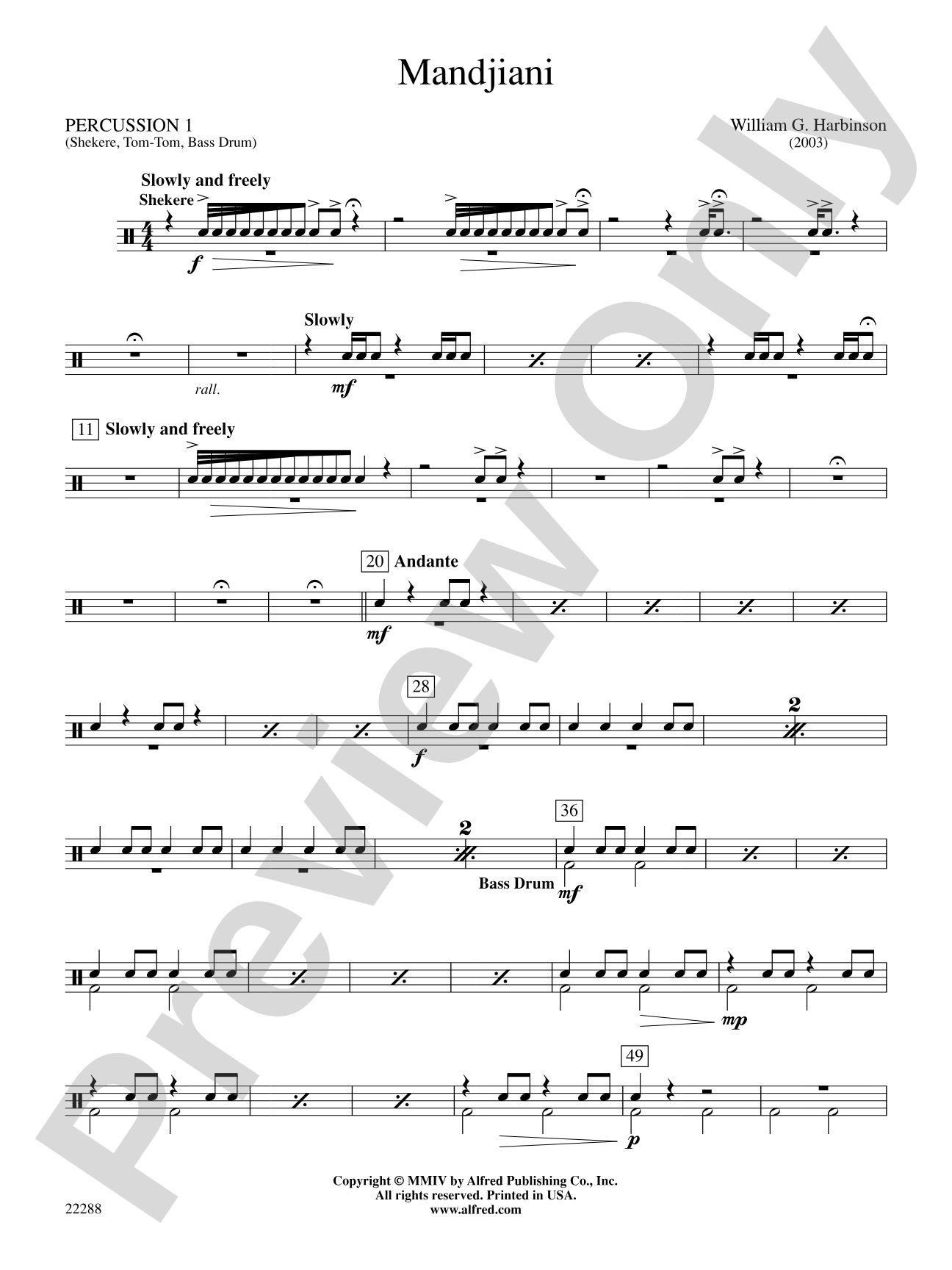
Mandjiani: 1st Percussion

By William G. Harbinson

Grade: 3 (Medium)

Item: 00-PC-0000542_PC1

Digital Download
$3.00
Description
Mandjiani is based on a number of compositional techniques common to the music of Africa. Among the techniques employed are "call and response," layering independent lines to create complex textures, parallel voice leading, diatonic harmonies, and invigorating cross rhythms. Mandjiani is the name of the ostinato rhythmic pattern that appears in the work and persists until the end of the composition. This title is available in MakeMusic Cloud.

Don't just read it, hear it, play along with it, and watch your students grow with it. In MakeMusic Cloud, Mandjiani: 1st Percussion comes alive with professional accompaniment, adjustable tempo, and built-in practice tools that turn solo practice into real progress.

Sample Audio
0:00
0:00
Sample Video
Additional Details
Series: Alfred Concert Band
Publisher: Alfred Music
Page Count: 280
SKU: 00-PC-0000542_PC1

More about this title

Why we love this

Harbinson crafts a Grade 3 work that engages students with authentic African musical concepts rather than surface-level exoticism. The persistent ostinato and layered textures keep the ensemble locked in while individual sections get room to breathe, making it as rewarding to conduct as it is to perform.

What to expect

Rhythmically propulsive and layered, with a sense of forward momentum that comes from the repeating ostinato. The work balances complexity (overlapping rhythms and independent lines) with accessibility, creating music that feels both energized and unified.

Who it's for

Concert bands working at Grade 3 level who want to expand their cultural and compositional literacy without sacrificing musical substance. This score builds rhythmic independence and part-reading skills while introducing students to compositional techniques grounded in African musical traditions.

How to get the most out of it

  • Emphasize the call and response sections with clear articulation and dynamic contrast between the ensemble and answering voices; this clarity drives the work's conversational energy.
  • Lock the cross rhythms in sectional rehearsal first, isolating the rhythmic pattern from the melodic content so students internalize the pulse before combining layers.
  • Layer the independent lines gradually in full ensemble, starting with the ostinato foundation and adding voices one section at a time to build the harmonic texture with precision.
  • Shape the parallel voice leading to avoid a static quality; use slight dynamic shaping and breath placement to highlight the melodic contour even when voices move together.

How to use it

Ideal for a multicultural or world music concert focus, or as a contest selection where the combination of technique and engaging sound rewards solid preparation. It also works well mid-season as a rhythm and ensemble-building tool before tackling more demanding Grade 4 repertoire.

Skills your students will build

  • Reading and executing cross rhythms with precision
  • Maintaining an ostinato pattern while other sections perform independent material
  • Balancing parallel voice leading and layered textures
  • Call and response articulation and phrasing
  • Diatonic harmonic understanding across concert band voicing

You May Also Like