
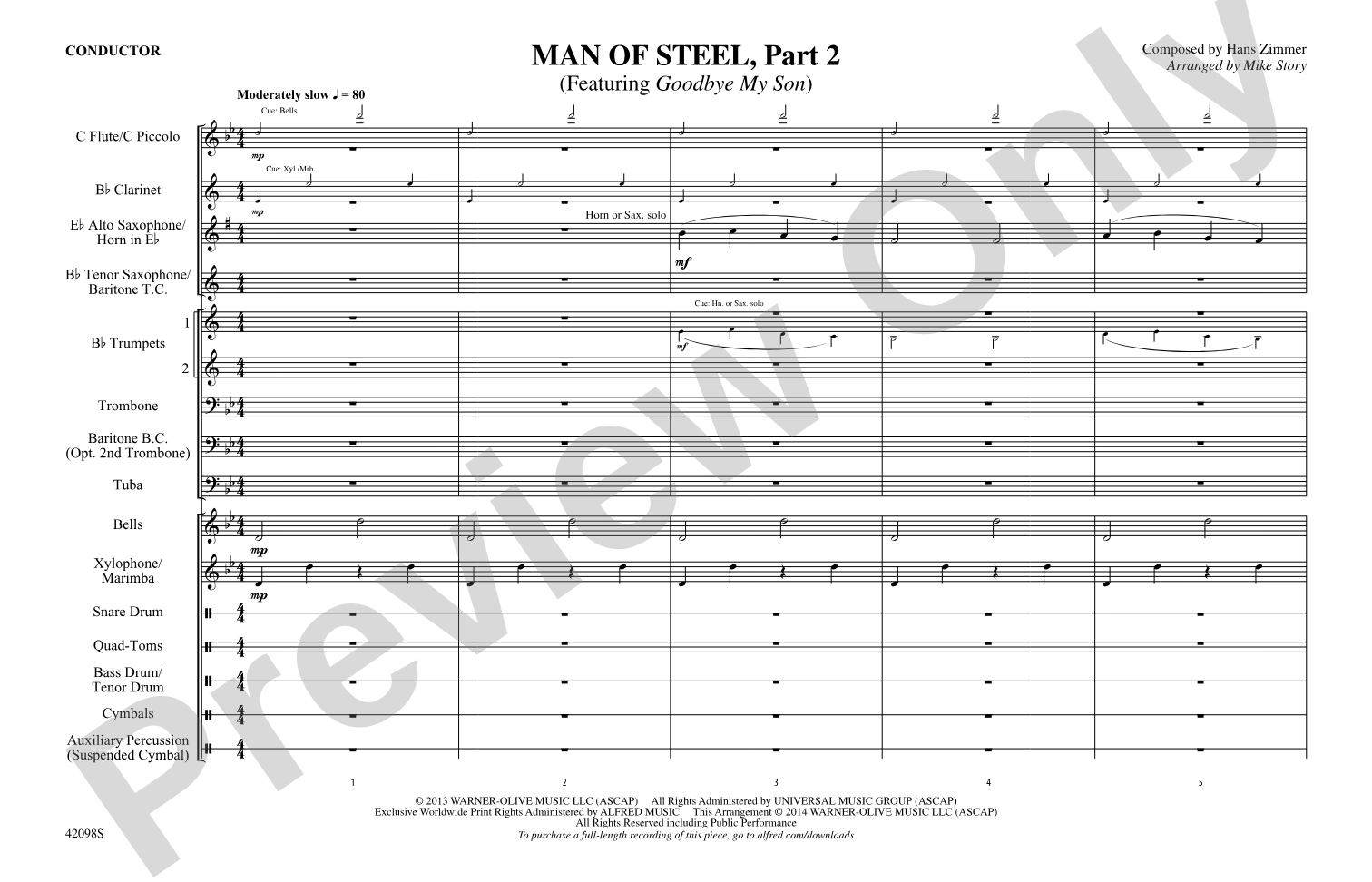
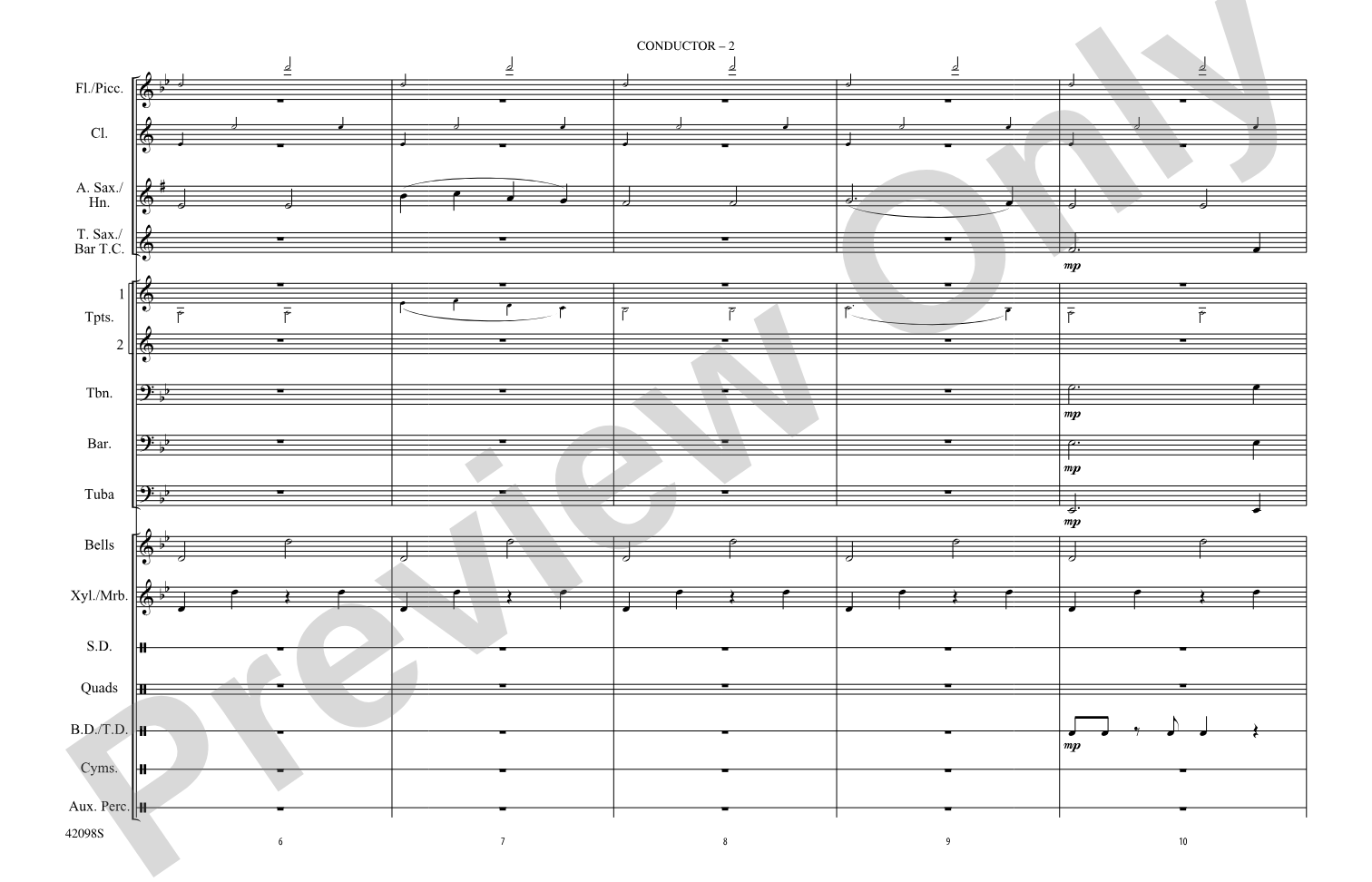
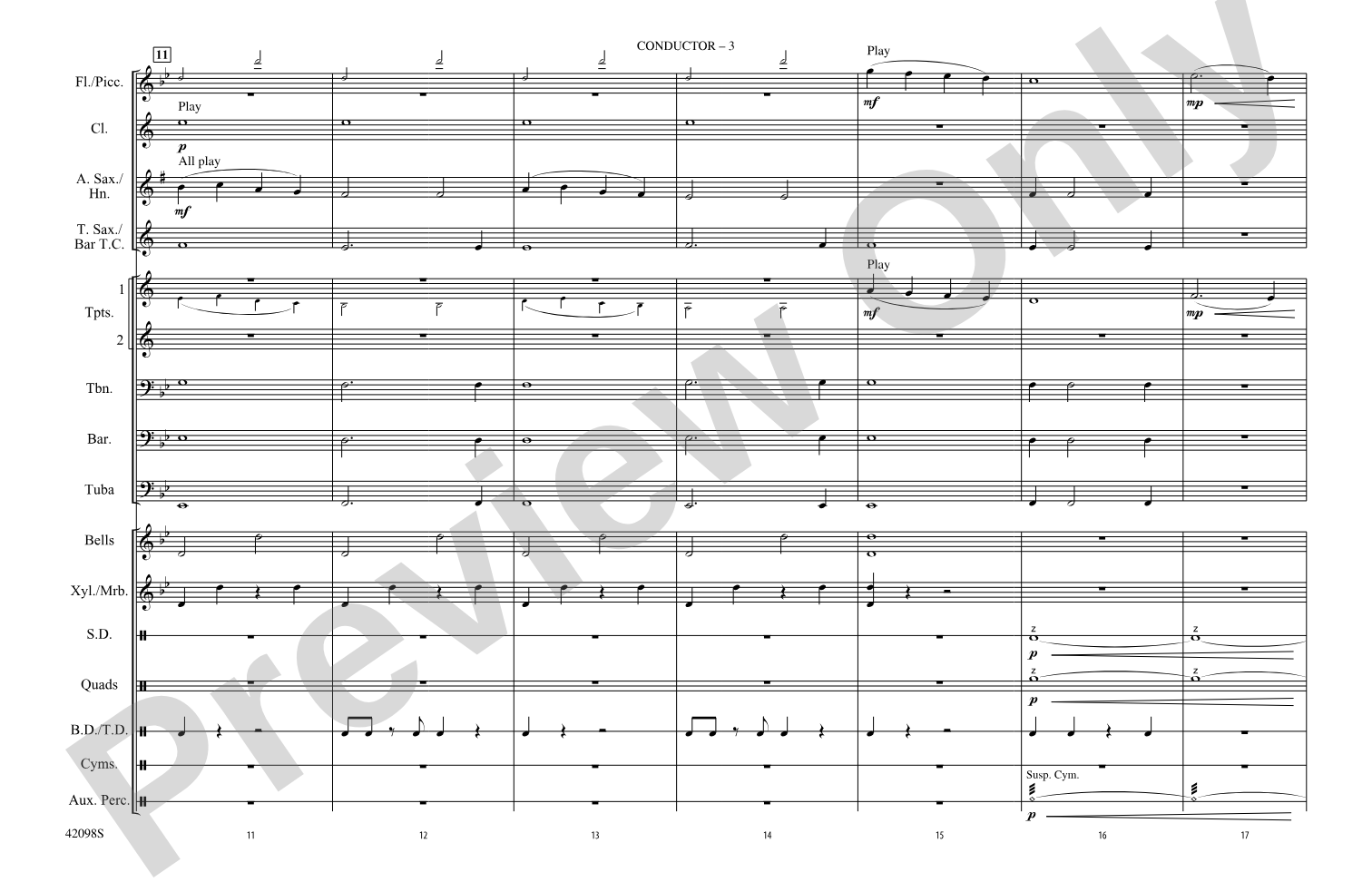
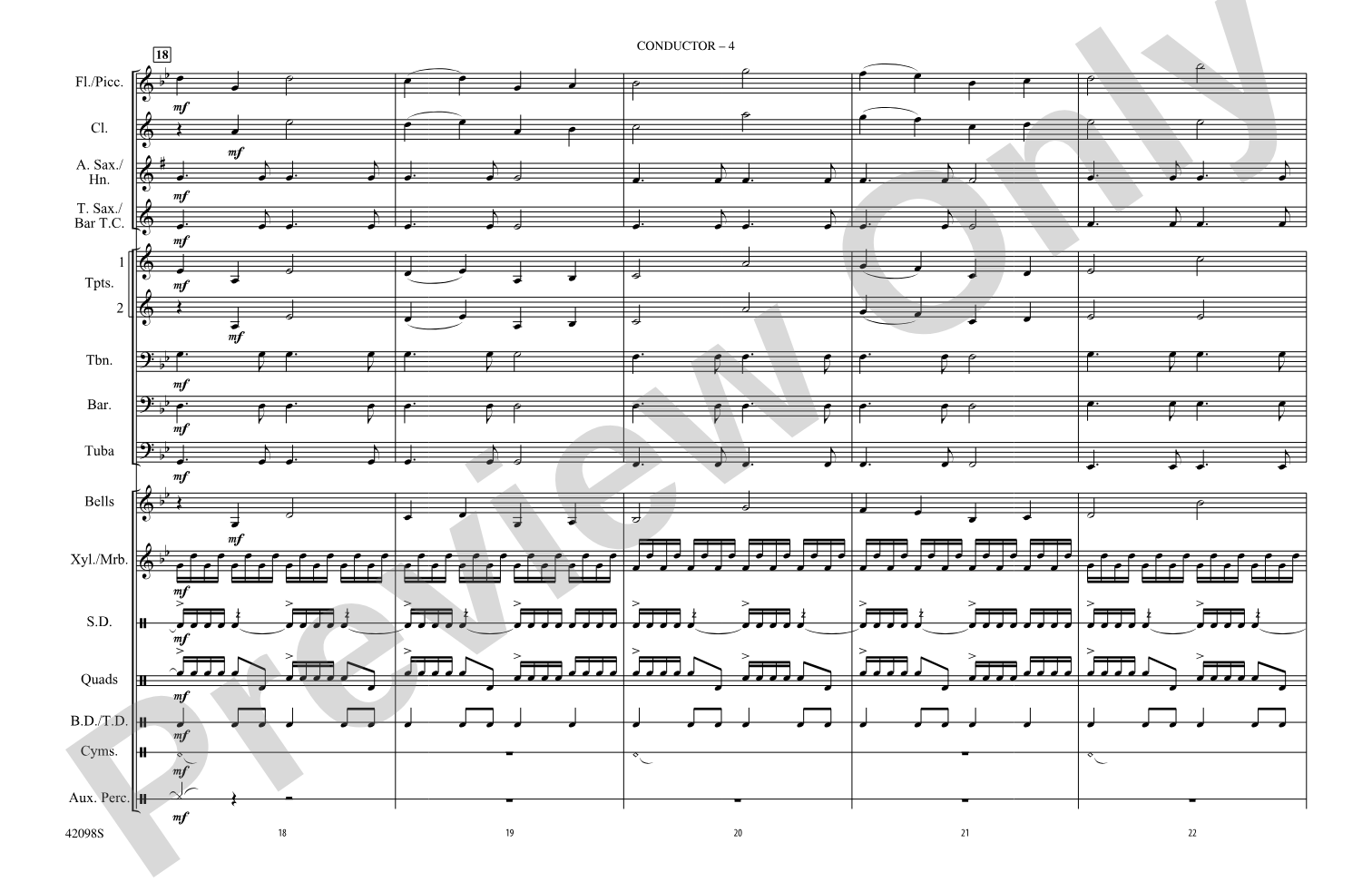

Man of Steel, Part 2: Marching Band Conductor Score & Parts
Featuring: Goodbye My Son
Composed by Hans Zimmer / arr. Mike Story
Grade: 2 (Easy)
Item: 00-PK-0006228

$60.00
Pickup currently not available
Buy Extra Parts (Digital PDF Download)
Parts Added to Cart!
Description
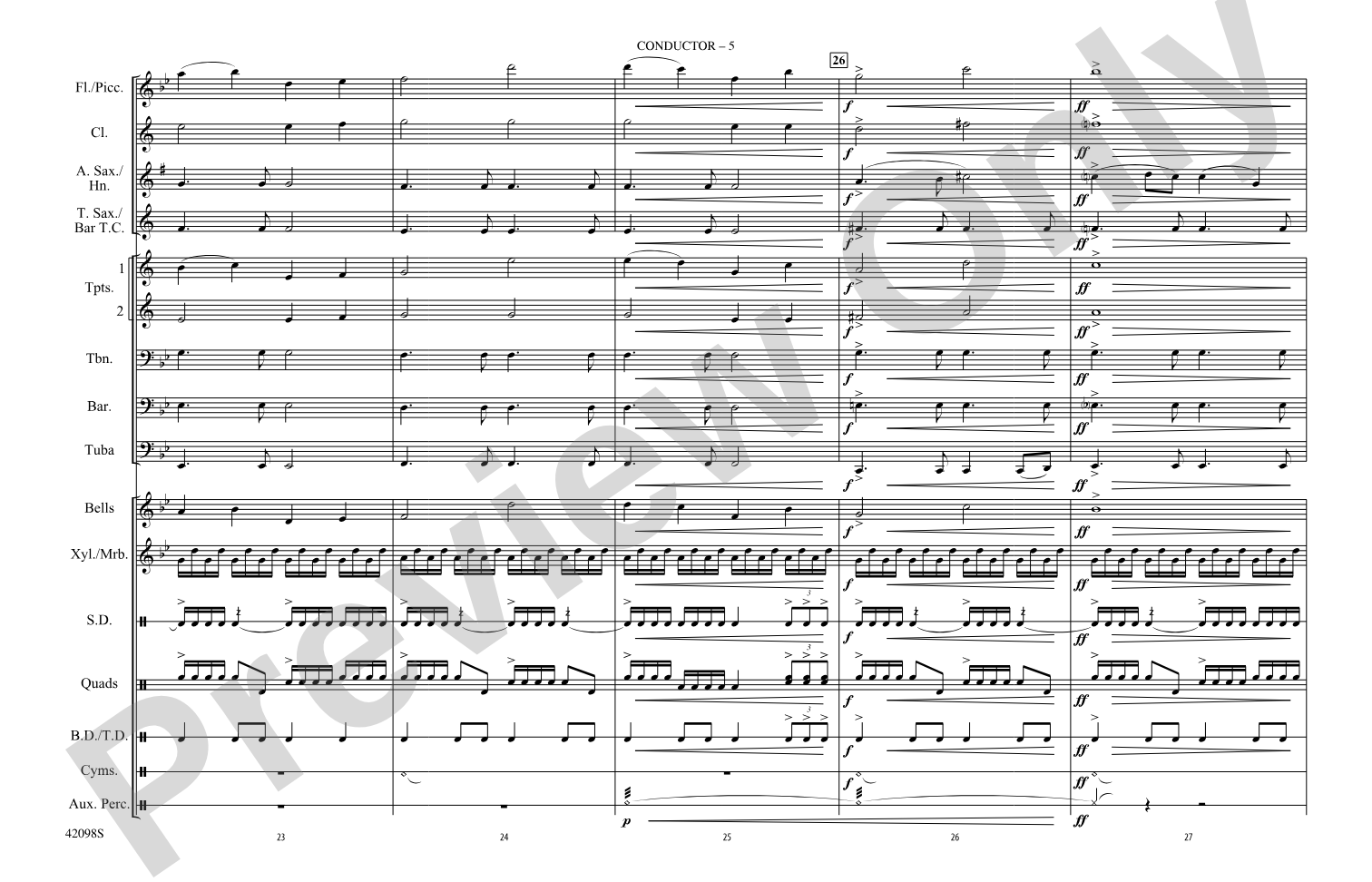
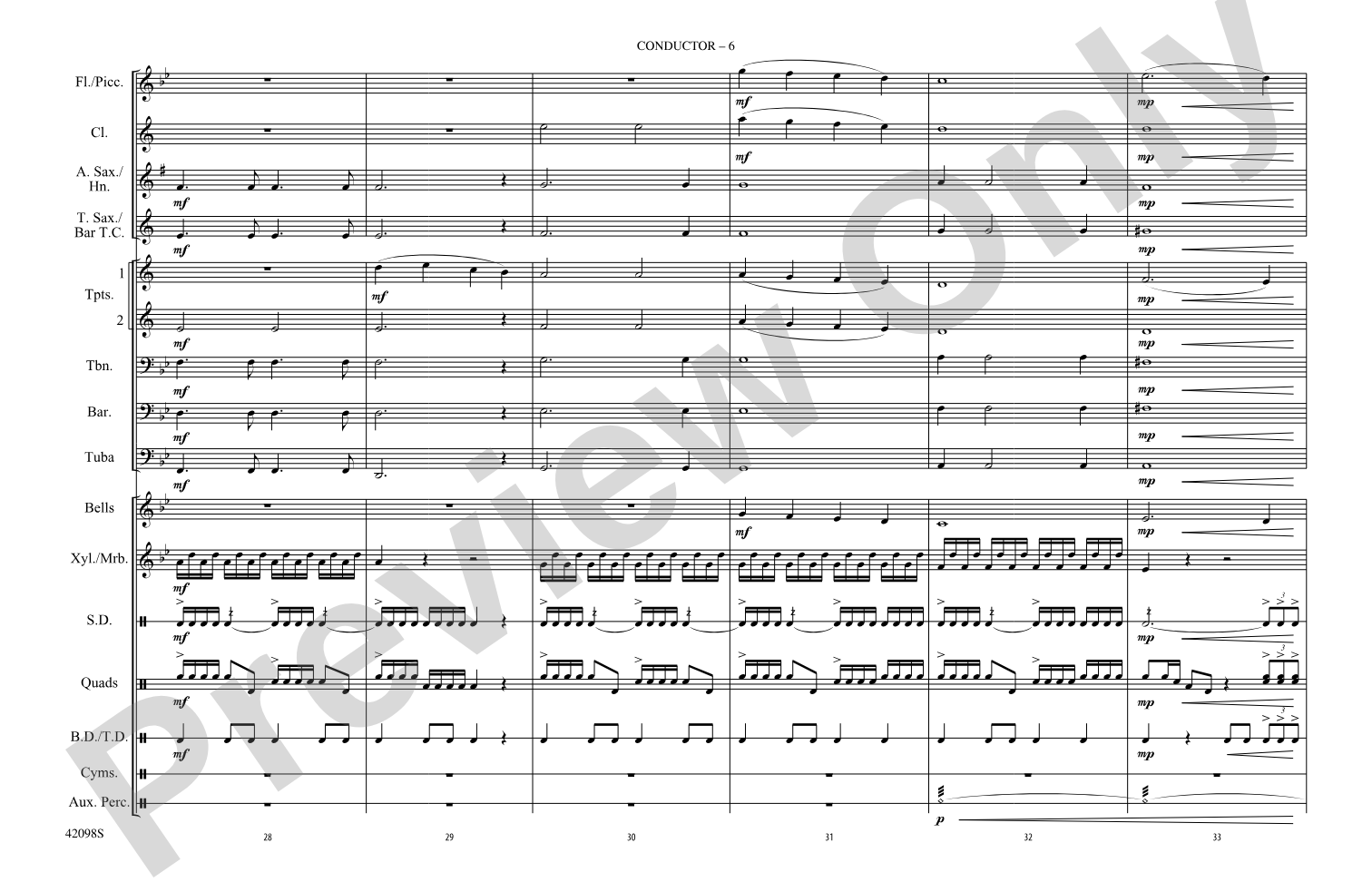
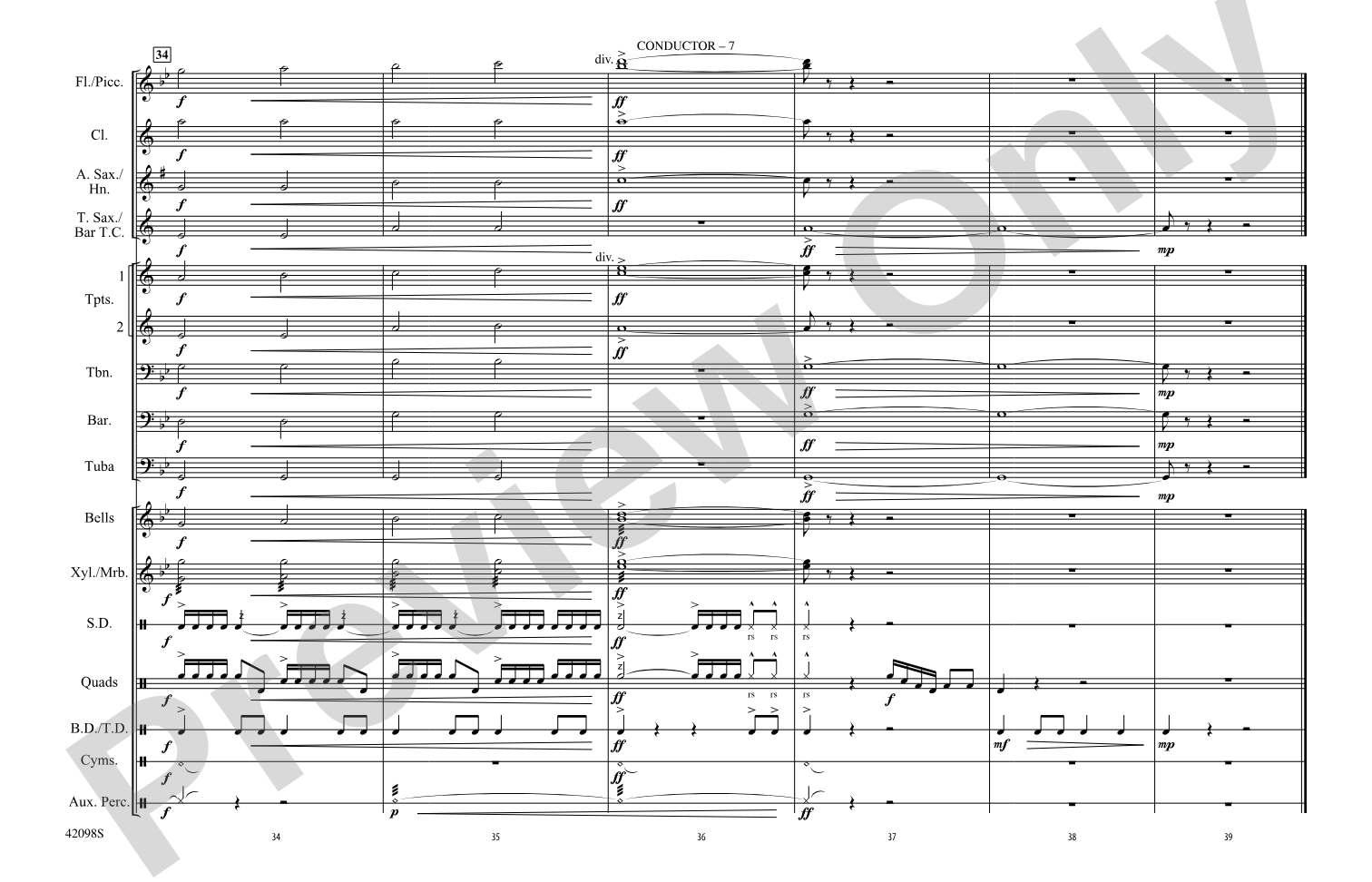
Part 2 of our Man of Steel show contains the poignant and beautiful Goodbye My Son. After beginning quietly with a horn or alto sax solo, the piece gradually builds to a stunning finish. (2:00)


Don't just read it, hear it, play along with it, and watch your students grow with it. In MakeMusic Cloud, Man of Steel, Part 2: Marching Band Conductor Score & Parts comes alive with professional accompaniment, adjustable tempo, and built-in practice tools that turn solo practice into real progress.
Open in the Player
Jump straight in and assign it today.
Start Your Free Trial
Open this title and explore the full library in minutes.
Sample Audio
1
Audio File
--:--
0:00
0:00
Sample Video
No sample videos found.
Additional Details
Series:
Big and Easy
Publisher:
Alfred Music
Page Count:
118
SKU:
00-PK-0006228
More about this title
About the Composer: Hans Zimmer
Hans Zimmer stands among the most prolific film composers of our time, with a career spanning over four decades and scores for some of cinema's most iconic franchises. His work ranges from intimate character moments to sweeping orchestral landscapes, always grounded in emotional clarity and harmonic sophistication. Zimmer's influence on contemporary composition extends well beyond film; his music has become a touchstone for understanding how modern orchestration can serve narrative and feeling in equal measure.
Why we love this
This arrangement captures the emotional weight of Zimmer's original without overwhelming a Grade 2 ensemble. The gradual dynamic arc from solo to full ensemble is narratively satisfying and musically achievable, giving students a real sense of building toward something meaningful rather than simply executing technical passages.
What to expect
Quiet reflection that unfolds into something grand without losing its intimate core. The piece carries weight and sincerity; it's about saying goodbye with dignity, and that character shapes every moment from the soft opening through the powerful conclusion.
Who it's for
Band directors looking for accessible repertoire that doesn't sacrifice emotional authenticity. This works equally well for groups still building technical confidence and for programs seeking music that connects students to film scoring as a legitimate compositional tradition.
How to get the most out of it
- Balance the opening solo carefully. Whether it's a horn or alto sax, this moment should feel intimate before the band enters; resist the urge to fill in behind the soloist too early.
- Shape the crescendo with intent rather than rushing. Marching bands often accelerate slightly when building dynamics; stay locked to the tempo even as volume increases.
- Let the final section breathe. The "stunning finish" works best when the band plays with controlled power, not frantic energy. Conductor clarity on this transition is essential.
- Work the blend between the solo voice and the band when they overlap. The soloist should be heard through the texture, not buried by it.
How to use it
This works beautifully as a centerpiece in a film music or contemporary music concert, particularly if paired with other cinematic works. It also functions as an effective emotional anchor in a mixed-genre show, offering contrast to uptempo material and giving your program emotional range.
Skills your students will build
- Dynamic control and phrasing over extended crescendos
- Balancing solo voice with ensemble accompaniment
- Maintaining tempo consistency while building intensity
- Ensemble blend and intonation in sustained passages
- Understanding film scoring context and emotional narrative in instrumental music