
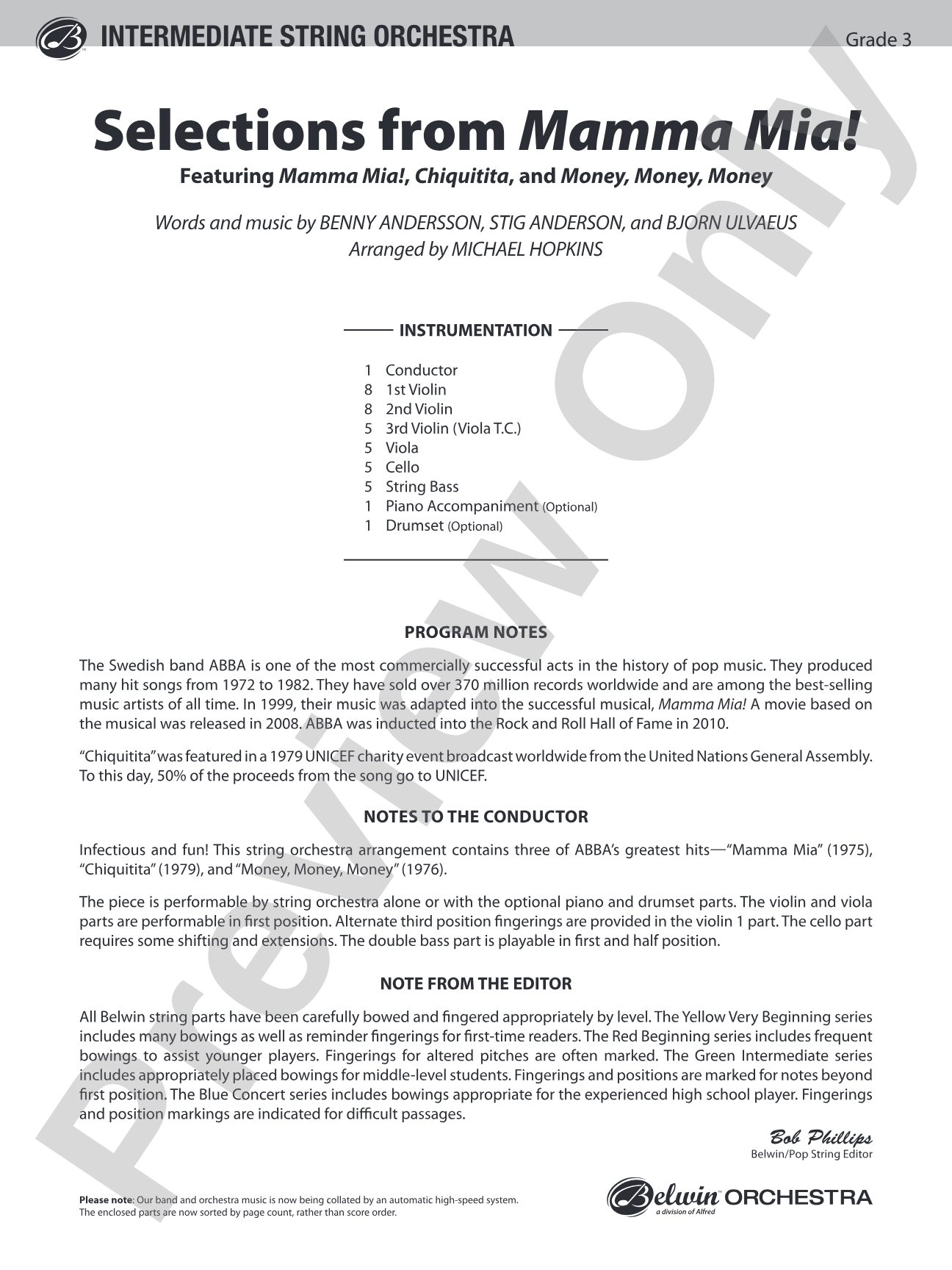
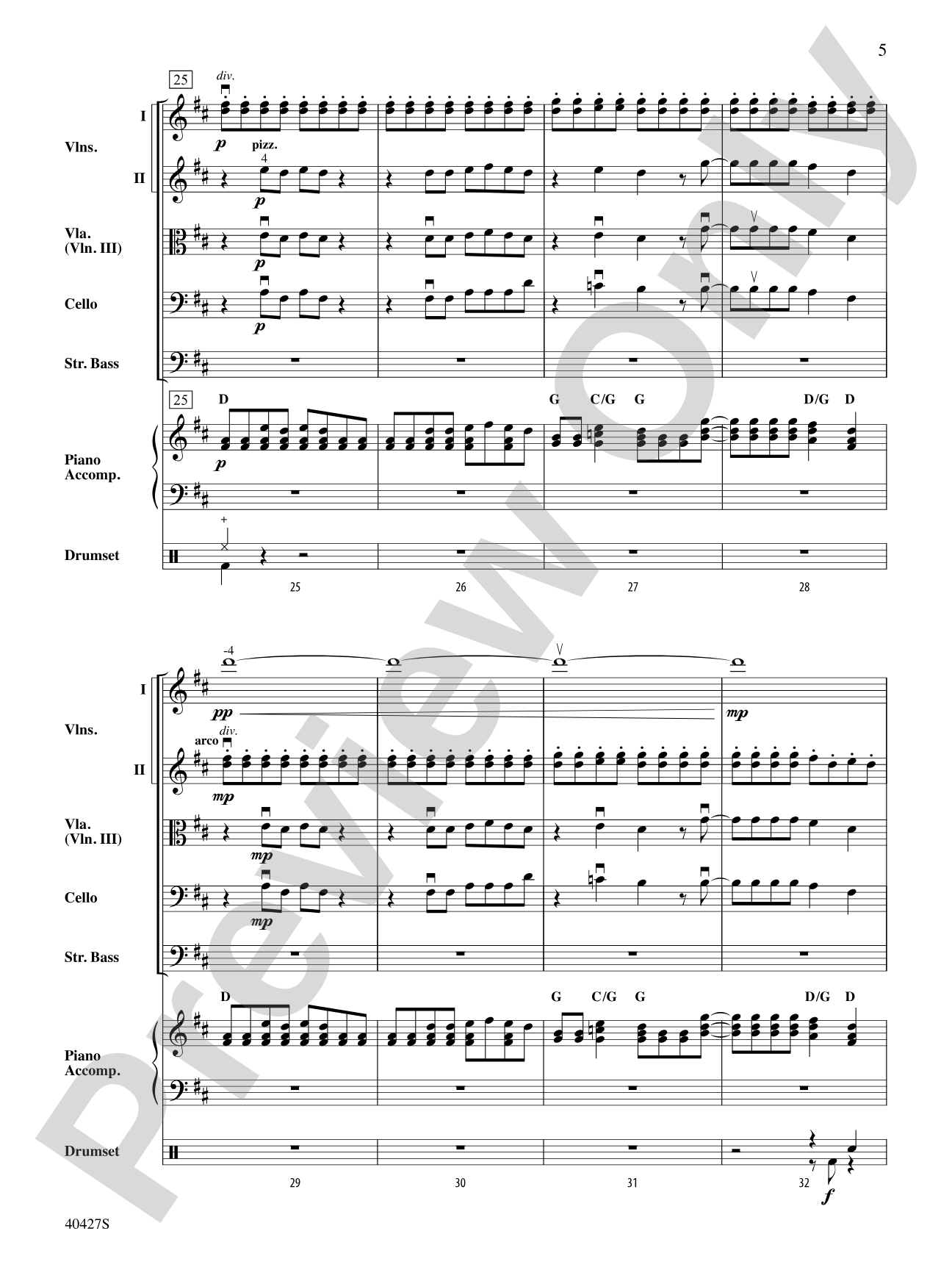
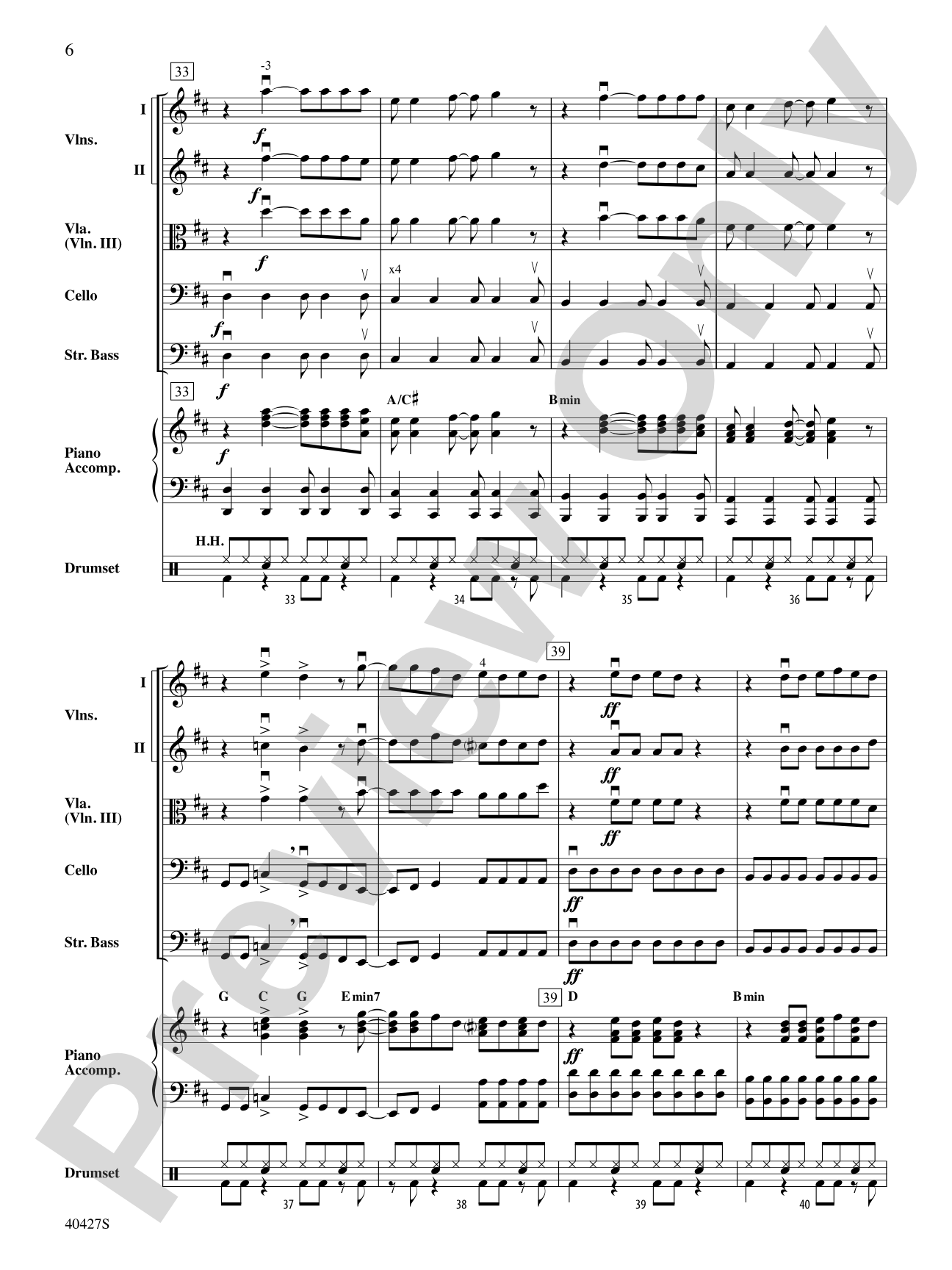
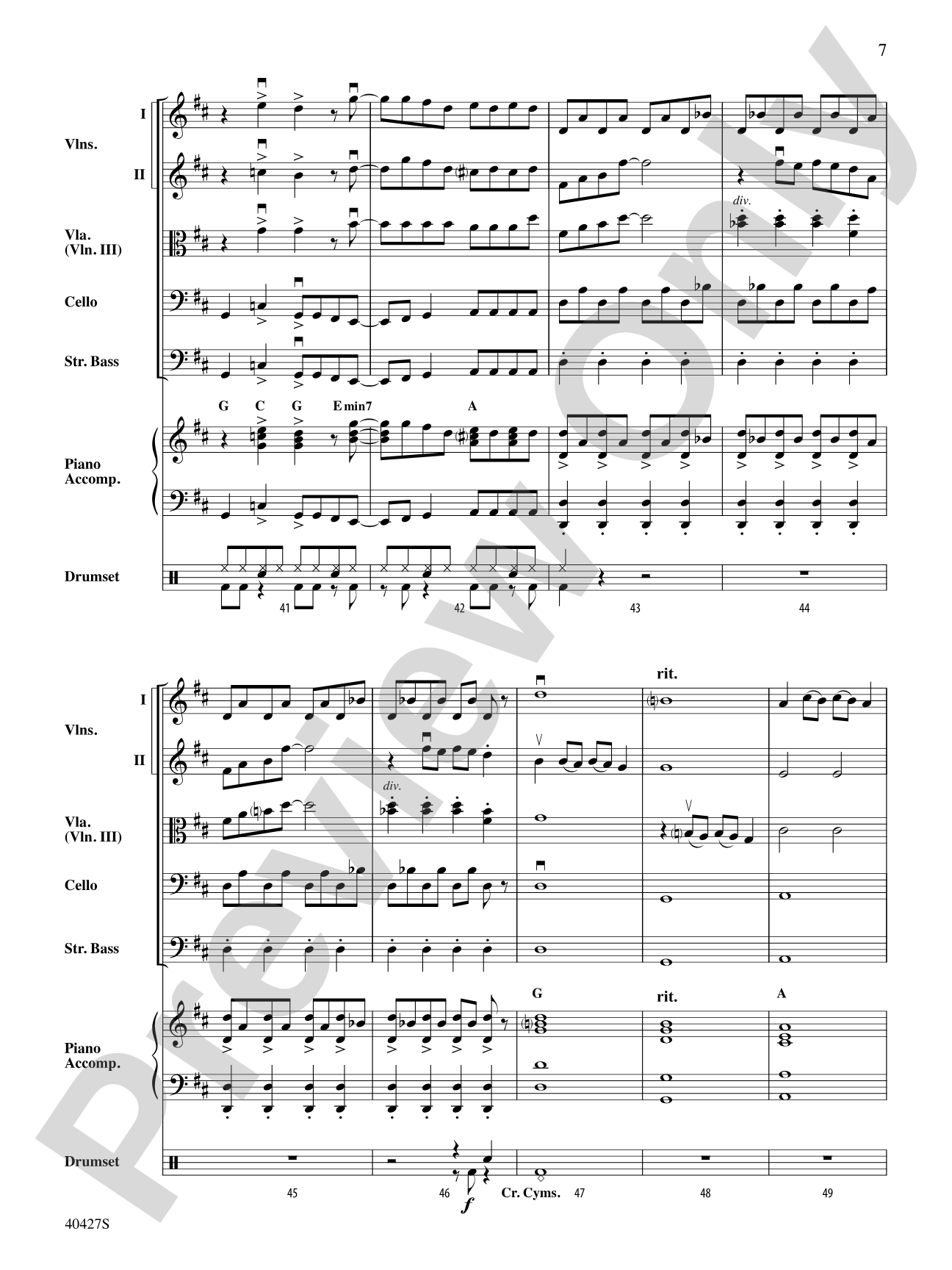
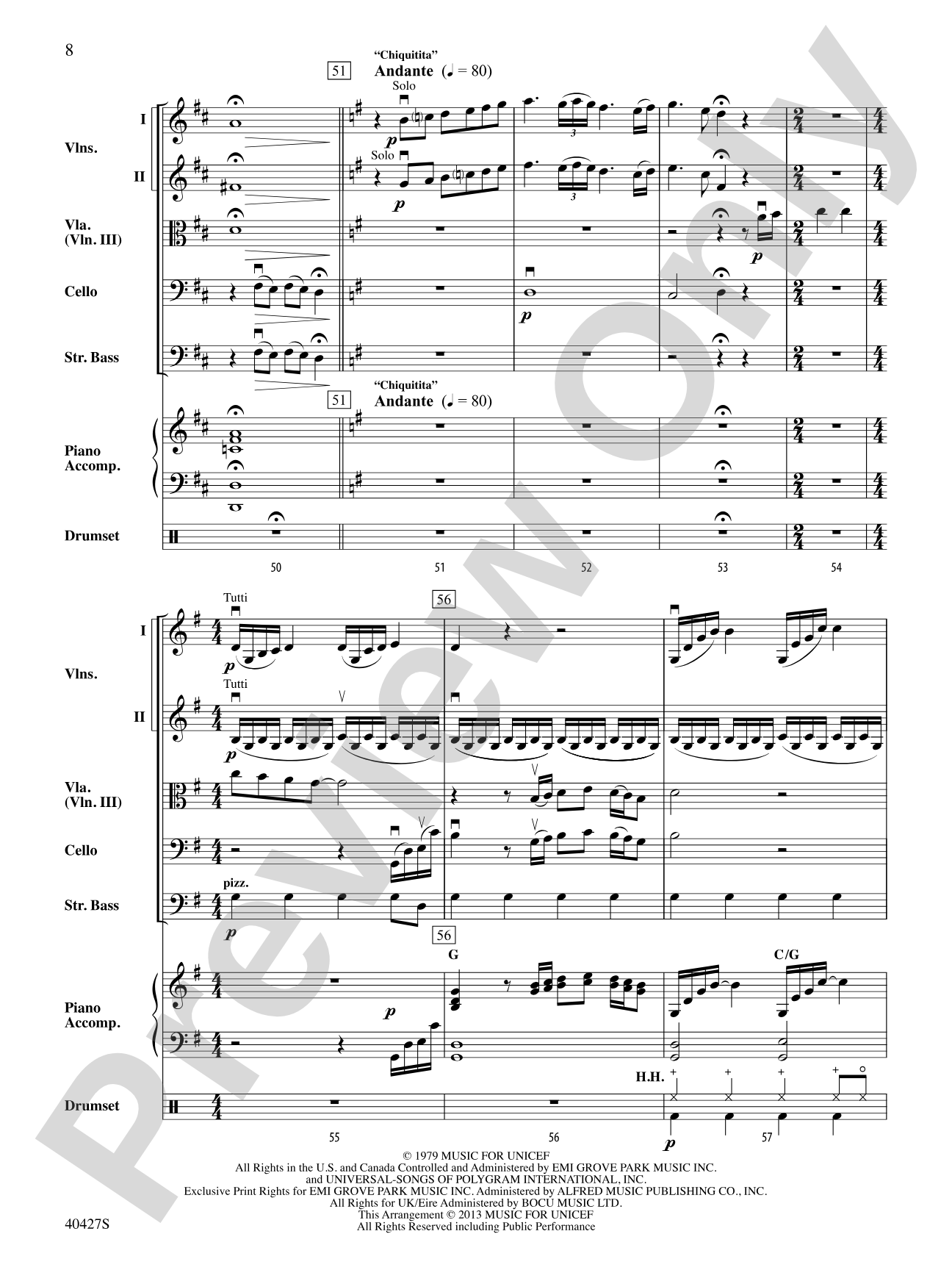
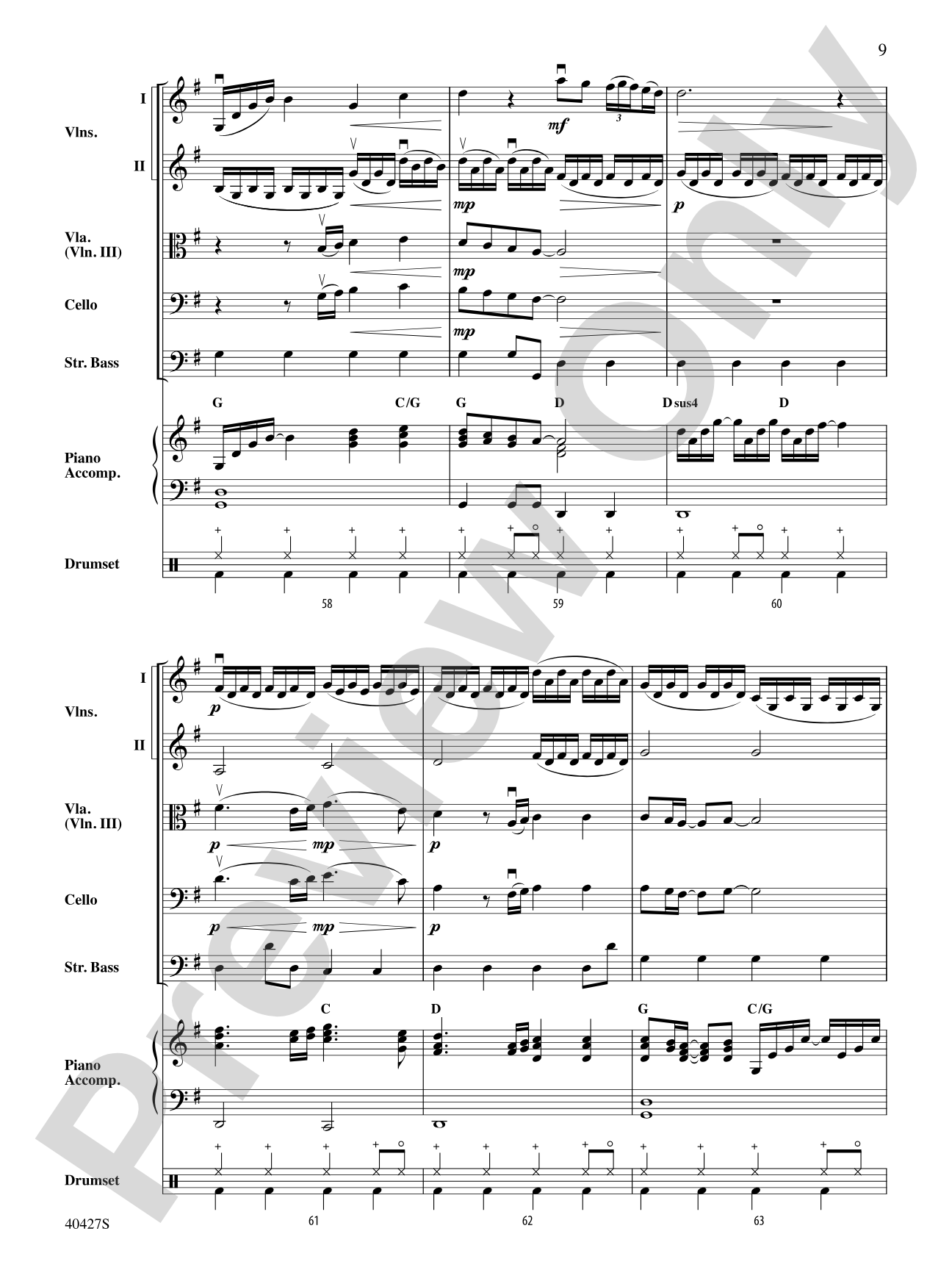
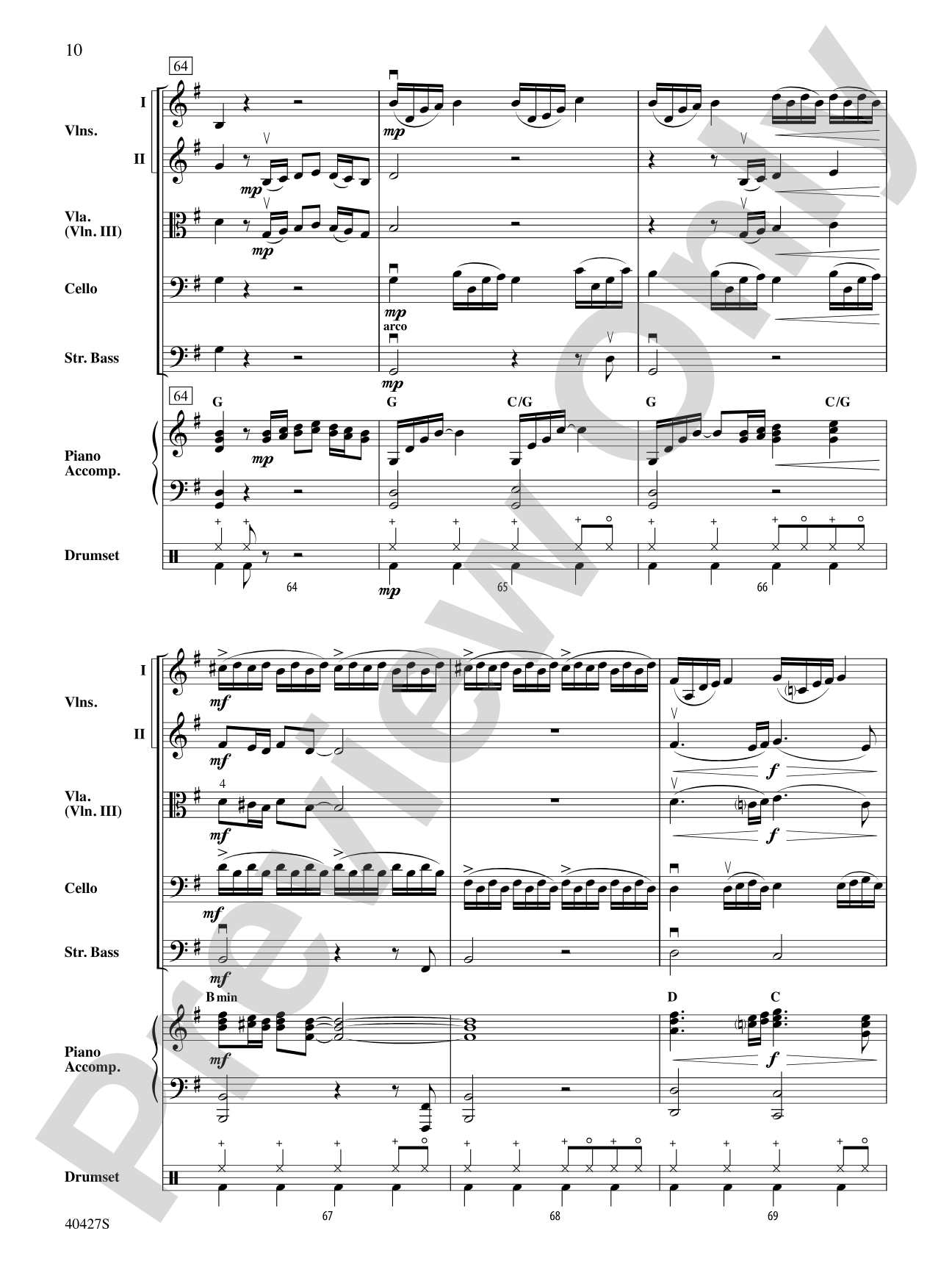
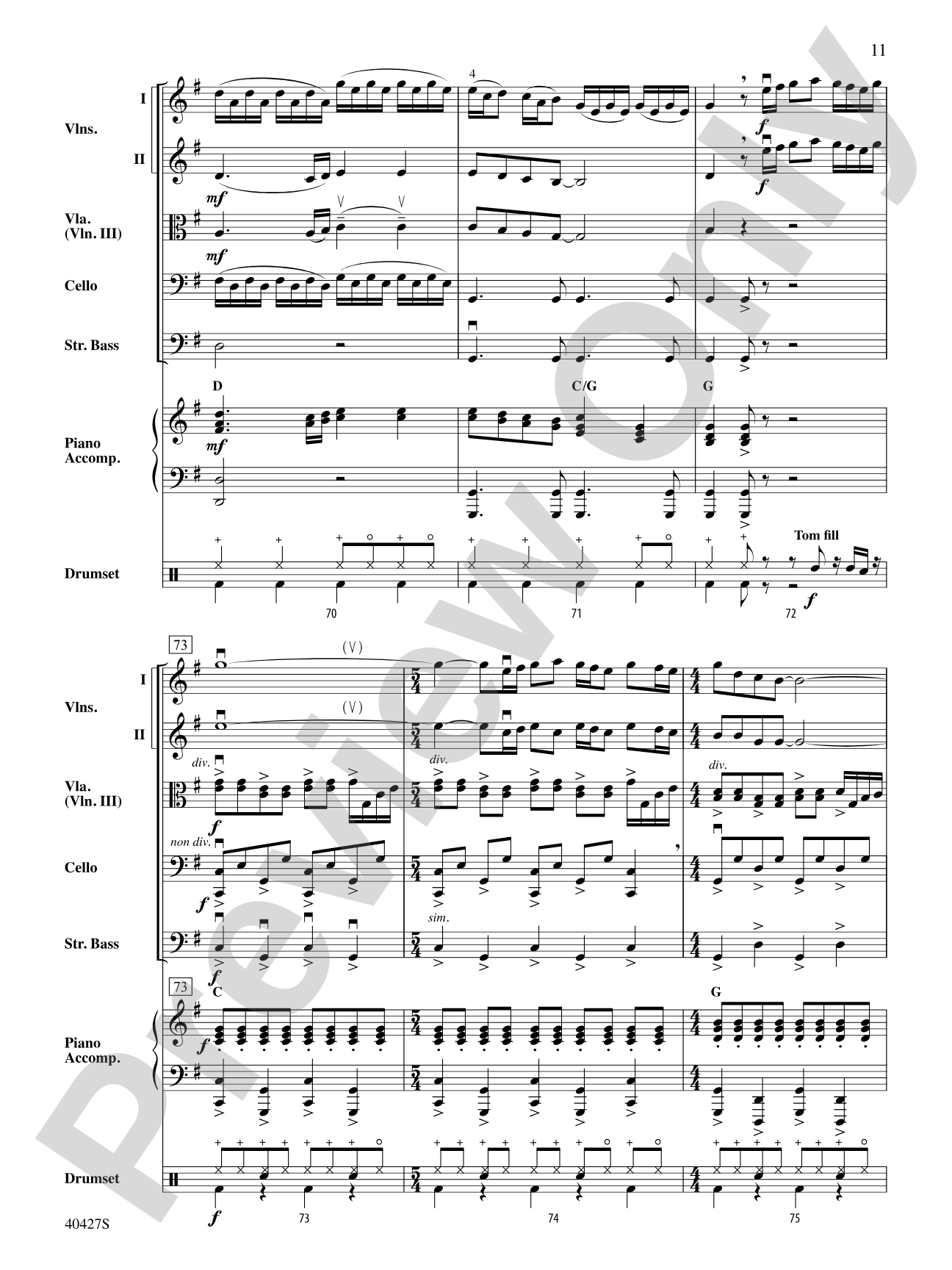
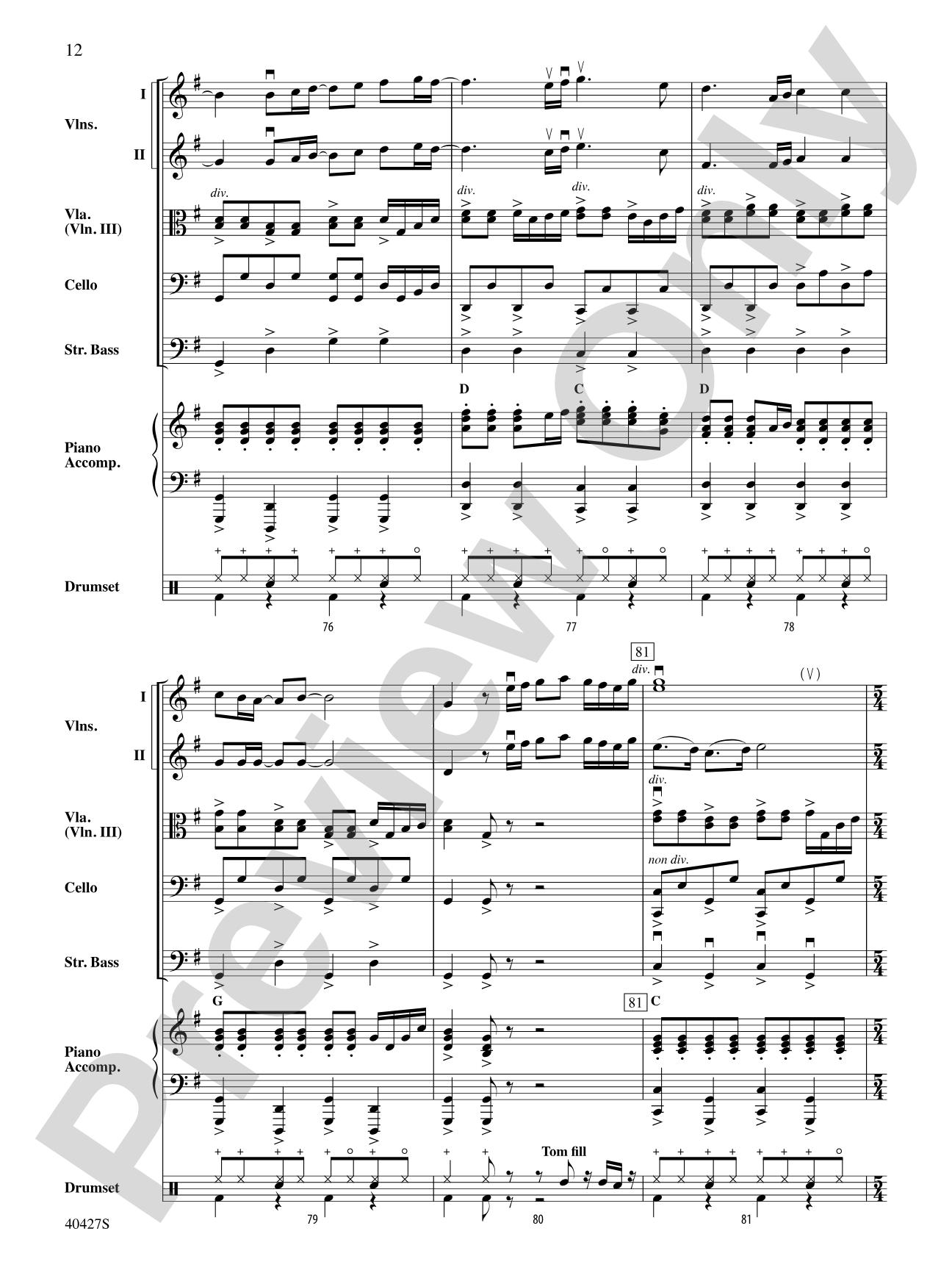
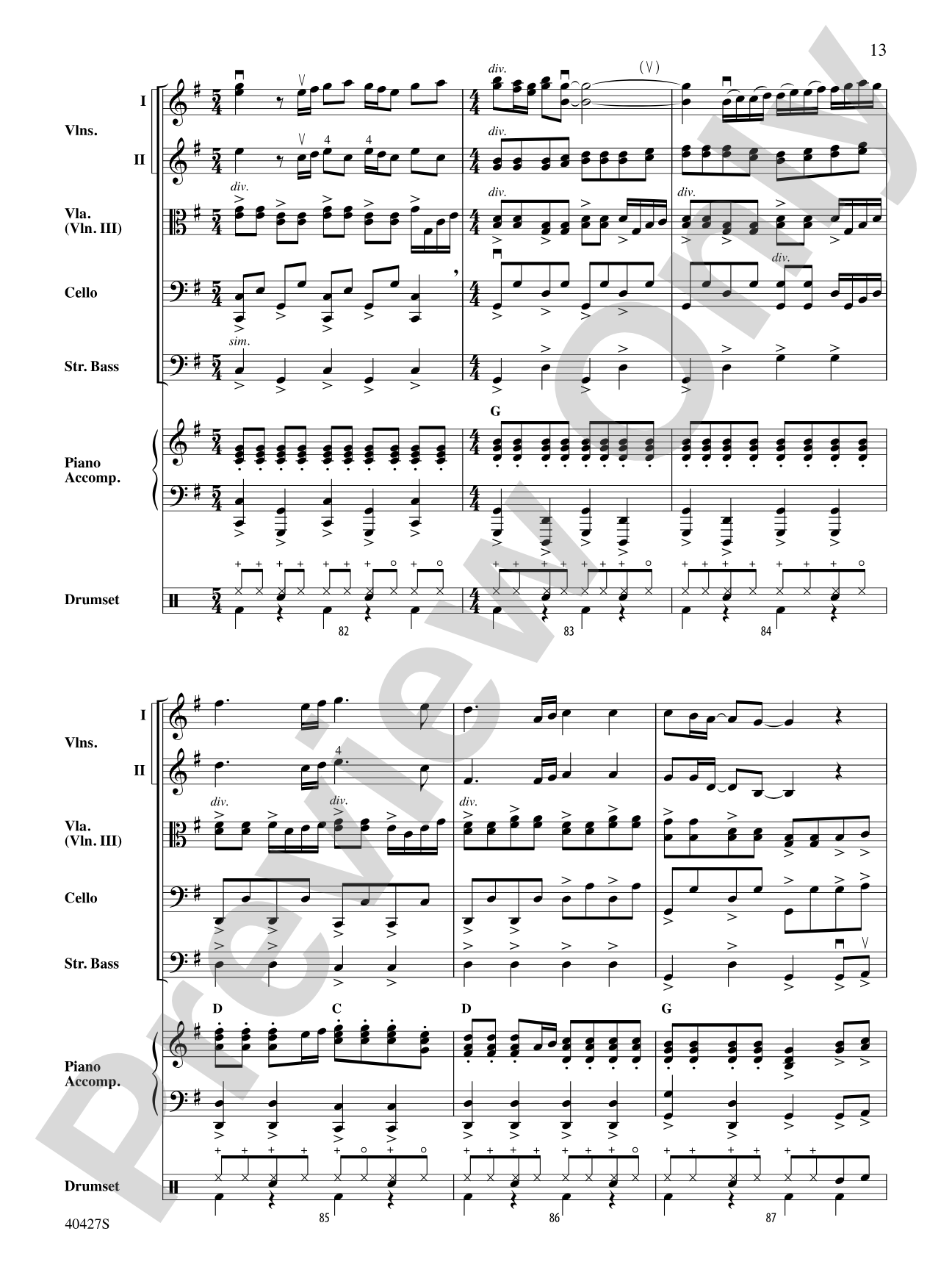
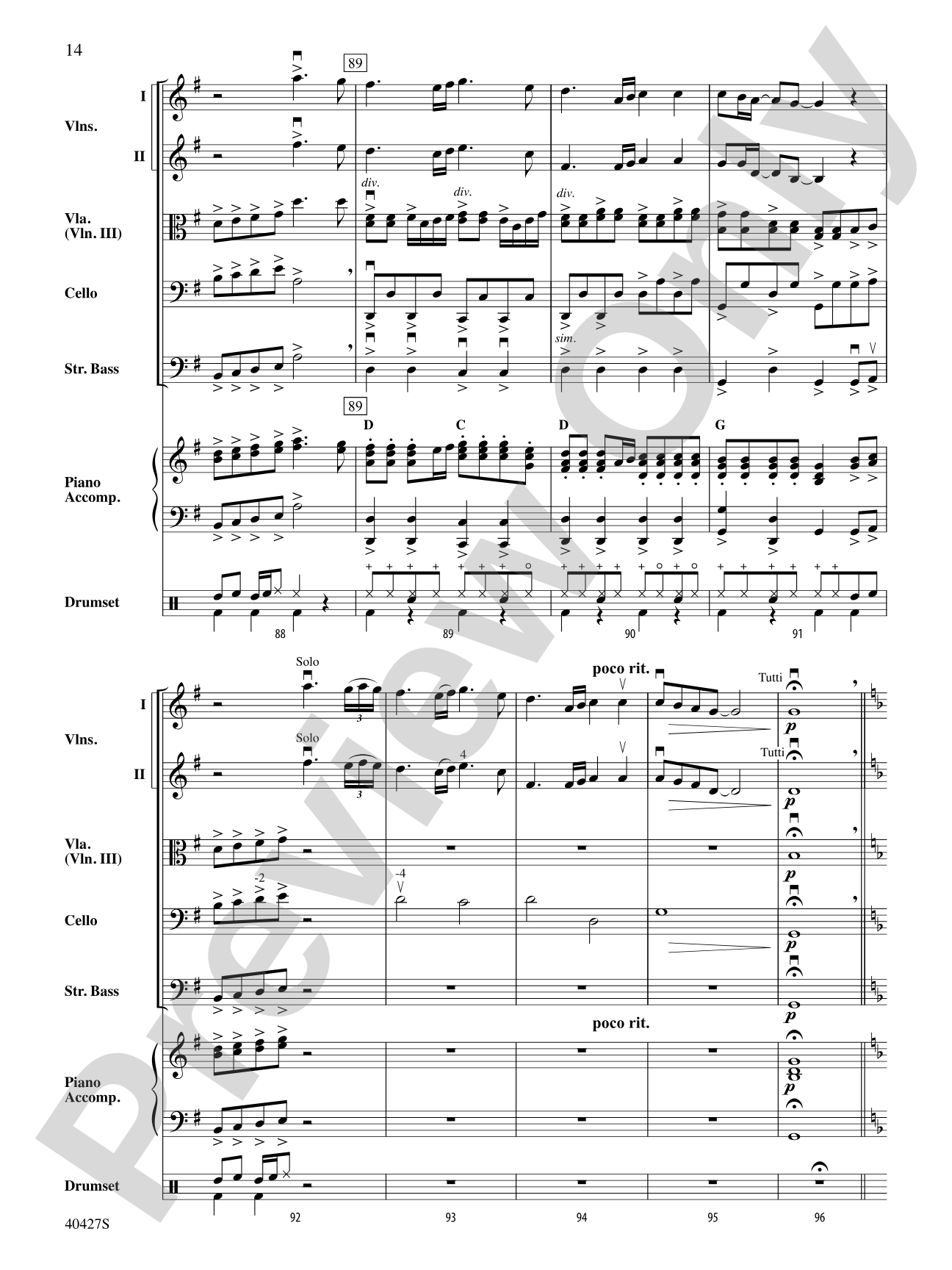
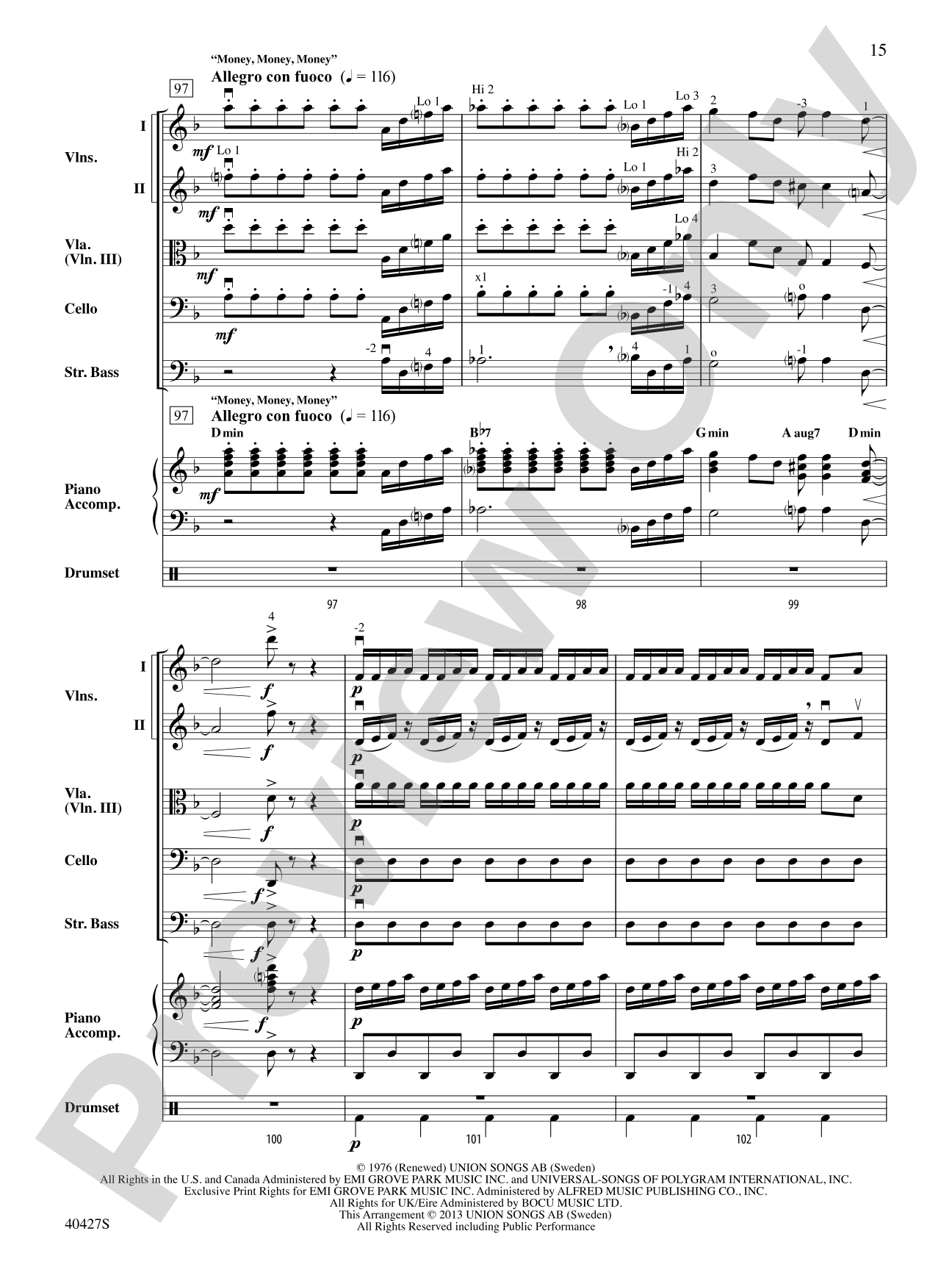
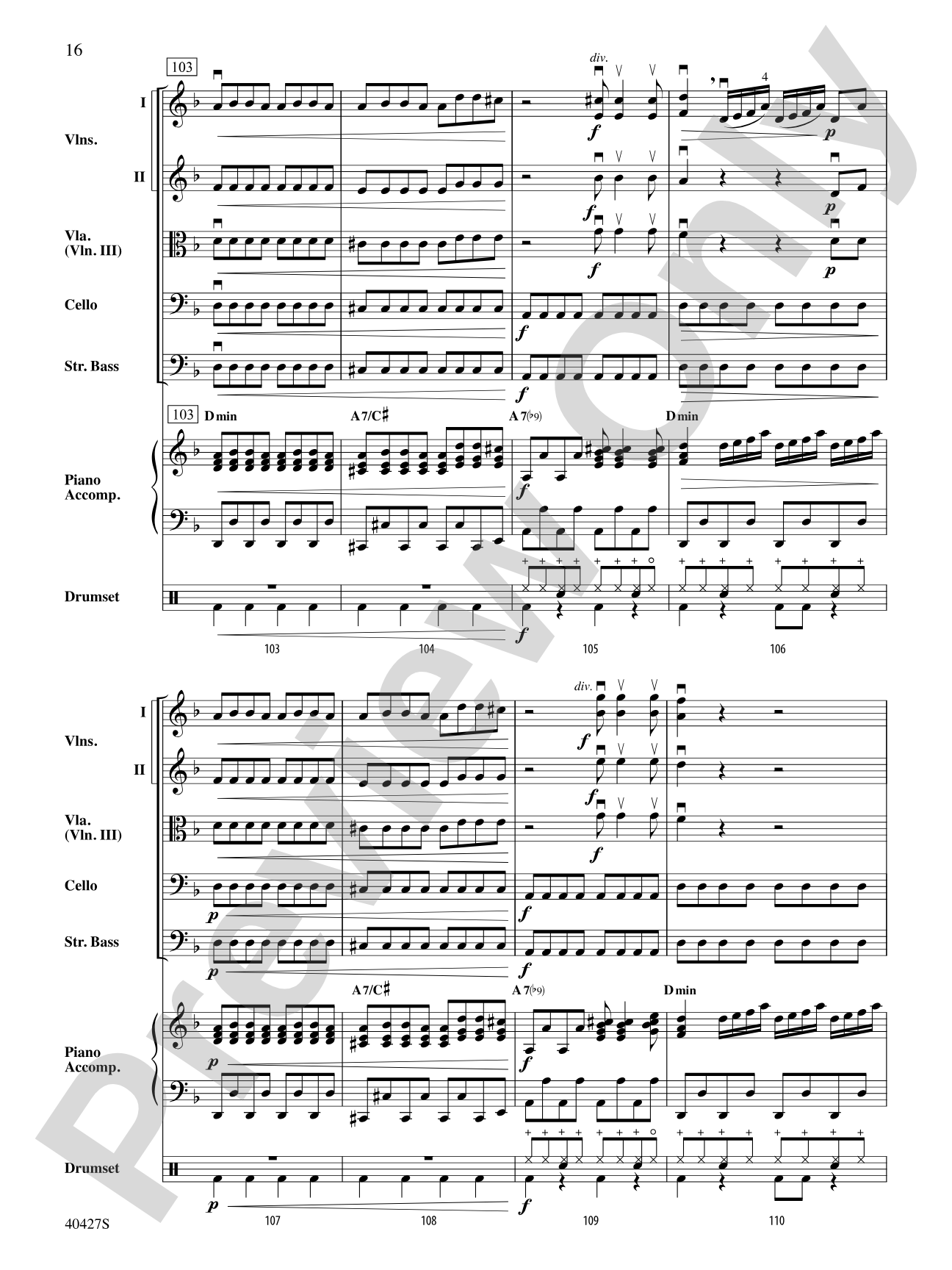
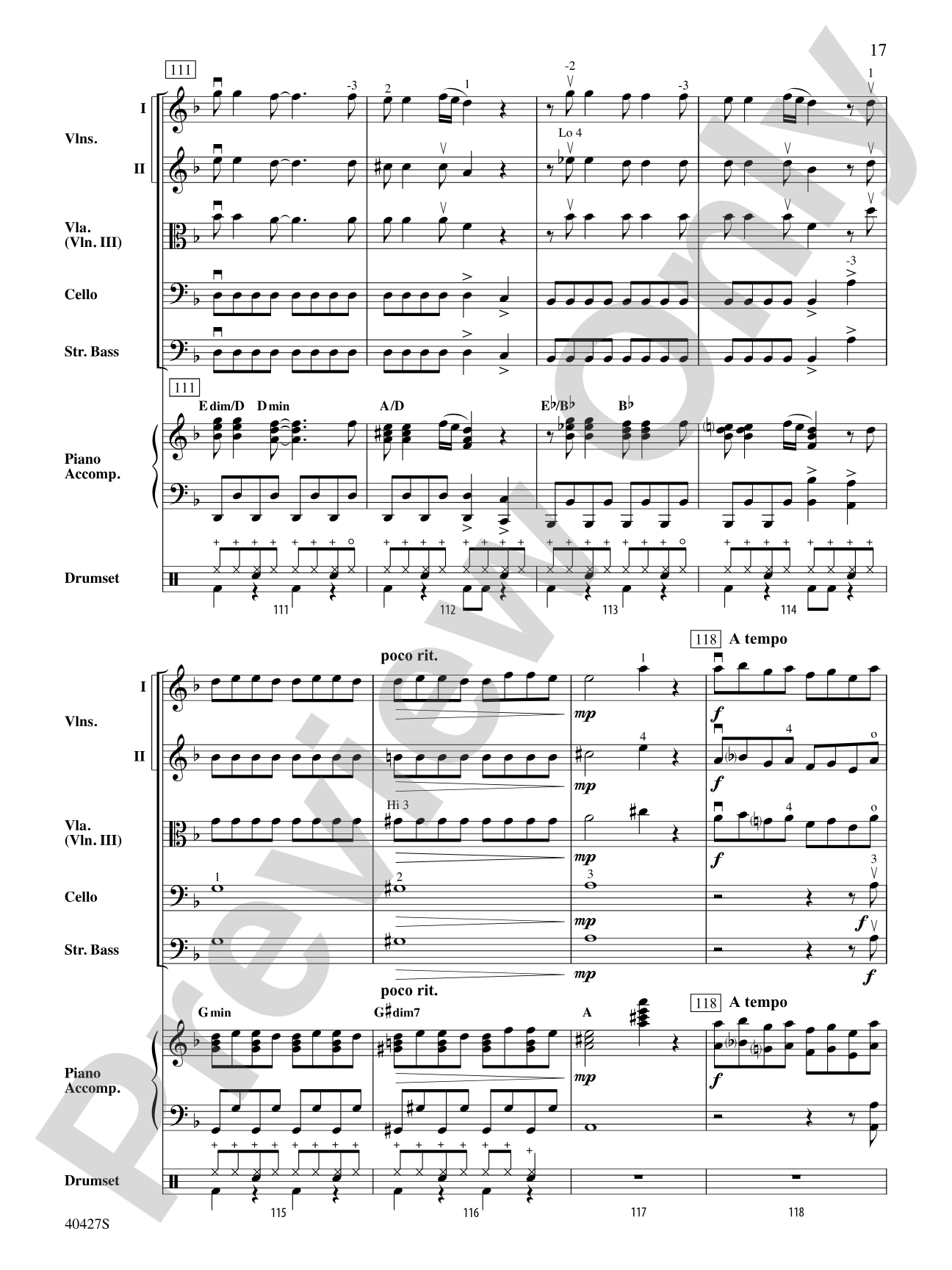
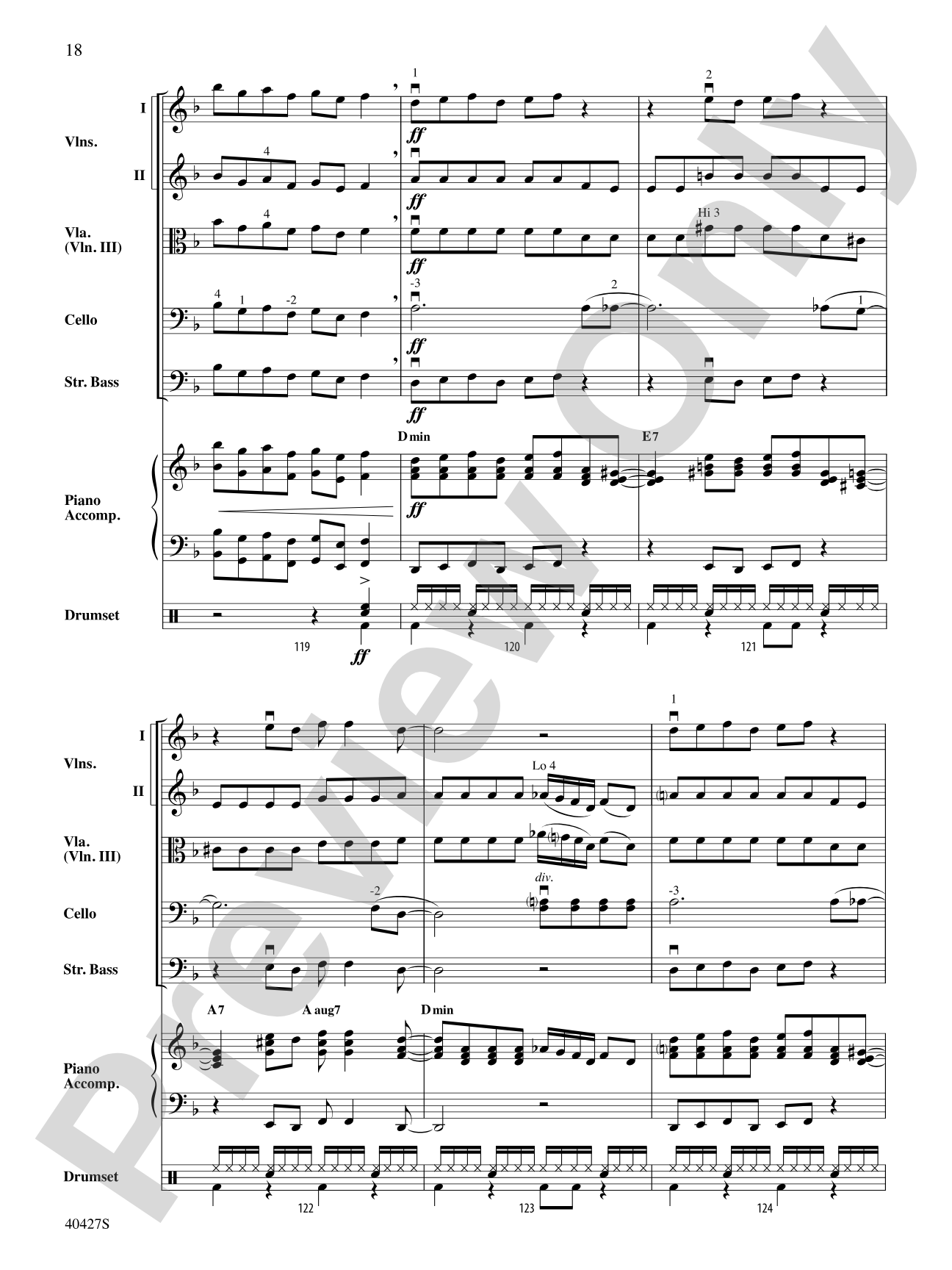
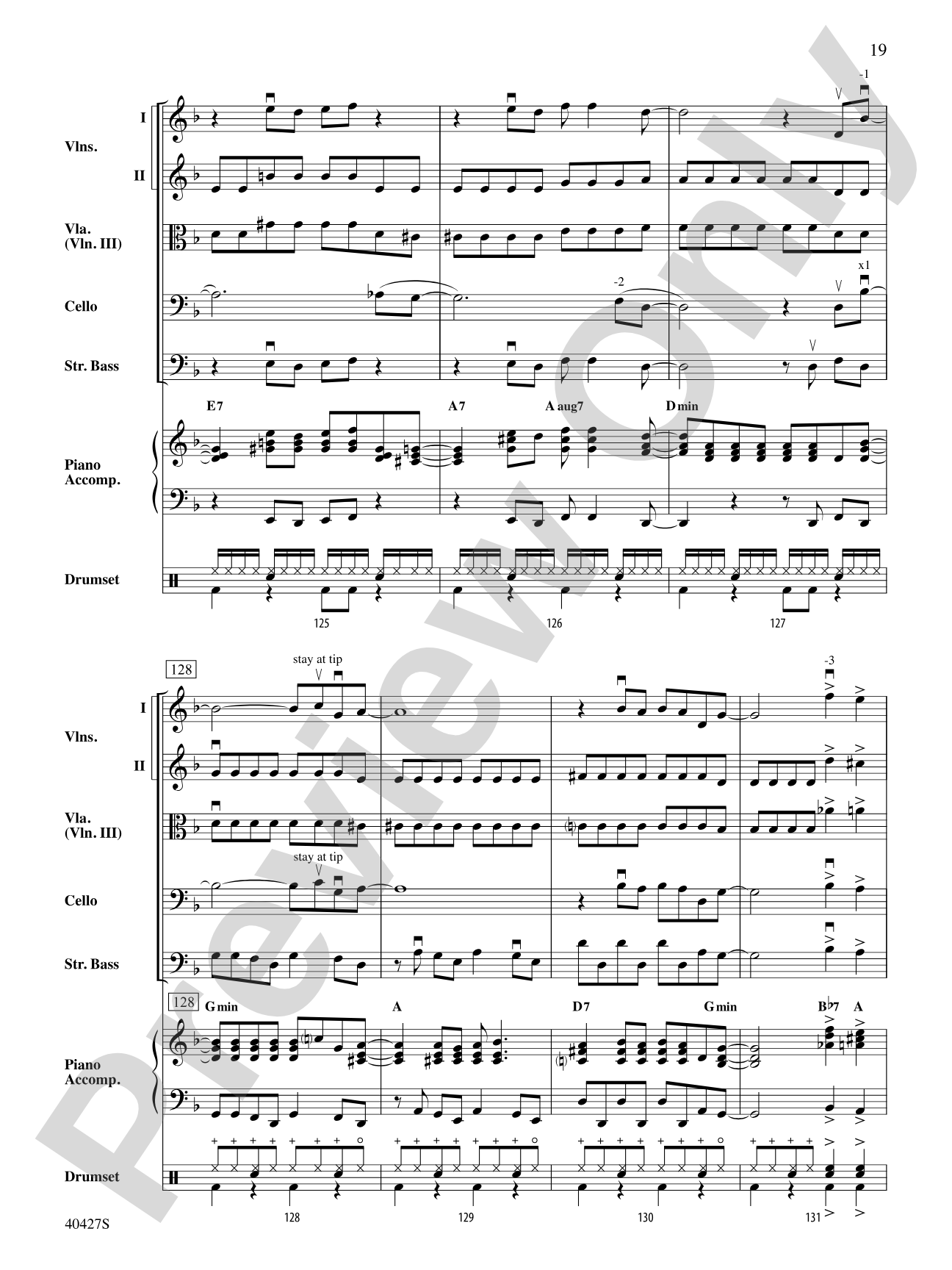
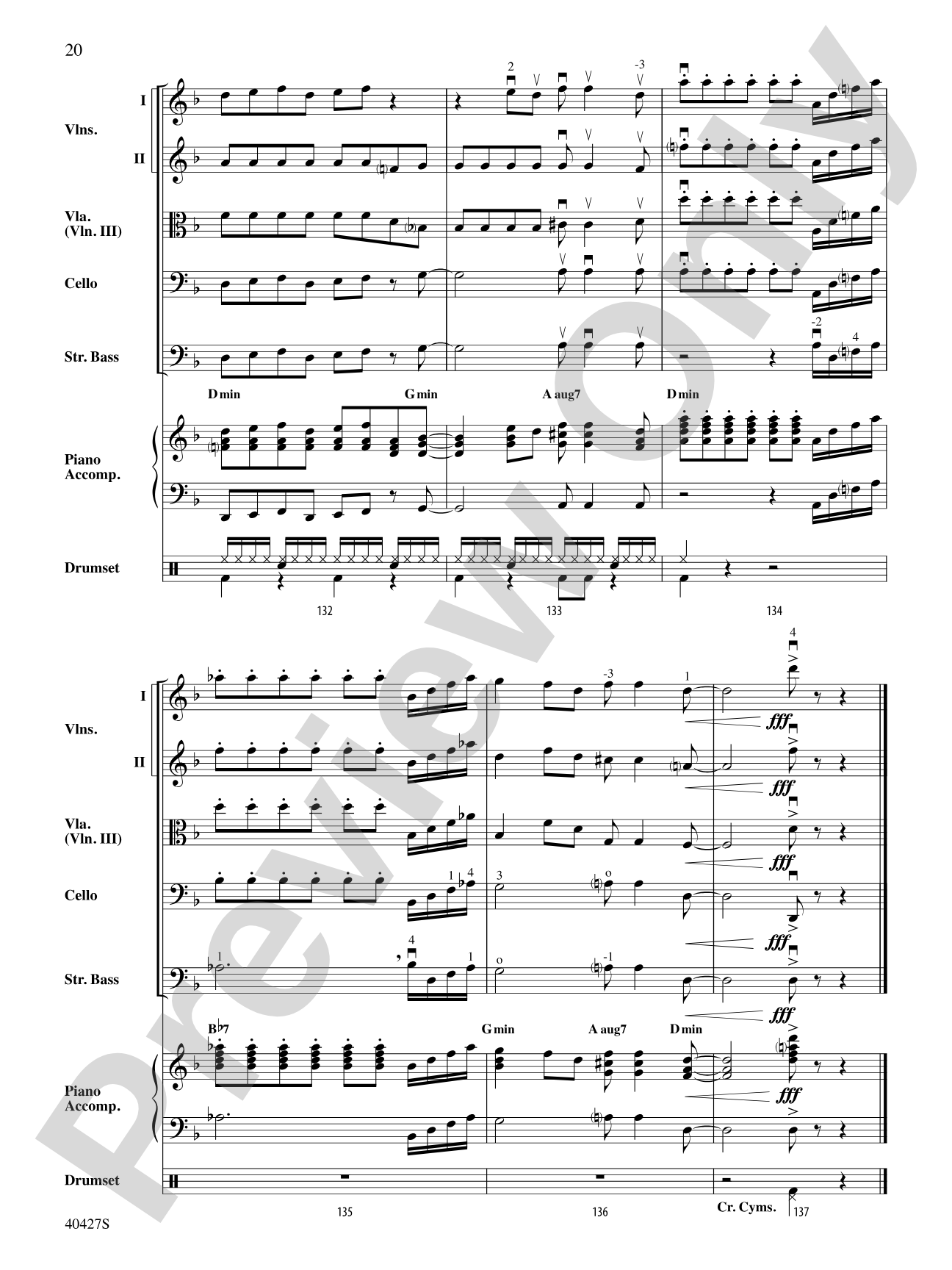

Mamma Mia!, Selections from: String Orchestra Conductor Score & Parts
Featuring: Mamma Mia / Chiquitita / Money, Money, Money
Words and music by Benny Andersson, Stig Anderson, and Björn Ulvaeus / arr. Michael Hopkins
Grade: 3
Item: 00-PK-0005710

$61.00
One moment…
Description
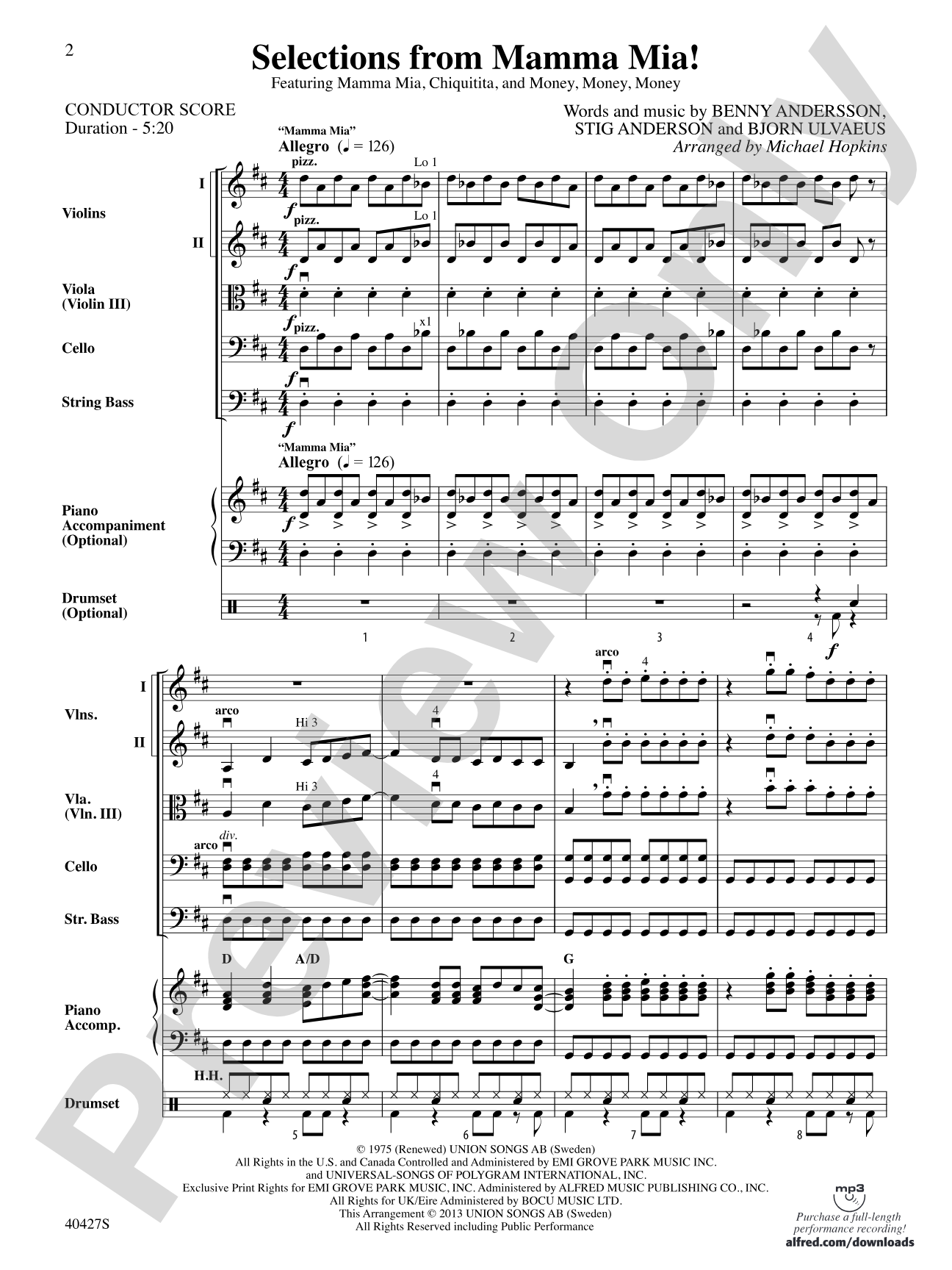
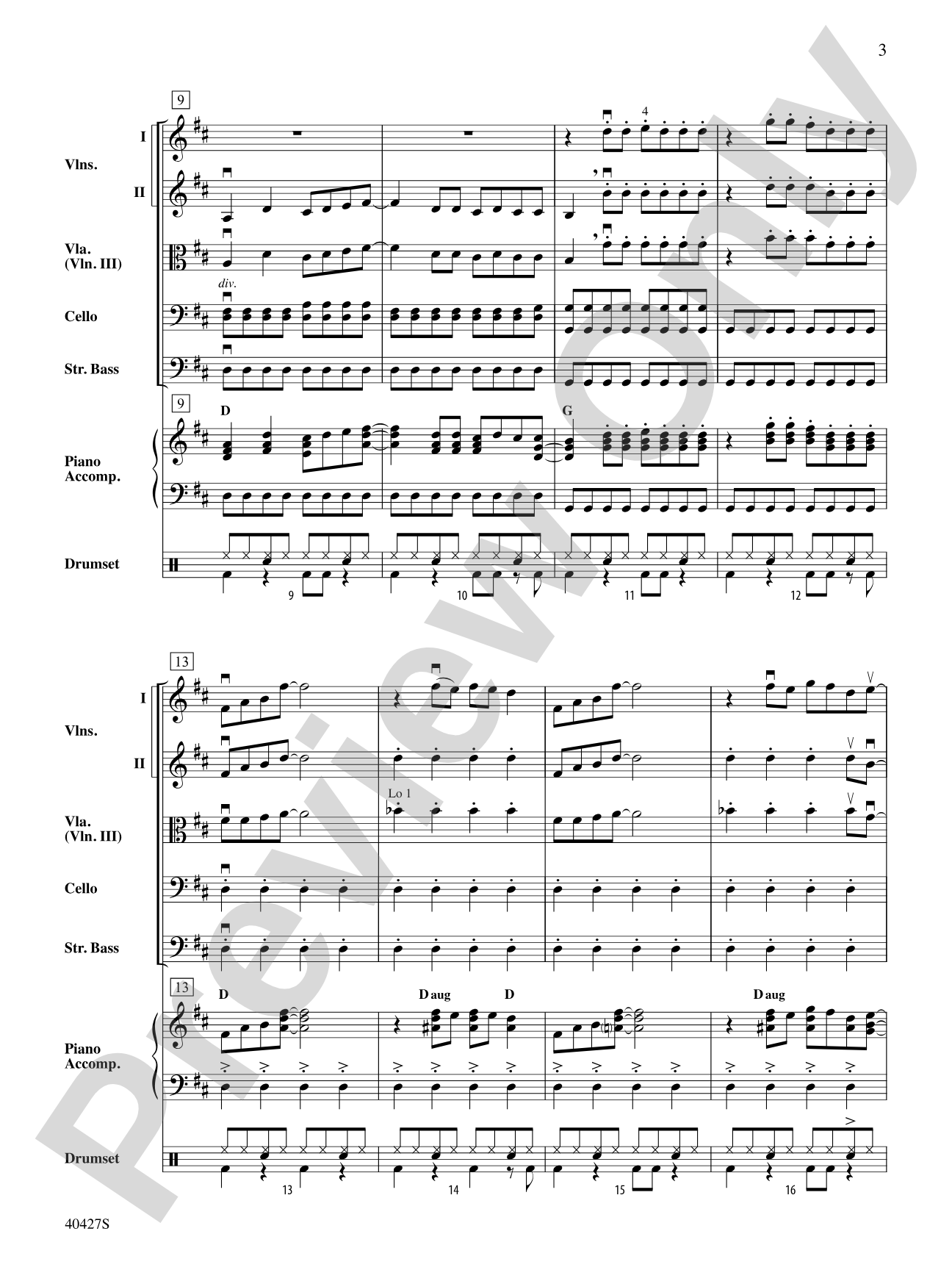
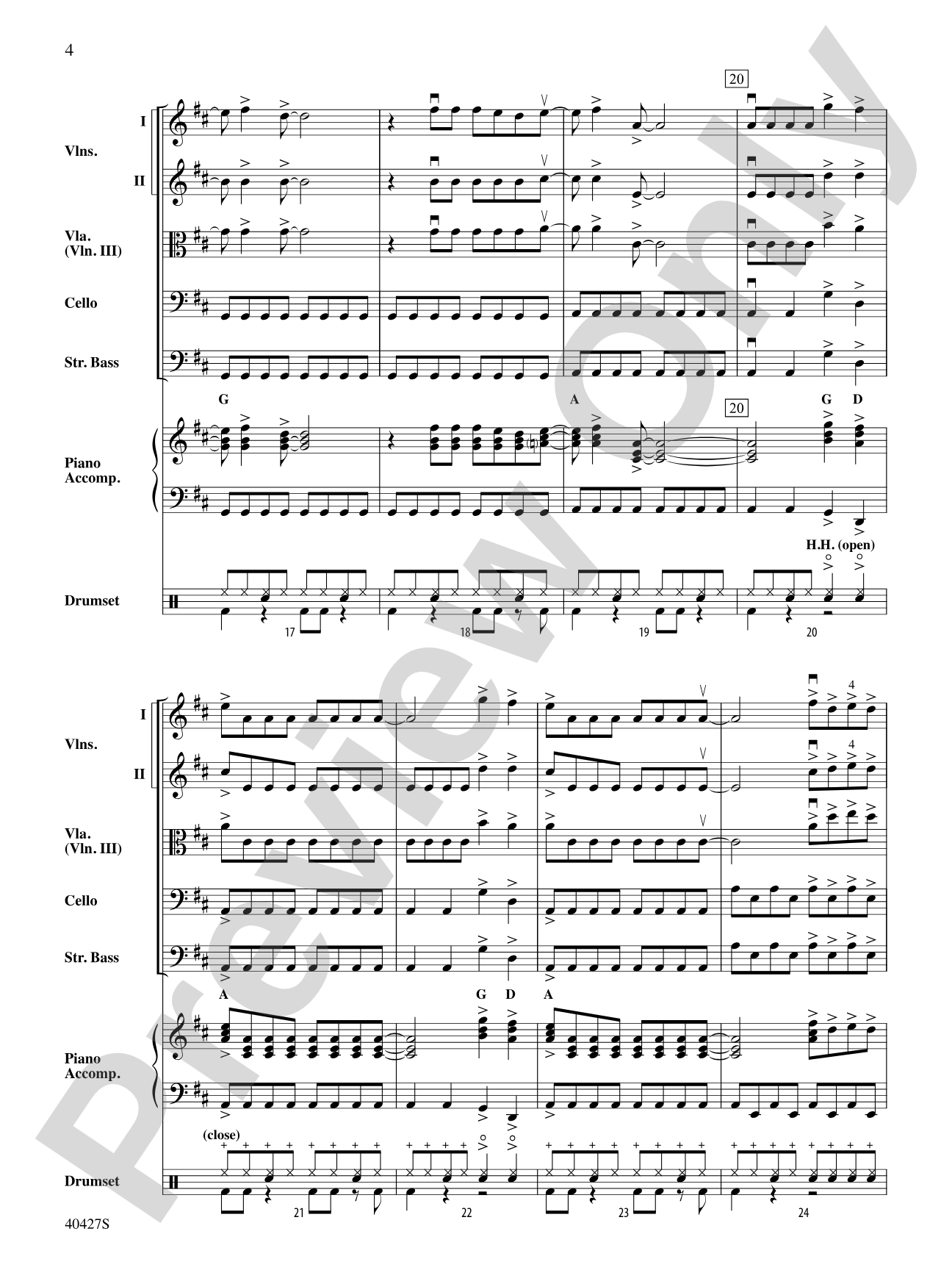
Infectious and fun! This arrangement contains three of Abba's greatest hits: "Mamma Mia," "Chiquitita," and "Money, Money, Money." Optional piano, guitar, and drumset parts add pizzazz, but it's great for string orchestra as well. (5:20)


Don't just read it, hear it, play along with it, and watch your students grow with it. In MakeMusic Cloud, Mamma Mia!, Selections from: String Orchestra Conductor Score & Parts comes alive with professional accompaniment, adjustable tempo, and built-in practice tools that turn solo practice into real progress.
Open in the Player
Jump straight in and assign it today.
Start Your Free Trial
Open this title and explore the full library in minutes.
Sample Audio
1
Audio File
--:--
0:00
0:00
Sample Video
No sample videos found.
Additional Details
Series:
Pop Intermediate String Orchestra
Publisher:
Alfred Music
Page Count:
156
SKU:
00-PK-0005710
More about this title
About the Composer: Benny Andersson
Benny Andersson co-founded ABBA in the 1970s and became one of the most successful songwriters in popular music history. His melodic gift and ability to craft unforgettable hooks shaped the sound of an entire era, making ABBA's catalog endlessly appealing across generations and performance contexts.
As a composer, Andersson understood how to write melodies that stick with listeners immediately while maintaining harmonic sophistication underneath. His work with ABBA has proven remarkably adaptable to orchestral arrangement, which is why their songs continue to thrive in concert halls, theaters, and school ensembles.
Why we love this
Michael Hopkins has arranged three of ABBA's most beloved songs in a way that keeps the infectious energy intact while giving string players genuinely interesting parts to perform. The optional rhythm section (piano, guitar, drums) lets you customize the sound to match your ensemble's strengths, but the arrangement stands brilliantly on strings alone. Your students will actually want to practice this music because they already love these melodies.
What to expect
Three minutes and twenty seconds of pure, unapologetic joy. The melodies sparkle, the rhythms propel forward, and the harmonic movement is straightforward enough to leave room for expressive playing. This is string orchestra music that feels celebratory, energetic, and completely accessible.
Who it's for
This arrangement suits intermediate string orchestras that want to program contemporary, recognizable music without sacrificing musical substance. Your students will engage immediately with melodies they know, making rehearsals productive and performances genuinely exciting for audiences.
How to get the most out of it
- Keep the pulse bouncy and bright, especially in the opening sections. These songs thrive on rhythmic precision and forward momentum, so lock in with your section leaders on the subdivision before the full group plays.
- Balance the string parts carefully during the verses so the melody line sings out clearly. The accompanying figures should support, not compete.
- Use the optional rhythm section strategically. Add drums and guitar during the chorus sections to amplify the pop energy, then pull back for the verses if your players need time to breathe.
- Shape phrases with dynamic contrast. Mark clear points where the arrangement builds or pulls back, and rehearse these transitions separately from note accuracy.
How to use it
Program this as a second-half opener on a spring concert, or pair it with a lighter classical piece to show your ensemble's versatility. The combined duration of 5:20 makes it ideal for filling a concert slot without overcommitting rehearsal time to a single work. Audiences love hearing beloved pop arrangements performed with orchestral color.
Skills your students will build
- Rhythmic precision in pop/contemporary idioms
- Balancing melody and accompaniment within an arrangement
- Stylistic flexibility and ensemble versatility
- Following conductor cues during dynamic and tempo transitions
- Performing with infectious energy while maintaining technical control