Mamma Mia (arr. Dirk Kokx) Sheet Music Preview

Mamma Mia (arr. Dirk Kokx): SSMMATB Choral Octavo

As performed by ABBA / Arranged by Dirk Kokx

Item: 35-DS00489506

Digital Download
$2.99
Description

Mamma Mia (arr. Dirk Kokx): SSMMATB Choral Octavo isn't in MakeMusic Cloud just yet...but it could be. Let us know you'd like to see it, and you'll help shape what comes next. In the meantime, start a free trial and dive into thousands of interactive titles your students can play along with today.

Sample Audio
No sample audio found.
Sample Video
Additional Details
Publisher: Hal Leonard
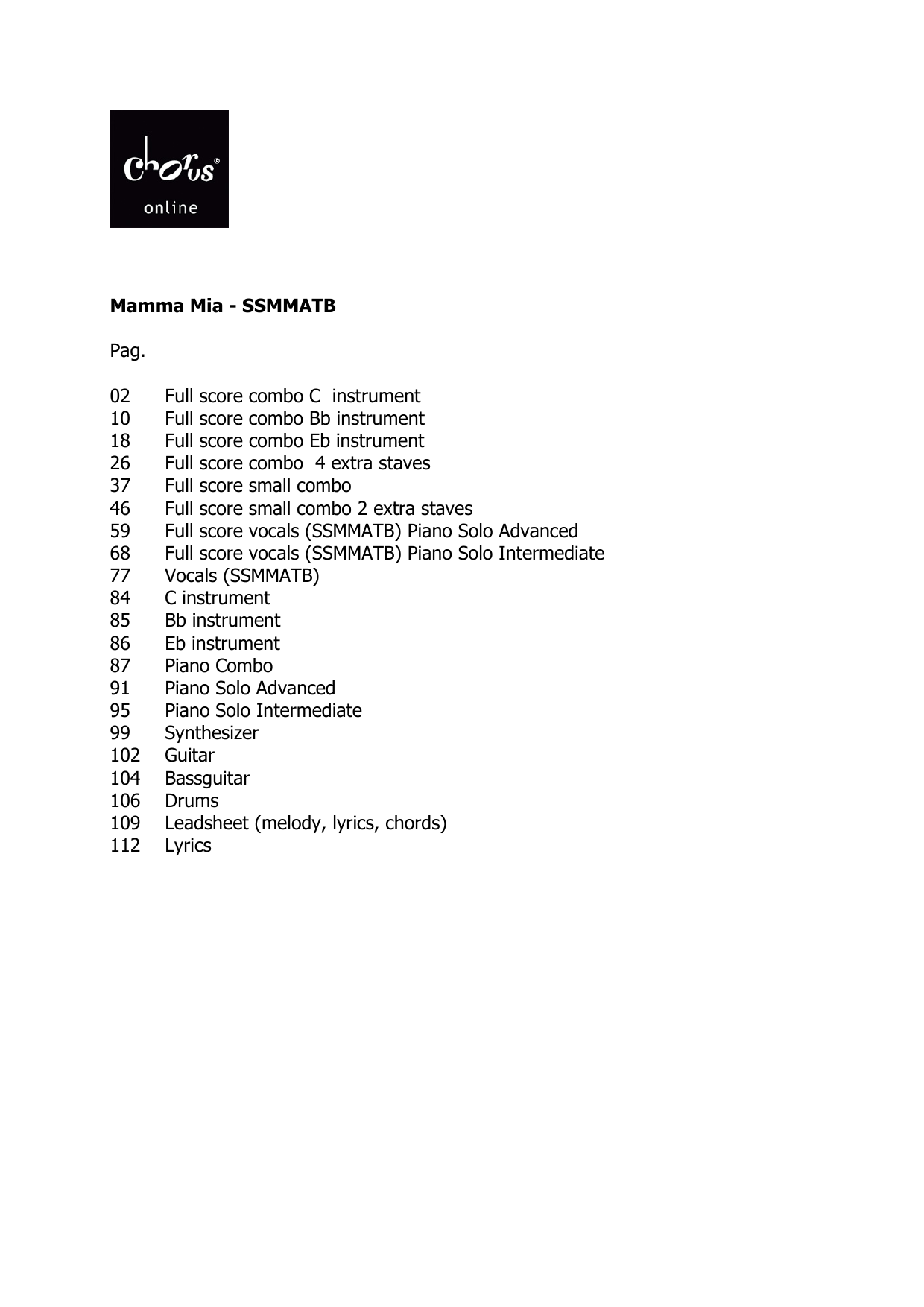
Page Count: 112
SKU: 35-DS00489506

More about this title

About the Artist: ABBA

ABBA dominated the 1970s and 1980s with infectious pop melodies, sophisticated harmonies, and impeccable production that made their songs instant classics. The Swedish supergroup of Agnetha Fältskog, Anni-Frid Lyngstad, Benny Andersson, and Björn Ulvaeus created a catalog that bridges pop sensibility with genuine musical craft, making their work enduringly relevant for choral arrangers seeking contemporary material with harmonic substance.

Their influence on choral music education is substantial. Songs like "Mamma Mia" have proven remarkably adaptable to ensemble singing, retaining their singability and emotional directness while offering arrangers room for creative interpretation. ABBA's legacy demonstrates that popular music can be both commercially successful and musically sophisticated, a lesson that reshapes how educators think about repertoire selection.

Why we love this

Dirk Kokx has written an arrangement that preserves the infectious joy of the original while creating genuine seven-part writing that engages every voice. The part writing feels natural rather than forced, allowing singers to experience real harmony contribution rather than just doubling. This is the kind of contemporary pop arrangement that makes students excited about choir while teaching them actual musical skills.

What to expect

This arrangement captures the irrepressible energy of the original while adding harmonic color that makes you hear the song anew. Seven-part writing creates a full, lush sound that feels celebratory and sophisticated at once, turning a well-loved pop hit into a genuinely satisfying ensemble experience.

Who it's for

Mixed choirs at intermediate to advanced levels seeking contemporary repertoire with genuine harmonic writing. Directors programming pops concerts, variety shows, or mixed-genre concerts will find this arrangement bridges the gap between pure pop appeal and choral substance without requiring the ensemble to apologize for their material.

How to get the most out of it

  • Keep the rhythm section (bass and rhythm guitars, if using accompaniment) locked and propulsive. This song lives and dies by its rhythmic groove, so the singers need a rock-solid foundation underneath them.
  • Articulate the repeated rhythmic figures crisply. The original track's percussive edge comes through in the vocal phrasing, so crisp consonants on repeated syllables will capture that essential character.
  • Balance the solos and featured sections carefully. If you're using a soprano soloist on the verse or bridge material, ensure the ensemble understands when to push forward and when to recede into supportive harmony.
  • Work the dynamic contrast between verses and the anthemic chorus. The arrangement likely builds energy through orchestration choices, so your singers need to match that arc vocally and interpret the dynamic markings as architectural rather than arbitrary.

How to use it

Schedule this alongside other contemporary arrangements to create a cohesive "modern pop" section that shows your choir's range. The 112 pages suggest substantial material that justifies a full program spot rather than a quick novelty closer. It also works brilliantly as a spring concert opener, setting an energetic, audience-engaging tone before moving into your heavier or more classical selections.

Skills your students will build

  • Seven-part voice independence in a popular music context
  • Rhythmic precision in groove-based repertoire
  • Dynamic contrast and phrasing in contemporary arrangements
  • Blend and balance across extended voicings
  • Syllabic clarity and articulation in pop idiom

You May Also Like