Mamma Mia (arr. Dirk Kokx) Sheet Music Preview

Mamma Mia (arr. Dirk Kokx): SSMMAA Choral Octavo

As performed by ABBA / Arranged by Dirk Kokx

Item: 35-DS00489504

Digital Download
$2.99
Description

Mamma Mia (arr. Dirk Kokx): SSMMAA Choral Octavo isn't in MakeMusic Cloud just yet...but it could be. Let us know you'd like to see it, and you'll help shape what comes next. In the meantime, start a free trial and dive into thousands of interactive titles your students can play along with today.

Sample Audio
No sample audio found.
Sample Video
Additional Details
Publisher: Hal Leonard
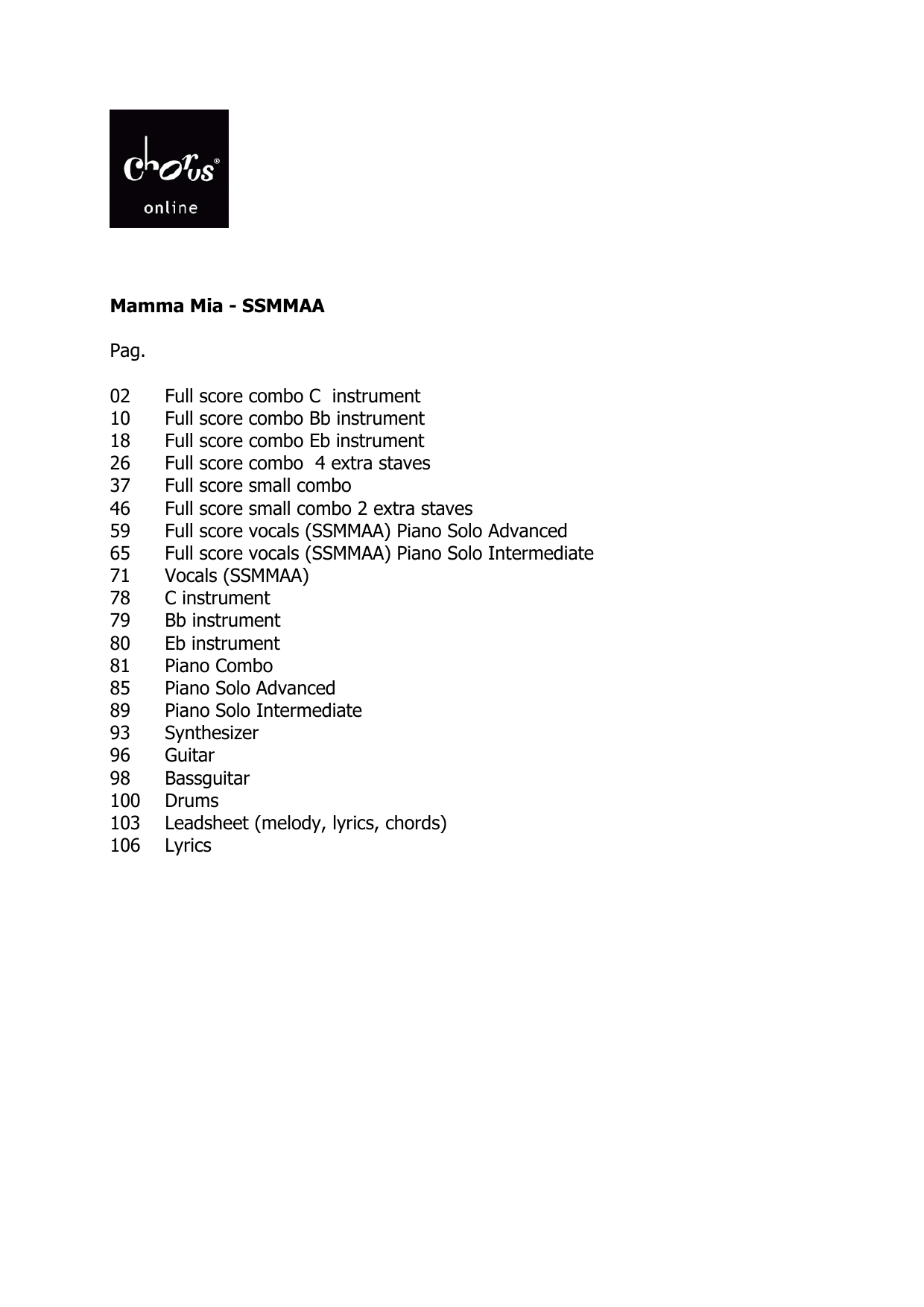
Page Count: 106
SKU: 35-DS00489504

More about this title

About the Artist: ABBA

ABBA dominated the pop landscape of the 1970s and 1980s, creating some of the most instantly recognizable melodies in modern music. The Swedish supergroup, formed by Agnetha Fältskog, Björn Ulvaeus, Benny Andersson, and Anni-Frid Lyngstad, perfected the art of the earworm: songs engineered to lodge themselves in your memory and refuse to leave. Their catalog remains a staple of popular culture, proving that sophisticated production, tight harmonies, and genuine melodic craft can reach audiences across generations and continents.

For music educators, ABBA's music offers an accessible entry point into arranging concepts and ensemble singing. The bright, energetic production values and layered vocal textures translate well to choral settings, giving students the chance to perform material they recognize and genuinely enjoy while building real musical skills.

Why we love this

Dirk Kokx's arrangement unlocks the infectious jubilation of 'Mamma Mia' for a six-part choir, maintaining the song's irresistible forward momentum while giving each voice section something engaging to sing. The 106 pages suggest substantial development and layering, which means your singers get to experience how a pop hit can be deconstructed and rebuilt with genuine choral sophistication. Audiences recognize this song instantly, so your choir walks on stage already winning half the battle.

What to expect

Pure joy and propulsive energy. The piece captures the infectious confidence of the original, with harmonic layering that feels sophisticated without becoming precious. Singing this arrangement puts your choir in the headspace of a stadium full of people shouting along to something they love.

Who it's for

Directors leading mixed choirs of any skill level who want repertoire that generates genuine enthusiasm from singers and audiences alike. This arrangement works equally well in concert settings, pops programs, or as a crowd pleaser at competitions where you need something that lands with immediate impact.

How to get the most out of it

  • Nail the rhythmic precision in the opening sections. The drive of this piece depends on locking the pulse between sections; under-rehearsing the rhythm chart is the most common pitfall.
  • Balance the soprano lines carefully during the layered passages. These parts have a tendency to overshadow the middle voices, so isolate each section's material and ensure every voice can be heard in context.
  • Embrace the brightness and lift in the arrangement. This music lives in a major key and benefits from forward vowels and energized articulation; resist any temptation to smooth it into something it's not.
  • Use the recorded accompaniment strategically in rehearsal, but spend time drilling sections unaccompanied. Your choir's internal security will improve dramatically, and you'll catch balance issues the playback might mask.

How to use it

Place this near the end of a concert to send the audience out energized. It pairs well with other pop or contemporary choral work, giving you a full set list that feels cohesive and modern. The substantial page count means it's also an excellent centerpiece for a choir dedicated to learning a single extended arrangement in depth.

Skills your students will build

  • Blend and balance across six-part voicing
  • Rhythmic precision in syncopated pop idiom
  • Maintaining forward motion through repeated sections
  • Harmonic awareness in contemporary chord progressions
  • Vowel uniformity in fast-moving passages
  • Confidence performing recognizable material

You May Also Like