
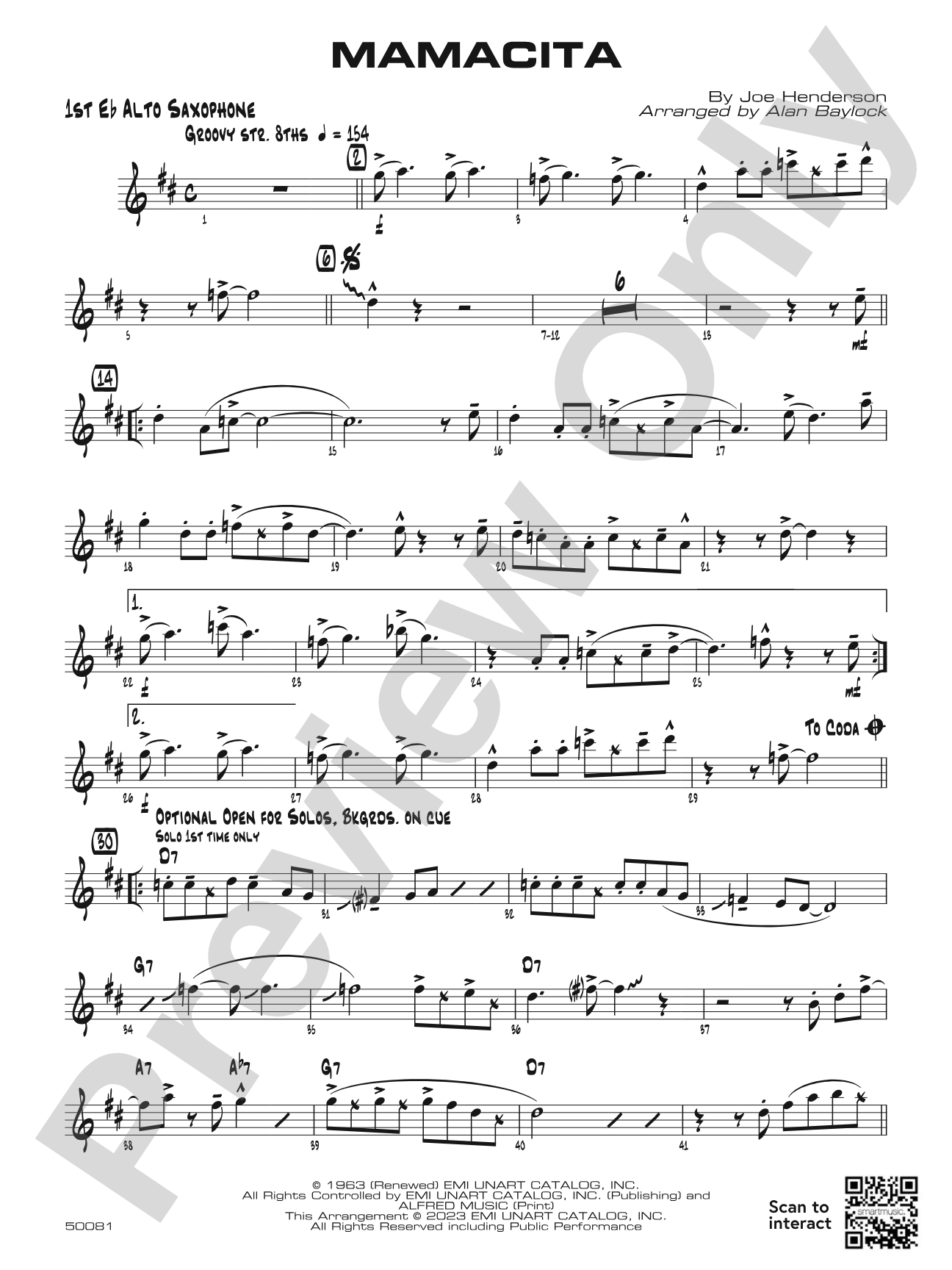
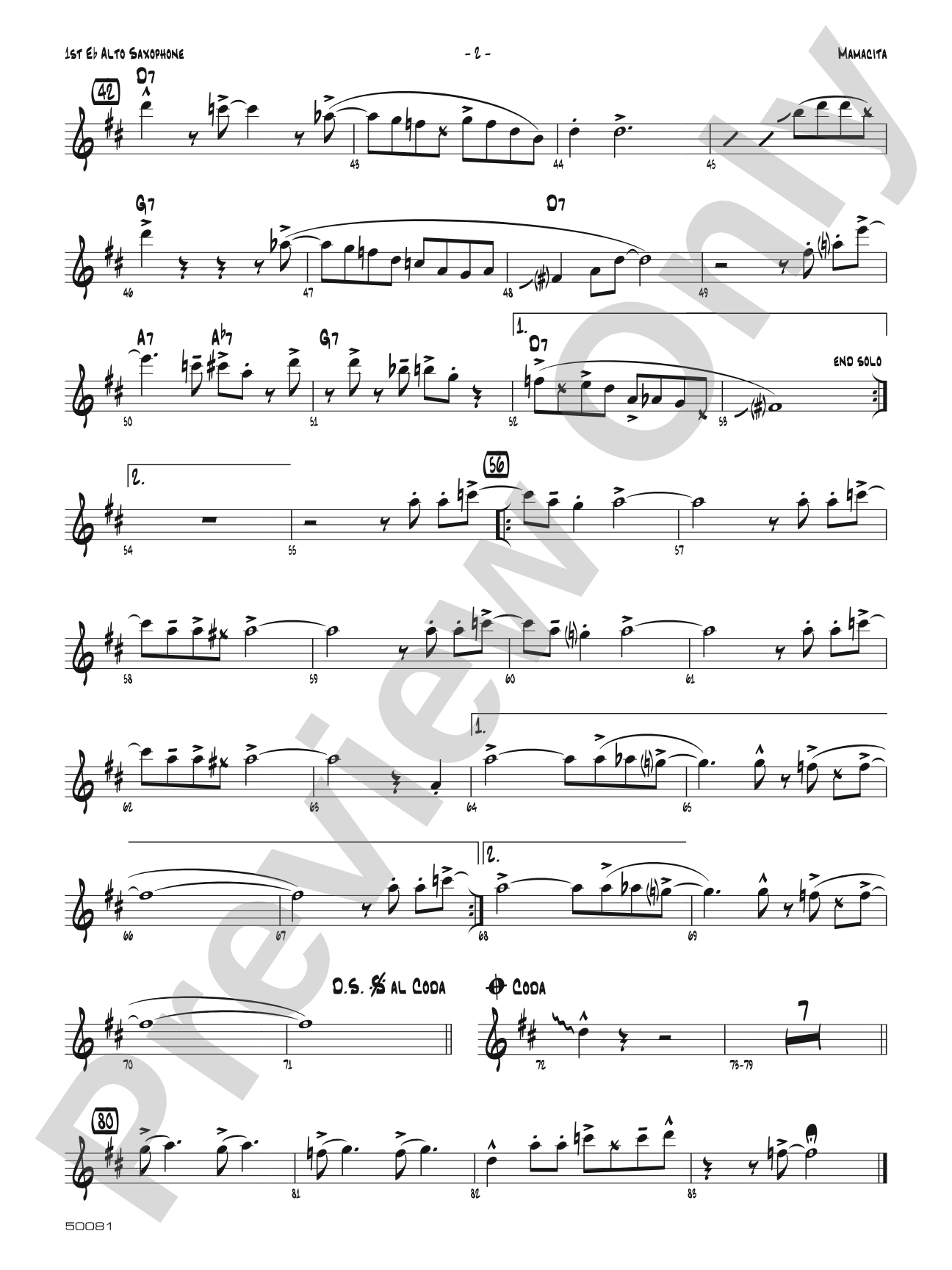

Mamacita: Jazz Ensemble Conductor Score & Parts
By Joe Henderson / arr. Alan Baylock
Grade: 3.5
Item: 00-PK-0008750

$55.00
One moment…
Description
A groovy straight-eighth feel on this jazz standard. Tempo is around 154 BPM, and lead trumpet range is to written B-flat above the staff. Sample solos provided for alto and tenor sax plus optional flute and vibes parts. Energy prevails! (4:05)


Don't just read it, hear it, play along with it, and watch your students grow with it. In MakeMusic Cloud, Mamacita: Jazz Ensemble Conductor Score & Parts comes alive with professional accompaniment, adjustable tempo, and built-in practice tools that turn solo practice into real progress.
Open in the Player
Jump straight in and assign it today.
Start Your Free Trial
Open this title and explore the full library in minutes.
Sample Audio
1
Audio File
--:--
0:00
0:00
Sample Video
Additional Details
Series:
Jazz Band Series
Publisher:
Alfred Music
SKU:
00-PK-0008750
More about this title
About the Composer: Joe Henderson
Joe Henderson was a tenor saxophonist and composer whose work shaped the sound of hard bop and modal jazz from the 1960s onward. His compositions balanced sophisticated harmonic structures with accessible melodic appeal, making them enduring favorites in both professional and educational jazz settings. Henderson's legacy includes hundreds of original pieces that continue to inspire bandleaders and arrangers looking for material with real musical substance.
Why we love this
Alan Baylock's arrangement captures the infectious groove of Henderson's original while keeping the ensemble writing clean and playable at the 3.5 grade level. The straight-eighth feel and 154 BPM tempo create immediate momentum, and the provided solo samples for alto and tenor sax give students a clear model for improvisation without requiring them to build solos from scratch. This is the kind of chart that gets real energy from a group because the rhythm section can lock in fast and the front line responds with confidence.
What to expect
Straight-ahead groove, full of motion. The piece lands somewhere between a head-and-solos format and a fully arranged number, balancing space for individual voices with moments of tight ensemble unison. There's a Latin undertone woven through the harmony that prevents the piece from feeling static, even at a single tempo throughout.
Who it's for
Jazz ensemble directors working with intermediate groups (grades 8-12 or community college) who want a piece with authentic jazz language and genuine swing feel. The 3.5 grade level and clear arrangement make it accessible to ensembles still building their improvisation skills, while the Henderson pedigree keeps it musically credible.
How to get the most out of it
- Lock the straight-eighth feel in the rhythm section first. Bass and drums need to commit to the groove before the horns enter; this is what carries the whole piece at 154 BPM.
- Balance the lead trumpet carefully when it hits the written B-flat above the staff. That's a high passage; make sure the player has support from the section without them covering it.
- Study the provided alto and tenor sax solos as a team before individual players attempt their own improvisations. Hearing how Henderson's melodic language translates into a solo gives improvisers a stronger foundation.
- Keep the flute and vibes parts optional but encourage participation if you have players ready for them. They add textural layers that make the piece feel more complete without becoming essential to success.
How to use it
Program this on a jazz concert alongside other Henderson compositions or comparable hard bop standards to build a coherent first set. Its four-minute length and infectious energy make it ideal as the second or third tune, when the ensemble is warmed up and the audience is engaged. Alternatively, use it as a rehearsal staple when you want to reinforce groove pocket and basic solo construction without demanding complex harmonic navigation.
Skills your students will build
- Maintaining straight-eighth groove in a Latin-jazz context
- Reading and executing chord changes at moderate tempo
- Building simple improvised solos from provided harmonic and melodic models
- Balancing individual solo voice with ensemble sound
- Responding to rhythm section dynamics and tempo stability