Mama Paquita: 2nd Violin Sheet Music Preview

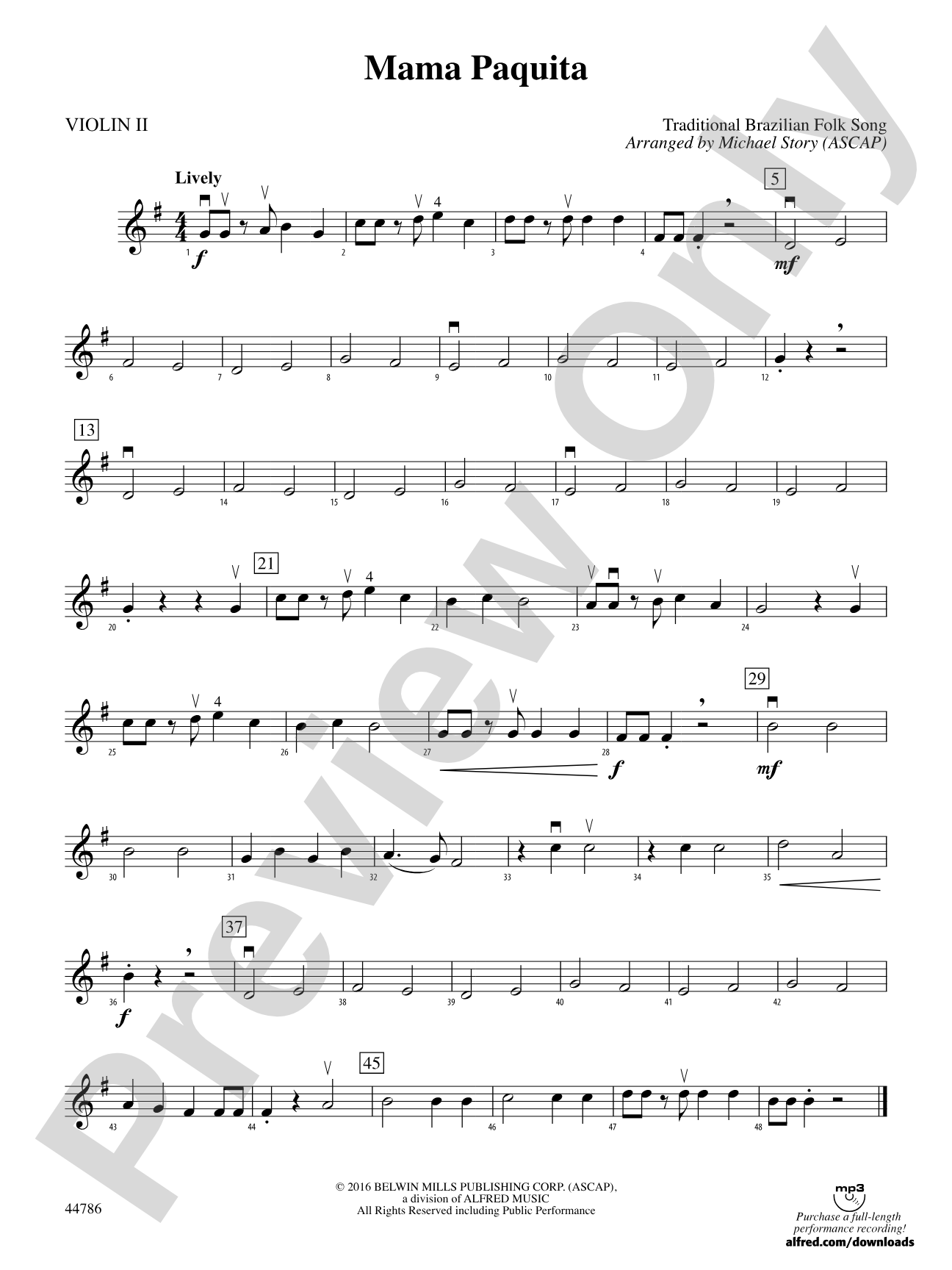
Mama Paquita: 2nd Violin

Traditional Brazilian Folk Song / arr. Michael Story

Grade: 1.5

Item: 00-PC-0017304_VN2

Digital Download
$5.99
Description
Mama Paquita arranged by Michael Story is a catchy, high-spirited, and great-sounding arrangement of the popular Brazilian Carnaval song, featuring bouncy yet repetitive eighth note patterns and contrasting styles. It's both educational and fun! (1:35) This title is available in MakeMusic Cloud.

Don't just read it, hear it, play along with it, and watch your students grow with it. In MakeMusic Cloud, Mama Paquita: 2nd Violin comes alive with professional accompaniment, adjustable tempo, and built-in practice tools that turn solo practice into real progress.

Sample Audio
0:00
0:00
Sample Video
Additional Details
Series: Belwin Beginning String Orchestra
Publisher: Alfred Music
Page Count: 80
SKU: 00-PC-0017304_VN2

More about this title

About the Arranger: Michael Story

Michael Story has established himself as a prolific composer and arranger for school ensembles across all instrumentation. His work for beginning and intermediate groups demonstrates a keen understanding of what young musicians need: clear melodic writing, manageable technical demands, and genuine musical substance. Story's arrangements consistently bring world music, folk traditions, and popular repertoire into the string orchestra classroom in ways that engage both players and audiences.

Why we love this

This arrangement captures the infectious energy of Carnaval without overwhelming a beginning string orchestra. The repetitive eighth note patterns give every section something engaging to do, while the contrasting styles keep the piece musically interesting across its 1:35 duration. It's the kind of selection that makes students excited to rehearse and audiences delighted to listen.

What to expect

Mama Paquita pulses with the warmth and movement of Brazilian street celebration. The bouncy eighth note patterns propel the piece forward with infectious energy, while shifts in texture keep the listener engaged. It captures that feeling of being swept up in something joyful and communal.

Who it's for

Beginning string orchestras ready to explore music beyond the traditional repertoire will find this ideal for concert programming, festive occasions, or simply for the joy of playing something with genuine rhythmic drive. It works equally well for groups new to Latin music and those adding variety to a season of European classics.

How to get the most out of it

  • Lock in the rhythmic feel by having the ensemble play the opening eighth note patterns as a group before adding melodic layers. This creates a unified rhythmic foundation that holds the piece together.
  • Bring out the contrast between sections by adjusting articulation and dynamics. The bouncy passages benefit from lighter, shorter strokes, while contrasting ideas gain clarity through distinct phrasing.
  • Keep the tempo steady and buoyant. A conductor with clear, energetic preparation will help the ensemble maintain the spirited character without rushing.
  • Balance the texture so the main melody rings through. With repetitive accompanying figures, resist the urge to let accompaniment parts overshadow the featured line.

How to use it

Program this early in a concert to energize the audience and showcase your ensemble's rhythmic precision and ensemble control. It pairs beautifully alongside contrasting material such as lyrical pieces or traditional folk arrangements, creating a well-rounded first half. It's also ideal for pops concerts, cultural diversity celebrations, or any occasion where spirit and accessibility matter.

Skills your students will build

  • Steady execution of repetitive rhythmic patterns across all sections
  • Maintaining rhythmic precision in eighth note figures at tempo
  • Listening and balancing within texture where multiple sections play similar material
  • Recognition and performance of Latin/Brazilian musical style
  • Ensemble cohesion when executing contrasting articulations between sections

You May Also Like