
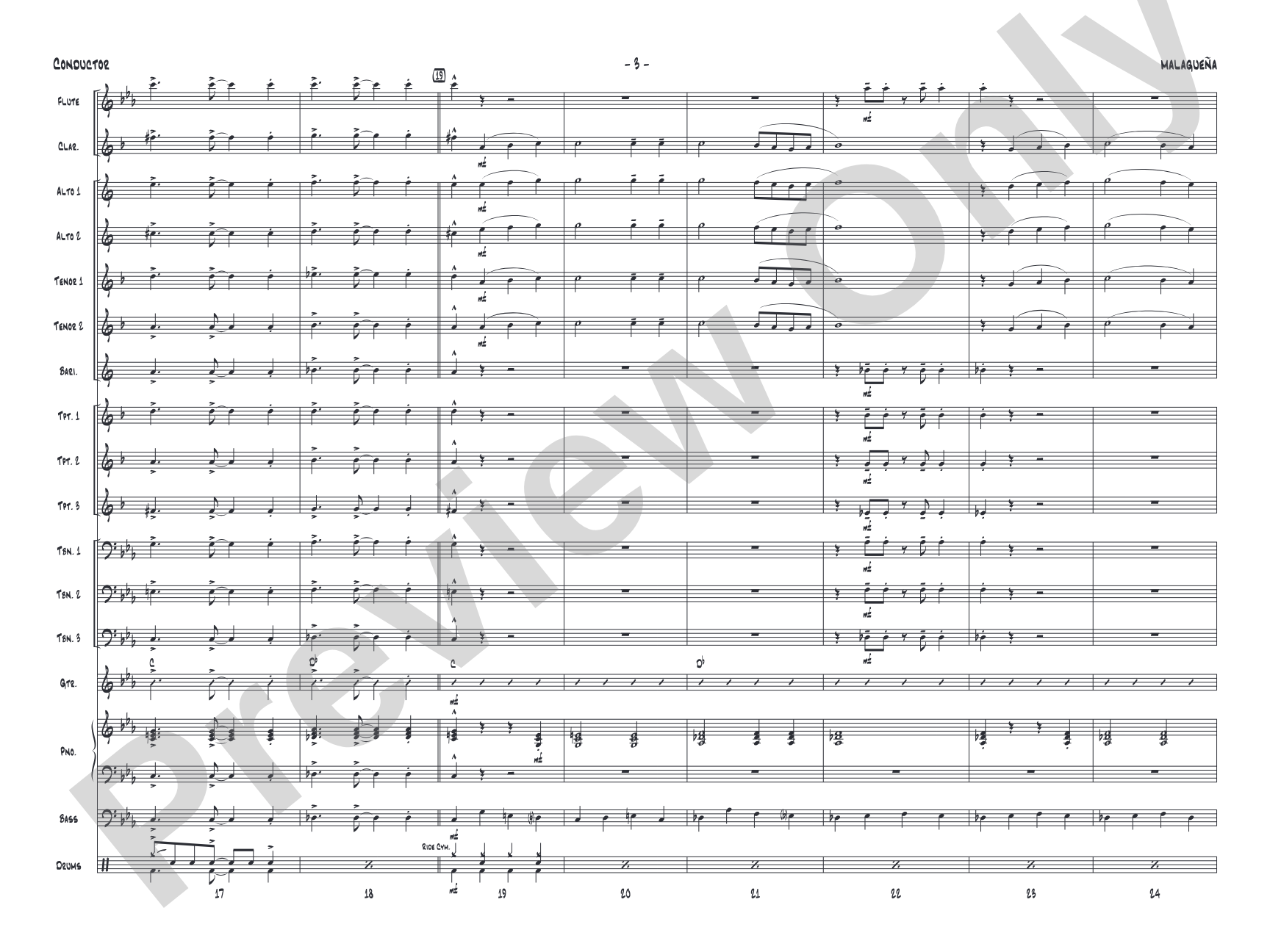
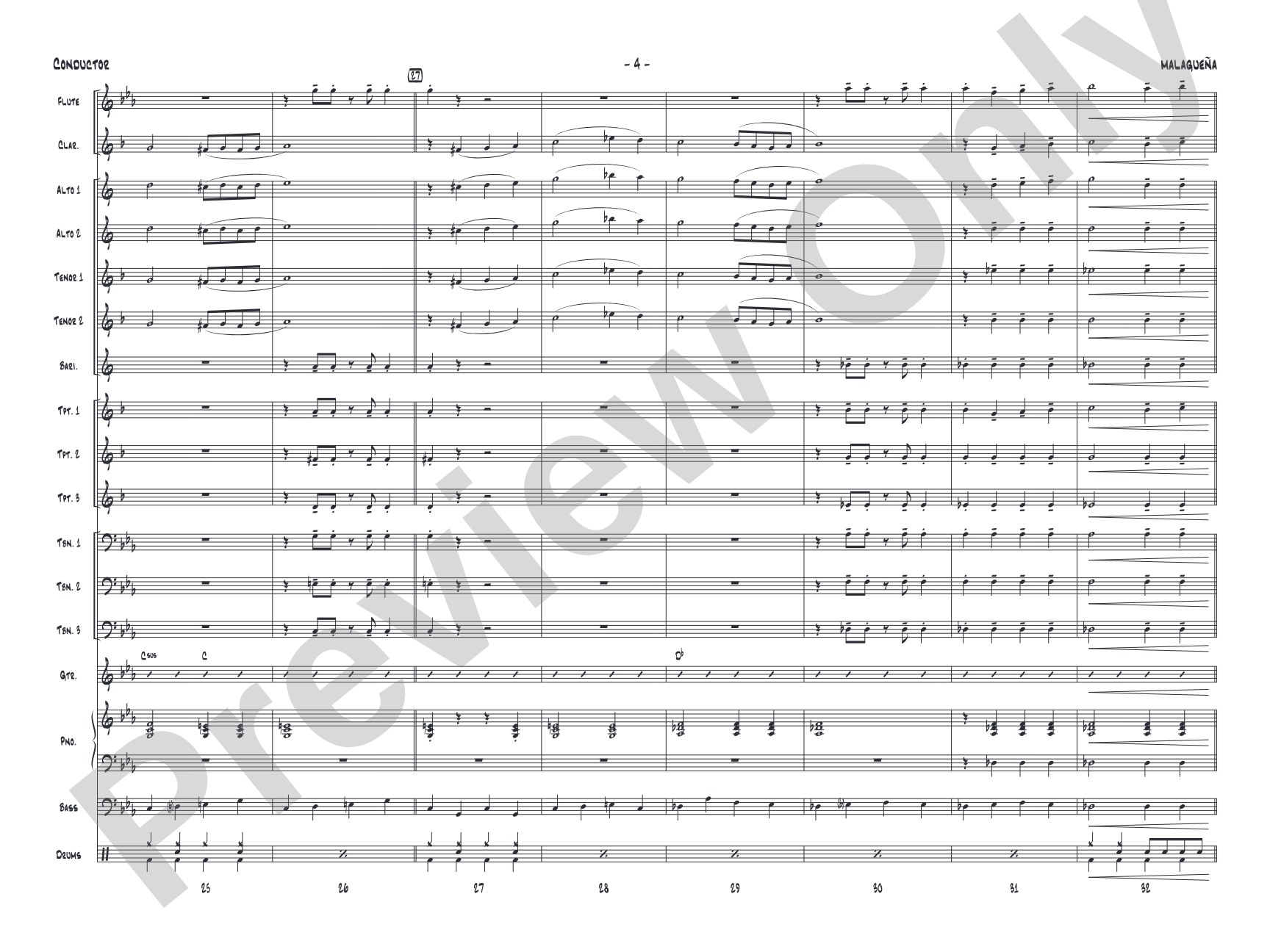
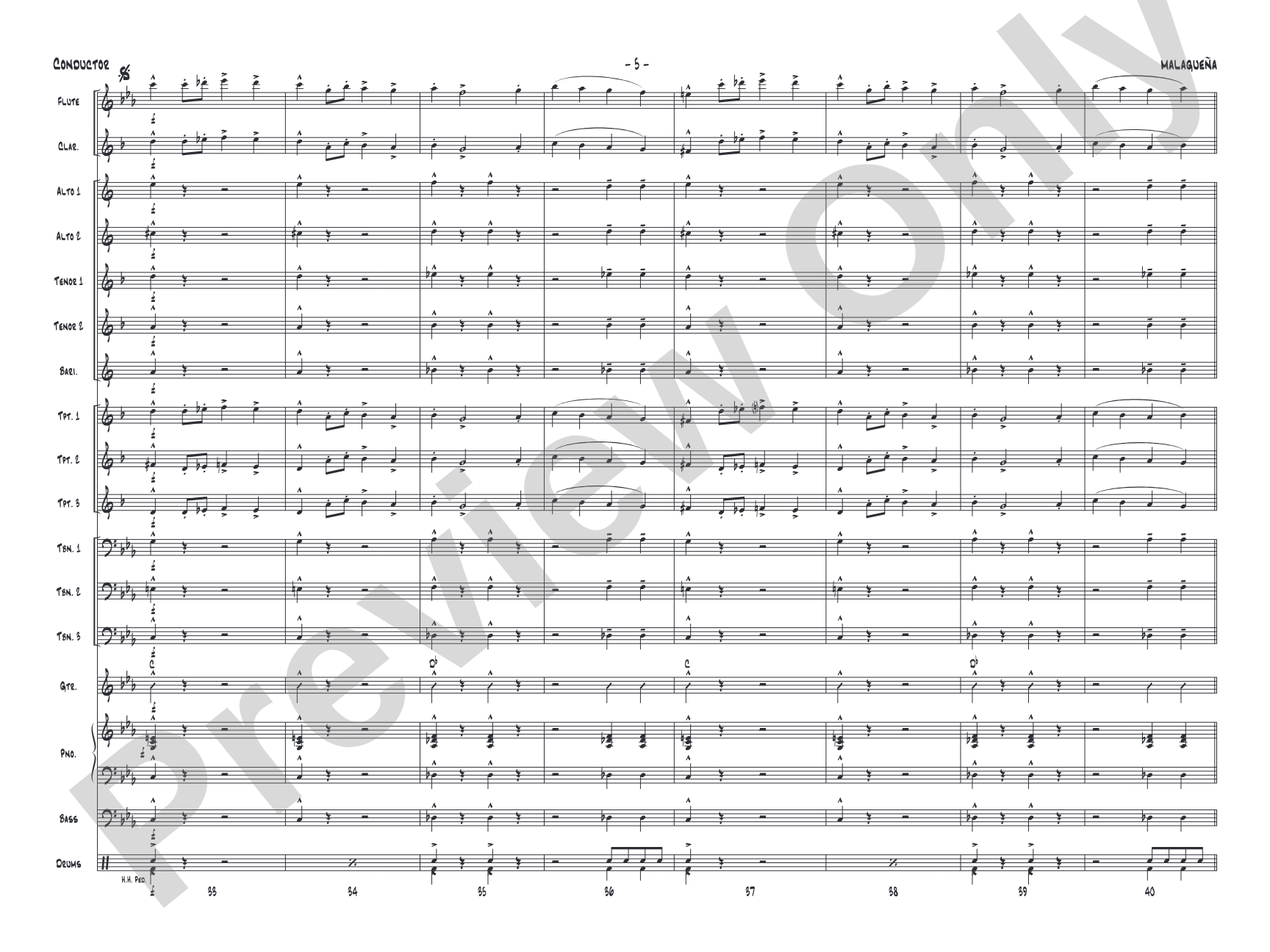
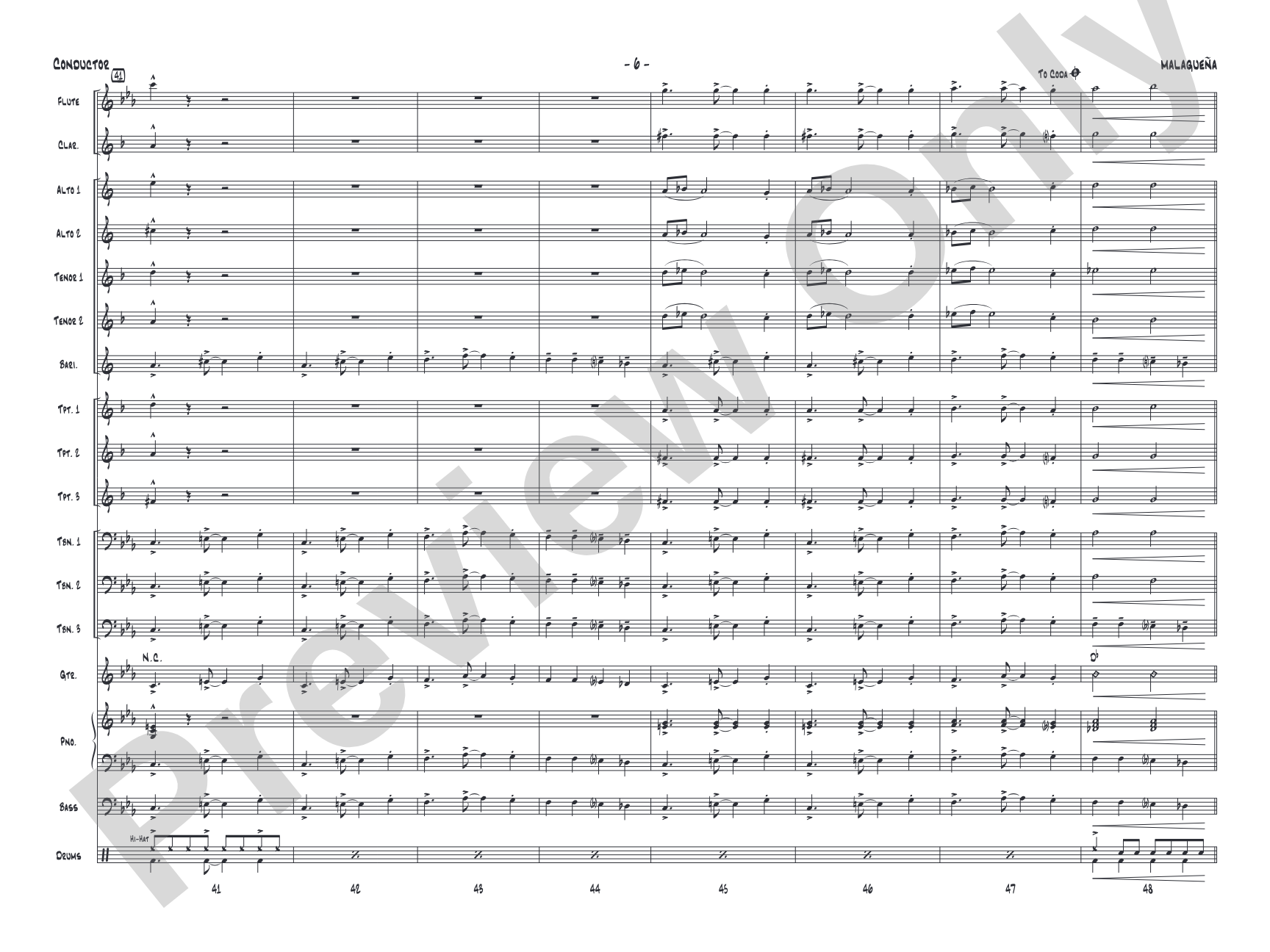
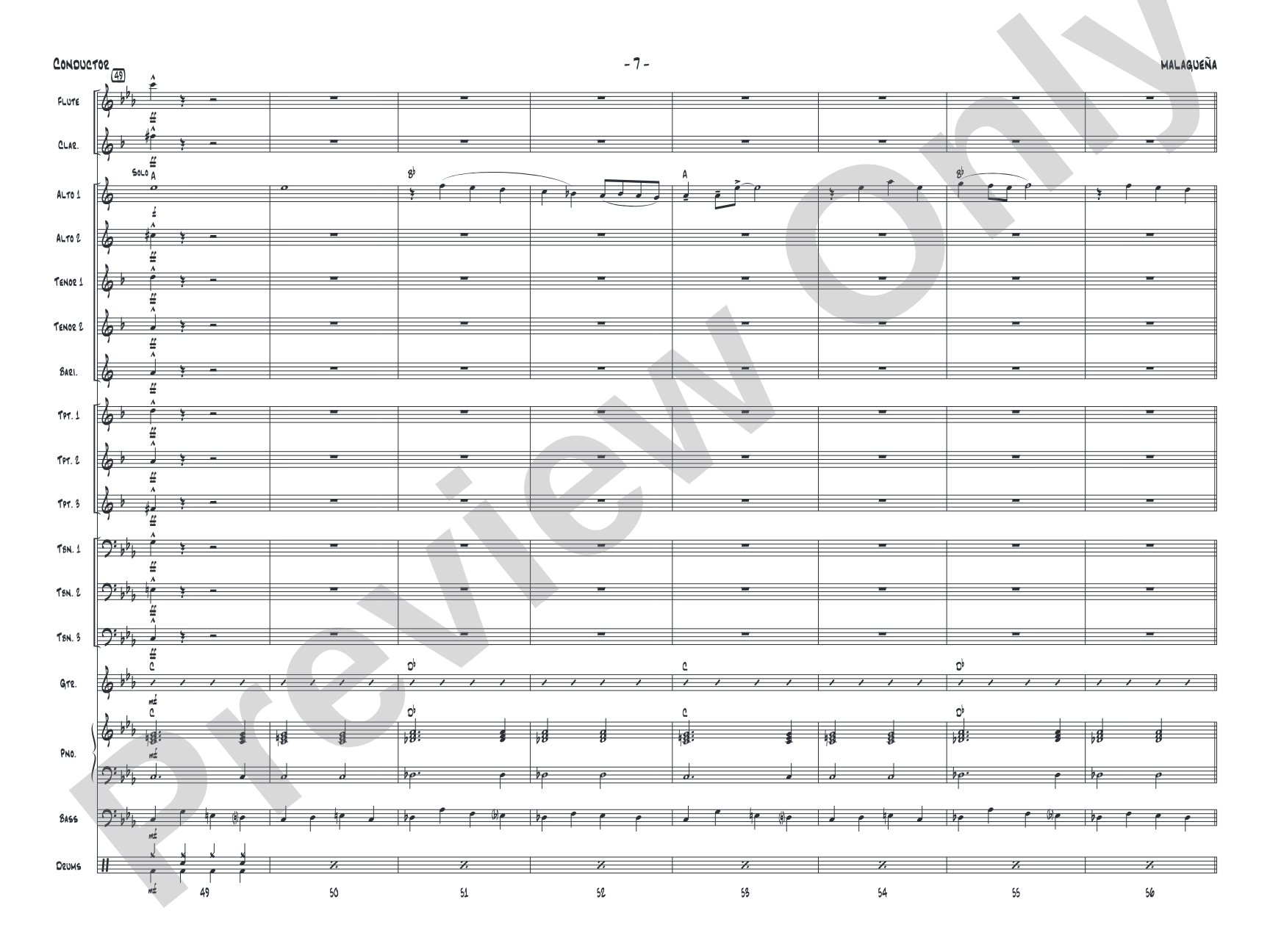
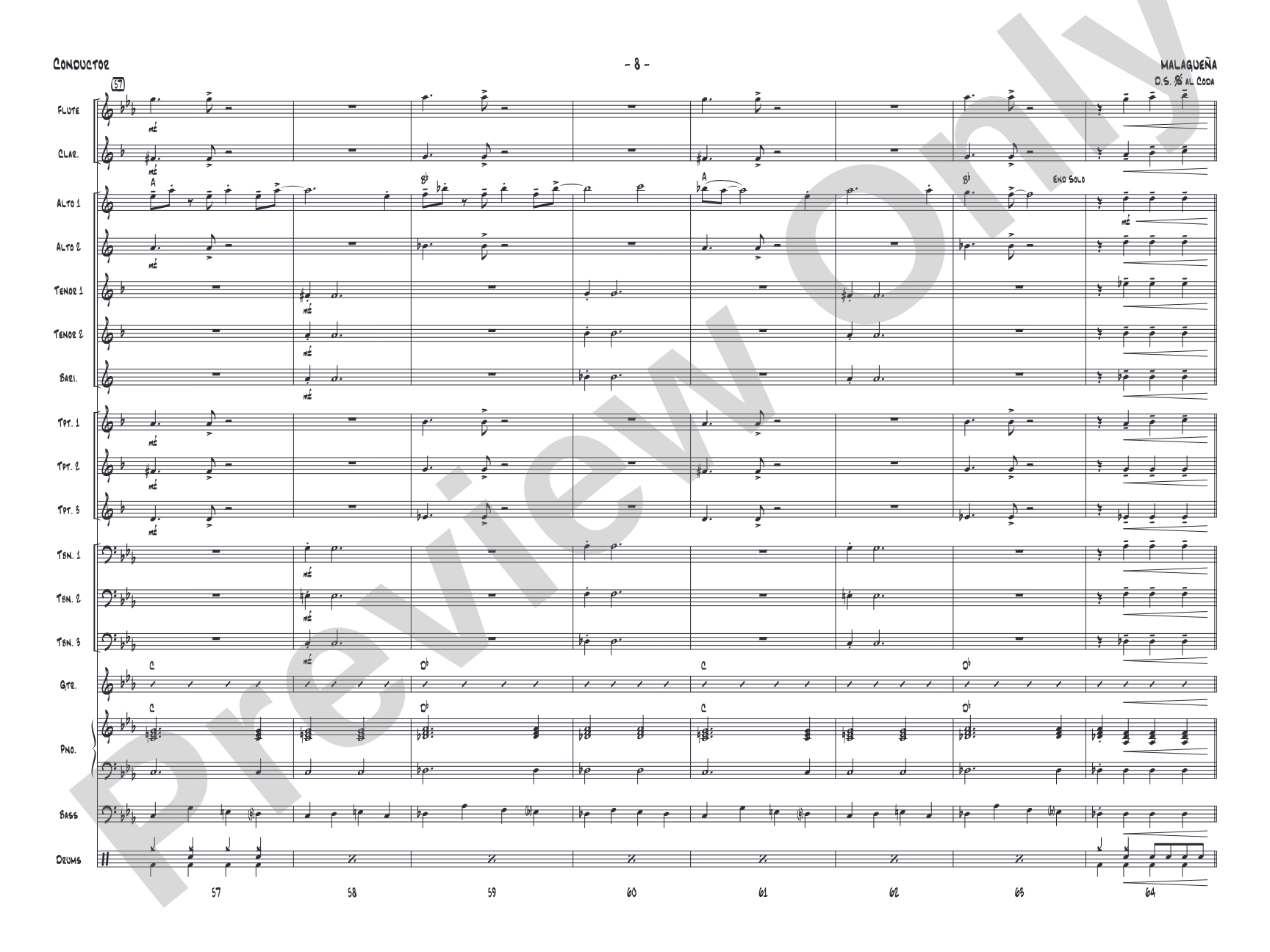
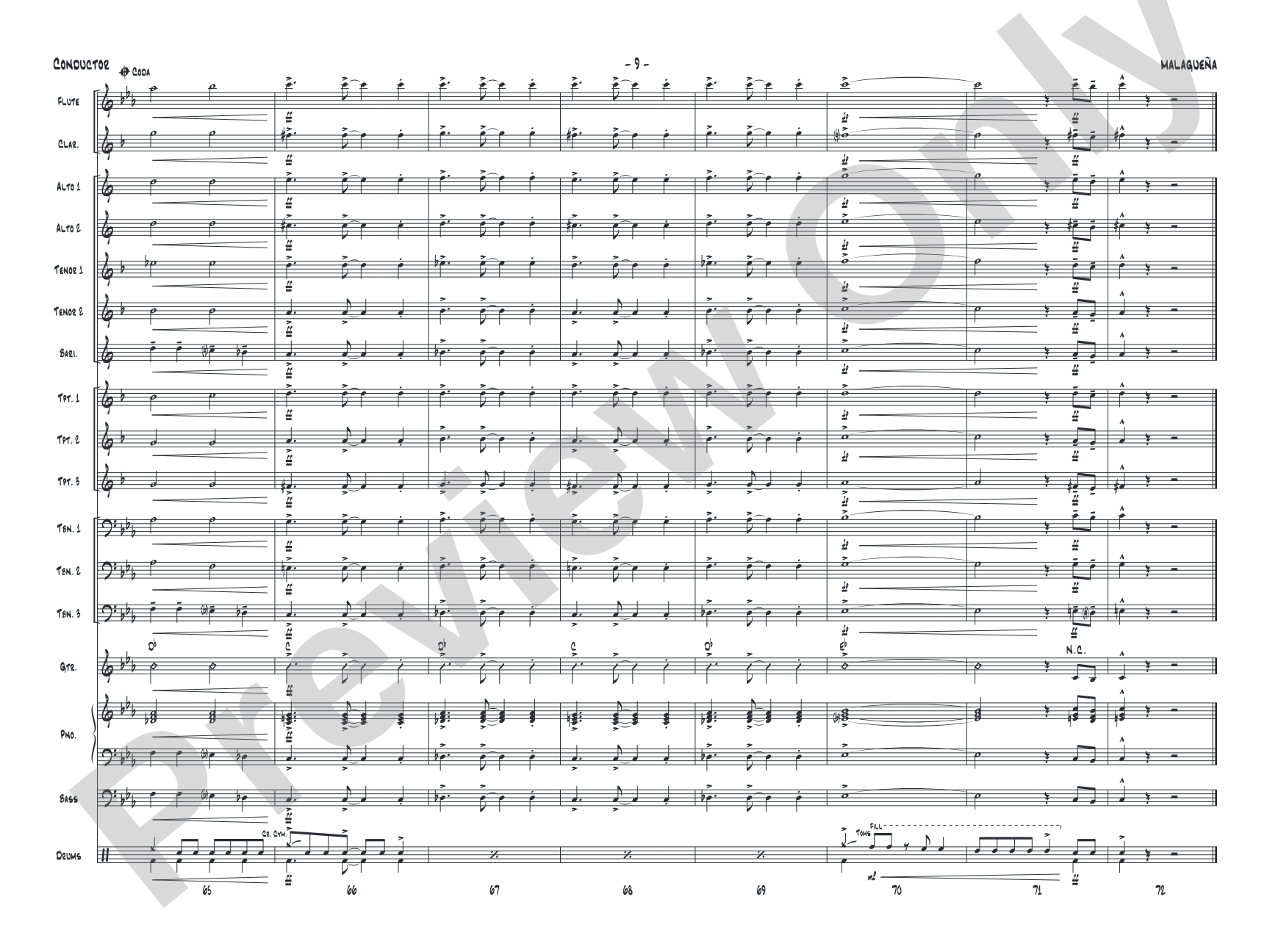

Malagueña: Score
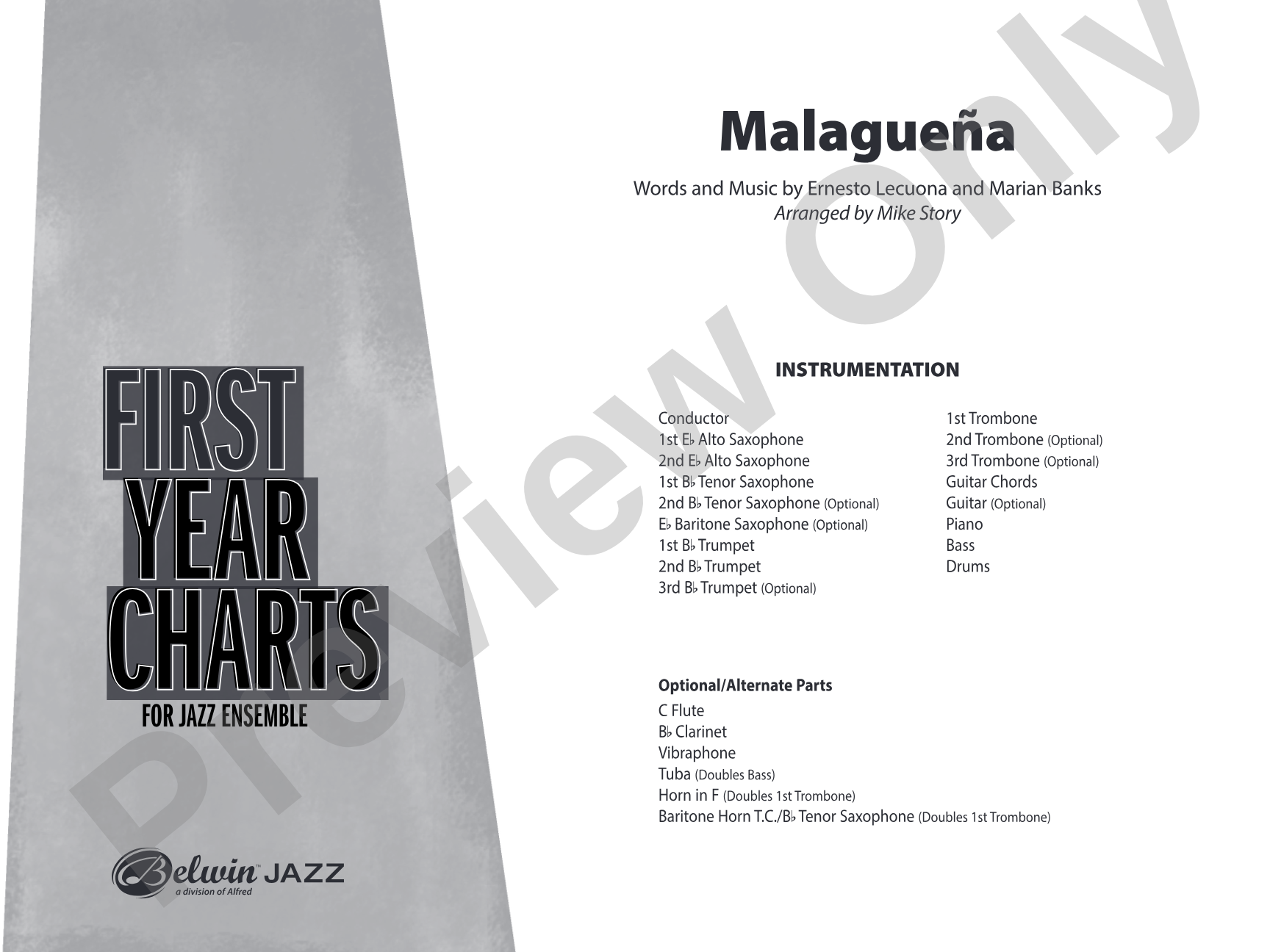
Words and music by Ernesto Lecuona and Marian Banks / arr. Mike Story
Grade: 1 (Easy)
Item: 00-PR-0006789
$9.00
Pickup currently not available
Description
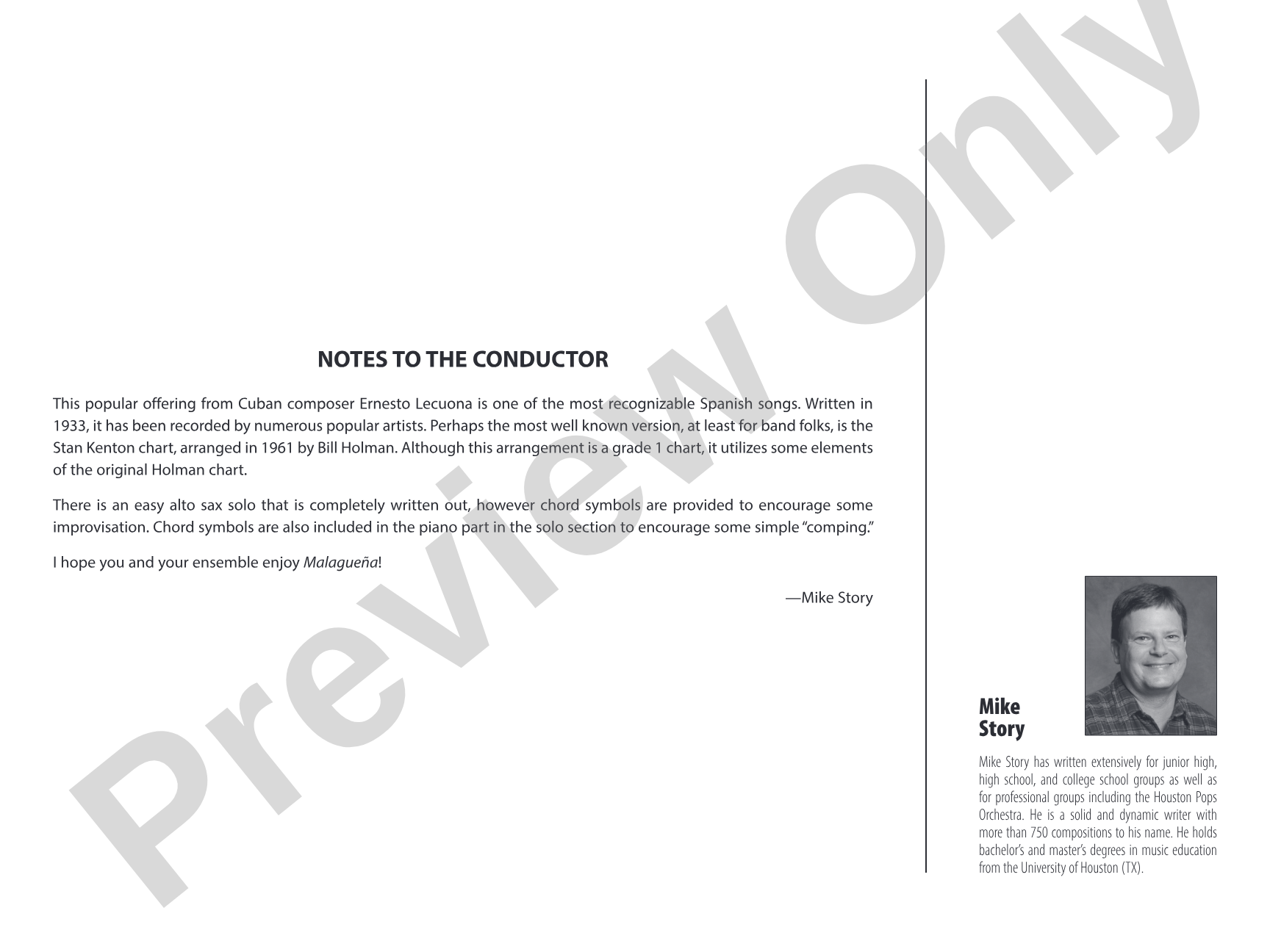
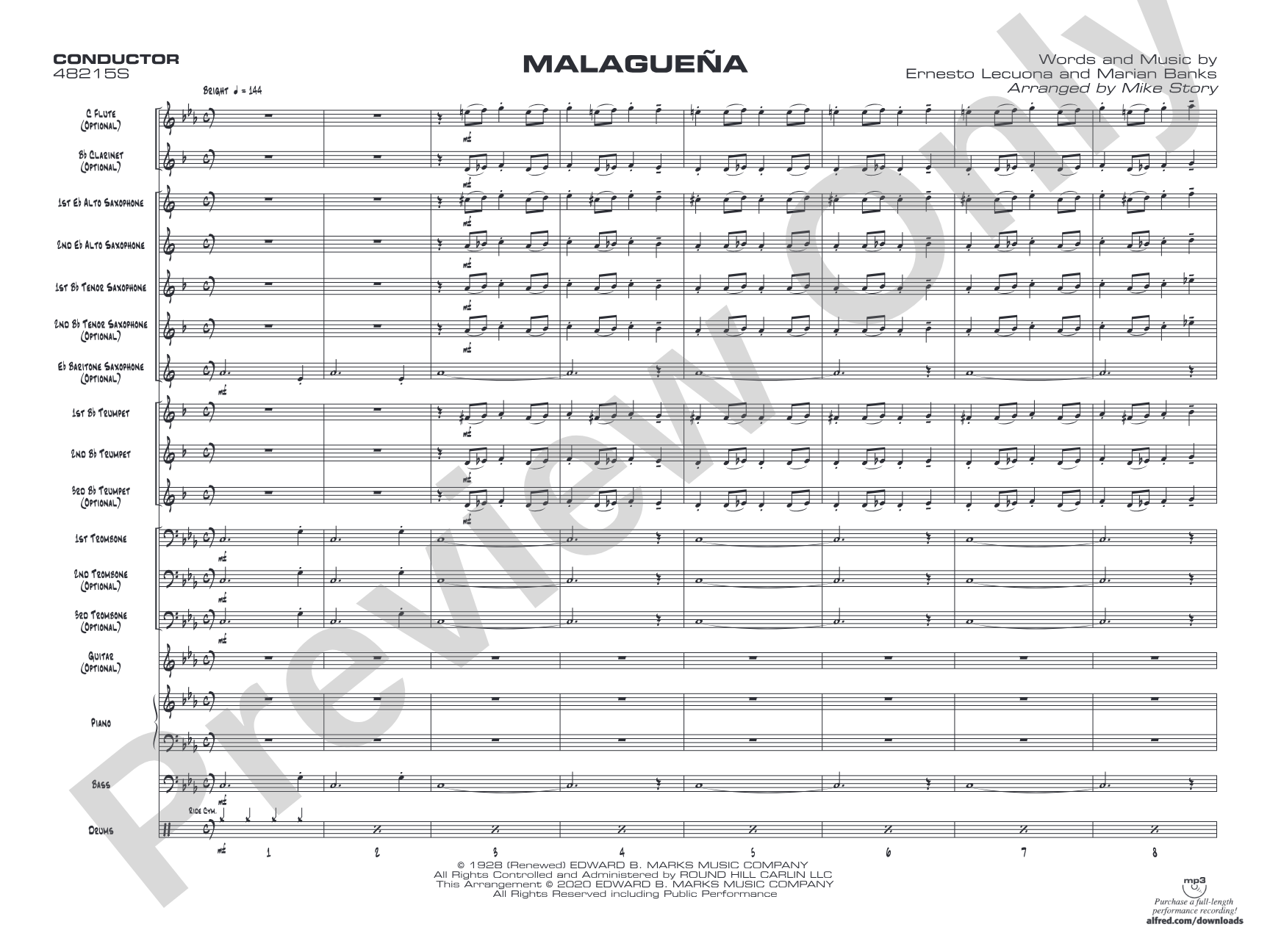
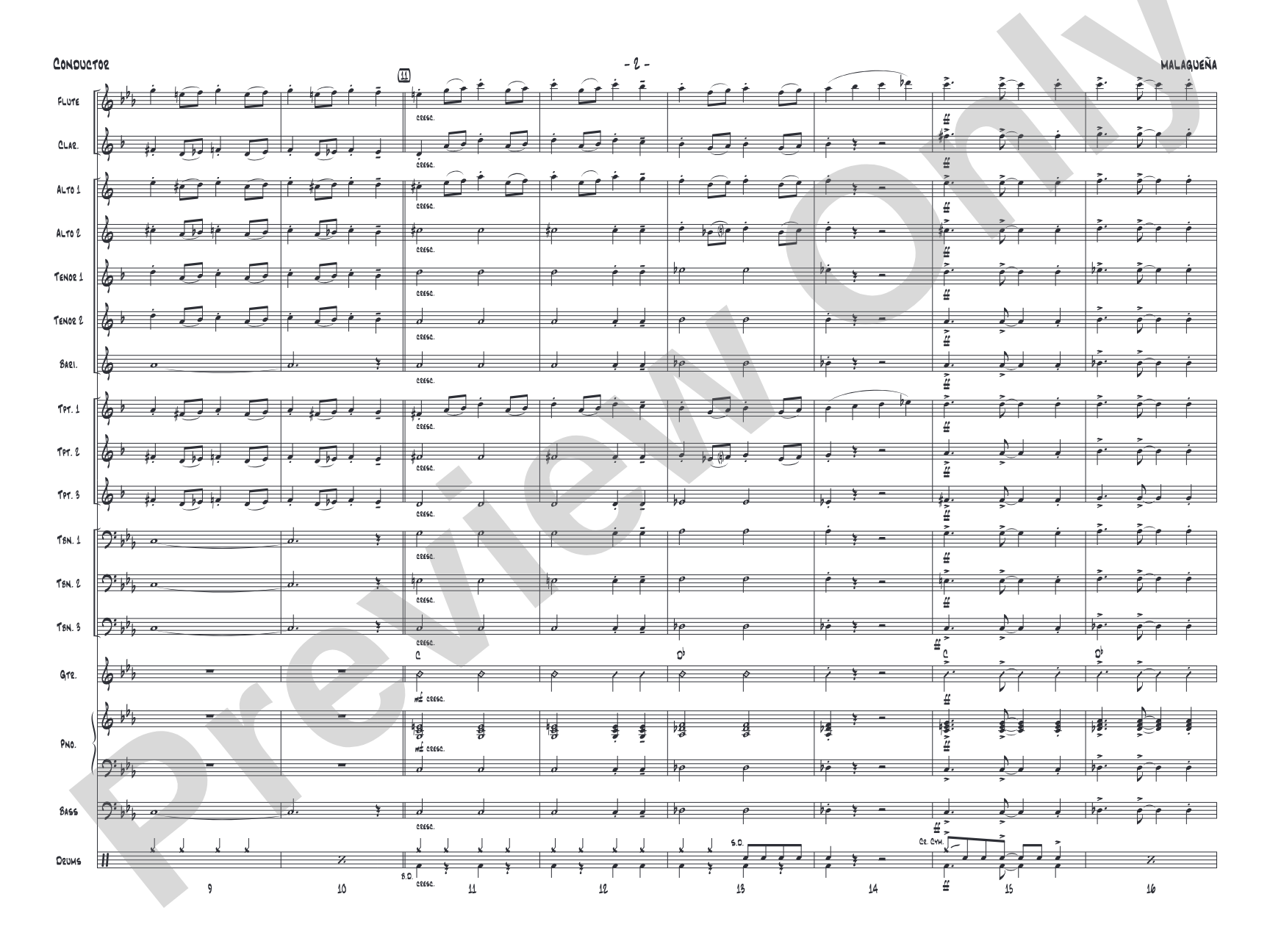
Finally an easy version of the classic tune, Malagueña, arranged by Mike Story! Played with a swing feel around 144 BPM with a written-out alto solo, trumpet 1 range to written F top line, this easy to play crowd pleaser will be a hit. It's accessible, very playable and definitely a great addition to your library. (2:26) This title is available in MakeMusic Cloud.


Don't just read it, hear it, play along with it, and watch your students grow with it. In MakeMusic Cloud, Malagueña: Score comes alive with professional accompaniment, adjustable tempo, and built-in practice tools that turn solo practice into real progress.
Open in the Player
Jump straight in and assign it today.
Start Your Free Trial
Open this title and explore the full library in minutes.
Sample Audio
1
Audio File
--:--
0:00
0:00
Sample Video
Additional Details
Series:
First Year Charts for Jazz Ensemble
Publisher:
Alfred Music
Page Count:
84
SKU:
00-PR-0006789
More about this title
About the Composer: Ernesto Lecuona
Ernesto Lecuona (1895-1963) was a Cuban composer and pianist whose music became a bridge between classical training and popular Cuban idiom. His works, including the beloved Malagueña, draw deeply from Spanish and Afro-Cuban musical traditions and remain standards in both classical and jazz repertoires worldwide.
Lecuona's gift was making emotionally resonant melodies that work equally well in concert halls and dance bands. Malagueña exemplifies this: the original piano piece has become the basis for countless arrangements across genres because the melody itself carries such infectious character and harmonic richness.
Why we love this
Mike Story has done what few arrangers manage: preserved every ounce of Malagueña's sultry charm while making it genuinely playable for first-year jazz ensembles. The written-out alto solo removes improvisation pressure, the trumpet 1 top line sits comfortably at F, and the swing feel around 144 BPM swings hard without becoming a technical gauntlet. Directors know this tune will draw applause, and now they can actually program it without talent-level mismatches.
What to expect
Malagueña swings with a warm, old-school sophistication. There's a hint of Spanish flair in the harmony and a laid-back swing groove that makes students feel like they're playing a real jazz standard, not an exercise. The melody has memorable contour, the rhythm feels natural underfoot, and the whole piece exudes the kind of understated cool that makes people want to listen.
Who it's for
First-year and early second-year jazz ensemble directors who want to program a piece with genuine character and proven audience appeal without overextending their groups. Saxophonists and trumpeters benefit from playing a recognizable standard in a swing idiom, while the written-out solo gives younger improvisers the scaffolding they need to succeed.
How to get the most out of it
- Build the groove from the rhythm section forward. The swing feel only lands when bass and drums lock into a relaxed, conversational pocket; have them settle the tempo before the ensemble enters.
- Shape the alto solo with vocalization in mind. This is a singer's melody adapted for saxophone, so encourage phrasing that breathes and bends notes where the line naturally suggests rubato.
- Balance the brass against the reeds carefully, especially in section tuttis. At 144 BPM with the full ensemble, trumpets and trombones can easily cover the saxes; rehearse with dynamics marked and listen from the back of the room.
- Let the melody sing. Malagueña lives on its top line; make sure whoever has the melody (whether section or soloist) is never lost in the texture.
How to use it
Schedule this as a concert opener or closer to establish jazz credibility and audience engagement early or end on a high note. It pairs well with other accessible swing charts and works beautifully as the anchor of a jazz pops program; its familiarity and broad appeal also make it ideal for community events or informal performances where you want to build ensemble confidence.
Skills your students will build
- Playing with a relaxed swing feel and maintaining consistent groove
- Reading and executing written-out jazz solos with stylistic phrasing
- Balancing ensemble sound with featured melodic lines
- Managing Bb and Eb transposition in a jazz context
- Responding to conductor interpretation of tempo and dynamics in a swing idiom