Malagueña Sheet Music Preview

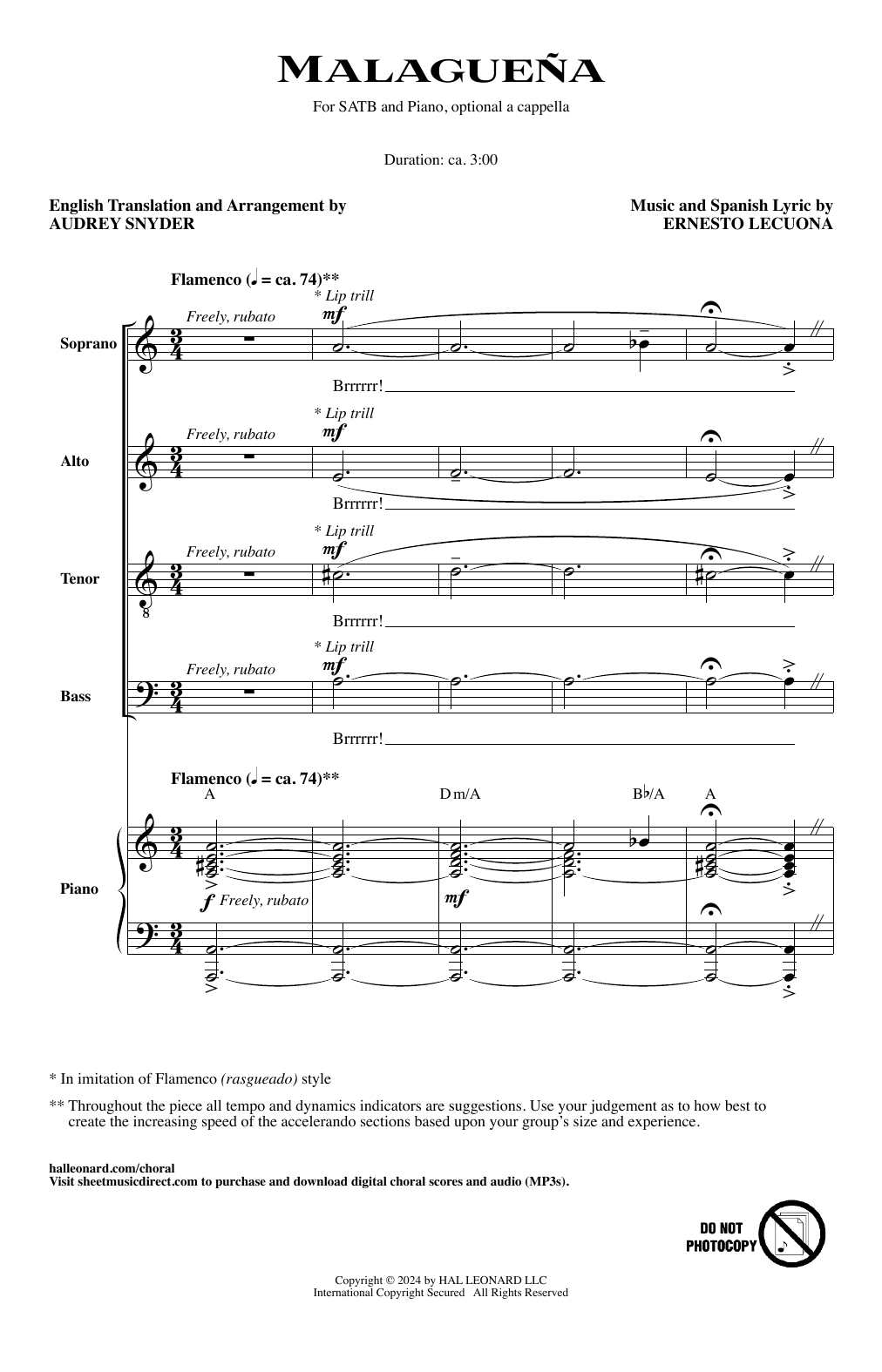
Malagueña: SATB Choral Octavo

By Ernesto Lecuona / Arranged by Audrey Snyder

Item: 35-DS01505881

Digital Download
$2.99
Description

Malagueña: SATB Choral Octavo isn't in MakeMusic Cloud just yet...but it could be. Let us know you'd like to see it, and you'll help shape what comes next. In the meantime, start a free trial and dive into thousands of interactive titles your students can play along with today.

Sample Audio
No sample audio found.
Sample Video
Additional Details
Publisher: Hal Leonard
Page Count: 14
SKU: 35-DS01505881

More about this title

About the Composer: Ernesto Lecuona

Ernesto Lecuona (1896-1963) was a Cuban pianist, composer, and conductor whose works bridged classical training and popular idiom with remarkable fluency. His compositions, particularly those drawing from Cuban folk and dance traditions, became staples of both concert halls and dance floors, earning him international recognition as one of the most performed Cuban composers of the twentieth century.

Why we love this

Snyder's arrangement captures the sultry sophistication of Lecuona's original without sacrificing singability, giving your SATB choir access to a piece that sounds far more complex than it is to prepare. The Latin rhythmic foundation sits naturally in voices, and the harmonic language rewards crisp diction and controlled legit tone in equal measure.

What to expect

Warm, rhythmically alive, and touched with nostalgia. The piece evokes candlelit café settings and the languid sensuality of Cuban folk tradition, yet remains accessible and joyful rather than heavy.

Who it's for

Intermediate to advanced SATB choirs seeking repertoire with character and sophistication. This arrangement works equally well for secular concert programming, jazz festival participation, or festival competitions where Latin music is valued.

How to get the most out of it

  • Establish the rhythmic pocket early in rehearsal by tapping or clapping the signature Latin figures before singers add pitch; this grounds the ensemble's approach to the style.
  • Shape phrases around the harmonic rhythm rather than the bar line; Lecuona's melodic contours often float across traditional measures, and acknowledging this creates elegance.
  • Balance the lower voices carefully so that any jazz voicings or chromatic movement in the arrangement stays audible without muddying the soprano's lyrical line.
  • Treat the recorded accompaniment as a rehearsal tool first; once secure, encourage the choir to breathe with the style rather than strictly with it, allowing interpretive flexibility.

How to use it

Pair this with other Latin or world music selections to build a cohesive concert set, or place it strategically in a mixed program where its spirited character provides a refreshing shift in mood and tempo. It also serves well as a festival contest piece that audiences recognize and enjoy while still offering pedagogical depth.

Skills your students will build

  • Latin rhythmic vocabulary and articulation
  • Reading and sustaining jazz harmonies
  • Balancing complex voicings across four parts
  • Stylistic interpretation and legit tone production in a non-classical context
  • Diction clarity in Spanish language passages

You May Also Like