

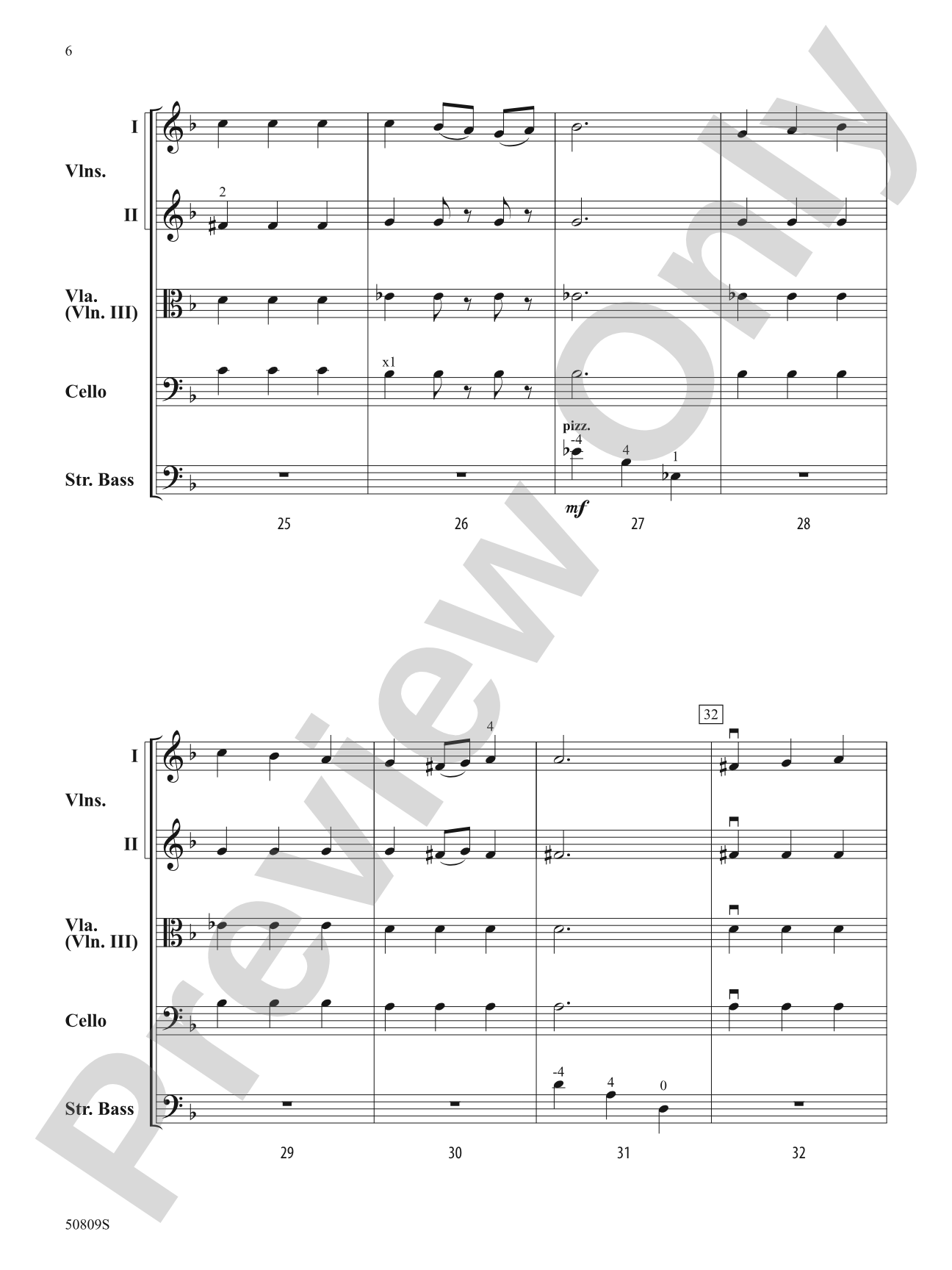
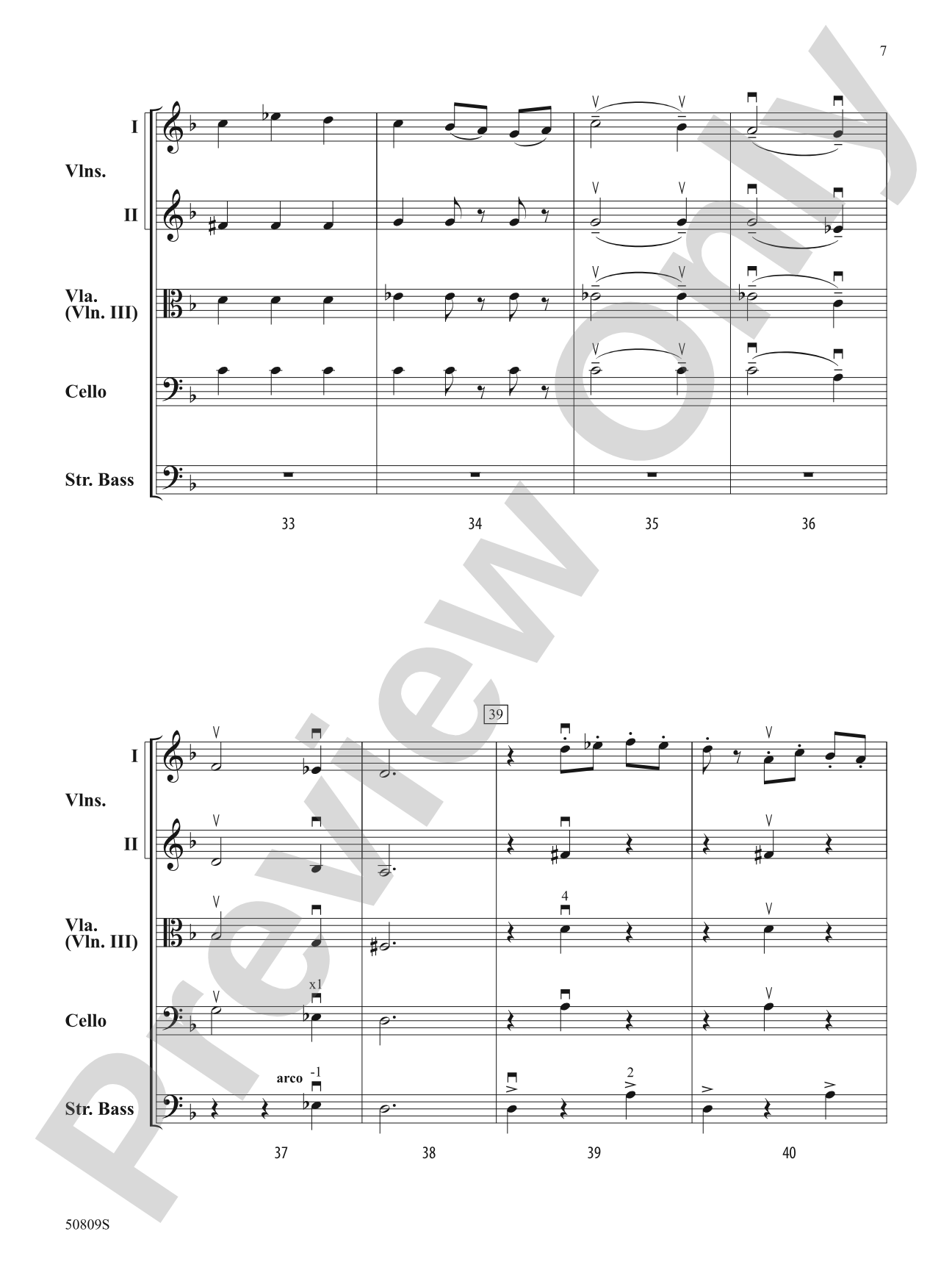
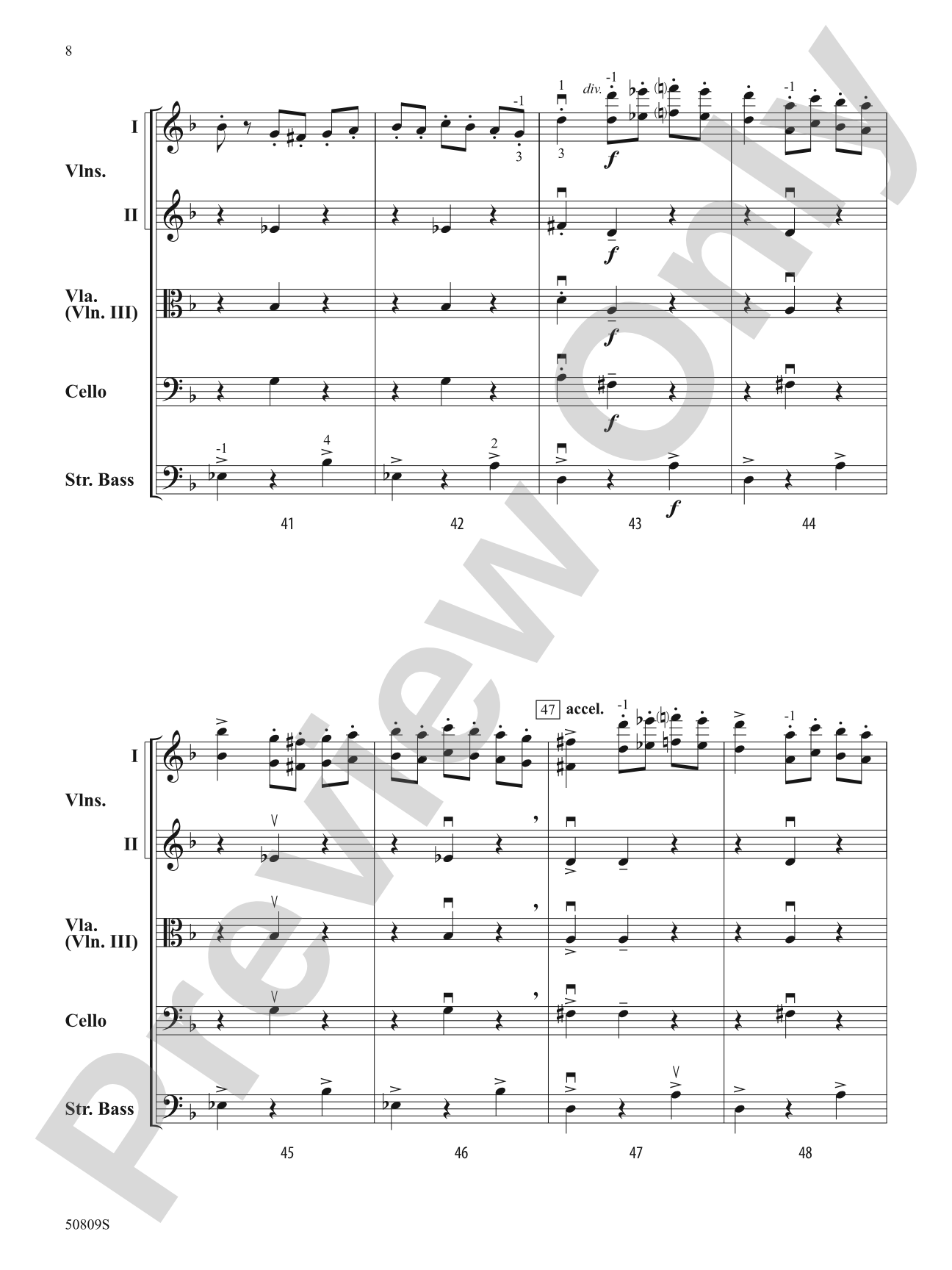
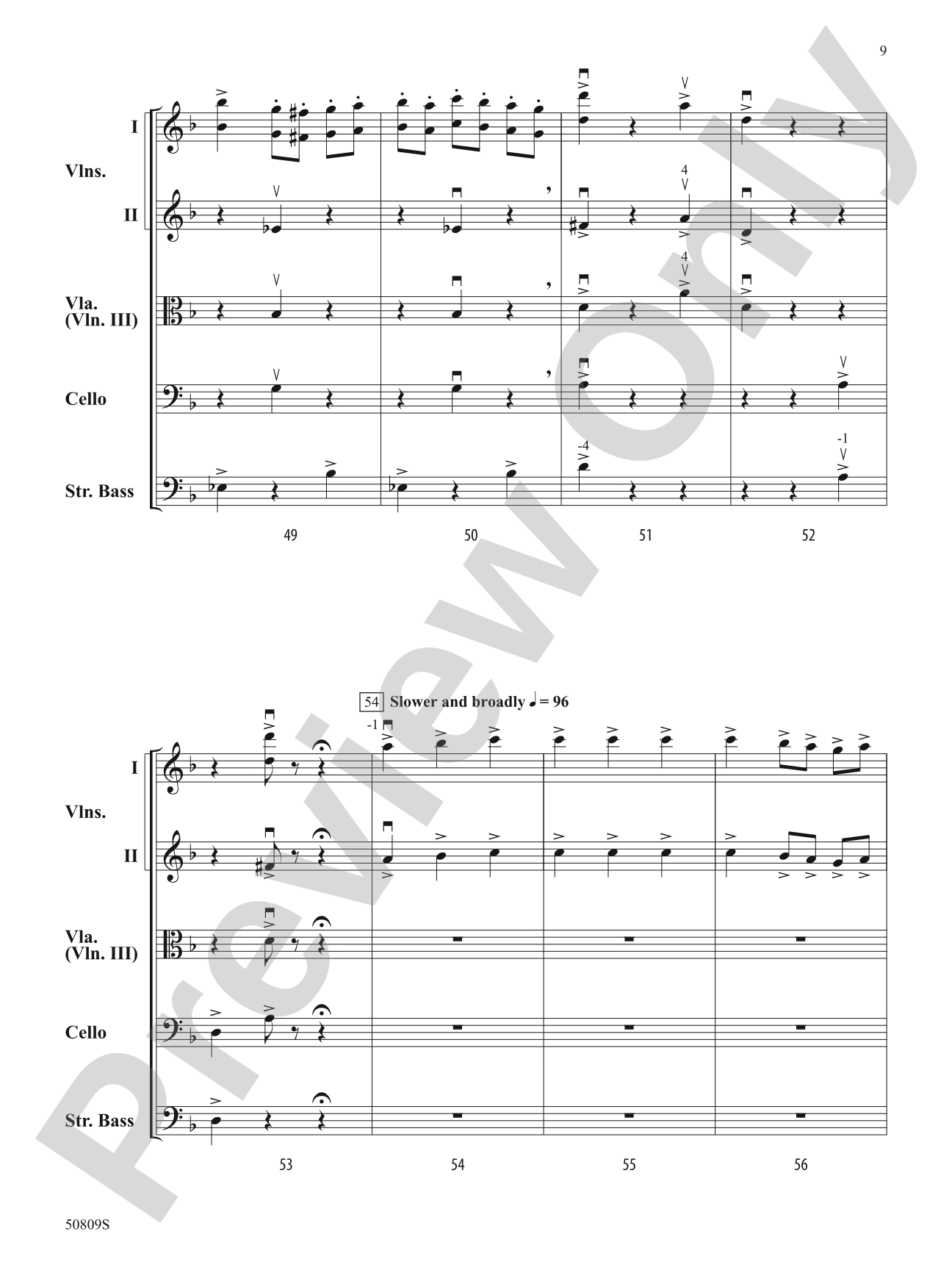
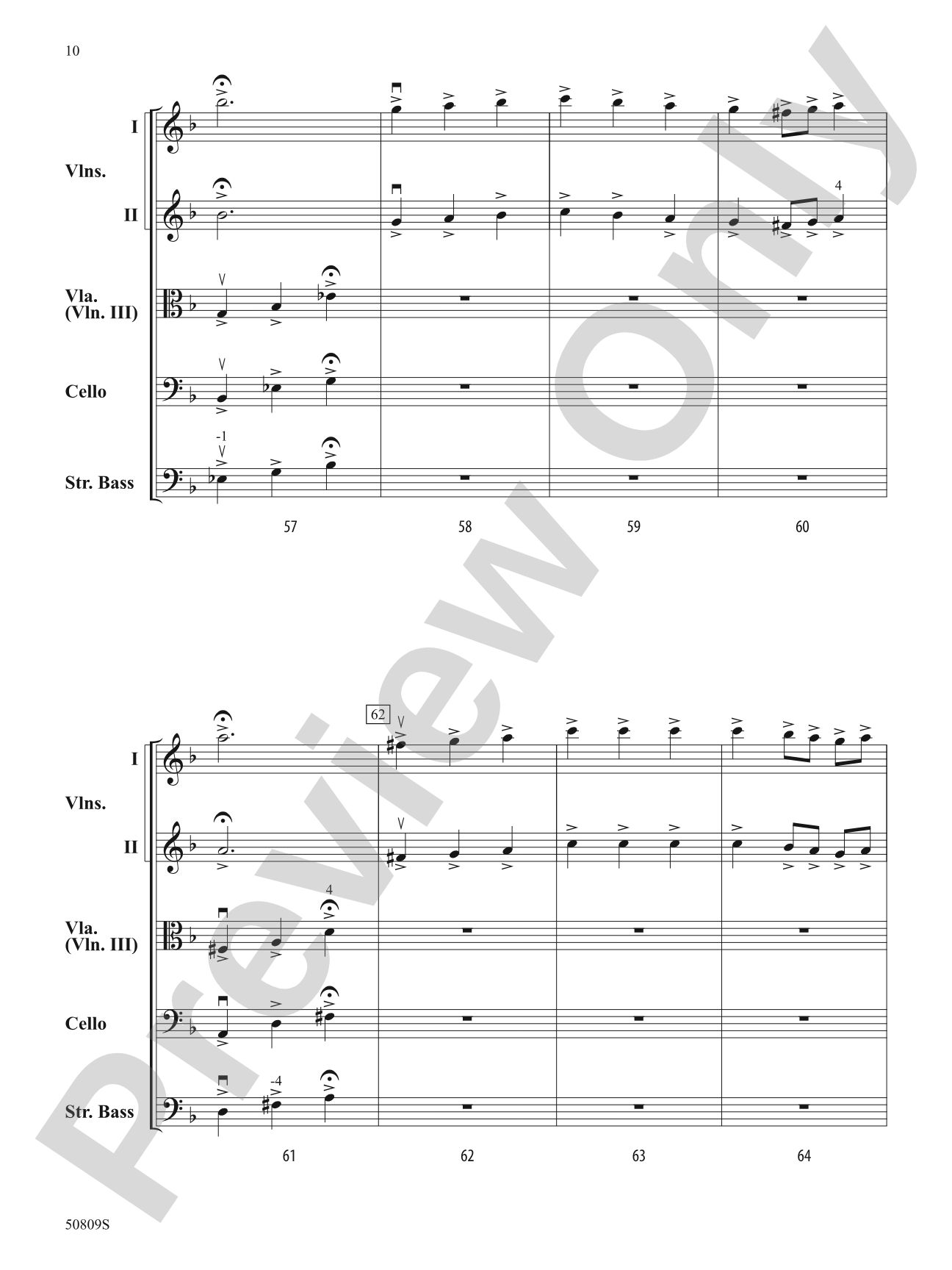
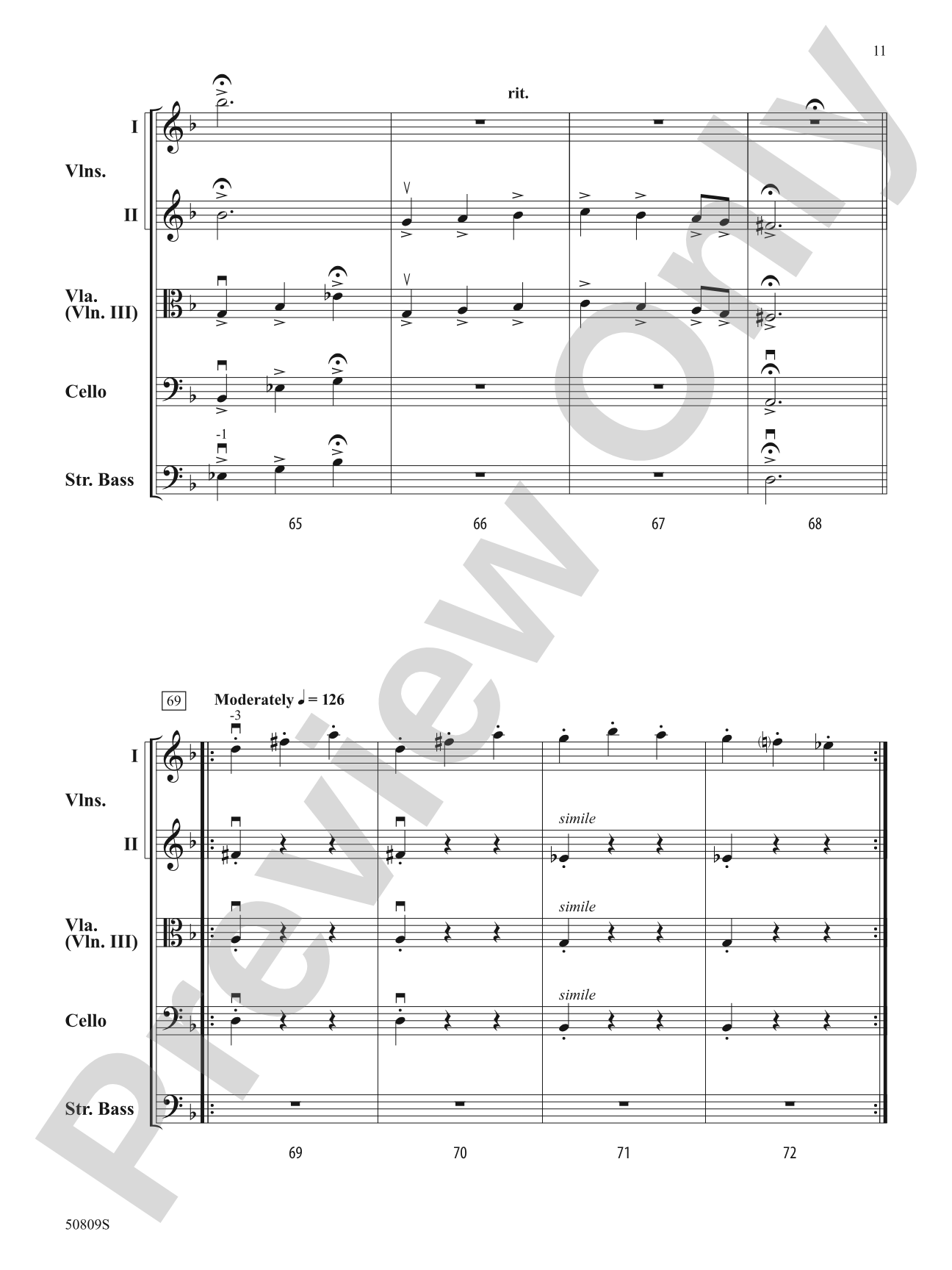
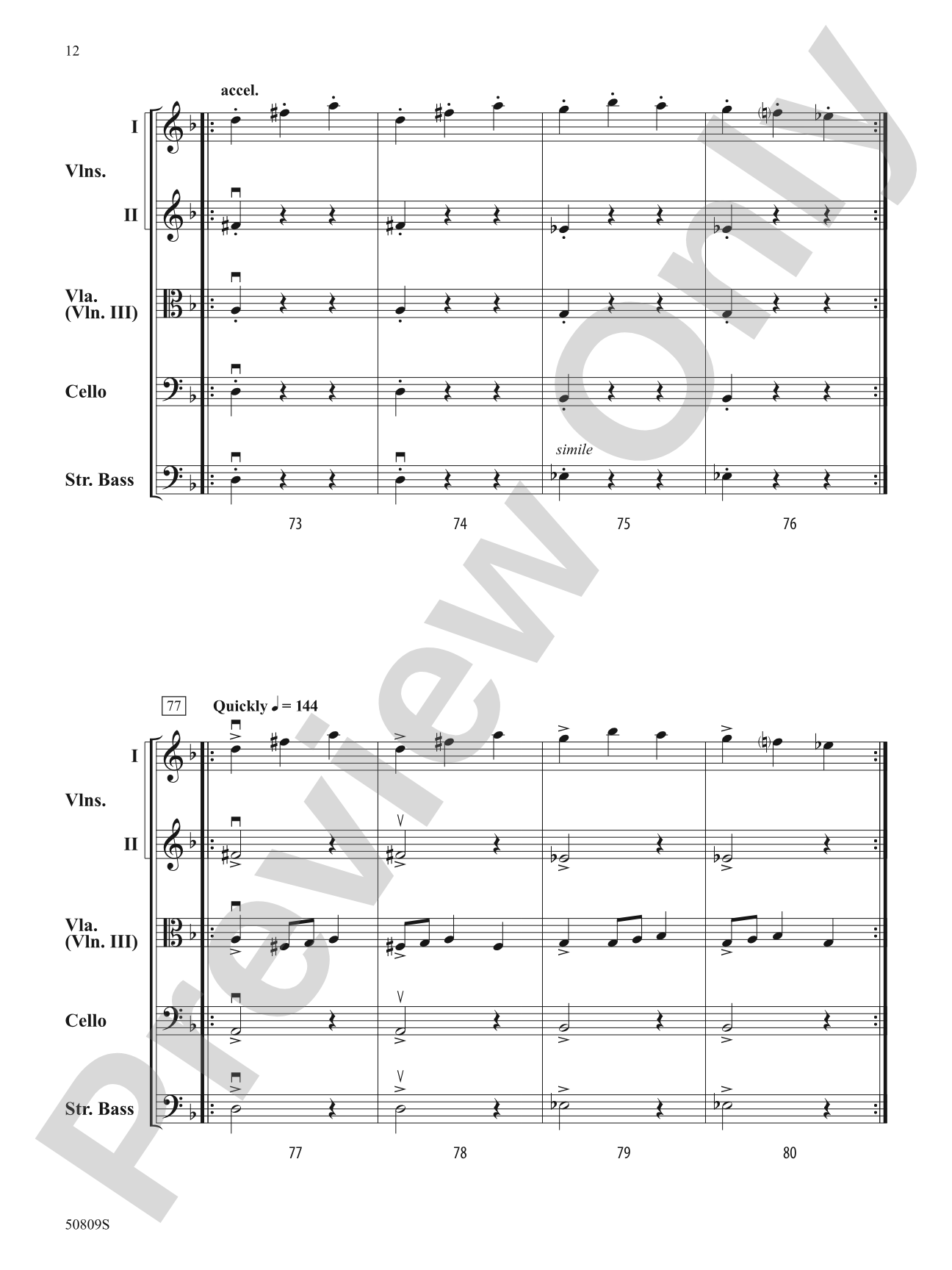
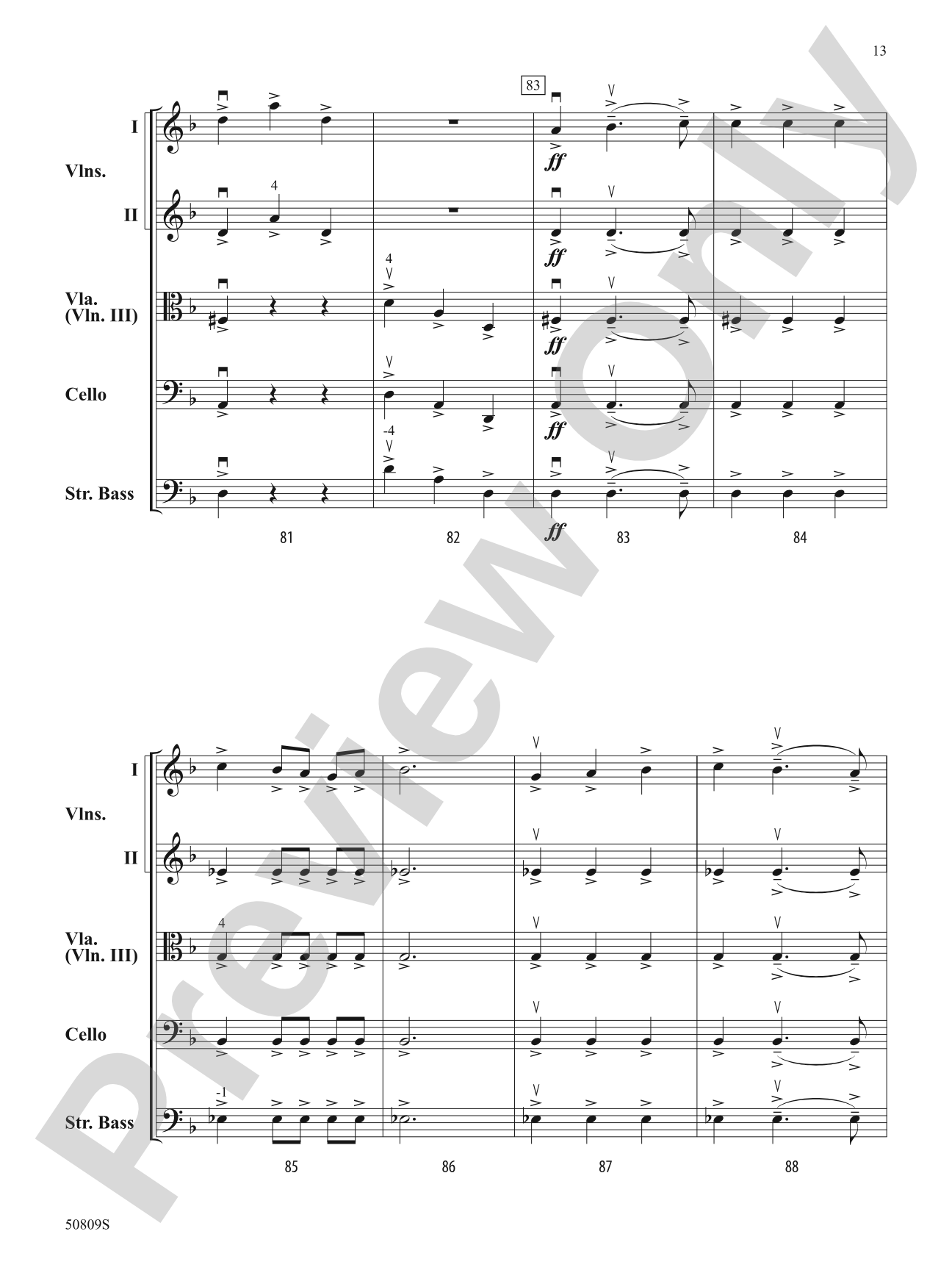
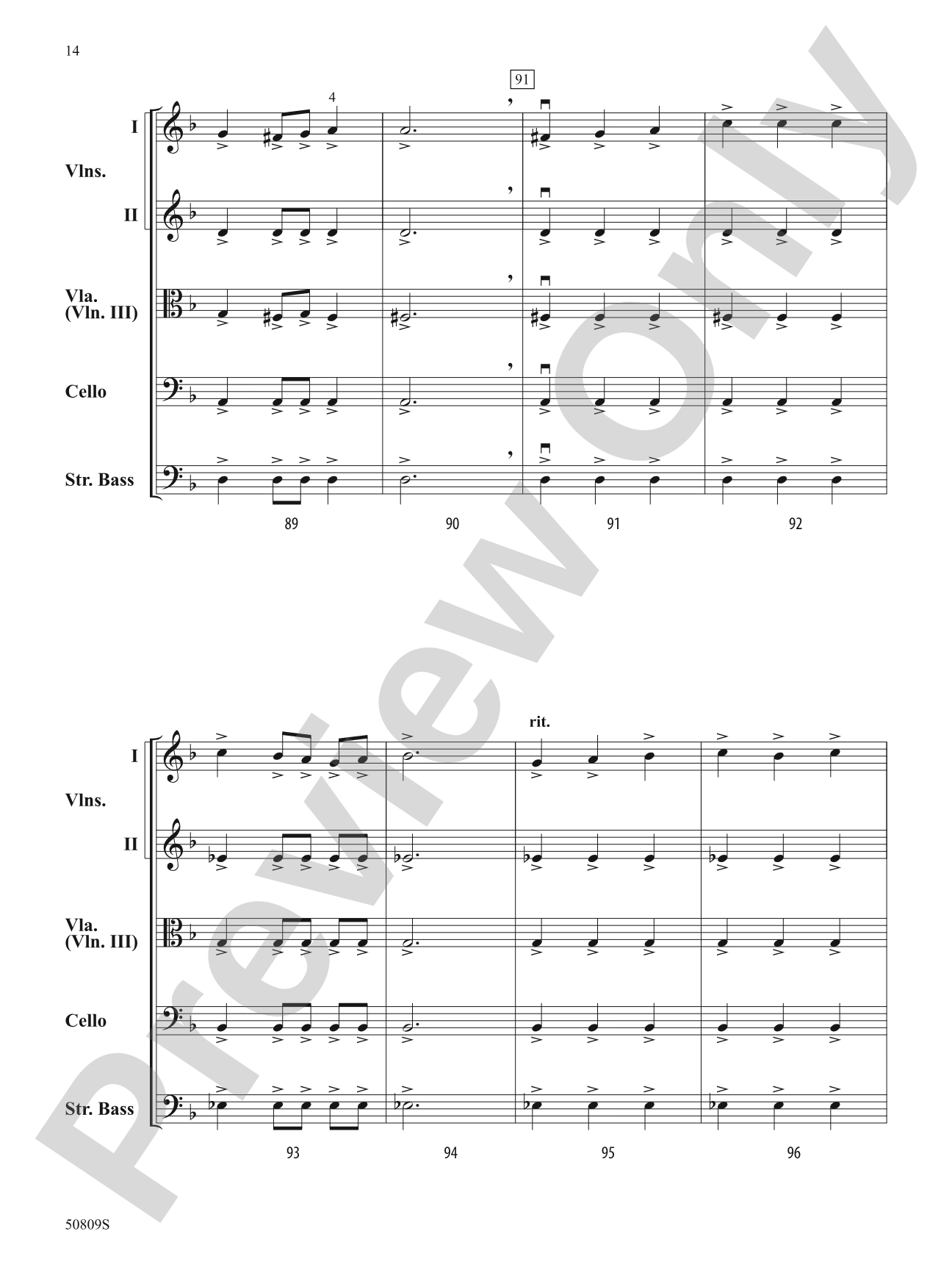
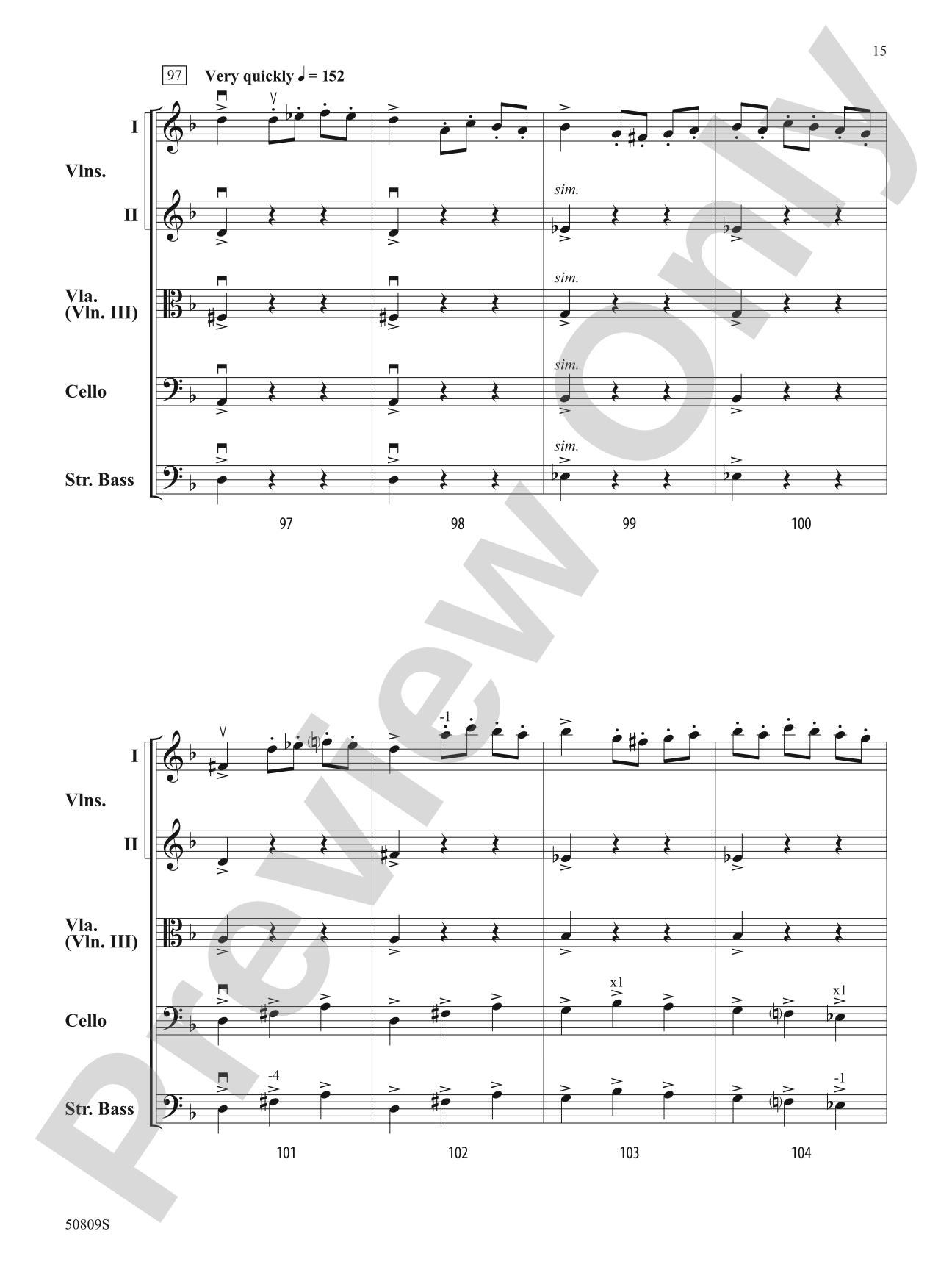
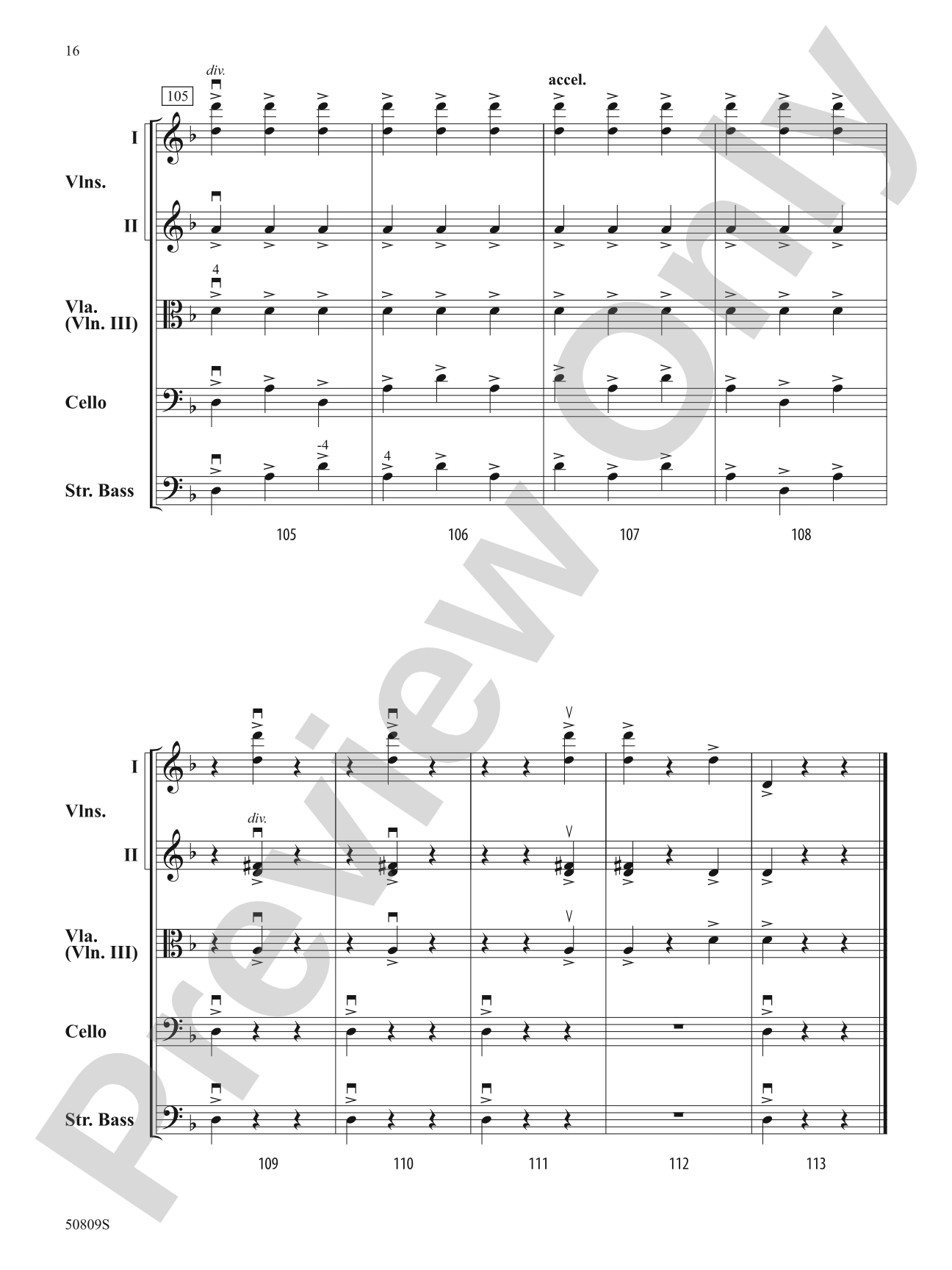

Malagueña: String Orchestra Conductor Score & Parts
From Andalucía Suite
By Ernesto Lecuona / arr. Douglas E. Wagner
Grade: 3
Item: 00-PK-0008979

$65.00
Pickup currently not available
Buy Extra Parts (Digital PDF Download)
| Product | Price | Quantity |
|---|---|---|
| Malagueña: Score | $10.00 | |
| Malagueña: 1st Violin | $3.00 | |
| Malagueña: 2nd Violin | $3.00 | |
| Malagueña: 3rd Violin (Viola [TC]) | $3.00 | |
| Malagueña: Viola | $3.00 | |
| Malagueña: Cello | $3.00 | |
| Malagueña: String Bass | $3.00 |
Parts Added to Cart!
Description
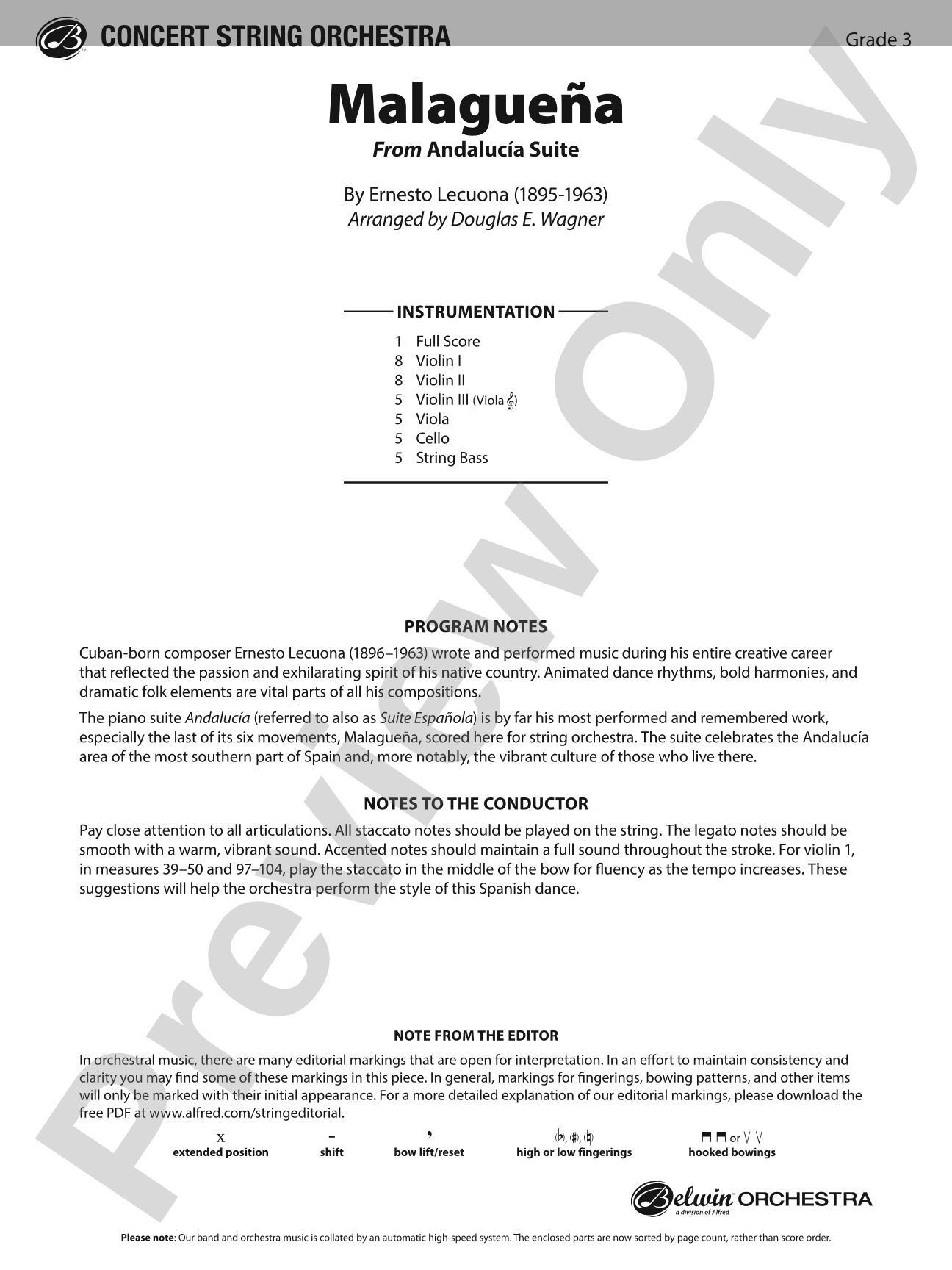
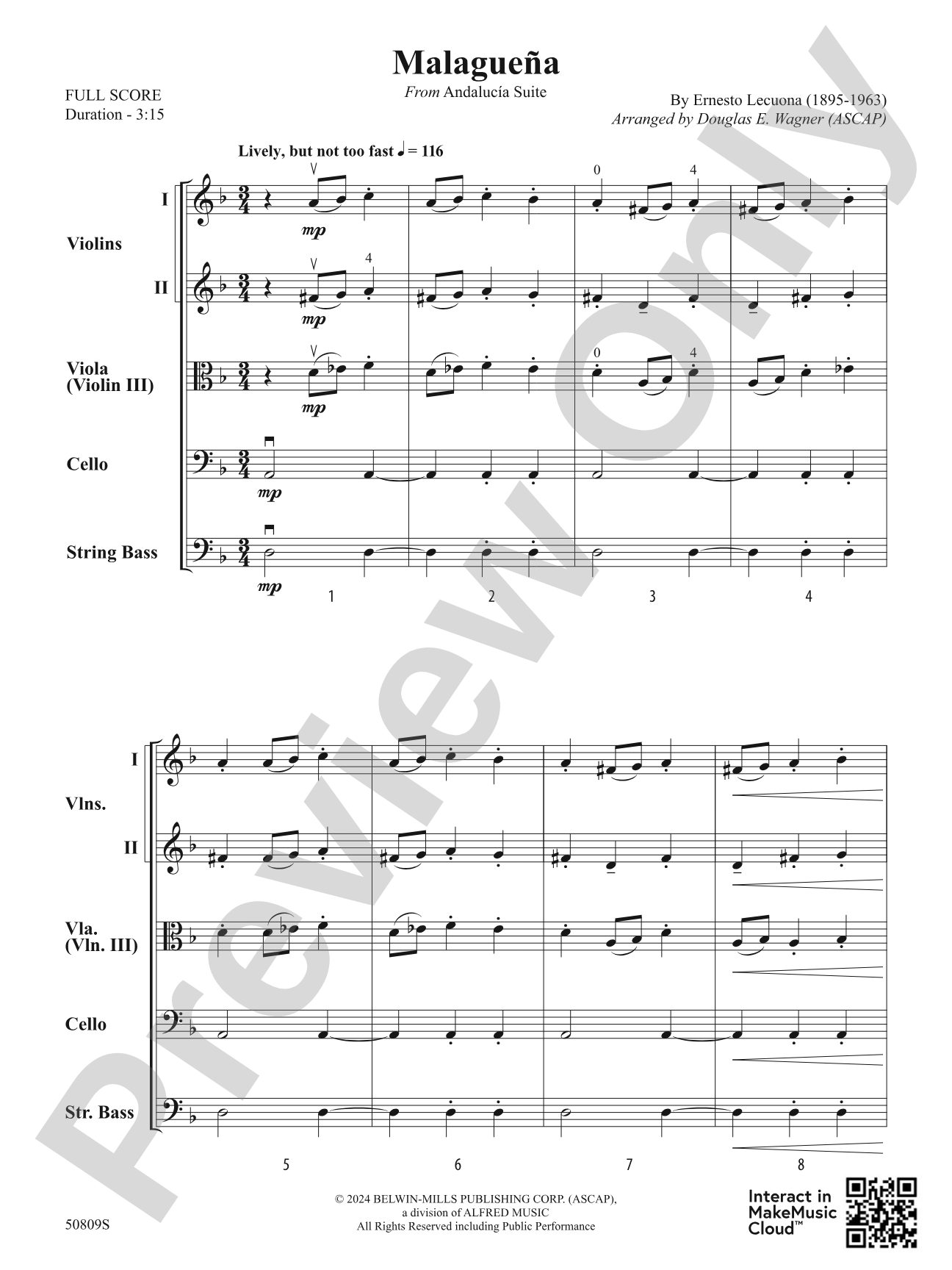
The piano suite Andalucía (also referred to as Suite Española) is by far Ernesto Lecuona's most performed and remembered work, especially the last of its six movements, "Malagueña," scored here for string orchestra. The suite celebrates the Andalucía area of the most southern part of Spain and, more notably, the vibrant culture of those who live there. This arrangement, by Douglas E. Wagner, captures all of the passion of the original and will be perfect for concert or contest. (3:15)


Don't just read it, hear it, play along with it, and watch your students grow with it. In MakeMusic Cloud, Malagueña: String Orchestra Conductor Score & Parts comes alive with professional accompaniment, adjustable tempo, and built-in practice tools that turn solo practice into real progress.
Open in the Player
Jump straight in and assign it today.
Start Your Free Trial
Open this title and explore the full library in minutes.
Sample Audio
1
Audio File
--:--
0:00
0:00
Sample Video
Additional Details
Series:
Belwin Concert String Orchestra
Publisher:
Alfred Music
SKU:
00-PK-0008979
More about this title
About the Composer: Ernesto Lecuona
Ernesto Lecuona (1895-1963) was a Cuban composer and pianist whose works bridged European classical forms with the rhythmic vitality of Caribbean and Spanish musical traditions. His piano suites, particularly Andalucía, became staples of the classical repertoire and remain accessible entry points for students encountering Spanish-influenced music with genuine compositional substance.
Why we love this
Wagner's arrangement preserves the sweeping melodic lines and rhythmic drive that make 'Malagueña' instantly recognizable while distributing the texture across the full string section in a way that feels both transparent and rich. The piece sits comfortably at Grade 3, letting orchestras focus on phrasing and style rather than technical survival, which means your students can actually connect with the music's Spanish character and passion.
What to expect
Malagueña captures the warmth and restless energy of Southern Spain, with sweeping violin lines that feel almost improvisational over steady accompaniment. There's an undercurrent of joy and dance rhythms beneath the lyrical surface, creating music that feels both intimate and vibrant.
Who it's for
This arrangement works for string orchestras that want to program something recognizable and emotionally engaging without stepping outside Grade 3 technical range. Directors preparing festival or contest repertoire will find a piece that audiences and adjudicators alike respond to immediately, and students get to play music with genuine melodic and cultural substance.
How to get the most out of it
- Shape the opening melody with gentle rubato and allow the first violins breathing space; avoid rushing through the lyrical passages even as the harmonic movement suggests forward momentum.
- Anchor the rhythm section (violas and cellos) with steady pulse during the syncopated figures so the melody can soar without losing its grounding.
- Build toward the climax gradually across the full form; this piece rewards patience and makes the final gesture genuinely stirring when you don't arrive there too early.
- Balance the secondary material in lower strings carefully; these counter-melodies add color only if they don't overshadow the primary voice.
How to use it
This works equally well as a concert closer or festival showpiece; its three-minute length and immediate appeal make it ideal for audience-engagement programming. Consider pairing it with other multicultural repertoire to highlight global musical traditions, or program it alongside classical works to demonstrate how composers across eras and regions have drawn inspiration from Spanish idioms.
Skills your students will build
- Phrasing across longer melodic lines with varied articulation
- Stylistic interpretation of Spanish musical idioms (rhythmic inflection, vibrato control)
- Balancing transparent orchestration where each part remains audible
- Dynamic shaping and rubato in romantic-era string writing
- Ensemble rhythmic precision in syncopated accompaniment figures