Making Mischief Sheet Music Preview

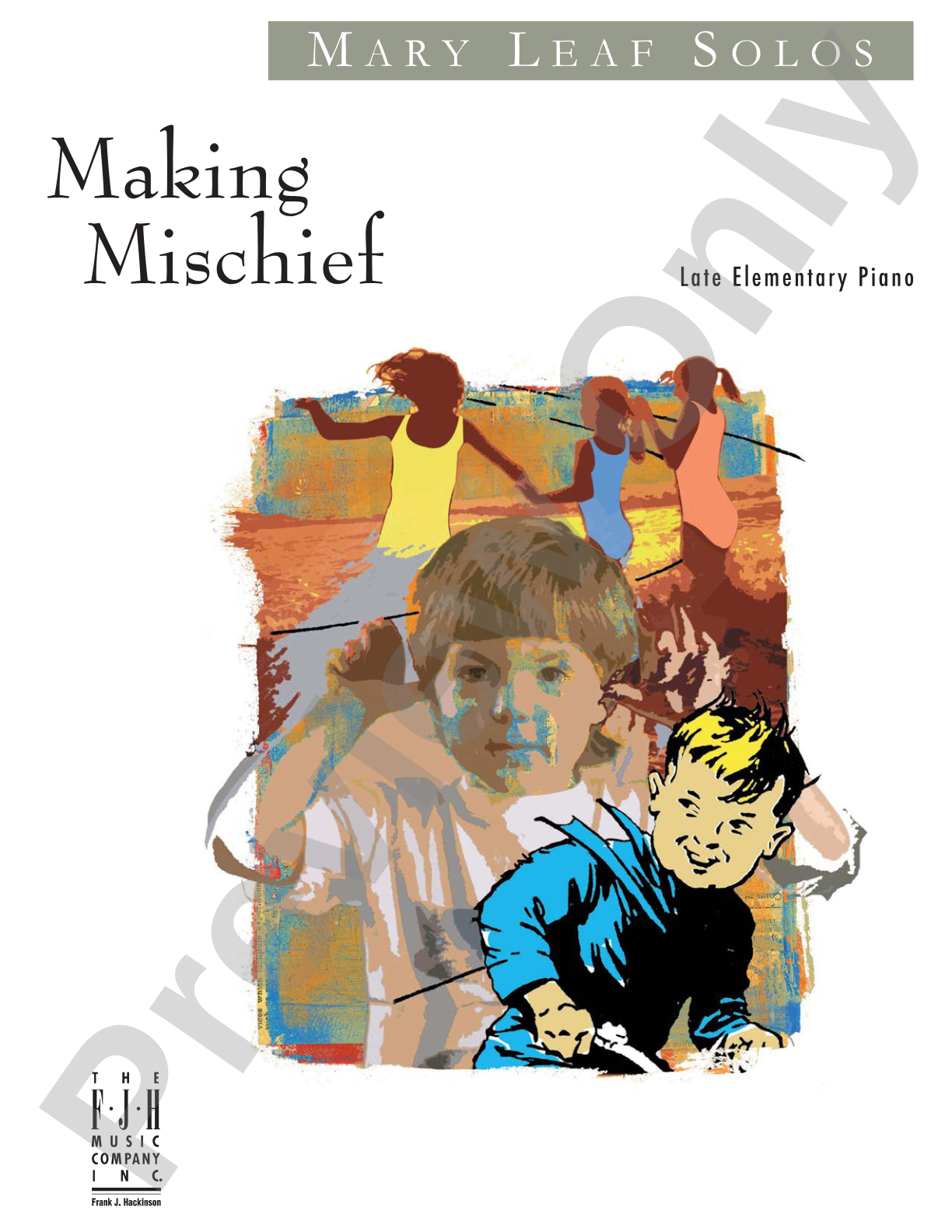
Making Mischief: Piano

By Mary Leaf

Item: 98-DW9080

Digital Download
$4.95
Description
A lively, light-hearted piece featuring staccati, dynamic contrasts, and changing octaves.

Making Mischief: Piano isn't in MakeMusic Cloud just yet...but it could be. Let us know you'd like to see it, and you'll help shape what comes next. In the meantime, start a free trial and dive into thousands of interactive titles your students can play along with today.

Sample Audio
No sample audio found.
Sample Video
Additional Details
Series: Written For You
Publisher: The FJH Music Company, Inc.
SKU: 98-DW9080

More about this title

Why we love this

The staccato writing and frequent octave shifts give students immediate physical feedback about their touch and hand position, making technique transparent rather than abstract. It's the kind of piece that sounds delightful in a studio recital without demanding virtuosity, which means students actually want to perform it.

What to expect

Playful and impish, with a sense of mischievous energy that comes from precise rhythmic clarity and sharp attacks. The changing octaves add a touch of surprise that keeps both the player and listener engaged.

Who it's for

Early intermediate pianists who are ready to work on articulation clarity and hand independence without tackling complicated harmonic language. Students thrive when they can hear exactly how their choices shape the character of the music.

How to get the most out of it

  • Keep the staccato articulation crisp and even across both hands; inconsistent release will muddy the playful character.
  • Lean into the dynamic contrasts deliberately rather than letting them happen by accident. The shifts between quiet and loud are what create the mischief.
  • Approach the octave changes as intentional leaps, not stumbles. A clean preparation of the hand position before each jump pays off in confident execution.

How to use it

Pair this with other character pieces on a student recital for variety in mood and texture. It works especially well early in a program when you want to establish a lighter tone before moving into more serious repertoire.

Skills your students will build

  • Staccato articulation and consistent note release
  • Dynamic control and sudden shifts between soft and loud
  • Octave leaps and hand position transitions
  • Even rhythmic execution across both hands

You May Also Like