
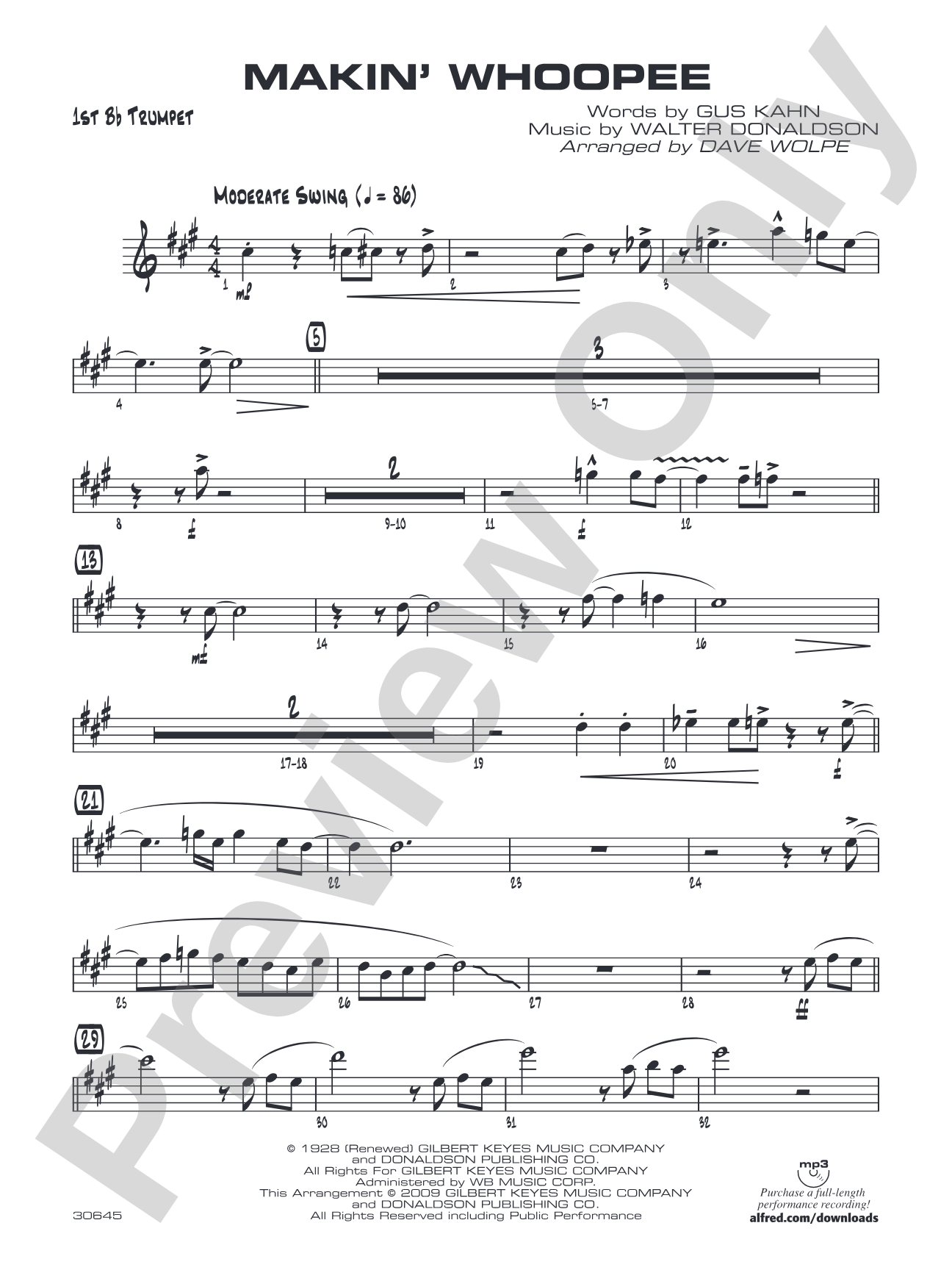

Makin' Whoopee: 1st B-flat Trumpet
Lyrics by Gus Kahn, music by Walter Donaldson / arr. Dave Wolpe
Grade: 4 (Medium Advanced / Difficult)
Item: 00-PC-0017157_T1
$3.00
Pickup currently not available
Description
Bass 'bone players can count on one hand the good charts available for their instrument. Well, here is one of the best, arranged by Dave Wolpe. A medium-swing feel, this showcase will bring the best out in your bass trombone player with no improvisation, just written melody. There is some (written-out) jazz for 2nd trumpet in harmony mute, and the lead trumpet has a unison line to written high E. A nice sax soli is the icing on this cake. An outstanding feature chart. (3:23)


Don't just read it, hear it, play along with it, and watch your students grow with it. In MakeMusic Cloud, Makin' Whoopee: 1st B-flat Trumpet comes alive with professional accompaniment, adjustable tempo, and built-in practice tools that turn solo practice into real progress.
Open in the Player
Jump straight in and assign it today.
Start Your Free Trial
Open this title and explore the full library in minutes.
Sample Audio
1
Audio File
--:--
0:00
0:00
Sample Video
Additional Details
Series:
Premier Jazz Series
Publisher:
Alfred Music
Page Count:
70
SKU:
00-PC-0017157_T1
More about this title
About the Composer: Walter Donaldson
Walter Donaldson (1893-1947) was a prolific American composer who shaped the sound of Tin Pan Alley and Broadway in the 1920s and 1930s. His gift for memorable melodies and sophisticated harmonies made him one of the most recorded composers of his era, with "Makin' Whoopee" becoming one of his signature standards.
For music educators, Donaldson's catalog offers accessible yet musically substantial material. His melodies sit naturally in the voice and across instrumental ranges, making his songs ideal for teaching phrasing, jazz interpretation, and the art of the well-crafted popular song.
Why we love this
Dave Wolpe's arrangement solves a real programming problem: finding a bass trombone feature that showcases the instrument without relying on improvisation. The written-out melody keeps the focus on tone and phrasing while the surrounding voicings (particularly the second trumpet harmony mute and sax soli) create a feature that feels complete and ensemble-focused rather than soloist-dependent. At Grade 4, it's ambitious enough to engage your advanced players but constructed with enough clarity that ensemble precision is achievable with solid preparation.
What to expect
Warm and slightly sophisticated, with a medium-swing bounce that keeps things grounded rather than frantic. The bass trombone melody has an almost singing quality, and the arrangement's use of harmony mutes and sax soli layers in color without sacrificing clarity. This is a chart that sounds mature and considered rather than flashy.
Who it's for
This is essential repertoire for jazz ensemble directors with a strong bass trombone section. The arrangement values all players in the ensemble while creating a genuine moment for an often-neglected voice to shine. Trumpets, saxophones, and the rhythm section will also find rewarding parts that demand ensemble precision and jazz vocabulary.
How to get the most out of it
- Lock the medium-swing feel in the rhythm section before rehearsing the horns. The groove sits on the pocket rather than rushing, and a relaxed time feel makes the written melodic lines sit naturally.
- Isolate the bass trombone and trumpet unison passages to confirm secure intonation, since both players are exposed on the main melody line.
- Have the second trumpet with harmony mute rehearse separately from the lead trumpet. The written jazz harmony requires tight voicing and articulation clarity to cut through without overshadowing the primary melody.
- Balance the sax soli section by having that section rehearse with the full ensemble at least once before the final run-through; the sweetness of the soli should be prominent but not overwhelming in the overall mix.
How to use it
Program this as a concert centerpiece rather than a novelty feature. Its 3:23 length and substantial scoring make it a legitimate showcase piece that holds its own alongside your more traditional jazz repertoire. It also pairs well with other swing-era standards or can anchor a set that explores the Great American Songbook through a jazz lens.
Skills your students will build
- Medium-swing articulation and phrasing on written melody lines
- Ensemble blend and voicing within four-part harmony (trumpet section and sax section work)
- Jazz interpretation of a standard without relying on improvisation
- Balanced dynamics between featured soloist and supporting ensemble sections
- Precision intonation in unison and close-harmony passages