
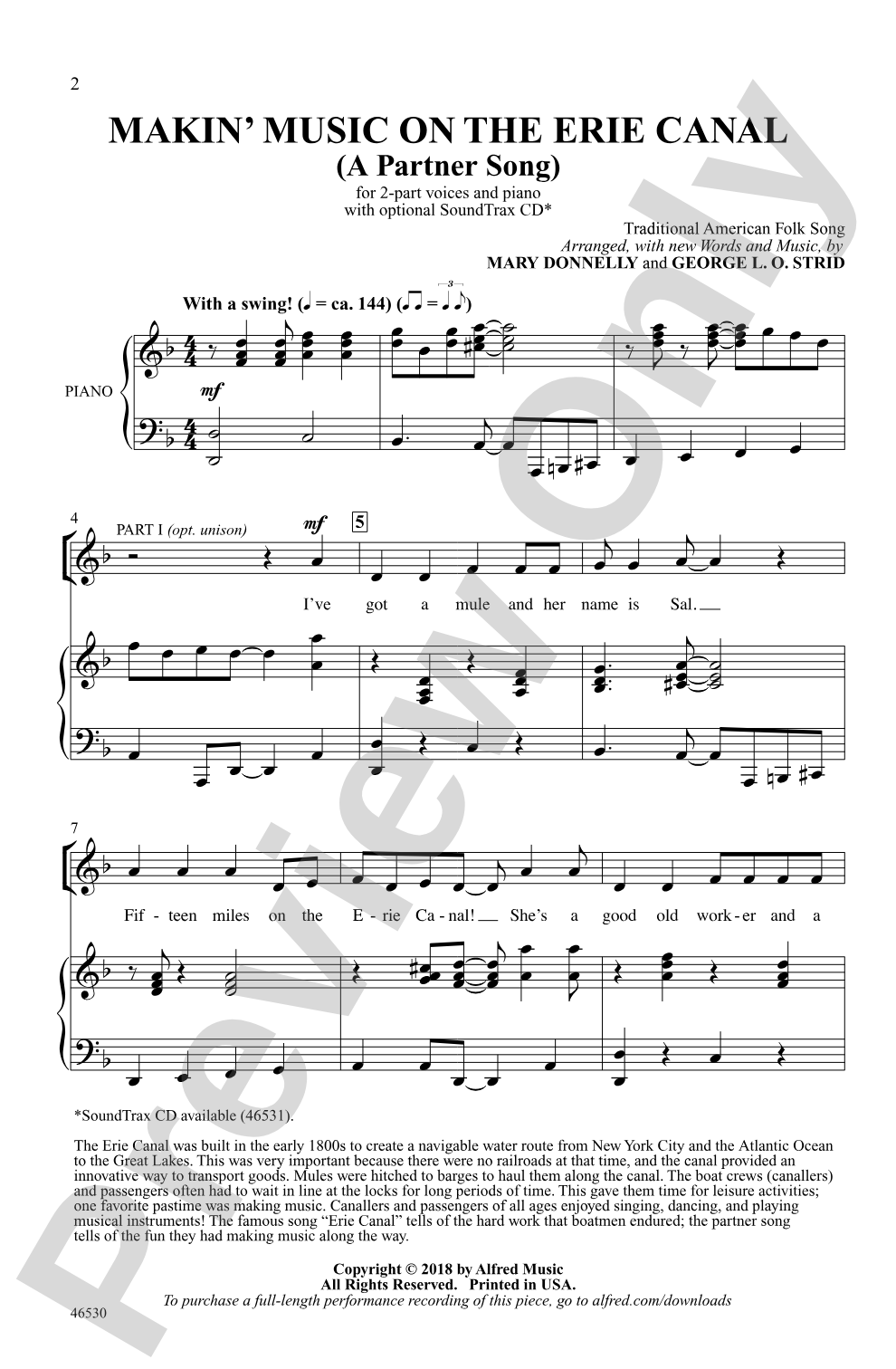

Makin' Music on the Erie Canal: 2-Part Choral Octavo
(A Partner Song)
Traditional American Folk Song / arr., with new words and music, by Mary Donnelly and George L. O. Strid
Item: 00-PO-0005706
$2.05
Minimum order quantity: 20 copies
Pickup currently not available
Description
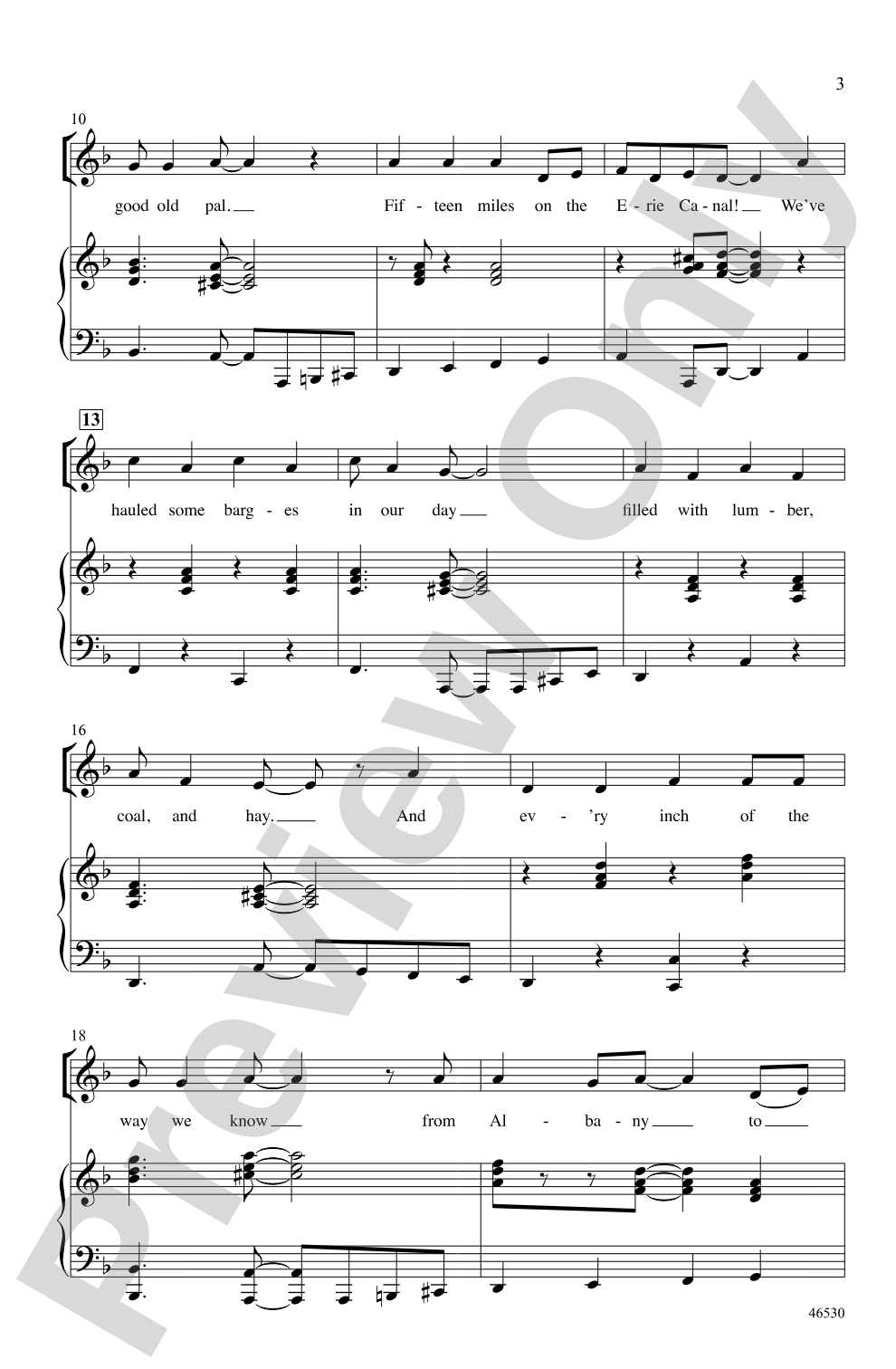
Here's a partner song arrangement of the favorite American folk tune that teaches some history and culture as well! The creative countermelody imitates sounds of musical instruments, which many Erie Canal passengers played to pass the time on their long journey through the locks. Educational and enjoyable!


Makin' Music on the Erie Canal: 2-Part Choral Octavo isn't in MakeMusic Cloud just yet...but it could be. Let us know you'd like to see it, and you'll help shape what comes next. In the meantime, start a free trial and dive into thousands of interactive titles your students can play along with today.
Request This Title
Tell us you want it.
Start Your Free Trial
Explore everything that's ready to play right now.
Sample Audio
1
Audio File
--:--
0:00
0:00
Sample Video
Additional Details
Series:
Alfred Choral Designs
Publisher:
Alfred Music
Page Count:
12
SKU:
00-PO-0005706
More about this title
About the Arranger: Mary Donnelly

Mary Donnelly spent three decades teaching general music and choir in the Reno, Nevada school district, where she developed a deep commitment to making music accessible and meaningful for young singers. She holds a Bachelor of Arts from the University of Nevada, Reno (with majors in English and French) and a Master's Degree in Education from Lesley College, where her coursework centered on integrating the arts across the curriculum.
In 1985, Donnelly began collaborating with George L. O. Strid when their principal asked them to write a musical for Reading Week. That first project, "The Million Dollar Mystery," launched a partnership that has produced over two hundred songs and twenty-five musicals. Now retired, Donnelly remains active in ACDA, NEA, and ASCAP.
Why we love this
This arrangement transforms a beloved American standard into an engaging teaching tool by pairing the melody with a countermelody that mimics the instruments Erie Canal travelers actually played. The partner song structure keeps both parts equally interesting, and the clever orchestration of sounds within the vocal line gives singers something specific to imagine and express, making this feel less like a historical exercise and more like genuine musical storytelling.
What to expect
Bright and folksy, with a hint of nostalgia. The combination of the sturdy melody with the playful instrumental sound effects creates a sense of movement and journey, evoking long days on the water with passengers passing time through music and conversation.
Who it's for
Middle school and upper elementary choirs looking for repertoire that teaches history while building vocal independence. The 2-part texture makes it accessible for developing singers, while the creative countermelody keeps more experienced ensembles engaged.
How to get the most out of it
- Encourage singers to listen closely to the recorded accompaniment during rehearsals so they can lock the rhythmic pulse, especially where the countermelody interacts with the main tune.
- Shape the instrumental sound effects (the countermelody) with clear articulation and lighter tone, letting them sparkle against the fuller, more sustained main melody.
- Work the two parts separately first, then layer them gradually so singers understand both the historical context and how the parts fit together musically before combining them.
How to use it
Perfect for a concert exploring American heritage or folk traditions. It pairs naturally with other American songs and works well as a bridge between pure folk singing and more composed arrangements, showing students how traditional material can be freshly reimagined.
Skills your students will build
- Reading and performing partner songs with contrasting melodic material
- Understanding how countermelodies interact with primary melodies
- Expressing programmatic content through vocal tone and articulation
- Connecting music to historical and cultural context
- Maintaining independent lines while blending with other voices