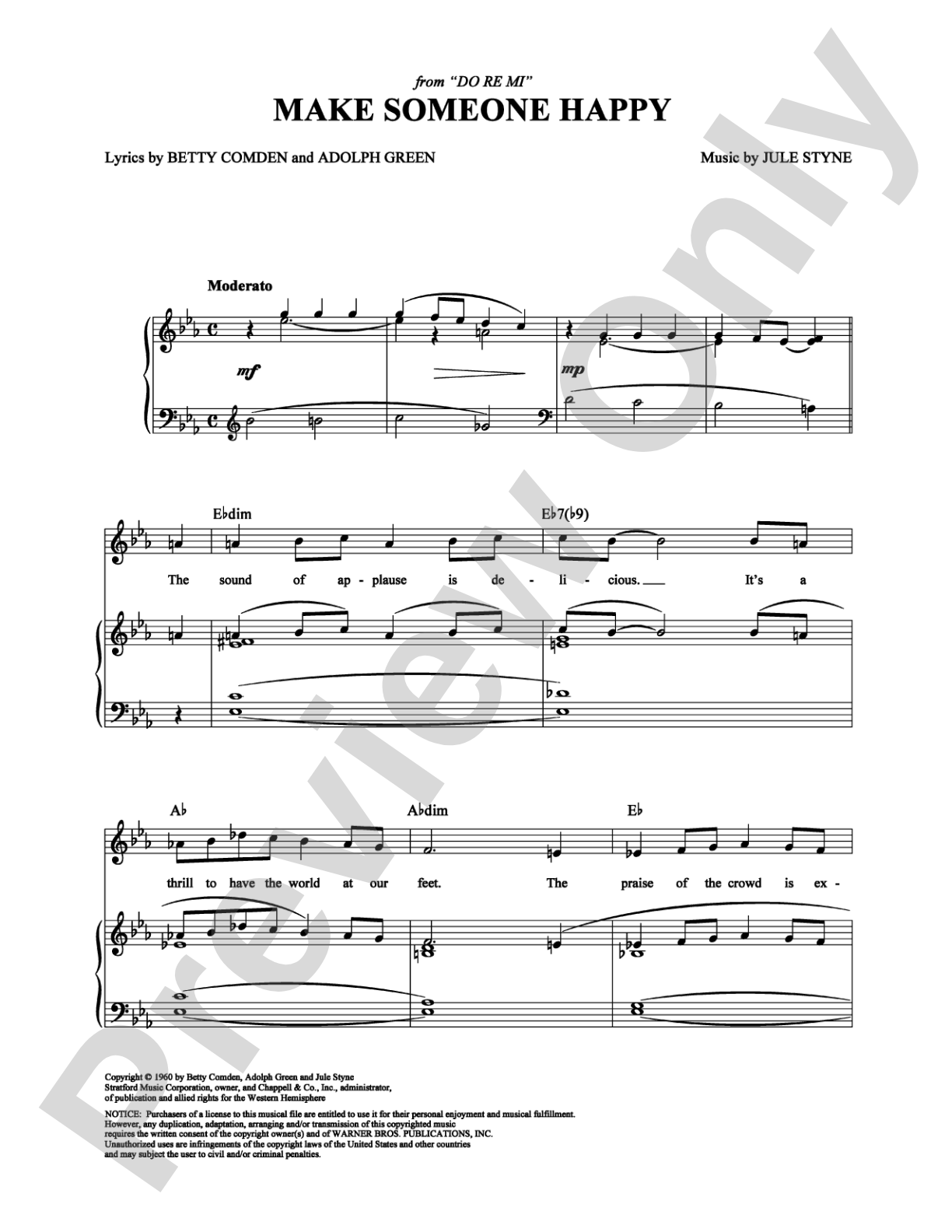
Make Someone Happy: Piano/Vocal/Chords Digital Sheet Music

Make Someone Happy: Piano/Vocal/Chords Digital Sheet Music

Jule Styne, Judy Garland

Item: 00-PS-0001520

Digital Download
$3.99
Description

Make Someone Happy: Piano/Vocal/Chords Digital Sheet Music isn't in MakeMusic Cloud just yet...but it could be. Let us know you'd like to see it, and you'll help shape what comes next. In the meantime, start a free trial and dive into thousands of interactive titles your students can play along with today.

Sample Audio
No sample audio found.
Sample Video
Additional Details
SKU: 00-PS-0001520

More about this title

About the Artist: Judy Garland

Judy Garland (1922–1969) was an American singer and actress whose voice became one of the defining sounds of the American songbook. Her interpretations of standards set a benchmark for vocal phrasing, emotional directness, and the integration of song and character that influenced generations of singers and music educators.

Garland's vocal technique combined technical precision with an unmistakable warmth that made every lyric feel personal. Her recordings remain essential listening for anyone studying jazz standards, pop ballads, and the vocal performance practices of the mid-twentieth century.

Why we love this

Garland's interpretation of this standard demonstrates how a vocalist can shape a melody through nuance rather than ornamentation. The piano/vocal/chords format gives singers and accompanists a clear roadmap to follow her phrasing while building the confidence to make the song their own.

What to expect

Warm, genuine, and quietly optimistic. The melody unfolds with a gentle conversational quality, inviting the singer to speak directly to the listener rather than perform at them. Garland's recording brings an unhurried pacing and honest emotional center that makes the song feel both timeless and intimate.

Who it's for

Singers working with a pianist or preparing for auditions and recitals will find this arrangement accessible and musically sound. It suits performers at the intermediate to advanced level who want to explore a standard with a vocal model at the highest level of artistry.

How to get the most out of it

  • Observe Garland's approach to the lyric line by listening to her recording before sitting down with the score. Note where she sits slightly ahead or behind the beat, and how she colors certain vowels.
  • Balance the vocal line with supportive but uncluttered piano voicings. Let the melody breathe rather than filling every space with harmonic texture.
  • Find the emotional through-line of the lyric. This song rewards a singer who commits to the sentiment rather than technical display.

How to use it

This standard works beautifully in a recital program where you want to ground singers in the vocabulary of American song standards. It also serves as an excellent teaching tool for understanding how a vocalist interprets melody, manages the relationship between voice and accompaniment, and connects with a lyric on a human level.

Skills your students will build

  • Interpreting vocal phrasing and understanding how timing affects emotional impact
  • Recognizing and executing jazz standard harmonic progressions
  • Balancing vocal line independence with harmonic support from accompaniment
  • Connecting lyrical content to vocal delivery and interpretation

You May Also Like