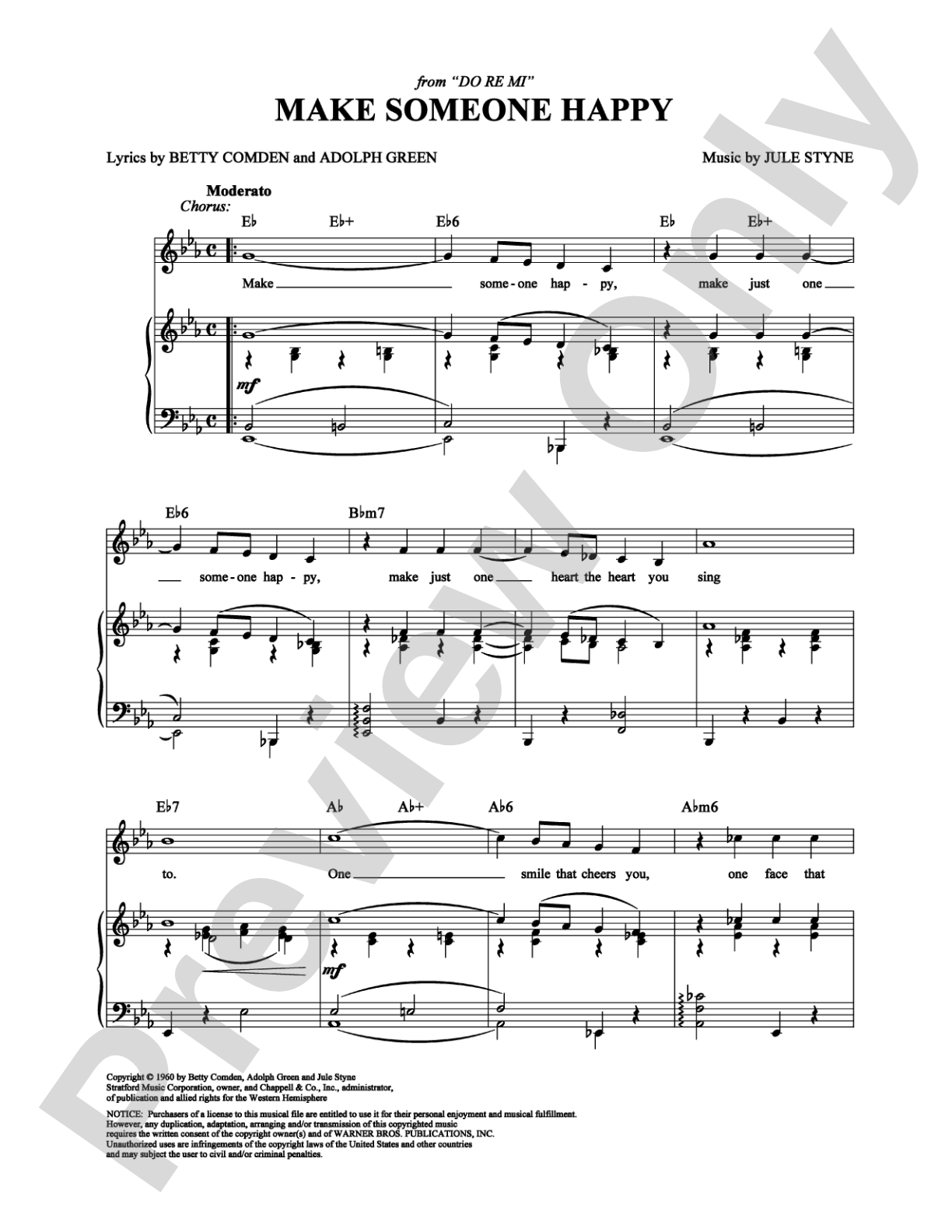
Make Someone Happy: Piano/Vocal/Chords Digital Sheet Music

Make Someone Happy: Piano/Vocal/Chords Digital Sheet Music

Jule Styne, Judy Garland

Item: 00-PS-0001519

Digital Download
$3.99
Description

Make Someone Happy: Piano/Vocal/Chords Digital Sheet Music isn't in MakeMusic Cloud just yet...but it could be. Let us know you'd like to see it, and you'll help shape what comes next. In the meantime, start a free trial and dive into thousands of interactive titles your students can play along with today.

Sample Audio
No sample audio found.
Sample Video
Additional Details
SKU: 00-PS-0001519

More about this title

About the Artist: Judy Garland

Judy Garland (1922-1969) remains one of the most influential vocalists in American entertainment history. Her career spanned vaudeville, film, and concert performance, and her interpretive gifts shaped how generations of singers approach the American songbook. For music students and teachers, Garland's recordings offer masterclasses in phrasing, emotional authenticity, and the art of connecting lyric to melody.

Why we love this

Garland's recorded interpretation of this Jimmy Webb standard is a study in restraint and warmth. The vocal line sits naturally in the accompaniment, making this arrangement genuinely playable for intermediate singers and pianists while maintaining the intimacy that makes the song work.

What to expect

Warm, genuine, and quietly optimistic. The song radiates a quiet confidence in love's simple power to transform an ordinary day. The melody moves with gentle ease, settling into comfortable places that feel less like performance and more like honest conversation.

Who it's for

Intermediate to advanced singers and pianists working on American standards repertoire. This arrangement works well for recital study, jazz ensemble vocalists, or anyone seeking an accessible entry point into the vocal standards tradition.

How to get the most out of it

  • Balance the vocal line with the piano accompaniment so the lyric remains the focus. The standard's strength lies in its conversational quality, not in vocal display.
  • Pay attention to the chord voicings written in the sheet music. These changes often move subtly and support the harmonic storytelling of the lyric.
  • Sing through the phrases with natural speech rhythm first, then layer the melody. This helps avoid oversinging and keeps the performance grounded.

How to use it

Program this alongside other standards from the Great American Songbook in a vocal recital or jazz program. It pairs naturally with other mid-century pop standards and offers a moment of genuine emotional connection in a set. The accessibility of both the melody and harmony makes it suitable for emerging vocalists in a mixed-repertoire concert.

Skills your students will build

  • Interpreting standards with conversational phrasing and emotional authenticity
  • Balancing vocal line with piano accompaniment in a small ensemble format
  • Reading and voicing chord symbols in the context of harmonic progression
  • Understanding the relationship between lyric inflection and melodic shape

You May Also Like