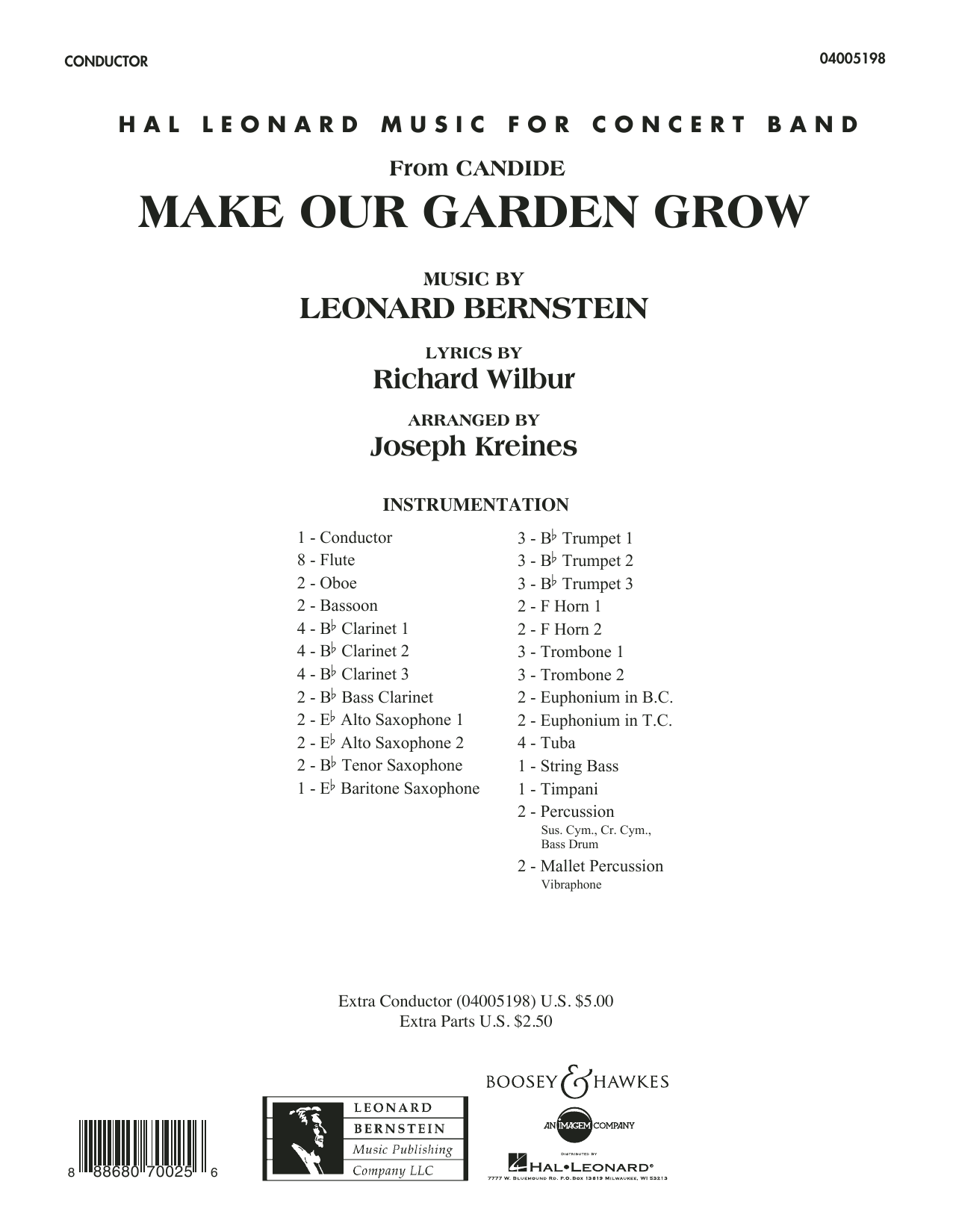
Make Our Garden Grow (from Candide): Concert Band Conductor Score & Parts
Arranged by Joseph Kreines
Grade: 3
Item: 35-PK00388393
Digital Download
$65.00
One moment…
Description
From Bernstein's 1956 operetta "Candide", the beautiful closing number, "Make Our Garden Grow", has gone on to become a beloved and familiar classic. Arranged here for younger bands, this setting moves from delicate scoring in the opening to a powerful climax by the full ensemble. (Boosey Hawkes) Dur: 2:30
Discover MakeMusic Cloud: thousands of interactive titles your students can play along with today.
Joseph Kreines has spent his career building the musical infrastructure of Florida's classical scene. He served as associate conductor of the Florida Symphony Orchestra in Orlando early in his tenure, later taking the helm of the Brevard Symphony and holding associate conductor roles with The Florida Orchestra in Tampa while freelancing extensively as a musical director for opera and theater productions across the region.
Beyond the podium, Kreines has become a fixture in American band literature through his prolific transcription work, particularly his interpretations of Percy Grainger's catalogue. He has written the definitive annotated guide to band repertoire, "Music for Concert Band," and maintains an active schedule as a clinician and guest conductor with ensembles nationwide. He currently directs the Brevard Symphony Youth Orchestra.
Why we love this
Kreines understands how to serve younger ensembles without condescension. The orchestration builds naturally from transparent textures that allow individual sections to shine into a genuinely moving full band statement, letting students experience the emotional arc of Bernstein's gorgeous melody without drowning them in complexity. At grade 3, this is sophisticated programming that actually sounds like something worth playing.
What to expect
The piece begins with tender, almost hymn-like voicing that creates an intimate quality even with full instrumentation. As it unfolds, optimism and hope build steadily, culminating in a radiant affirmation that feels earned rather than sudden.
Who it's for
Bands at the grade 3 level looking for repertoire with genuine musical substance. This works equally well for groups ready to stretch slightly upward or for accomplished younger ensembles seeking material with emotional depth and Broadway appeal.
How to get the most out of it
Keep the opening chorale singing with legit tone production rather than marching band crispness; the beauty of Bernstein's harmony depends on warmth and blend in those opening measures.
Bring the tempo down slightly when the melody passes between sections in the middle section to let the line breathe and prevent rushing as students navigate the handoffs.
Balance the swell to the final climax carefully across all sections so the ensemble crests together rather than individual voices poking through; the power comes from unified sound, not volume.
How to use it
This is an excellent closing number for a spring concert, particularly alongside other 20th-century American works or in a program exploring musical theater orchestration. It also pairs naturally with other Bernstein arrangements or serves as a standalone feature that leaves audiences in a warm, reflective mood.
Skills your students will build
Balancing transparent voicing in chorale textures
Managing dynamic crescendos across multiple sections with unified direction