Vicki Tucker Courtney began piano study at age four and developed deep roots in choral music during her time at North Texas State University, where she gained experience as an accompanist. Her prolific compositional output spans choirs, piano, handbells, and solo voice; she has received multiple ASCAP Plus Awards throughout her career and studied composition under the mentorship of Dove Award winner Mark Hayes. From her base in Columbia, Tennessee, Courtney now writes full time and maintains an active teaching studio, having published over 350 titles since reaching her first hundred in 2009.
Beyond composition, Courtney brings real church music experience to her work, having performed for both traditional and contemporary services. Her body of work reflects the practical needs of working musicians and educators who depend on repertoire that sounds polished without demanding unrealistic rehearsal time.
Why we love this
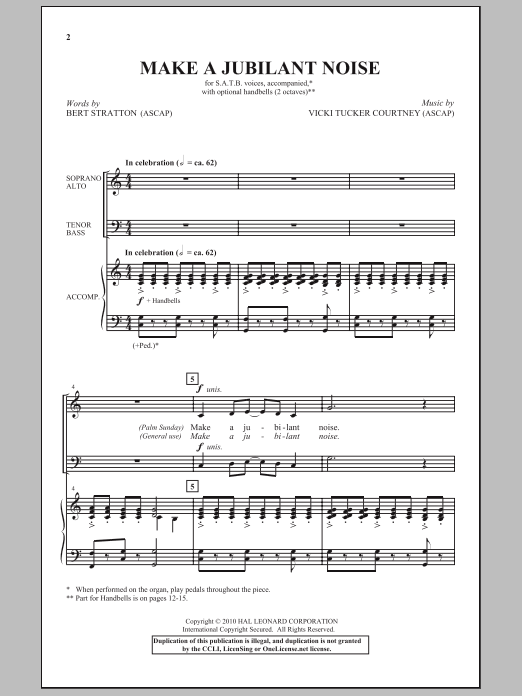
Courtney writes with a keen understanding of what SATB choirs can accomplish in limited rehearsal time. The jubilant character and Easter subject matter make this a natural choice for spring programming, and the text setting sits gratefully for singers while maintaining the harmonic freshness that distinguishes her work from standard Easter fare.
What to expect
The title itself promises exactly what the music delivers: brightness, affirmation, and genuine celebration. The harmonic palette suggests both reverence and joy, creating a jubilant character that feels earned rather than imposed. This is music that lifts singers' spirits in the rehearsal room and communicates its message clearly to listeners.
Who it's for
Any SATB choir preparing Easter music that wants to move beyond the predictable. This works for church choirs with moderate experience, high school or community ensembles seeking spring repertoire, and college choirs looking for shorter sacred works that feel complete without excessive length.
How to get the most out of it
Balance the soprano line in the opening; it carries the primary melodic interest and needs to project over the harmonic foundation beneath it.
Shape phrases toward the text's key words rather than resting at bar lines. This approach preserves the forward momentum Courtney builds into the harmonic rhythm.
Attend to the alto and tenor parts during sectional rehearsals; these middle voices often contain unexpected harmonic turns that anchor the piece's color.
Consider the acoustic of your space when setting the overall tempo. The piece thrives with slight elasticity in faster passages and benefits from a conductor who feels comfortable breathing with the text rather than maintaining metronomic rigidity.
How to use it
Slot this as a strong anchor in your Easter concert or spring service, where it can follow a slower, more introspective sacred work and create welcome contrast. The fourteen pages make it substantial enough to command attention without overwhelming a concert program built around longer choral works.
Skills your students will build
Reading and balancing SATB voicing with clear harmonic function
Diction and text expression in sacred music context
Phrasing through harmonic movement rather than conventional phrase markings
Blend and blend adjustment across parts during passages with overlapping melodic material
You May Also Like
Scan to Complete Your Purchase
Use your phone's camera to scan the code below
You'll log in on your phone and the order will be added to your account